 Now, Yeogi
What to Eat in Jeonju: Bibimbap, Bean Sprout Soup and the Night Market (2026)
Jeonju is a UNESCO City of Gastronomy. What that means on a plate: what makes Jeonju bibimbap different from every other version, the local bean sprout soup with its poached egg, and where to eat.
Places in this post
- Address
- 19-3 Pungnammun 1-gil, Wansan-gu, Jeonju
- Hours
- Every Friday and Saturday, 17:00–23:00, year-round
- Tip
- The best eating in Jeonju happens here two nights a week. Nothing replaces it midweek.
Jeonju was designated a UNESCO Creative City of Gastronomy in 2012, one of a small number of cities worldwide to hold that title. Koreans did not need telling. Jeolla province has been the country’s agricultural heartland for centuries, and Jeonju is where that turns into restaurant cooking.
Restaurant prices in Korea are rarely published, so this guide names dishes and restaurants rather than quoting figures it cannot source.
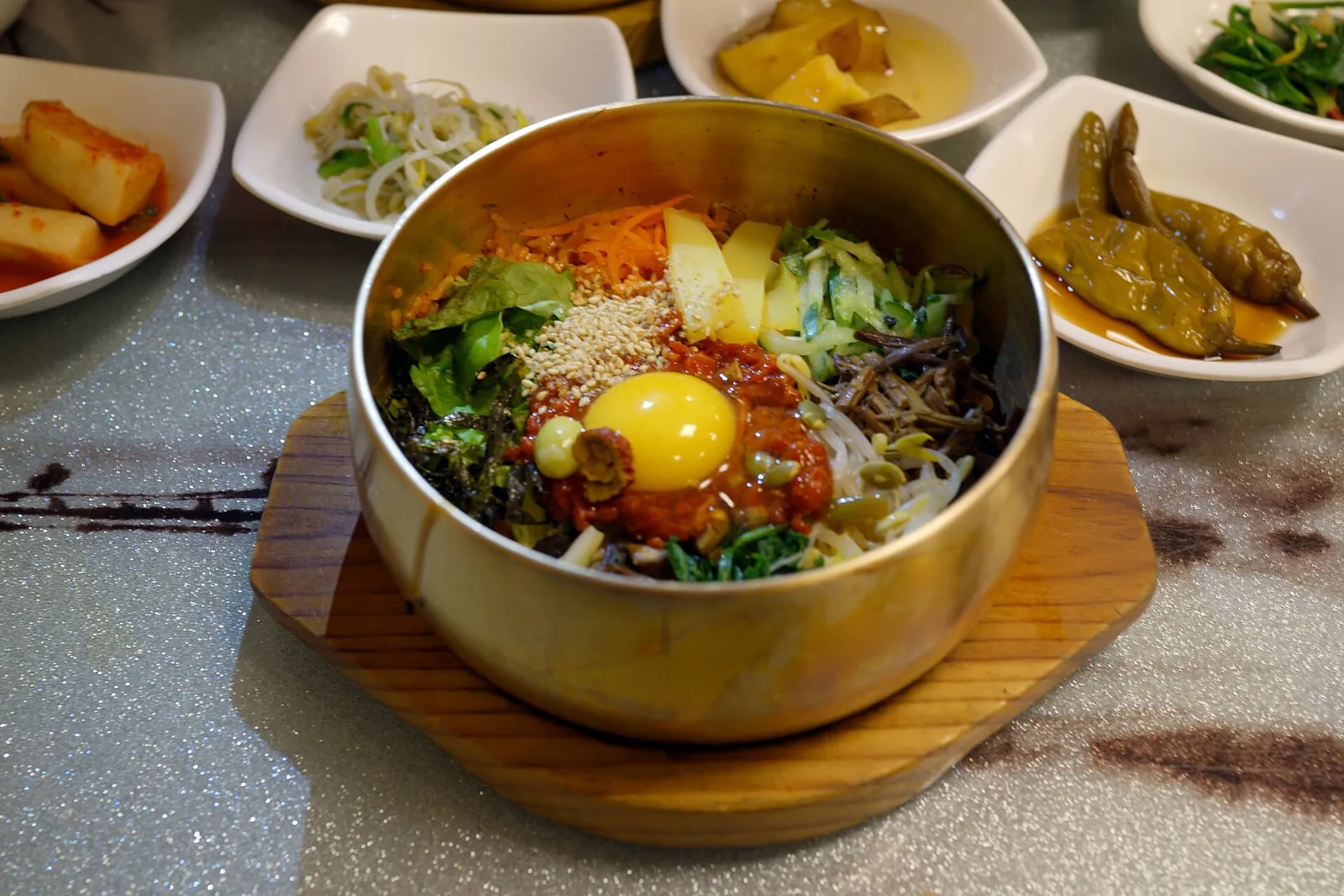
Jeonju bibimbap
Every Korean city serves bibimbap. Jeonju’s version is the one the others are measured against, and the city’s own description sets out exactly why.
Four things make it specific:
- The rice is cooked in beef bone broth, not water, which is the single biggest difference and the one you taste first.
- Jeonju bean sprouts, grown locally and noticeably crisper than the standard kind.
- Hwangpomuk (황포묵), a yellow mung bean jelly made with spring water from the Omokdae ridge, which most other versions leave out entirely.
- Traditionally aged chilli paste and soy sauce, made with glutinous rice.
The dish uses more than thirty ingredients arranged in the five traditional colours, and it carries the nickname baeksebap, the hundred-year rice, for being considered a complete meal.
Where to eat it. The city’s own listings name Gajokhoegwan (가족회관), whose owner holds the city’s first designation as a master of Jeonju cuisine, and Hanguk-jip (한국집), trading since 1952 and the oldest of them. Seongmidang (성미당) dates from 1965. Gogung, Gapgi-hoegwan and Giwa also appear on the official list. For a cheaper version, the city points to Baeksong-hoegwan, where a bowl runs around ₩10,000.
Kongnamul gukbap
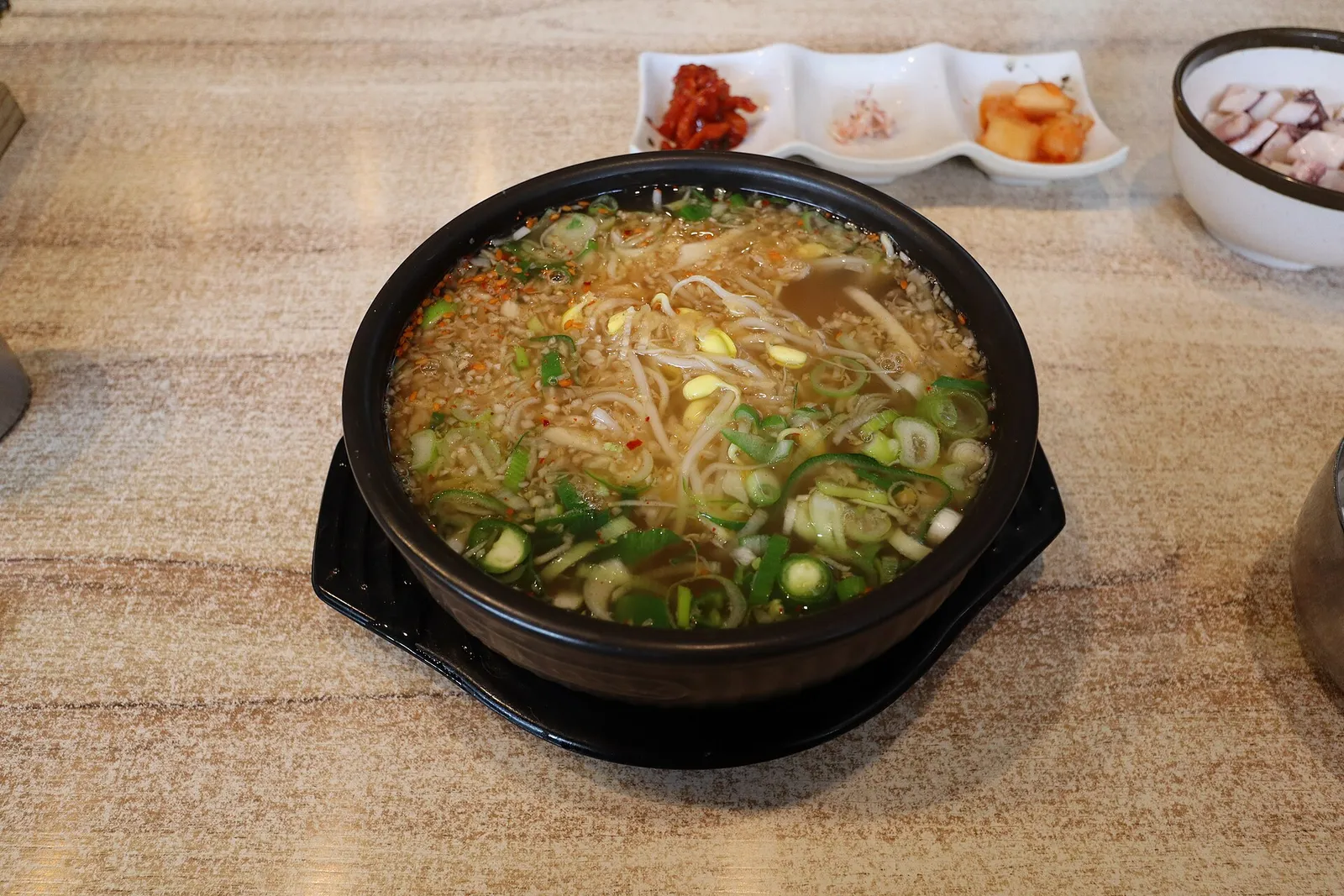
Kongnamul gukbap (콩나물국밥) is bean sprout soup poured over rice, and in Jeonju it is breakfast, hangover cure and cheap lunch all at once.
The Jeonju style worth seeking out is the Nambu Market method. The rice is not simply boiled in the broth. It is repeatedly dipped in and out of the hot anchovy and kelp stock, a technique called toryeom, so the grains stay separate rather than dissolving.
It arrives with two things on the side. A suran, a raw egg dropped into hot broth with sesame oil, which you drink first. And toasted seaweed to crumble in. The traditional accompaniment is moju, a warm spiced rice wine.
The city lists Hyeondae-ok in the Hanok Village and Dongmunwon among the places serving it.
Full-course Jeolla dining
Hanjeongsik (한정식) is the formal Jeolla banquet: a table covered edge to edge with a dozen or more dishes at once. Jeolla province is where this style is taken most seriously, and Jeonju is the place to try it if you are going to try it anywhere.
The city’s official listings name Giwa, described as the largest upscale hanjeongsik house in the Hanok Village, along with Yangbanga, Ujeonjae, Damun and Oehalmeoni Somssi.
This is a meal to book and to arrive hungry for. Expect it to take two hours.
The night market
The Nambu Market night market is the best eating in the city and it runs Friday and Saturday only, 17:00 to 23:00, all year round.
Stalls fill the central aisle of the market with street food, and the crowd is local as much as it is visiting. If your dates include one of those two nights, plan dinner around it rather than booking a restaurant.
The Cheongnyeonmol, a floor of small youth-run shops and cafés inside the same market, runs on its own schedule.
Things to take home
The city promotes a set of modern souvenirs built on the bibimbap idea rather than traditional preserves.
- Bibimppang and bibim noodles from a bakery café in the village
- Gyodong croquettes
- Bibimbap waffles
- Jeonju bibimbangul
These are recent inventions and they are what the city itself puts forward, so treat them as souvenirs rather than as tradition.
Where to eat, by area
Inside the Hanok Village you will find the bibimbap houses, the hanjeongsik restaurants and a dense layer of street snacks along Taejo-ro. It is convenient and priced for visitors.
Nambu Market, just past Pungnammun, is where the bean sprout soup tradition sits and where the night market happens. Cheaper and more local.
Gaeksa and the downtown north of the village is where residents eat, and it stays open later than the village does.
Practical notes
- The village empties early. Many restaurants inside it close by nine.
- Bibimbap is usually a one-person dish, unlike much Korean restaurant food, so it works for solo travellers.
- Hanjeongsik usually needs two people minimum and is worth booking.
- Vegetarians can manage bibimbap by asking for it without beef, but the rice itself is cooked in bone broth in the traditional version. Ask before ordering.
- Cards work almost everywhere, though market stalls may prefer cash.
Wrapping up
Have bean sprout soup for breakfast, bibimbap for lunch at one of the old houses, and dinner at the night market if it is Friday or Saturday. That is the city’s food in a day, and it is the reason to come as much as the roofs are.
More in this series: the Jeonju overview, where to stay and what to see.