 Now, Yeogi
Jeonju Travel Guide: The Hanok Village, Transport and Two Days (2026)
A first-timer's guide to Jeonju: how to get there from Seoul, why the bus beats the train, what the Hanok Village actually is, and how to plan two days in Korea's UNESCO City of Gastronomy.
Places in this post
- Address
- 110 Jeondongseongdang-gil, Wansan-gu, Jeonju
- Hours
- Open 24 hours, year-round
- Menu
- Entry to the village No admission charge
- Tip
- It is a living district of 947 buildings, not a gated site, so there is no ticket and no closing time. Individual attractions inside it set their own hours.
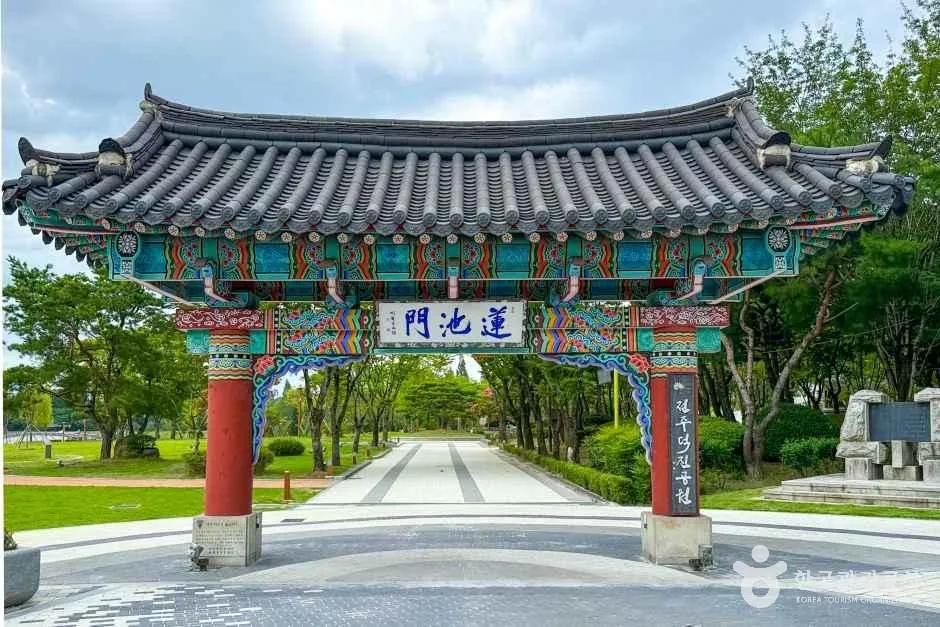
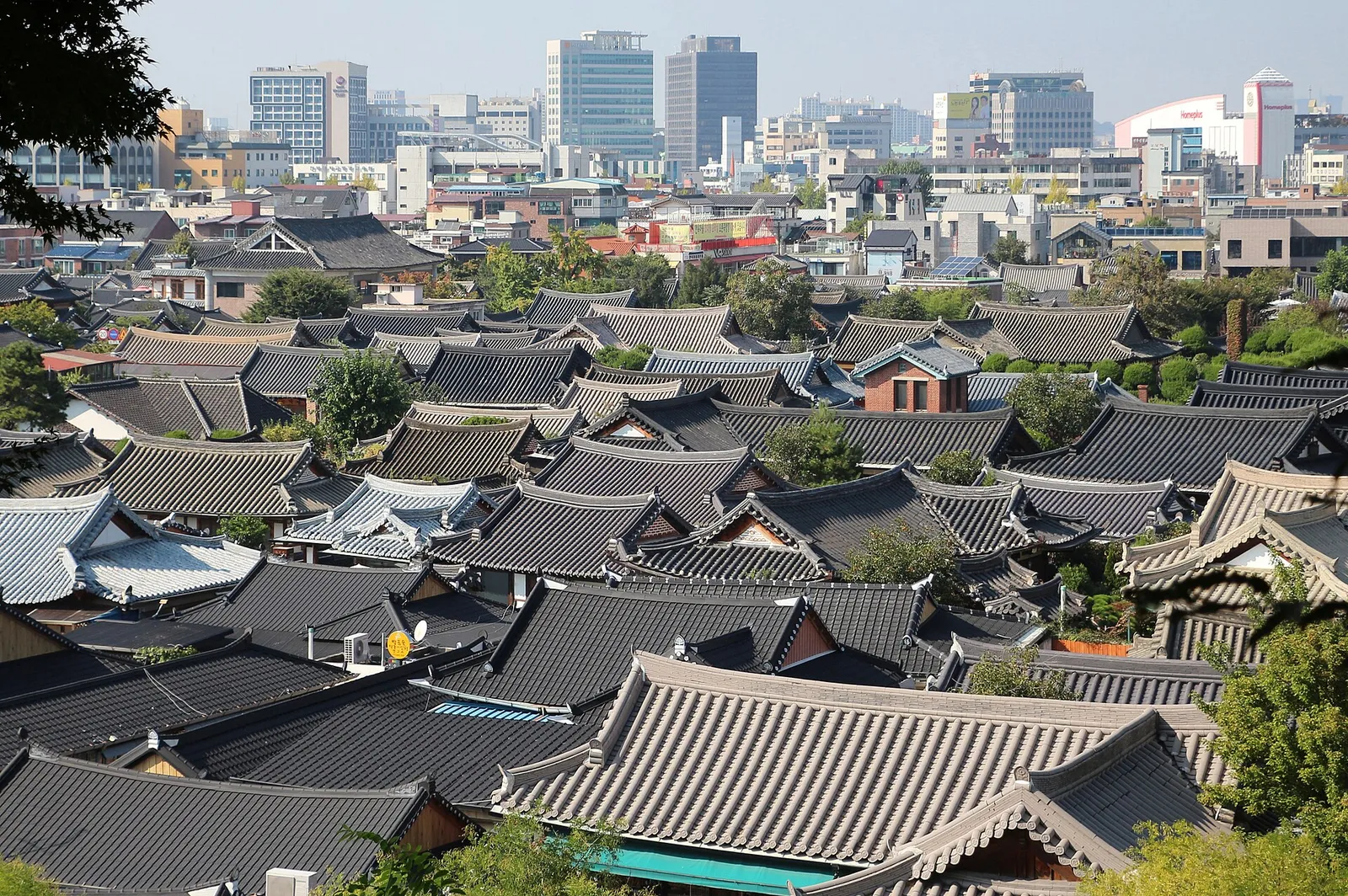
Jeonju has the largest concentration of traditional Korean houses anywhere in the country, and it is not a preserved museum village. People live in it, run businesses out of it, and the office towers of a city of 650,000 rise directly behind the roofline.
It is also a UNESCO Creative City of Gastronomy, designated in 2012, which is the other reason to come. Prices and times are as of September 2026.
What the Hanok Village actually is
Jeonju Hanok Village (전주한옥마을) covers about 298,000 square metres and contains 947 buildings, of which 735 are hanok, plus some 575 businesses.
The important thing for planning: there is no admission charge and no closing time. It is an ordinary city district, open 24 hours a year-round. Individual attractions inside it set their own hours and a few charge, but walking the streets costs nothing at any hour.
That changes how you use it. The village is at its worst in the middle of a Saturday afternoon and at its best early in the morning or after the day trippers leave.
Getting there from Seoul
By KTX, Yongsan to Jeonju takes about 1 hour 40 minutes. Yongsan has more departures than Seoul Station.
One caveat on the fare. Korea’s two high-speed operators merged on 1 September 2026 and fares fell by around ten percent on average, but Korail has not published a route-by-route table. Check the current Jeonju price when you book rather than trusting a figure from an older guide.
By express bus, Central City Terminal in Gangnam to Jeonju takes 2 hours 40 minutes over 202 km, with roughly ninety departures a day.
| Class | Fare |
|---|---|
| Standard | ₩15,000 |
| Deluxe | ₩22,000 |
| Premium | ₩28,600 |
The bus deserves a serious look here. It is an hour slower, but it costs a fraction of the train and Jeonju’s express bus terminal is closer to the Hanok Village than the railway station is.
From the station to the village
From Jeonju Station, take bus 112, 79, 508, 536, 542, 545, 546, 101, 119 or 999 and get off at the Jeondong Cathedral stop, which is the Hanok Village stop. It takes about 25 minutes. A taxi runs ₩7,000 to ₩8,000.
From the express bus terminal, take bus 79, 999 or 1994 for about 15 minutes, or a taxi for ₩5,000 to ₩6,000.
Getting around
City buses cost ₩1,700 for adults and ₩1,350 for middle and high school students, based on an eight-kilometre base zone. T-money works, including the T-money Travel Card, though topping up at convenience stores is cash only.
Transfers are generous. Tag off when you get out and you get a free transfer to another Jeonju route within 30 minutes, up to twice.
Inside the village there is a free shuttle between the fourth public car park and Taejo-ro, running 10:00 to 18:30 every day.
For something more structured, a tourist taxi is bookable at ₩50,000 for three hours, ₩80,000 for five, and ₩20,000 for each extra hour. A guided day tour of the village alleys and the arboretum runs at ₩10,000 a head through a local operator.
What to see
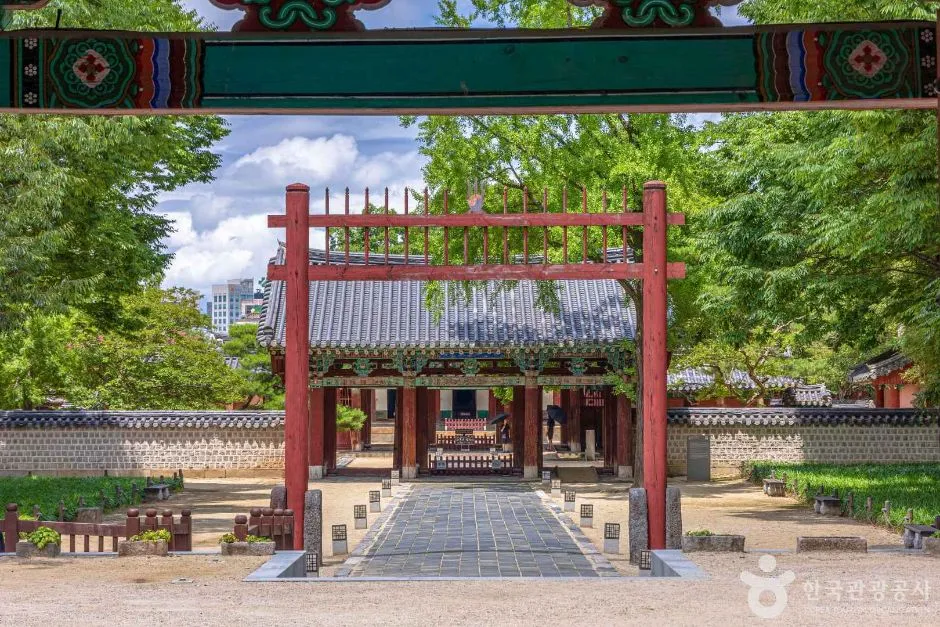
Almost everything is inside or beside the village, and most of it is free.
Gyeonggijeon (경기전) is the one paid site and the one to pay for: the shrine holding the portrait of King Taejo, founder of the Joseon dynasty, whose clan came from Jeonju. ₩3,000 for adults.
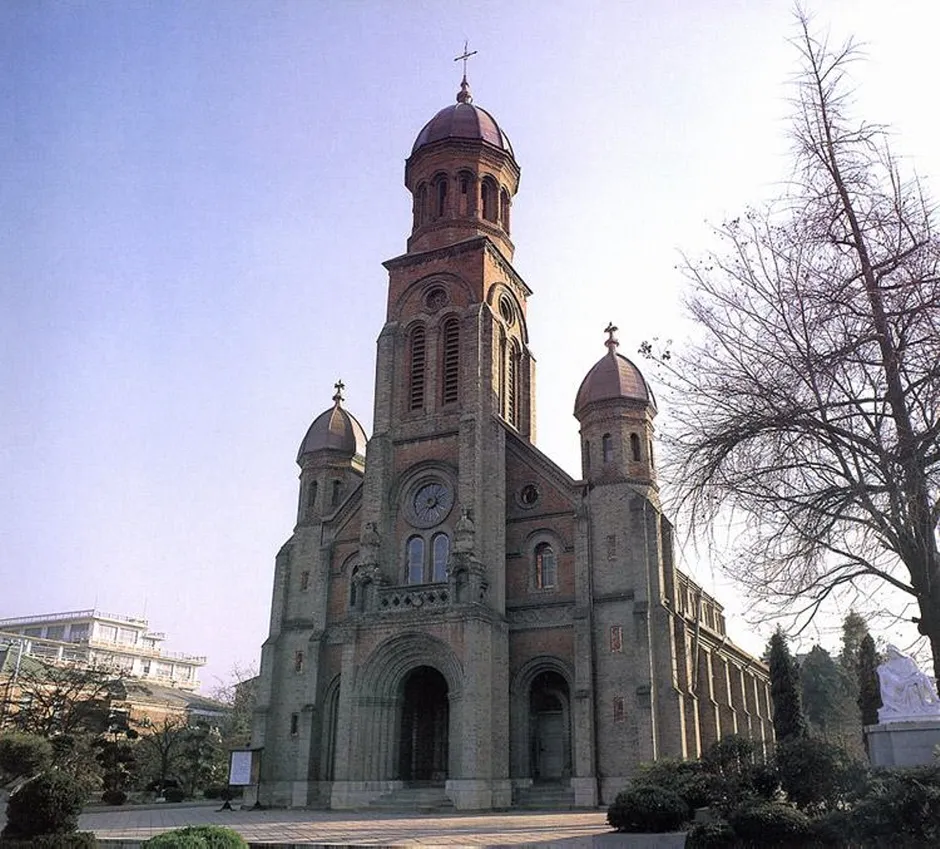
Jeondong Catholic Cathedral (전동성당), a red brick Romanesque church from the Japanese colonial period, stands directly opposite. Free.
Omokdae (오목대) is the pavilion on the ridge above the village and the place to photograph the roofs. Jeonju Hyanggyo (전주향교) is the Confucian school, and its ginkgo trees peak in November. Both free.
Full hours and details are in our things to do guide.
What to eat
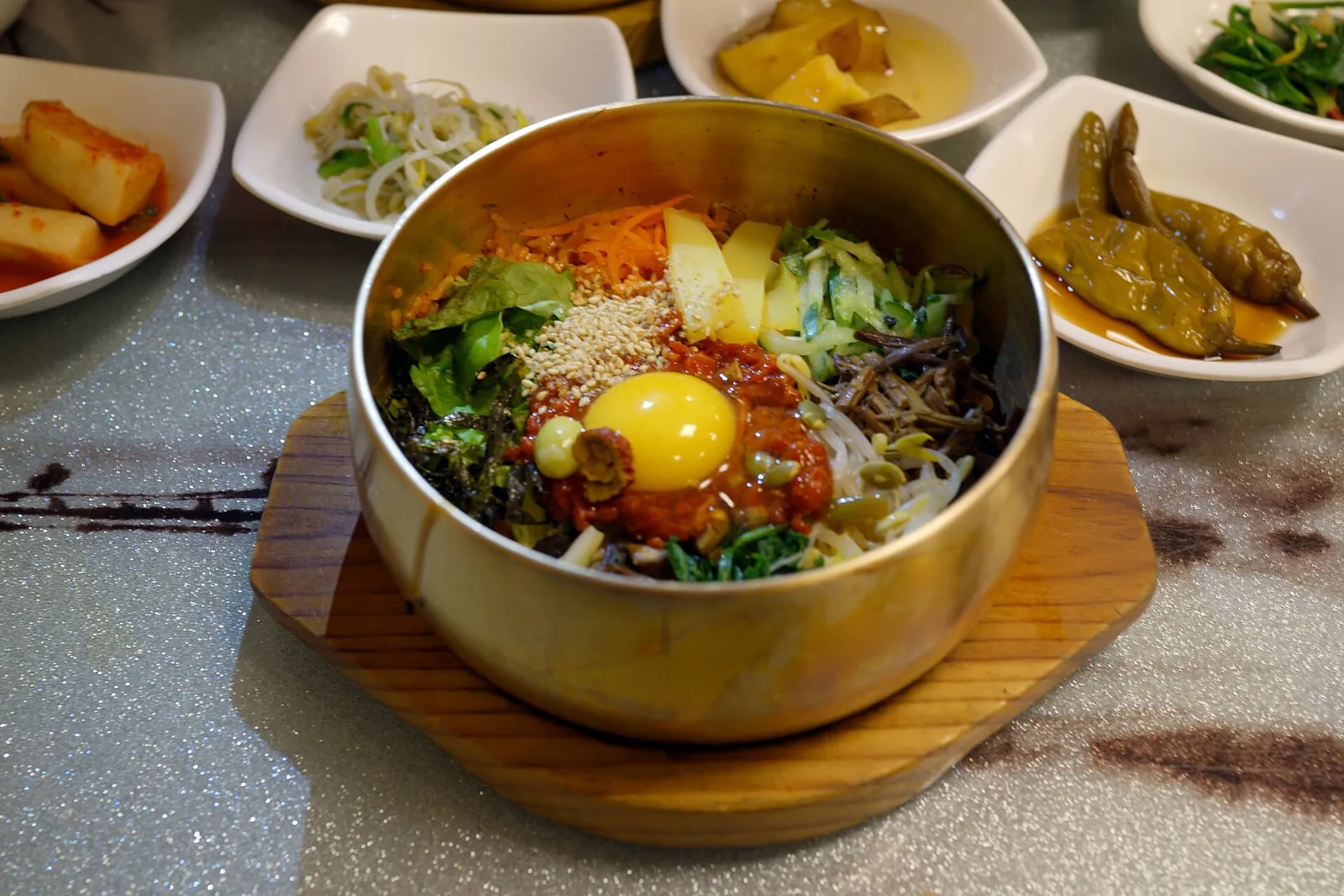
This is not a city where food is a side note. Jeonju bibimbap is the dish the whole country measures others against, and Jeonju-style kongnamul gukbap, bean sprout soup poured over rice, is the local breakfast.
The Nambu Market night market runs Friday and Saturday, 17:00 to 23:00, year-round, and it is the single best evening plan in the city.
Our food guide covers what makes the Jeonju versions different.
Two days that work
Day one. Arrive late morning, bibimbap for lunch, Gyeonggijeon and Jeondong Cathedral in the afternoon, climb to Omokdae at golden hour, then the Nambu Market night market if it is Friday or Saturday.
Day two. Bean sprout soup for breakfast, Jeonju Hyanggyo and the Jaman mural village, then the Hanji Museum or a paper-making workshop, and Deokjin Park before you leave.
If you only have one day, do the first and skip the second.
When to go
The city markets all four seasons equally and publishes no recommended one, so pick by what is on.
Late April and early May brings the Jeonju International Film Festival, whose 27th edition runs 29 April to 8 May 2026. It is one of Korea’s two major film festivals and it fills the city.
October has the 30th Jeonju Hanji Culture Festival on 8 to 10 October 2026, and November is when the Hyanggyo ginkgos turn, which is the photograph everybody wants.
Practical notes
- Stay overnight if you can. The village empties in the evening and that is when it is worth seeing.
- Consider the bus from Seoul. Cheaper, and it arrives closer.
- Weekends are crowded. A weekday visit is a different place.
- Most sites are free. Budget about ₩3,000 a person for tickets.
- Hanbok rental is everywhere in the village and gets you into Gyeonggijeon at half price on the fourth Saturday of each month.
Wrapping up
Jeonju is a one-night trip that people try to do in an afternoon. Arrive in time for dinner, walk the village after dark when the day visitors have gone, and eat two proper meals before you leave.
More in this series: where to stay, what to see and what to eat.