 Now, Yeogi
Things to Do in Seongbuk-dong: A Gisaeng House Turned Temple, and a Museum That Is Shut (2026)
What there is to see in Seongbuk-dong, set out from official sources: Gilsangsa Temple, which began as a high-end gisaeng house, Simujang, built facing north, Choi Sun-u's house, open only eight months a year, and the fact that the Kansong Art Museum is closed right now.
Places in this post
- Address
- 68 Seonjam-ro 5-gil, Seongbuk-gu, Seoul
- Hours
- Open all year
- Menu
- Admission Free
- Tip
- Village bus Seongbuk 02 from exit 6 of Hansung University Station. This is where the high-end gisaeng house Daewongak became a temple.
- Address
- 24 Seongbuk-ro 29-gil, Seongbuk-gu, Seoul
- Hours
- Open all year
- Menu
- Official status Historic Site (designated 8 April 2019) · Admission Free
- Tip
- In 2019 it was raised from a Seoul city monument to a national Historic Site. It is the only building that survives the Bukjeong Village redevelopment.
- Address
- 9 Seongbuk-ro 15-gil, Seongbuk-gu, Seoul
- Hours
- 1 April to 30 November, Tue-Sat 10:00-17:00 (last entry 16:30); closed entirely December to March
- Menu
- Official status National Registered Cultural Heritage (19 September 2006) · Admission Free
- Tip
- The first citizens' cultural heritage property of the National Trust of Korea. It does not open at all in winter.
The sights in Seongbuk-dong are scattered across the top of a hill. Walking the lot is hard work, so you will want the village bus.
And one of them is shut at the moment. Start with that.
The Kansong Art Museum is closed at present
It is the first private art museum in Korea. Its main building, Bohwagak, is National Registered Cultural Heritage (registered 30 December 2019).
But the visitor information reads like this.
When an exhibition or programme is not running, the museum is closed.
It is not open year round. It opens only for the regular exhibitions in spring (late April to early May) and autumn (late September to early October), and by advance booking.
And as of 23 September 2026 there is no exhibition running. The most recent exhibition on the website is Munhwabogug, which ended on 14 June 2026 and is marked as a past exhibition. The latest notice on the site is dated 21 September, and there is no announcement of an autumn exhibition.
Plenty of posts say that Seongbuk-dong means the Kansong Art Museum, but turn up unannounced and you will not get in. You have to check the exhibition schedule on the website and book.
Gilsangsa Temple - a gisaeng house that became a temple
The story is widely known, but it is an official record written into the Seoul Future Heritage citation. It is not a rumour.
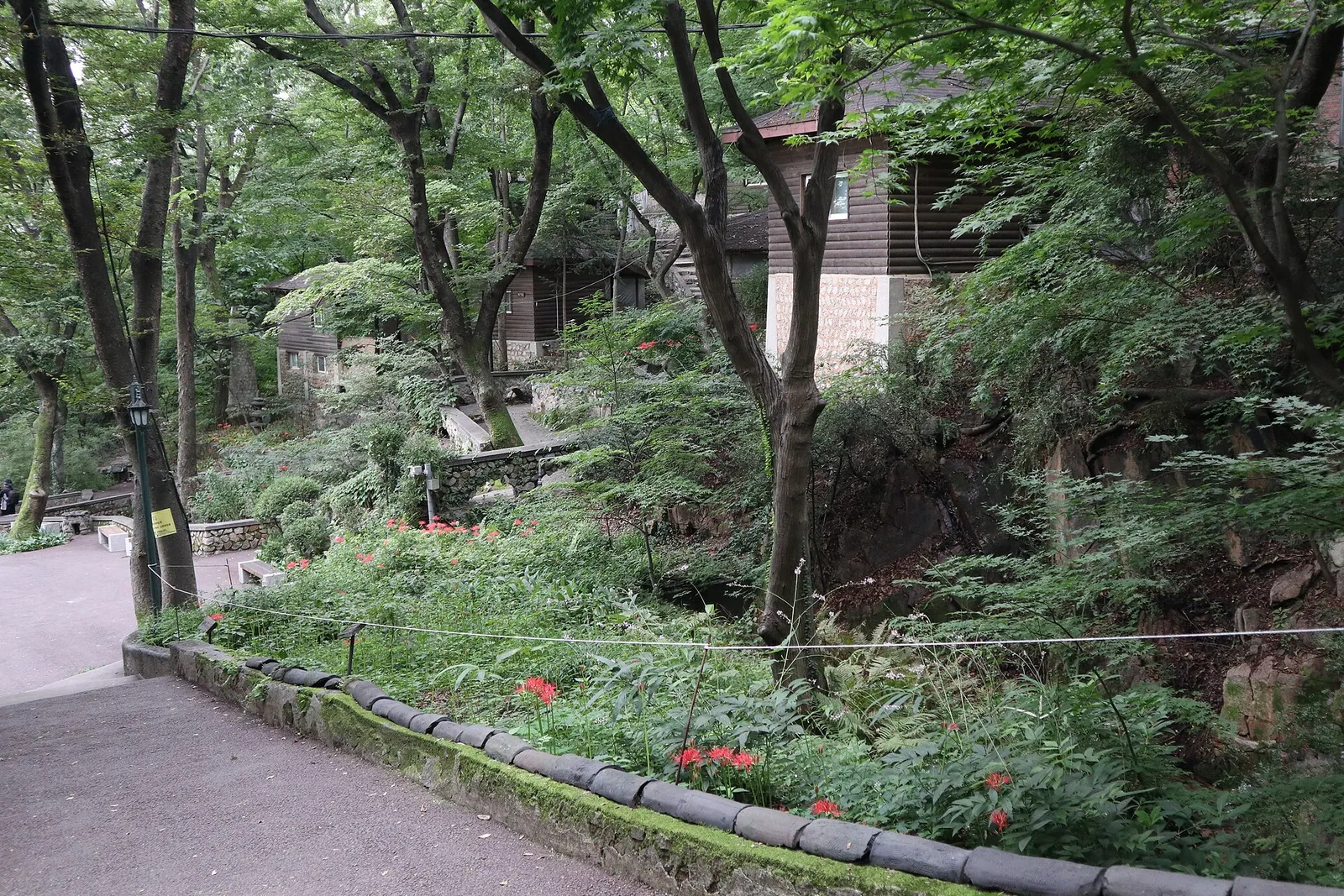
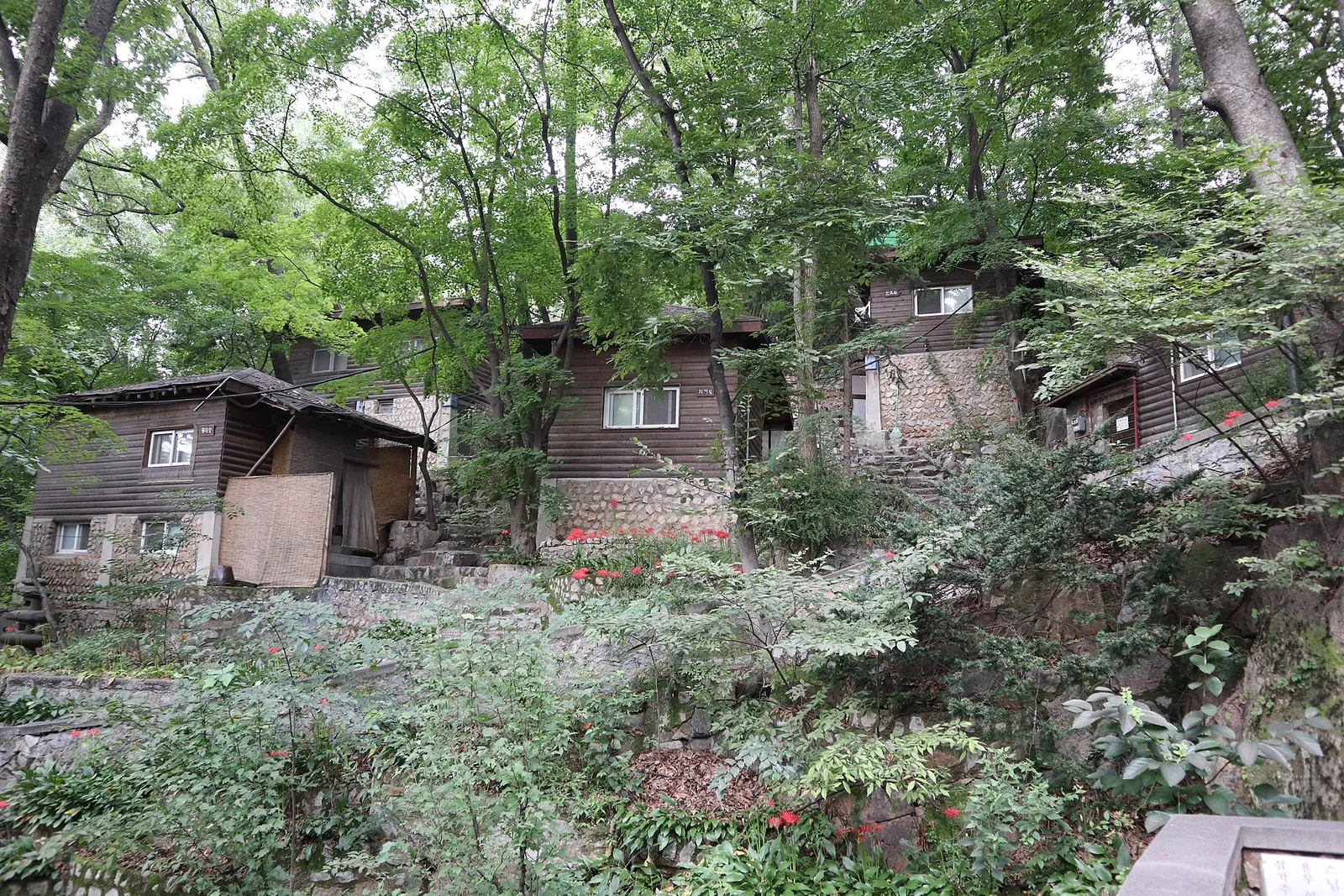
A high-end gisaeng house called Daewongak became a temple. The timber buildings stepping up the slope in the photograph above are the rooms from that period.
- Free
- Open all year
- Village bus Seongbuk 02 from exit 6 of Hansung University Station
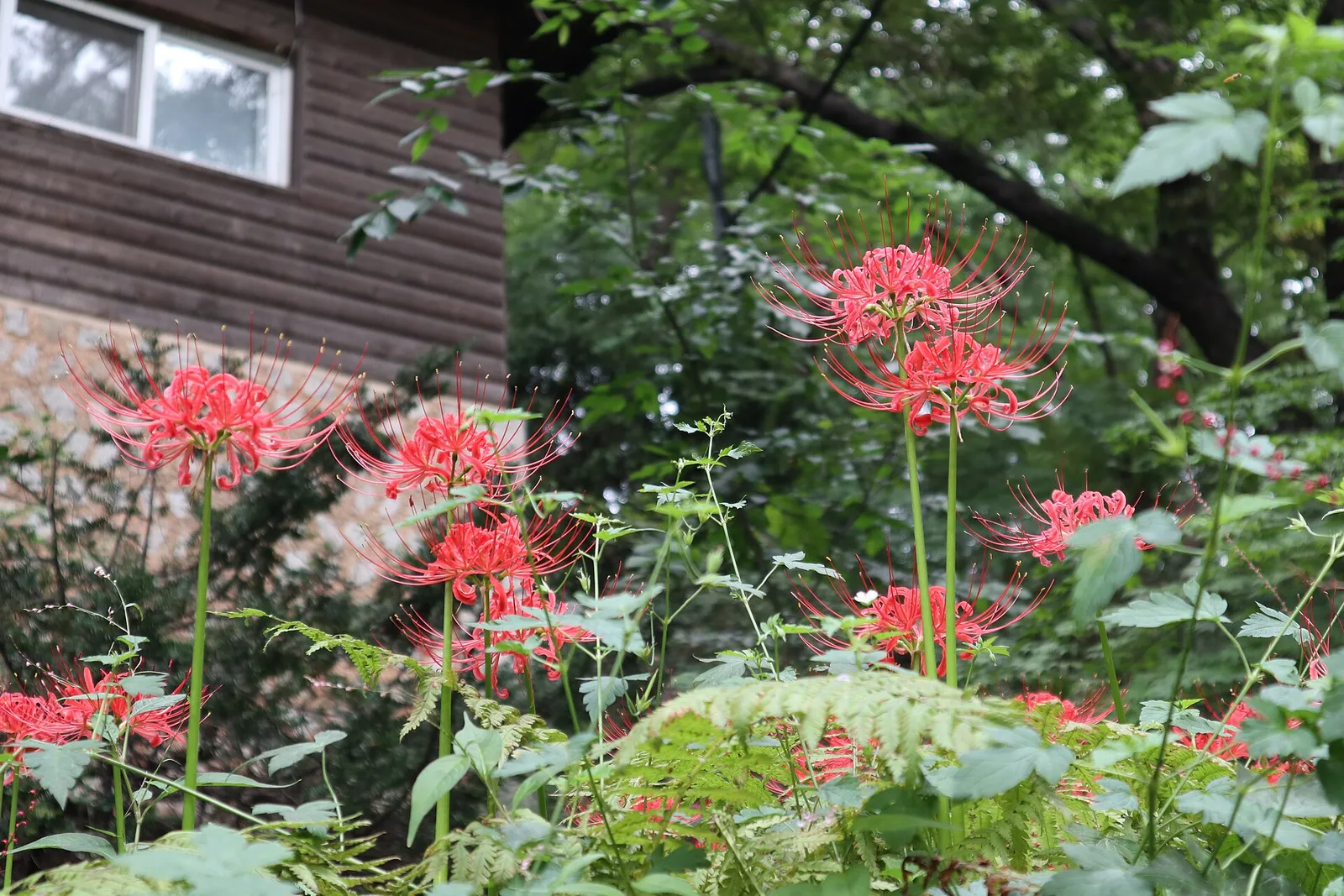
In autumn magic lilies flower in the grounds.
It is a registered temple stay temple. Seon meditation and the theory-and-meditation programme are 30,000 won each. There is, however, no English-only programme, and no standing temple food programme either. The refectory is for monks and practising Buddhists.
There is a teahouse in the grounds, Gilsang Dawon, which visitors may use. Its hours and prices are not published.
Simujang
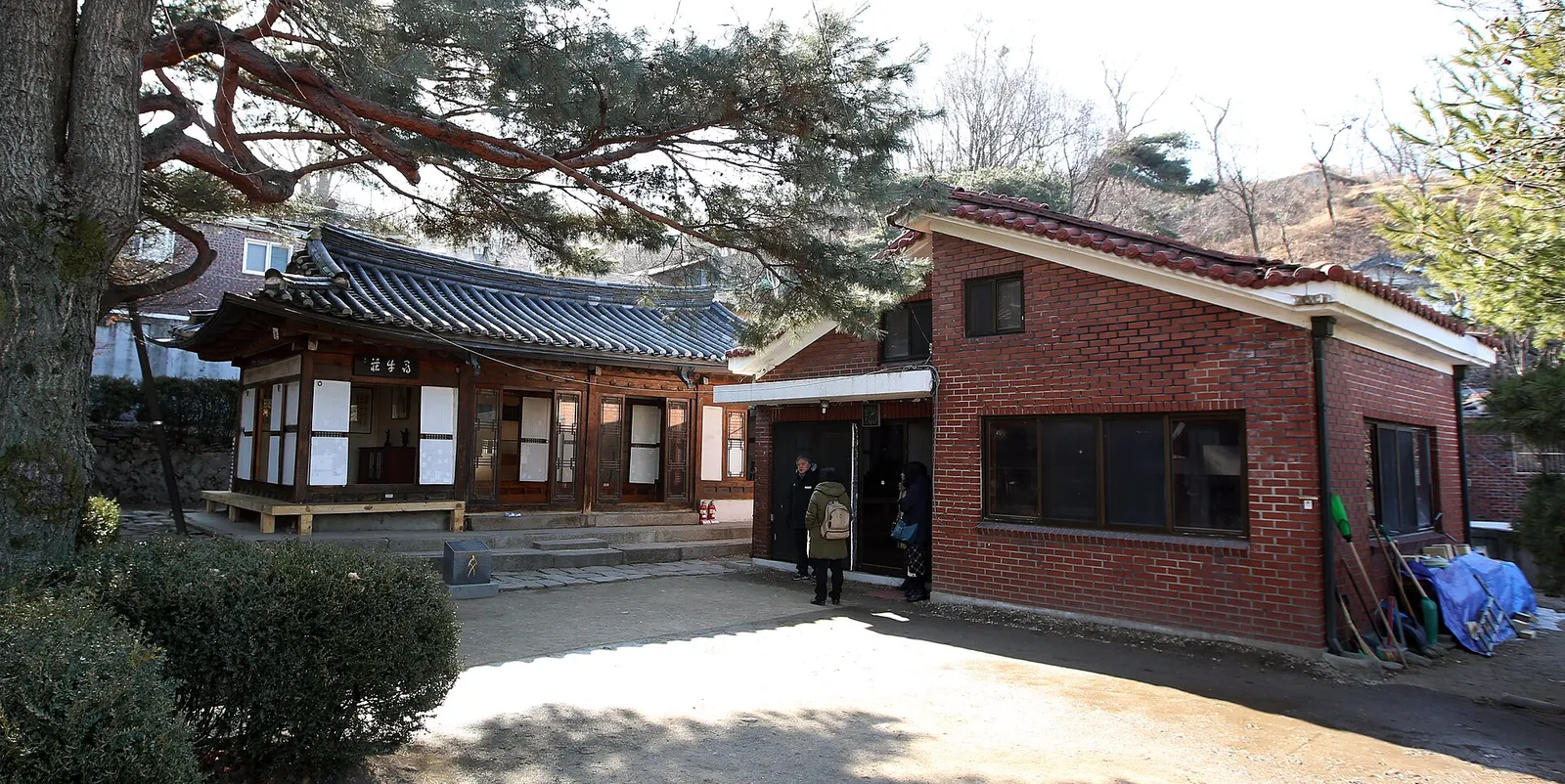
The house where Manhae Han Yong-un spent his last years.
On 8 April 2019 it was raised from a Seoul city monument to a national Historic Site. The old designation was lifted the same day. It is the same arrangement as Suseong-dong Valley in the Seochon post.
- Free
- Open all year
- Village bus Seongbuk 03 from exit 6 of Hansung University Station
A careful note on the north-facing story
The story that it was built facing north instead of south so as to turn its back on the Japanese Government-General building is widely repeated.
A Seoul city press release states it flatly, but the Korea Heritage Service’s current Historic Site designation text does not contain the passage. Other sources write it up as an anecdote, or as something said to be the case.
So this post records it only as a story that has been handed down. It may be true, but it is not wording the state has confirmed.
One more thing. Simujang is the only building that survives the Bukjeong Village redevelopment. The 371 buildings around it come down.
Choi Sun-u’s house - not open in winter
It is the first citizens’ cultural heritage property of the National Trust of Korea. The Seongbuk-gu official wording calls it the first of its kind in the country. It is also National Registered Cultural Heritage (registered 19 September 2006).
Here is the catch.
- Open 1 April to 30 November only
- Tuesday to Saturday only
- 10:00-17:00, last entry 16:30
- Closed for all of December to March
- Free
That is eight months a year, and only five days a week within them. Come to Seongbuk-dong in winter and you will not see it.
Some sources give the closing time as 16:00, and that figure is wrong. The National Trust Fund for Cultural Heritage, which runs the house, gives 17:00. This post follows the operator’s figure.
The Korea Furniture Museum - no booking, no entry
This is the place in Seongbuk-dong you pay to enter, and the place you will be turned away from without a booking.
- 20,000 won per person
- Booking in advance is compulsory, and visits are by guided tour only
- Primary school age and above only
- English guided tours run Mon-Sat at 14:00, 15:00, 16:00 and 17:00, four times a day
From the museum’s own information.
All visits to the Korea Furniture Museum are by advance booking and take place as guided tours only.
If you have not booked in advance, there is a very high likelihood that entry will be refused on the day, so please bear this in mind.
It collects late Joseon wooden furniture, and was put together from 1995 over roughly 15 years by relocating ten old houses to the site, among them a royal residence, a house of the scholar-official class and a storehouse building.
The closing day needs care. Sunday closing is settled, but Monday is recorded differently in different official sources. Check on the booking page.
To get there, take village bus Seongbuk 02 from exit 6 of Hansung University Station and get off at the Korea Furniture Museum entrance.
Other designated heritage
Designated heritage is densely packed in Seongbuk-dong.
| Name | Designation | Date |
|---|---|---|
| Simujang, the house of Manhae Han Yong-un | Historic Site | 2019-04-08 |
| The Seonjamdan altar site, Seoul | Historic Site | 1963-01-21 |
| The Choi Sun-u house in Seongbuk-dong, Seoul | National Registered Cultural Heritage | 2006-09-19 |
| The house of Sangheo Yi Tae-jun (Suyeon Sanbang) | Seoul Folklore Cultural Heritage | 1977-03-17 |
| Bohwagak, Seoul (the Kansong Art Museum main building) | National Registered Cultural Heritage | 2019-12-30 |
| The Seongbuk-dong villa garden, Seoul (formerly Seongnagwon) | Scenic Site | 2020-09-02 |
The Seongbuk-dong villa garden is not open to the public. It is owned by a corporation.
Note also that for state-designated heritage, numbering of the “No. X” kind has officially not been used since November 2021. That is why the table above gives designation dates rather than numbers.
Suyeon Sanbang
The house the novelist Yi Tae-jun lived in, and Seoul Folklore Cultural Heritage (designated 17 March 1977). Seongbuk-gu classes it as a traditional teahouse.
That said, no official page confirming that it is trading in 2026 could be found. Check before you go.
Seongbuk-dong was the first hanok concentration area outside the four great gates
From the Seoul Hanok Portal.
Aengdu Village in Seongbuk-dong and the Seonjamdan altar site are among the first hanok concentration areas to be designated outside the four great gates of Seoul.
If Bukchon and Seochon are inside the four gates, Seongbuk-dong is the first outside the wall. The name of the neighbourhood itself is Seongbuk - north of the city wall.
Mondays, and the closing days
The same pattern as Seochon. Indoor sites in Seongbuk-dong close on Mondays.
| Closed | |
|---|---|
| Seongbuk Museum of Royal Sericulture, Seongbuk Museum of Art, Seongbuk Museum of Modern and Contemporary Literature | Monday |
| Choi Sun-u’s house | Monday and Sunday (closed entirely December to March) |
| Simujang | Open all year |
| Gilsangsa Temple | Open all year |
| The Korea Furniture Museum | Sunday (check the booking page for Monday) |
| The Kansong Art Museum | Open only during exhibitions |
If you come on a Monday, Simujang and Gilsangsa Temple are the answer. Both are free and open all year.
The Hanyang City Wall
The Hanyang City Wall runs above Seongbuk-dong. Bukjeong Village is immediately outside it.
On 16 January 2026 Seoul submitted the World Heritage nomination for the Capital City Walls of Hanyang.
You do not need ID
One thing to correct. Plenty of posts still say that you need identification to walk the Baegak (Bugaksan) section, but that was abolished on 5 April 2019. Monday closing went the same day.
Even the official Hanyang City Wall site has pages where the old wording survives. That is why the misunderstanding spreads. Under the current rules you can go in without ID.
It is the same kind of error the Seochon post corrected, where the opening of Inwangsan was 2018 and not 2022.
To walk the wall towards Hyehwamun Gate, it is five minutes on foot from exit 5 of Hansung University Station.
What could not be verified
The Kansong Art Museum’s autumn 2026 exhibition schedule has not yet been announced. If you want to go, you will have to check directly.
Whether Suyeon Sanbang is currently trading could not be confirmed from official sources.
The hours and prices at Gilsang Dawon are not published either.
The north-facing story about Simujang does not appear in the Korea Heritage Service designation text. It is recorded here only as a story handed down.
Whether the Korea Furniture Museum closes on Mondays differs across four official sources. Only Sunday closing is settled.
Wrapping up
- The Kansong Art Museum opens only during exhibitions and is closed at present. Booking is required.
- Gilsangsa Temple is a high-end gisaeng house that became a temple, and that is an official record written into the Seoul Future Heritage documents.
- Simujang was raised to a national Historic Site in 2019, and it is the only thing left standing in Bukjeong Village.
- Choi Sun-u’s house opens April to November, Tuesday to Saturday, 10:00-17:00 only. You cannot see it in winter.
- The Korea Furniture Museum is 20,000 won and booking is compulsory. There are four English guided tours a day.
- ID for the Baegak section of the Hanyang City Wall was abolished in 2019.
- On Mondays, Simujang and Gilsangsa Temple are the answer. Both free, both open all year.
- Seongbuk-dong was the first hanok concentration area outside the four great gates.
More in this series: the Seongbuk-dong overview, Seongbuk-dong food and where to stay in Seongbuk-dong