 Now, Yeogi
The Seongbuk-dong Guide: The Neighbourhood Seoul Decided to Keep, Then Reversed (2026)
A first-visit guide to Seongbuk-dong. Bukjeong Village, where 279 of 371 houses were to be kept in 2019 until a February 2026 notice ordered the lot demolished, the 40 ambassadorial residences on the opposite slope of the same neighbourhood, and which village bus to take from Hansung University Station.
Places in this post
- Address
- Around 226-103 Seongbuk-dong, Seongbuk-gu, Seoul
- Menu
- Official status Seoul Future Heritage 2015-016
- Tip
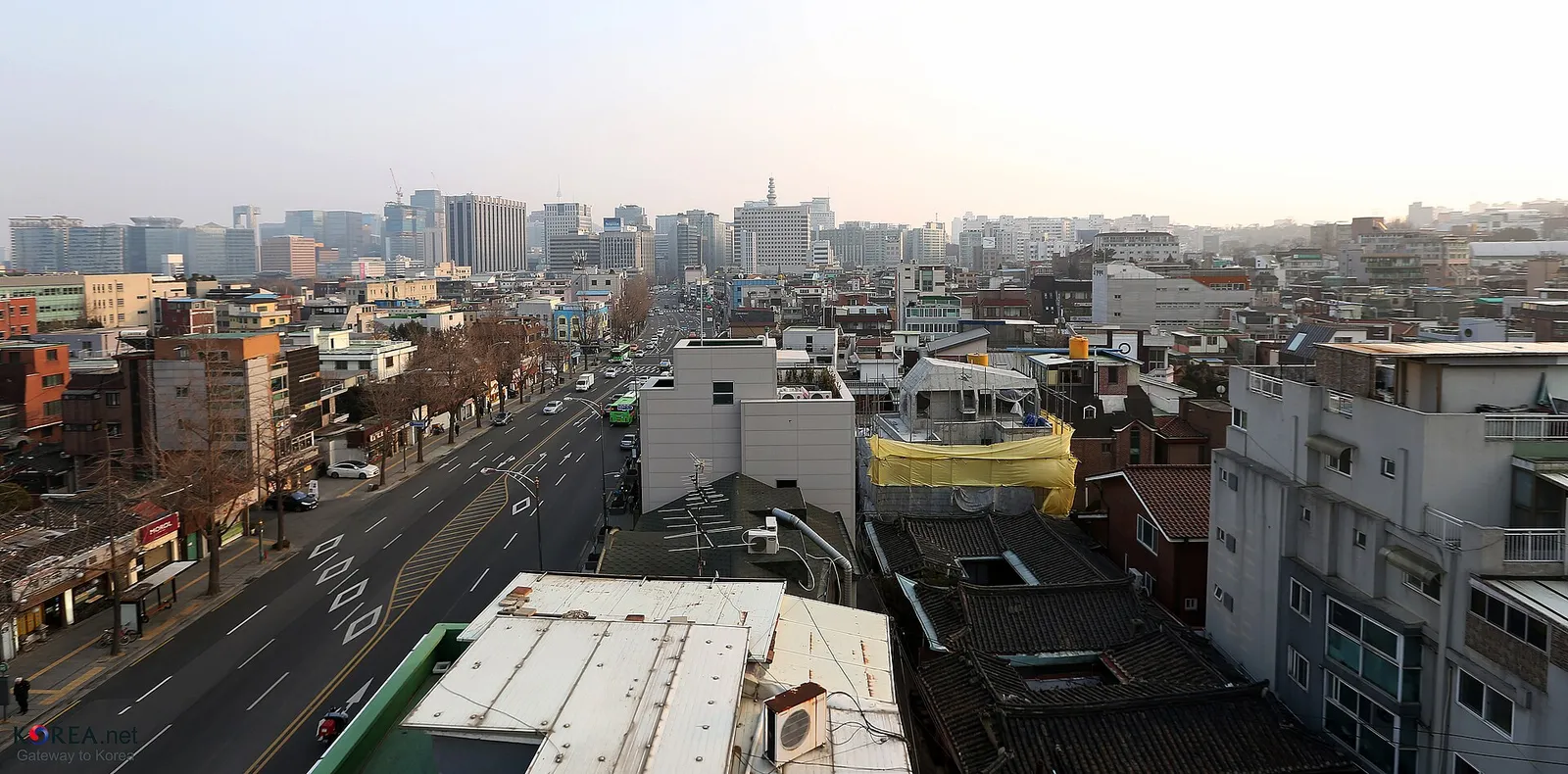
- A residential area on the slope outside the Hanyang City Wall. 371 buildings house 509 households, and demolition has been formally notified. It is not a tourist attraction.
- Address
- 68 Seonjam-ro 5-gil, Seongbuk-gu, Seoul
- Menu
- Admission Free
- Tip
- Take village bus Seongbuk 02 from exit 6 of Hansung University Station.
Of all the Seoul neighbourhoods this blog has covered, Seongbuk-dong is the only one where a decision to keep it was reversed.
In 2019 the city of Seoul decided to keep 279 of the 371 houses in Bukjeong Village. Then a notice dated 26 February 2026 scrapped that decision. The 279 buildings to be retained became zero.
Two notices
The most accurate way to explain Seongbuk-dong is to set two notices issued for the same neighbourhood side by side.
Seoul Metropolitan Government Notice 2022-366 (25 August 2022) - the permitted height of boundary walls rises from 1.5m to 2.0m. The stated reason is to reflect the situation in Seongbuk-dong, where a large number of ambassadorial residences are located.
Seoul Metropolitan Government Notice 2026-96 (26 February 2026) - all 371 buildings outside the wall are to be demolished and 474 units of no more than four storeys built in their place.
The same authority made both decisions, about two slopes of the same neighbourhood. On one side it raises the walls; on the other it pulls the houses down.
Seongbuk-gu has 40 ambassadorial residences, and one of its roads is actually called Daesagwan-ro, Embassy Road.
What I had wrong
Two of my assumptions broke while I was preparing this post. I will set them out as they are.
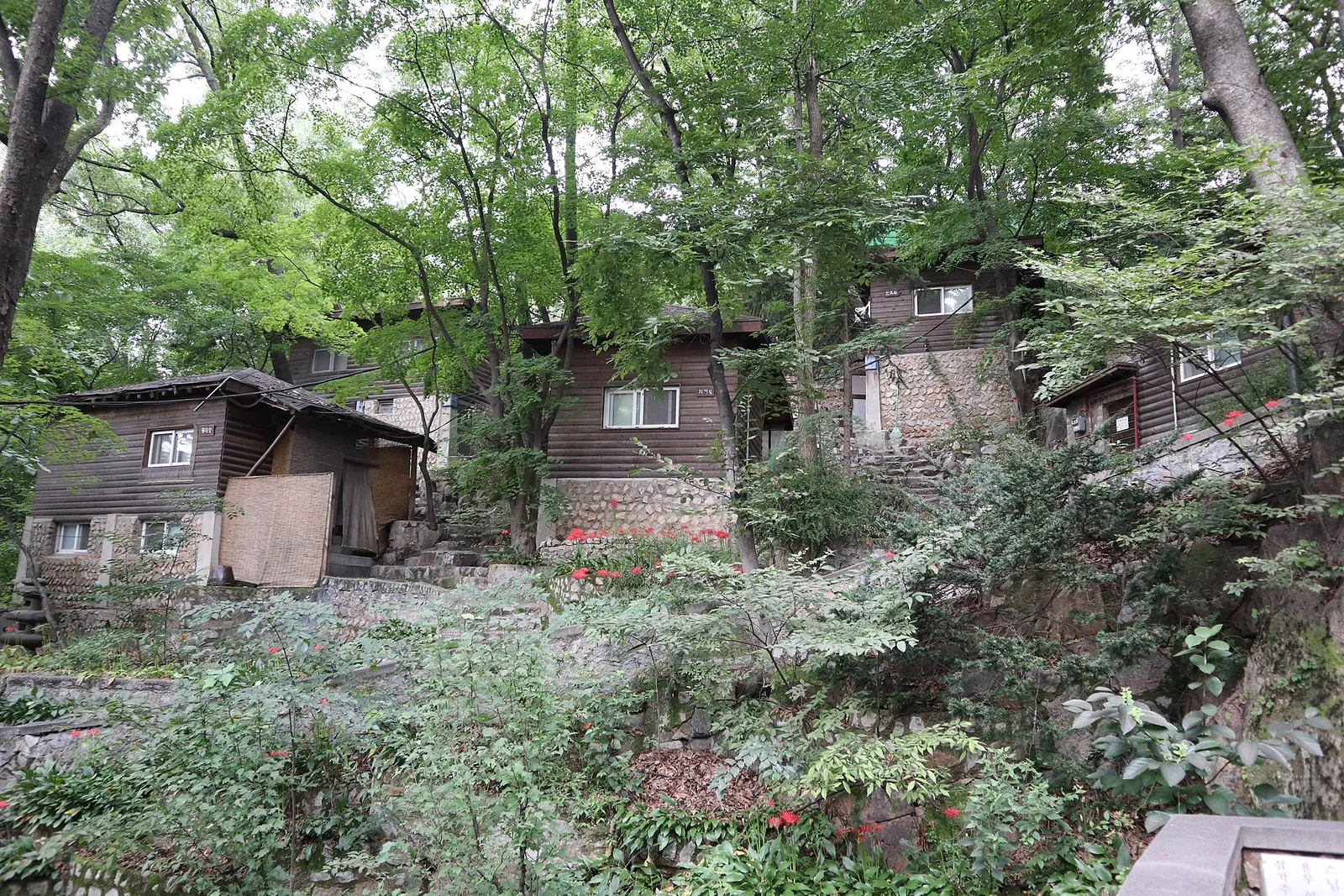
One: Bukjeong Village is not a shanty town. A Seoul city document puts it like this.
Around 500 tiled-roof houses built in the 1960s and 1970s
371 buildings, 509 households, and tiled-roof houses. The village that did begin as a shanty town is Jangsu Village, and that is in Samseon-dong, not Seongbuk-dong.
Two: it was the residents who wanted redevelopment. This is from the Seoul city press release itself.
an area where housing redevelopment has been pursued since 2009 as the long-standing wish of the great majority of residents
So this was not a case of residents wanting preservation while the city pushed development through. It was the residents who wanted redevelopment, and the city of Seoul that inserted the preservation mechanism.
Timeline
| When | What happened |
|---|---|
| 2009 | Residents begin pushing for redevelopment |
| 18 August 2011 | Designated an improvement zone |
| June 2015 | Switched to the rehabilitation model |
| 14 March 2019 | Decision to retain 279 of the 371 buildings |
| 5 September 2024 | Project implementation approved |
| 26 February 2026 | Individual improvement district abolished, changed to demolition of all 371 buildings |
The 2019 approach was an unusual one. It was a combined improvement project that transferred 80% of floor area ratio to the Sinwolgok 1 zone 3km away and used the profit from that development to improve Seongbuk 2 at low rise. Here is the city’s own account.
In order to save Bukjeong Village, one of the city wall villages, Seoul is trying something new, away from the wholesale-demolition style of redevelopment that erases the history and culture of an area.
That attempt was folded seven years later. The only building that will remain is Simujang, and in its place go 474 units, a history park of 5,571.1 square metres and a buffer green belt of 5,487.7 square metres. No public rental housing will be built.
It is Seoul Future Heritage, and it is being demolished
Bukjeong Village is Seoul Future Heritage 2015-016, and it was still on the current listing as of 1 January 2026. A month later its demolition was formally notified.
It looks like a contradiction, but it is the nature of the scheme. The city of Seoul says so directly.
The Seoul Future Heritage conservation programme is not a matter of putting regulatory mechanisms in place for the uniform preservation of cultural heritage.
The Ikseon-dong and Seochon posts made the same point, but this is where the limits of it show most clearly.
The UNESCO submission and the demolition notice
The timing stands out.
- 16 January 2026 - Seoul submits the World Heritage nomination for the Capital City Walls of Hanyang
- 26 February 2026 - the demolition of Bukjeong Village is notified
And the reason given in that notice for creating the buffer green belt is the protection of the Hanyang City Wall heritage. The two decisions are not a contradiction; they are a single policy.
The wealthy quarter and the slope came out of the same development
This was the most unexpected part of the research.
The Seoul Future Heritage citations put it like this.
- Yi Tae-jun’s story Moonlit Night - Seongbuk-dong, outside Dongsomun Gate, was brought into Gyeongseong late, to relieve the housing shortage
- Kim Kwang-sup’s poem The Doves of Seongbuk-dong - set against the residential land development of the Seongbuk-dong area in the 1960s
And the 500-odd tiled-roof houses of Bukjeong Village were also built in the 1960s and 1970s.
The upmarket housing of Seongbuk-dong and Bukjeong Village are two outcomes of the same development, at the same time. They did not arise separately.
Set beside the other four neighbourhoods
| Neighbourhood | The prescription |
|---|---|
| Euljiro | Demolition decided |
| Ikseon-dong | Lifted in 2018, with conservation measures |
| Seochon | Height limits from 1977, conservation from 2016 |
| Seongsu-dong | A 2015 ordinance restraining rents |
| Seongbuk-dong | Preservation in 2019, reversed to demolition in 2026 |
Seongbuk-dong is the only case where the decision was overturned.
Getting there
Line 4 Hansung University Station. It helps to know the exits and the buses in advance.
| Where you are going | How to get there |
|---|---|
| Restaurants | Exit 5 |
| Gilsangsa Temple | Exit 6, then village bus Seongbuk 02 |
| Bukjeong Village and Simujang | Exit 6, then village bus Seongbuk 03 |
Both leave from the stop named Hansung University Station Exit 6, Samseongyo. A village bus is 1,200 won.
Seongbuk-dong is steep. It may look close on the map, but walking up is hard work. The village bus is the answer.
Food at the bottom of the hill, sights at the top - remember that and the route plans itself.
About Bukjeong Village
It is not a tourist attraction. It is a residential area where 509 households live, and it is now facing demolition.
Seongbuk-dong has no official request for quiet of the kind Ikseon-dong posts as its four promises. Nearby Jangsu Village has one; Bukjeong Village does not. The absence of a rule does not mean it is fine to peer in.
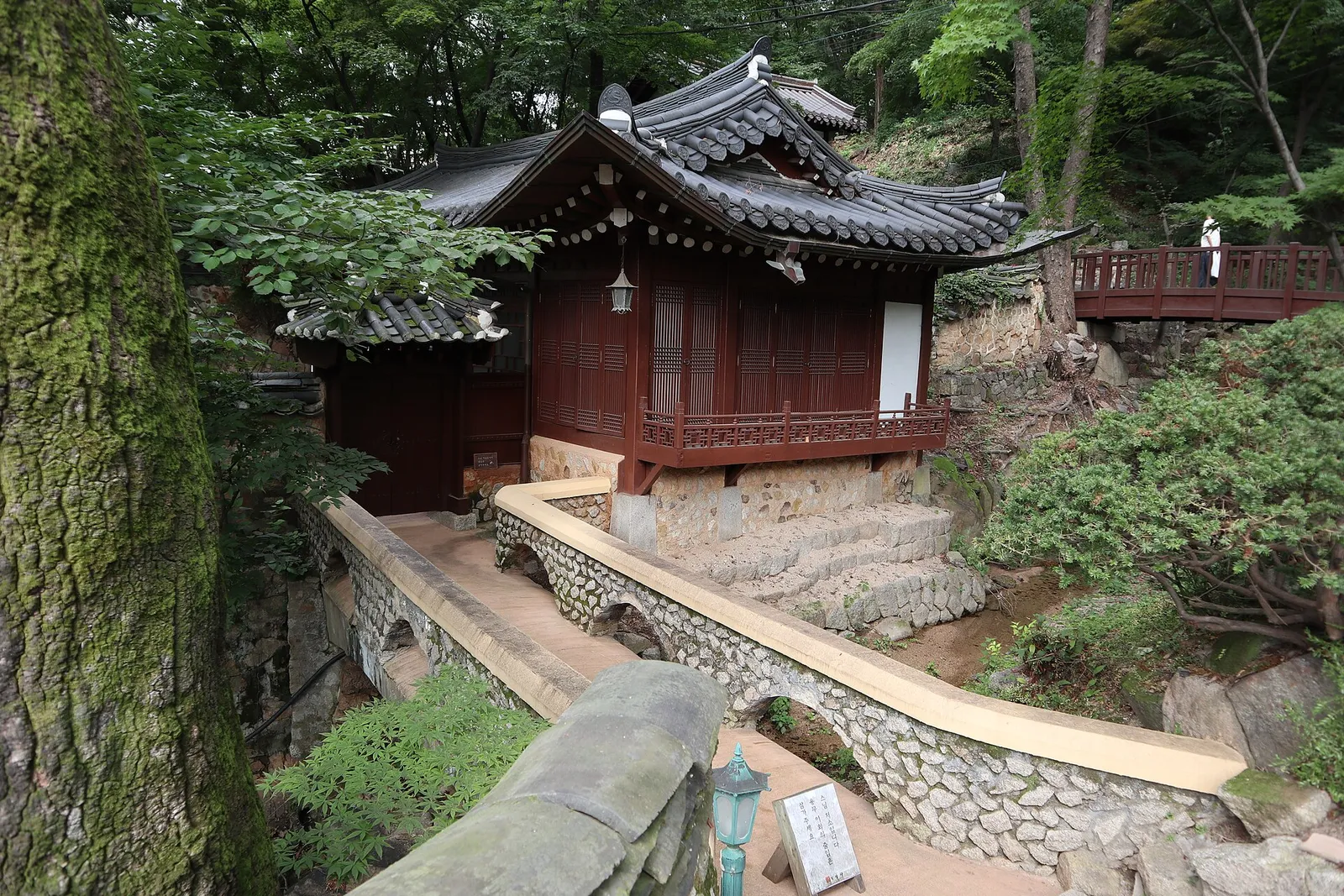
If you are going to Simujang you will pass through the village. Better to know that in advance and go through quietly.
Who this suits
It suits you if:
- You are interested in what a city keeps and what it erases
- You want to walk the Hanyang City Wall
- You want to see a temple and old houses quietly
- You want to see something you will not be able to see later
It does not suit you if:
- Hills are hard for you - in which case take the village bus
- You are expecting shopping or a cafe strip, in which case Ikseon-dong or Seongsu-dong is the better fit
- Monday closing applies to a good many of the sights
Wrapping up
- 279 buildings were to be kept in 2019, and the notice of 26 February 2026 changed that to demolishing all of them.
- The only thing left standing will be Simujang.
- Bukjeong Village is Seoul Future Heritage and is being demolished. Future Heritage is not a regulatory mechanism.
- The residents had wanted redevelopment since 2009. It was the city that added the preservation.
- The 40 ambassadorial residences and Bukjeong Village are in the same neighbourhood, two outcomes of the same period of development.
- Exit 5 at Hansung University Station for food, exit 6 for the buses. Seongbuk 02 for Gilsangsa Temple, Seongbuk 03 for Bukjeong Village.
In one line: Seongbuk-dong is the neighbourhood where Seoul decided what to keep, and then decided again.
More in this series: things to do in Seongbuk-dong, Seongbuk-dong food, where to stay in Seongbuk-dong and the Ikseon-dong overview