 Now, Yeogi
Ikseon-dong: The Hanok Alleys Redevelopment Did Not Get (2026)
A first-visit overview of Ikseon-dong, set out from official records: the urban hanok built for Korean residents in the 1930s, how the redevelopment zone was lifted in 2018 with three preservation measures attached the same day, why the alleys are narrow because the law says so, and the fact that people still live here.
Places in this post
- Address
- Ikseon-dong, Jongno-gu, Seoul
- Hours
- The alleys are open at all times; each shop keeps its own hours
- Menu
- Admission Free
- Tip
- 141m from exit 4 of Jongno 3-ga Station. It is designated as the Ikseon hanok concentration area (31,121.5 square metres) and a hanok preservation zone (7,565.9 square metres).
Ikseon-dong is the neighbourhood in Seoul where redevelopment fell through.
Euljiro, right next door, is a place where the city has announced it will “demolish the old and dangerous arcade blocks”, and demolition is actually under way. Ikseon-dong is the exact opposite. In 2018 its redevelopment designation was lifted, and on the same day three preservation measures were attached.
This post sets out that process, and what the place is like now, from official records.
Who built it
The 1930s, under Japanese colonial rule.
This is how the city’s official material describes it.
Jeong Se-gwon was deeply concerned that the Japanese, then settling into Seoul in earnest, would expand their residential areas in Namchon and Chungmuro and push on into Jongno and Bukchon. As a countermeasure, he threw himself into building hanok for Korean residents.
In the late 1920s Jeong Se-gwon bought up the land around Nudonggung palace in Ikseon-dong, which had been all but abandoned, and in 1935 dozens of hanok went up there.
Jeong Se-gwon founded a property development firm, the Geonyangsa company, around 1920. The city describes him as “the first modern developer” in Korea.
He spent what he earned from hanok development supporting the Singanhoe and the Korean Language Society, and in 1990 he was posthumously awarded the Order of Merit for National Foundation.
A note of caution here
This is a romantic story and an easy one to inflate. Here is what is official and what is not.
- Official city account - the founding of the Geonyangsa company, the intent to block Japanese expansion into Bukchon and Jongno, the purchase of Ikseon-dong and the 1935 development, the support for the independence movement, the state decoration
- A researcher’s estimate - the figure of “around 170 houses in the single year 1929” is cited from a book by Professor Kim Kyung-min. It is not a city survey figure
- Not confirmed - there is no official figure for exactly how many hanok in Ikseon-dong Jeong Se-gwon built
The number of hanok left in Ikseon-dong today is 118, by the Seoul Hanok Portal’s count. That is “how many remain”, not “how many he built”.
What an urban hanok is
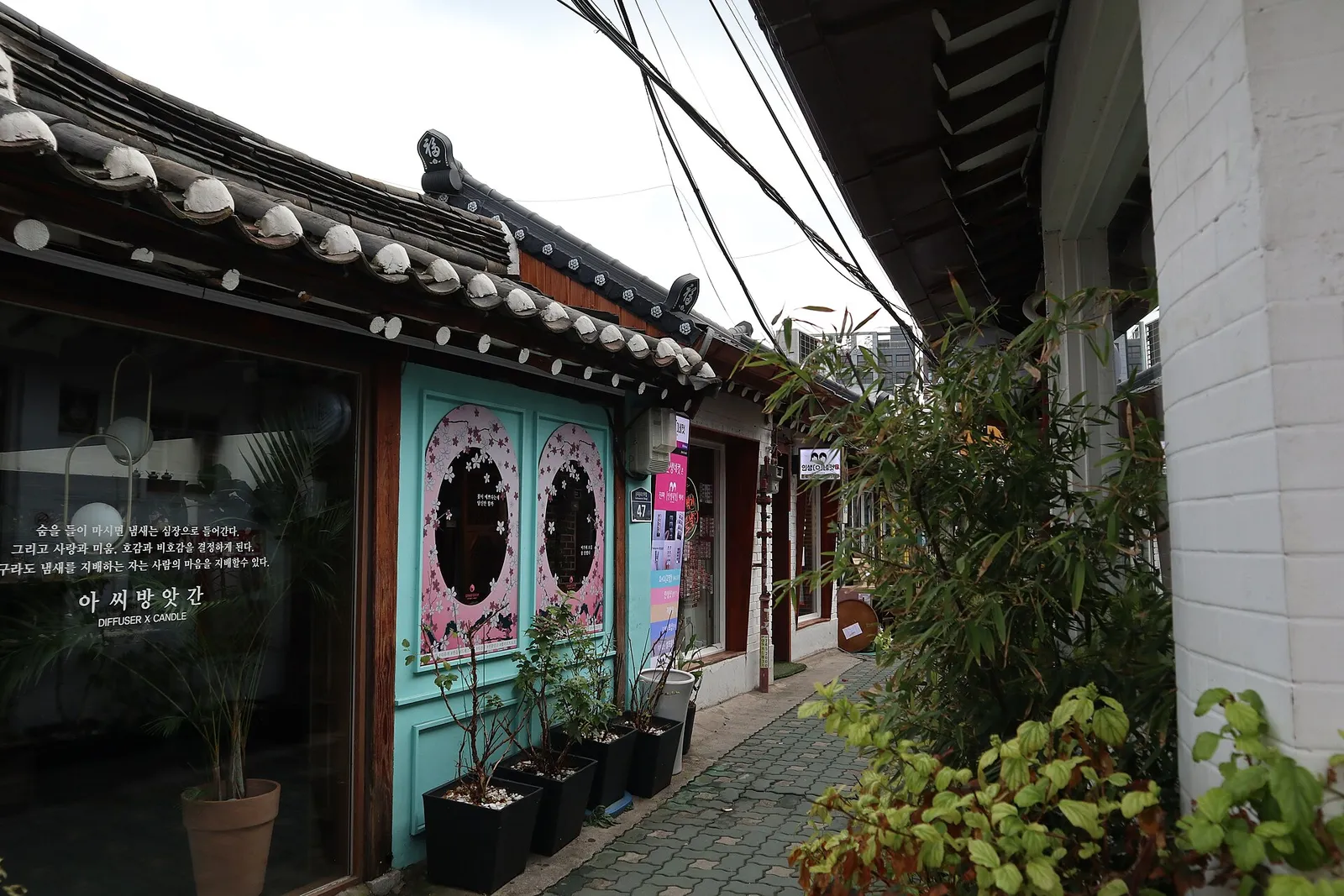
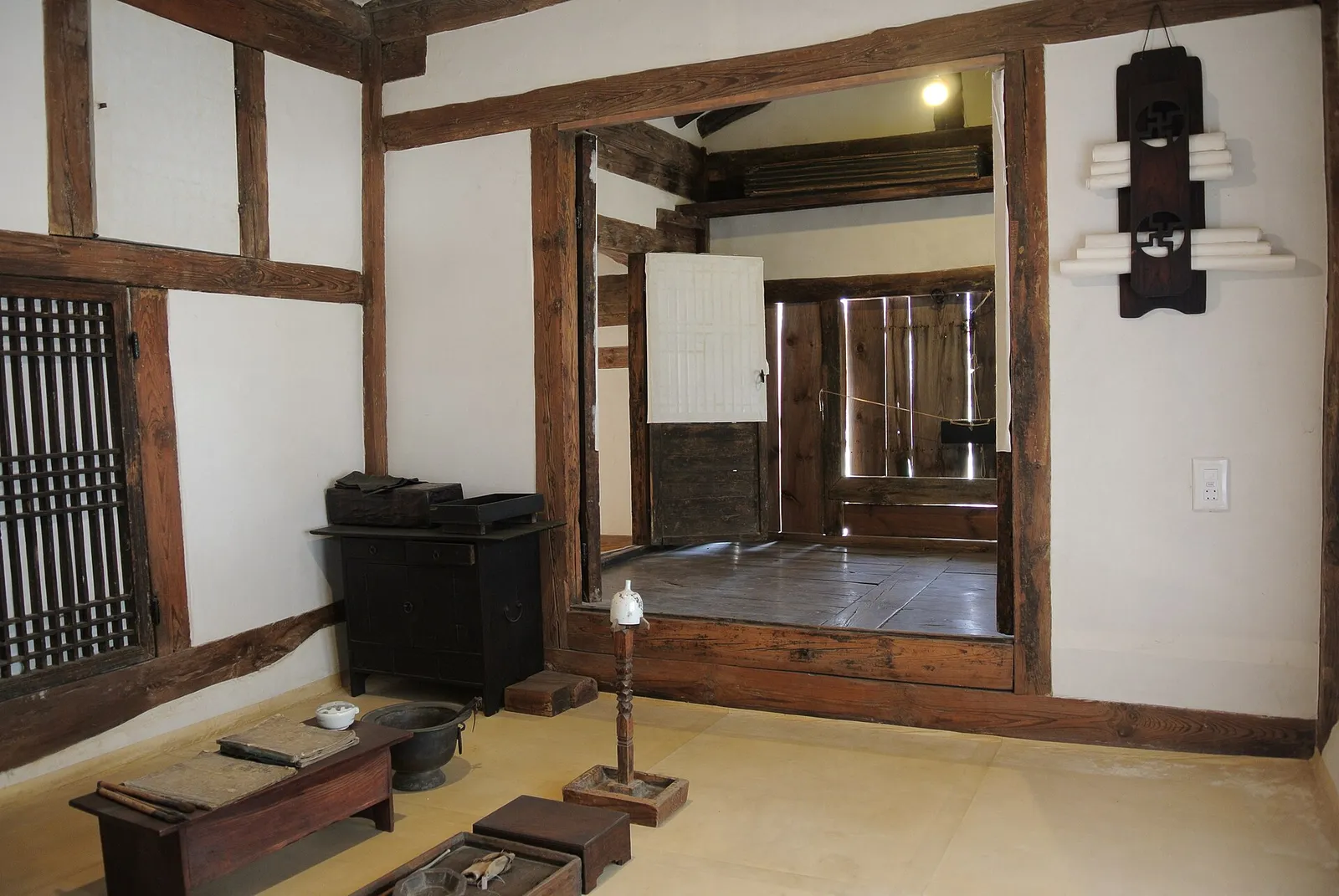
It is not a traditional hanok. It is collective housing: several units built tight together on a small plot. The courtyards are small and the alleys are narrow.
So Ikseon-dong was a mass-produced housing estate for ordinary people from the start, not a district of aristocratic houses.
Why the redevelopment fell through
This is the heart of the post, and a timeline makes it clear.
| Date | What happened |
|---|---|
| 29 April 2004 | The Ikseon urban redevelopment zone is designated |
| 3 January 2014 | Approval of the redevelopment association’s preparatory committee is cancelled |
| 1 October 2014 | The city planning committee defers the proposal to lift the zone |
| 18 April 2018 | The city planning committee approves the proposal as drafted |
| 10 May 2018 | Lifting, district unit plan and hanok concentration area designation, all gazetted at once |
The decisive moment is not 2018 but 1 October 2014. The city planning committee did not simply release the zone. It demanded this.
Before the redevelopment zone is lifted, management measures such as designation of a hanok concentration area and of a district unit plan area are to be prepared and the proposal resubmitted
It means “you may lift it, but lay the preservation measures first”. Only when those measures were complete, on 10 May 2018, was the zone lifted, and three things were gazetted the same day.
- The urban redevelopment zone was lifted
- The Ikseon district unit plan was decided
- The Ikseon hanok concentration area (31,121.5 square metres) and hanok preservation zone (7,565.9 square metres) were designated
An honest note
You will often read that “the residents fought off the redevelopment”, but no official document supporting that could be found.
The official record says two things. Approval of the redevelopment association’s preparatory committee was cancelled in 2014, and the city planning committee attached preservation conditions. The project ran aground first, and the administration attached conditions to that.
The alleys are narrow because of regulation
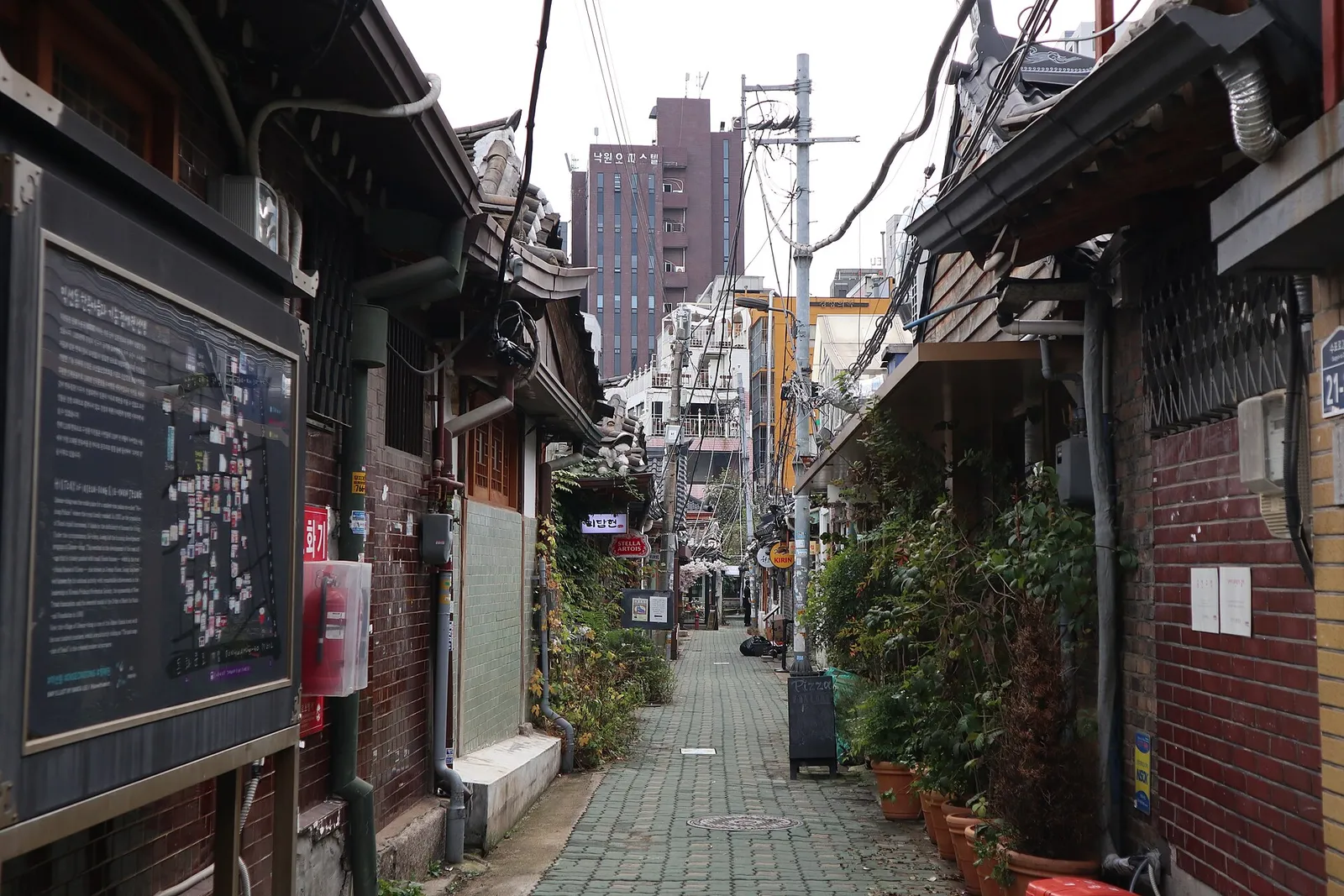
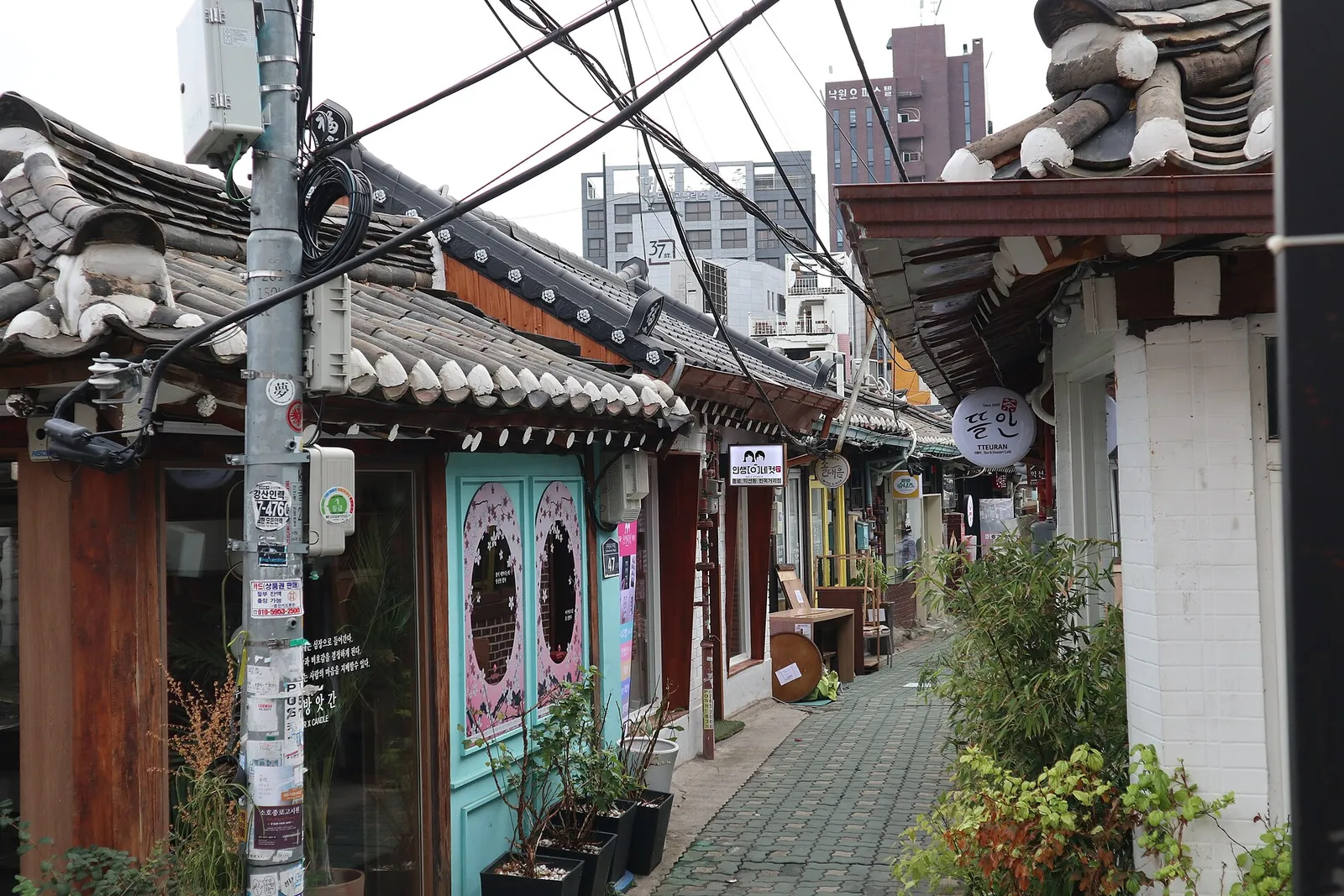
Once you know that the narrowness of these alleys is not atmosphere but a result fixed in law, the neighbourhood looks different.
Here is the district unit plan notice itself.
Merging plots not permitted - applies to: the whole zone
Maximum development scale 330 square metres or less
Land cannot be combined and the development unit is capped at 330 square metres. Putting up a large building is structurally impossible.
Heights are set too. In the hanok preservation zone, hanok may be one storey or lower and non-hanok two storeys (8m) or lower. In practice, single storey.
Building a hanok comes with rewards
The design is clever. Rather than forbidding demolition, it makes demolition a losing move.
Build as a hanok and you get a 20% relaxation of the building coverage ratio, a 100% exemption from the parking requirement, and a relaxation of permitted uses. Tear a hanok down and put up an ordinary building and all of that disappears, leaving only the limits on height and scale.
The cafes are not a loophole
This is widely misunderstood too. The district unit plan’s list of “recommended uses” reads as follows.
Refreshment stands and bakeries → traditional teahouses, Korean set-menu restaurants, traditional bars Detached houses → the hanok-stay business, urban homestay
Cafes and bakeries are uses the city recommended. Ikseon-dong turning into cafes was not an exploited gap in the rules but the planned direction.
The most recent change is a Jongno-gu notice of 13 November 2025, correcting the list of prohibited building uses.
Getting there
Line 1 Line 3 Line 5 Jongno 3-ga Station. Three lines interchange here.
- The Ikseon-dong hanok street - 141m from exit 4
- Nakwon Arcade - 114m from exit 5
- Jongmyo Shrine - 220m from exit 8
From the airport, take AREX to Seoul Station and change to Line 1.
A day here
Jongno-gu has an official alley walking course: “Ikseon-dong / the road that links the generations / 2 hours”.
Ikseon-dong Hanok Village · Urisori Library · the Jewellery Support Centre · Donhwamun Gugakdang traditional music hall · the senior-friendly street · Seosulla-gil
The point of the walk, as the district office puts it, is an interesting one.
a road of exchange linking the generations, between the young people of Ikseon-dong and the older people of the Jongno 3-ga area
Ikseon-dong is small. Thirty minutes is enough to walk every alley. So it makes sense to pair it with the wider Jongno 3-ga area and give the two half a day. Changdeokgung Palace and Jongmyo Shrine are within walking distance.
People live here
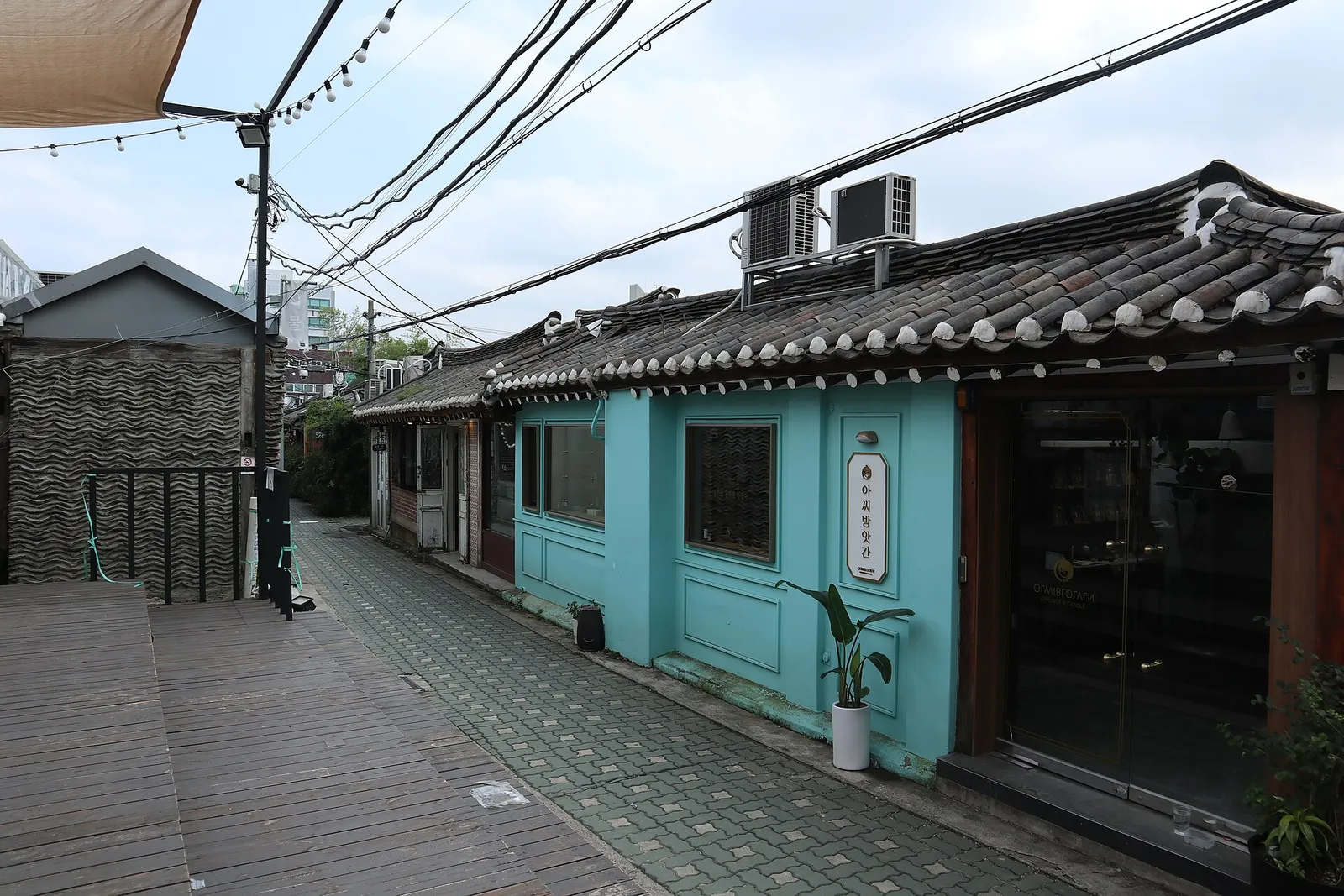
Jongno-gu puts this notice on its Ikseon-dong page.
Parts of the alley walking course are places where residents actually live.
Promise 1. Do not startle or disturb residents by shouting or taking photographs carelessly. Promise 2. If you make rubbish, you must take it with you. Promise 3. Mind even small noises, and never use a loudspeaker or a microphone. Promise 4. Do not peer into residents’ hanok or homes, or photograph them without permission.
The alleys are so narrow that you cannot tell a cafe door from somebody’s front gate. That is what the fourth promise is for.
Do not confuse this with Bukchon. The visiting-hour restrictions and the fines belong to the Bukchon red zone; there is no such regulation in Ikseon-dong. There is guidance, though.
Who this suits
It suits you if:
- You like narrow alleys and low rooflines
- You are interested in how a city survives and how it disappears
- You want to add half a day to a Jongno itinerary
It does not suit you if:
- You are expecting large, grand hanok houses. This was a housing estate for ordinary people
- You want quiet. Avoid the evening
- You are coming for Ikseon-dong alone. That is thirty minutes
Wrapping up
- It is an estate of urban hanok built in the 1930s for Korean residents.
- Cancellation of the association’s preparatory committee in 2014 left the project aground, and the city planning committee attached preservation conditions.
- On 10 May 2018 the lifting, the district unit plan and the hanok concentration area were gazetted on the same day.
- Merging plots is not permitted, and the maximum development scale is 330 square metres. The narrow alleys are the result of regulation.
- Build as a hanok and you get building-coverage relief and a parking exemption.
- The cafes are a recommended use under the district unit plan.
- 141m from exit 4 of Jongno 3-ga Station, and people live here.
In one line: Ikseon-dong was not left behind. It was decided upon.
More in this series: things to do in Ikseon-dong, Ikseon-dong food, where to stay in Ikseon-dong and things to do in Euljiro