 Now, Yeogi
Jongno 3-ga Pocha Street: The Tent-Bar Alley That Got Licensed (2026)
What the Jongno 3-ga street-tent bar alley is now: the co-prosperity street designation Jongno District made in 2024, the 250-metre strip and how many businesses are on it, why the tents go up at 5pm, and the Halloween and year-end closures that catch visitors out.
Places in this post
- Address
- Donhwamun-ro 11-gil, Jongno-gu, Seoul · about 250m from Nakwon Arcade to Myodong intersection
- Hours
- Stalls are set up from around 5pm (no opening hours are officially published)
- Menu
- Confirmed on the official page Chicken feet, rolled omelette, udon, seafood pancake
- Tip
- Jongno District advises stalls to suspend operation over Halloween and the year-end period.
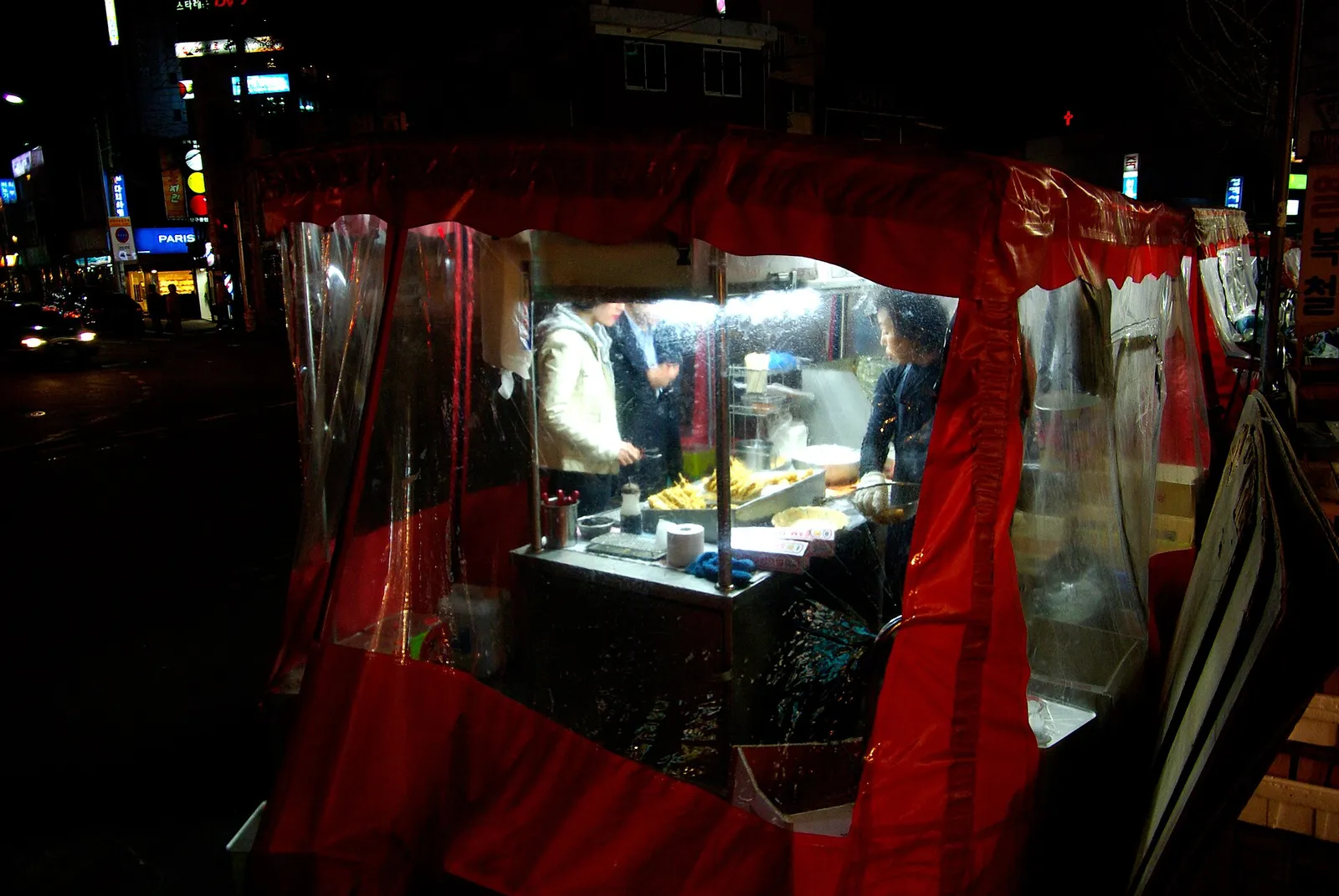
Seoul has a handful of alleys where people drink under canvas after dark, and the busiest of them right now is at Jongno 3-ga. The tented bars are called pocha, short for pojangmacha, the canopy stalls that serve food and alcohol on the street; drinking outdoors at one, at a table on the pavement, is what Koreans call yajang.
This street has changed a lot in two years. Here is what changed, and what the official record says it is now.
It is no longer an unlicensed night market
In November 2024 Jongno District designated Donhwamun-ro 11-gil a Sangsaeng Street, sangsaeng meaning co-prosperity. In October 2025 the designation was extended to take in the Ikseon-dong Galmaegi alley next door, and the two are now run as one street, under an agreement signed by around 70 businesses.
The district office is blunt about what came before. In its own words: “stalls and shops occupied the road without permission, pedestrian safety was threatened, and complaints never stopped.” Word spread from 2023 that this was the yajang spot in Seoul, crowds followed, and the crush became dangerous.
The district chose regularisation rather than clearance. It amended its ordinance to set criteria for road-occupancy permits and outdoor-business registration. As of July 2025 it reported 24 street stalls and 31 shops trading with both in hand.
The street was rebuilt to match. The pavement was widened to about 1.5 times its former width and the roadway narrowed to pay for it, two-way traffic became one-way, the electricity and water distribution boxes were replaced, and the public toilets refurbished.
Seoul rated Jongno the best district in the city in its 2025 evaluation of how districts manage street stalls. It had been rated excellent the year before.
Where the street actually is
- The strip runs about 250 metres, from Nakwon Arcade to the Myodong intersection. The road name is Donhwamun-ro 11-gil.
- Seoul Tourism Organization gives the address as 132 Jong-ro, Jongno-gu.
- The nearest station is Jongno 3-ga Station.
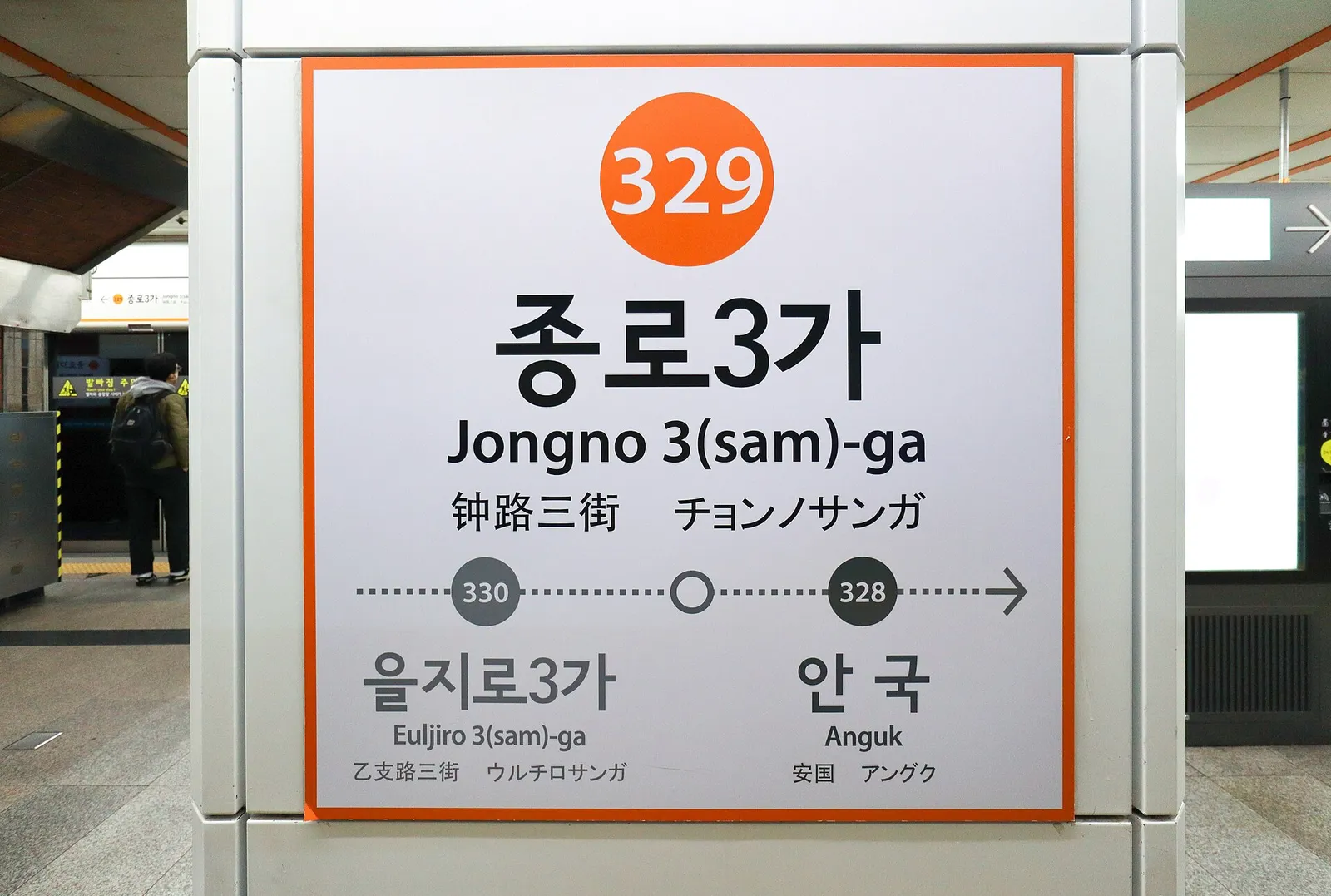
One thing to flag, because it is genuinely confusing. Seoul Tourism Organization’s own article on this pocha street calls Jongno 3-ga a Line 1 and Line 5 station. Every other page on the same site — Ikseon-dong, Nakwon Arcade, Jongmyo — says Lines 1, 3 and 5. The nameplate in the photograph above is a Line 3 platform, station number 329. Treat it as a Lines 1, 3 and 5 interchange, which is what it is.
There is no official exit number for the pocha street itself. The published walking distances are to landmarks at either end:
- Nakwon Arcade — exit 5, 114 metres
- Ikseon-dong Hanok Street — exit 4, 141 metres
- Jongmyo — exit 8, 220 metres
Songhae-gil is a different street
A marker stone and a bust for Songhae-gil stand at exit 5 of Jongno 3-ga Station, and it is easy to assume this is the pocha street. It is not.
Songhae-gil is an honorary road name given in 2016 to a 240-metre stretch of Supyo-ro, running up to Nakwon Arcade. The pocha street is Donhwamun-ro 11-gil. The two meet at Nakwon Arcade, which is why they get mixed up.
What is sold
Only what the official record actually says. The Seoul Tourism Organization page names chicken feet, rolled omelette, udon and seafood pancake, eaten with soju and beer.
Other dishes you may have read about — sea snails, fish cake and so on — could not be verified in any official source. Expect it to vary from stall to stall.
No prices appear in any official source for this street. Not per dish, and nothing either way about cover charges or compulsory side dishes. That is why there are no prices anywhere in this post.
When to go
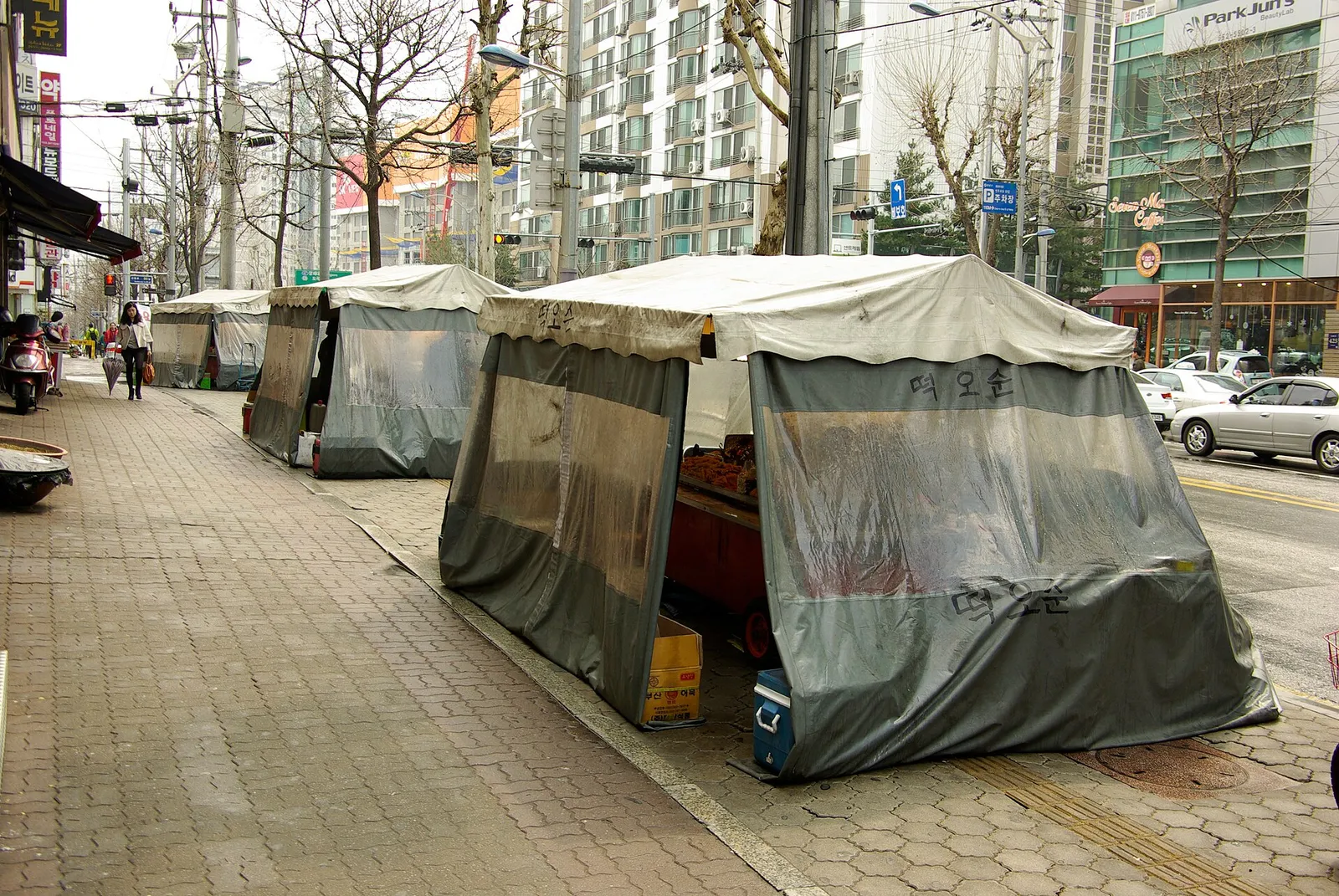
Stalls go up from around 5pm, one by one, according to Seoul Tourism Organization. By day you find what the photograph above shows: canvas tied down over folded frames.
There is no officially published closing time. The nearest guide is that the district’s safety patrol works the street daily from 17:00 to 02:00 — a patrol schedule, not opening hours, but it brackets the hours the street is active.
Seating is cramped. Seoul Tourism Organization says so itself: the seats are tight and it gets crowded at peak times, so allow extra time rather than arriving on a schedule.
It may be shut over Halloween and the year-end period
This is the single most practical warning here.
Jongno District’s own material states that during Halloween and the year-end period, when crowds build, it advises street stalls to suspend operation. If you are planning a night here around either, factor in that the street may not be trading.
The safety measures now in place
This is what separates the street from an ordinary stall alley.
- A joint public-private safety team patrols in groups of four, daily 17:00 to 02:00, managing crowd density and first response.
- A crowd-density system displays congestion on screens and broadcasts warnings when density passes a set threshold.
- A disaster-response room and an integrated CCTV safety centre run 24 hours.
- The merchants’ association files an annual safety plan, and traders must carry fire and accident insurance, keep K-class extinguishers and post evacuation route signs.
- A 14-member co-prosperity committee of district officials, merchants, stall operators and police, formed in December 2024, revises the operating rules quarterly.
The street is a no-smoking area, with reminders running on the electronic signboards, and public bins have gone from two to five.
What could not be verified
Stated plainly, because these are the gaps:
- Whether cards are accepted. Jongno District’s card-payment scheme for street stalls covers 77 stalls at Gwangjang Market, not this street. Bring cash.
- Whether foreign-language menus exist. The district’s multilingual QR menu project covers Gwangjang Market, Sejong Village Food Culture Street and Jongno Sinjin Market — not this street.
- Closing days and whether stalls trade in bad weather. Nothing official either way.
The overcharging controversy is not about this street
You may have seen reports of foreign visitors being overcharged at a market in Jongno. That was Gwangjang Market, not this pocha street. Jongno District’s official records tie the overcharging problem to Gwangjang Market alone, and travellers routinely conflate the two because they are minutes apart.
No official finding of overcharging exists for this pocha street.
Know the reporting route anyway. Jongno District runs an overcharging report centre. The grounds are a price that differs from the posted price, or no price list displayed at all.
- Seoul’s civil complaints line, 02-120, or the tourist information line, 1330
- Bring evidence — a receipt or photo, the time, and the business name. Complaints without evidence are not processed.
Worth combining with
All within 250 metres of Jongno 3-ga Station.
- Ikseon-dong Hanok Street — exit 4, 141 metres. Cafés and bars in converted hanok; its Galmaegi alley is now part of the same Sangsaeng Street.
- Nakwon Musical Instrument Arcade — exit 5, 114 metres. A building of instrument shops, Monday to Saturday 10:00–19:30.
- Jongmyo — exit 8, 220 metres.
Wrapping up
Jongno 3-ga’s pocha street is a different place before and after the works. The pavement is wider, the businesses hold permits, and a patrol walks it every night. For a street-stall alley, that is a lot of management.
Adjust your expectations all the same. The seats are still tight, the prices are not published anywhere official, and card payment is not confirmed. Carry cash, avoid peak hours, and check ahead around Halloween or the new year.
Read next: the complete Jongno guide and what to eat in Jongno.