 Now, Yeogi
Ikseon-dong Food and Cafes: The Price Gap One Street Over (2026)
What to eat in Ikseon-dong, set out from official sources: the published prices at the hanok cafes, a 3,000-won hangover soup one street away, the fact that not a single officially certified restaurant sits inside Ikseon-dong itself, and the four promises Jongno-gu asks visitors to keep.
Places in this post
- Address
- Ikseon-dong, Jongno-gu, Seoul
- Menu
- Cafe desserts Scones 4,700-5,800 won · cake 8,000-8,300 won
- Tip
- 141m from exit 4 of Jongno 3-ga Station. People actually live here, and Jongno-gu asks visitors to keep quiet.
- Address
- Nakwon-dong, Jongno-gu, Seoul
- Menu
- Official status Seoul Future Heritage, "the Jongno 3-ga Nakwon-dong braised monkfish street"
- Tip
- 167m from exit 5 of Jongno 3-ga Station. The Seoul style of braised monkfish uses fresh fish and starch, so it keeps a shallow pool of sauce.
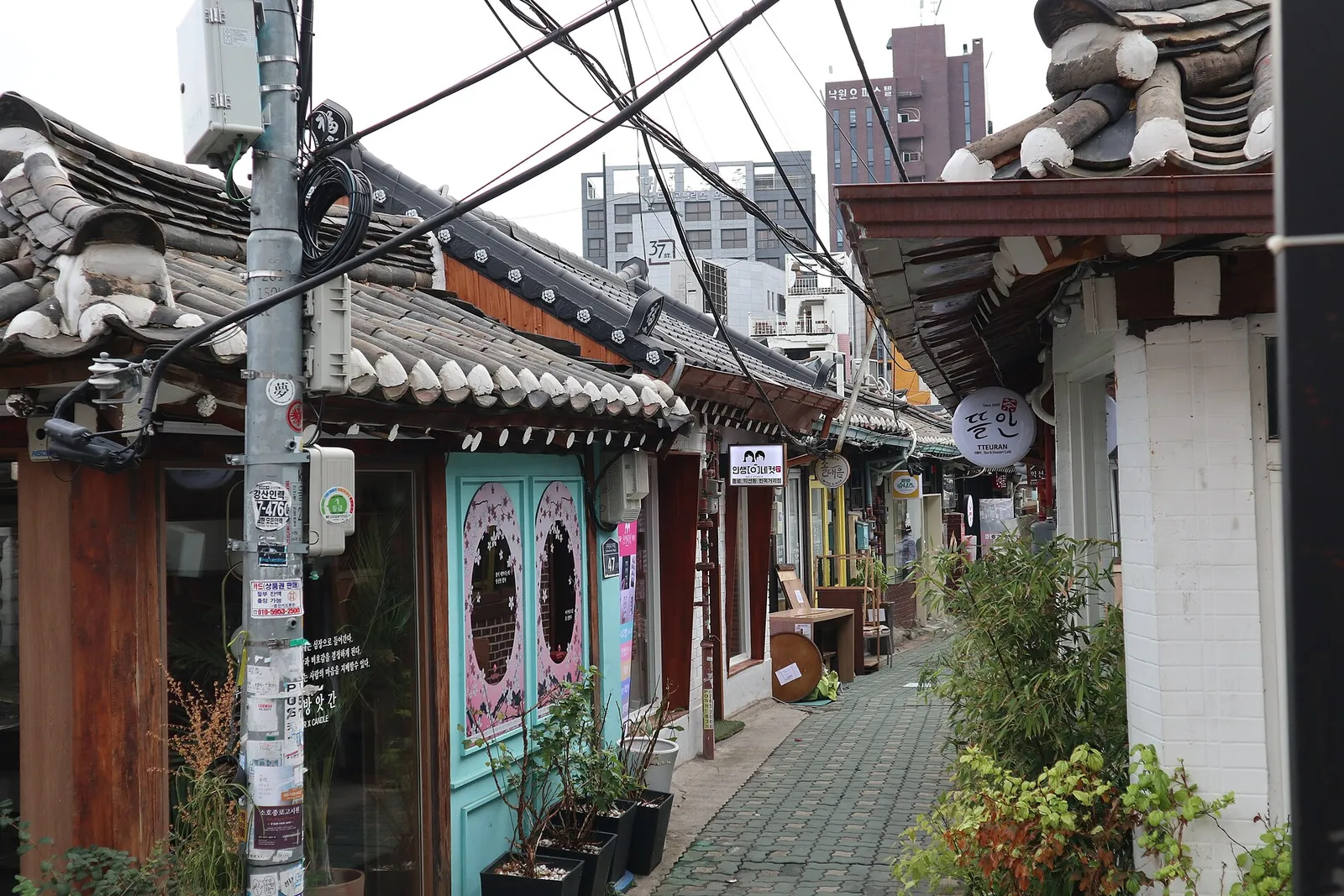
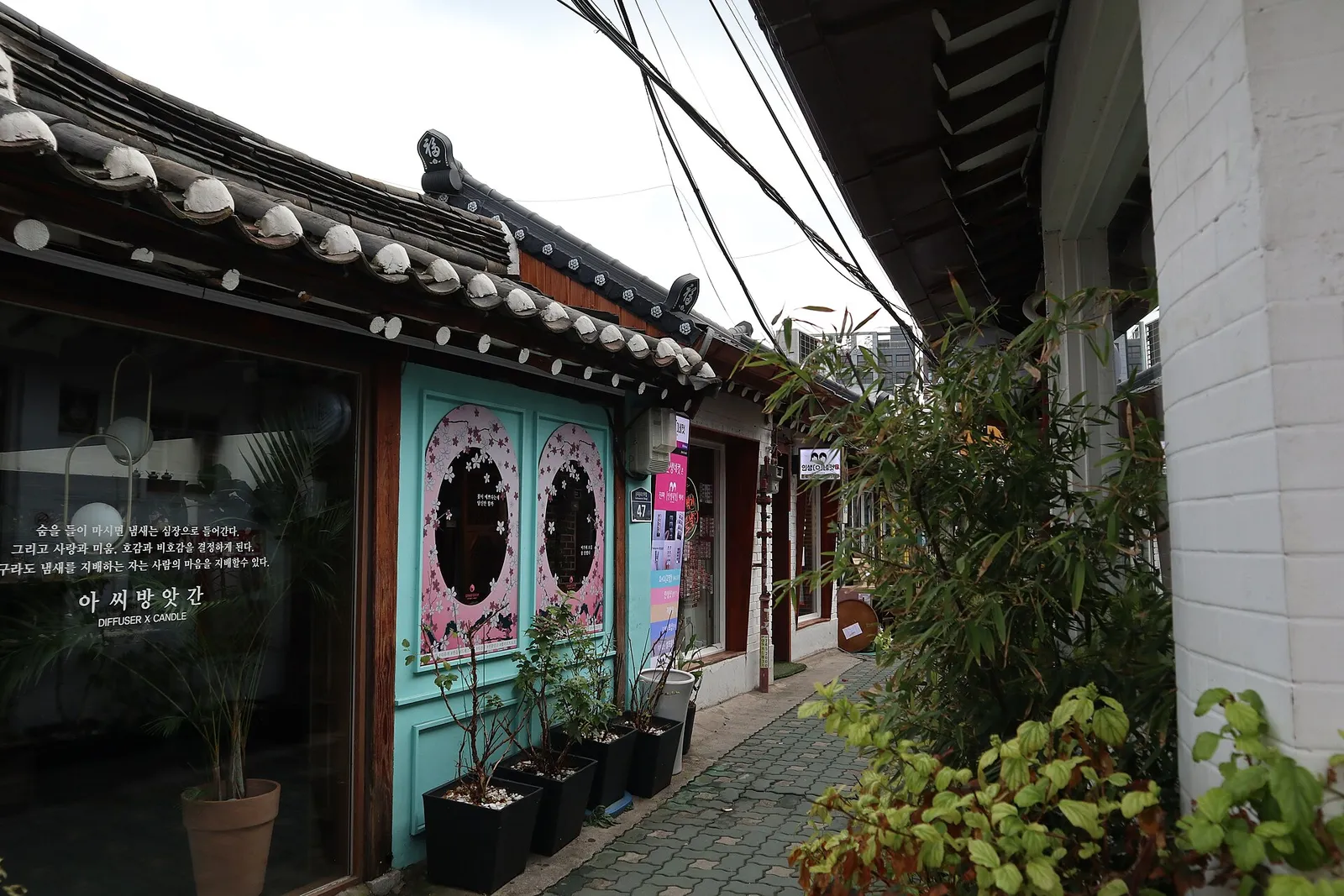
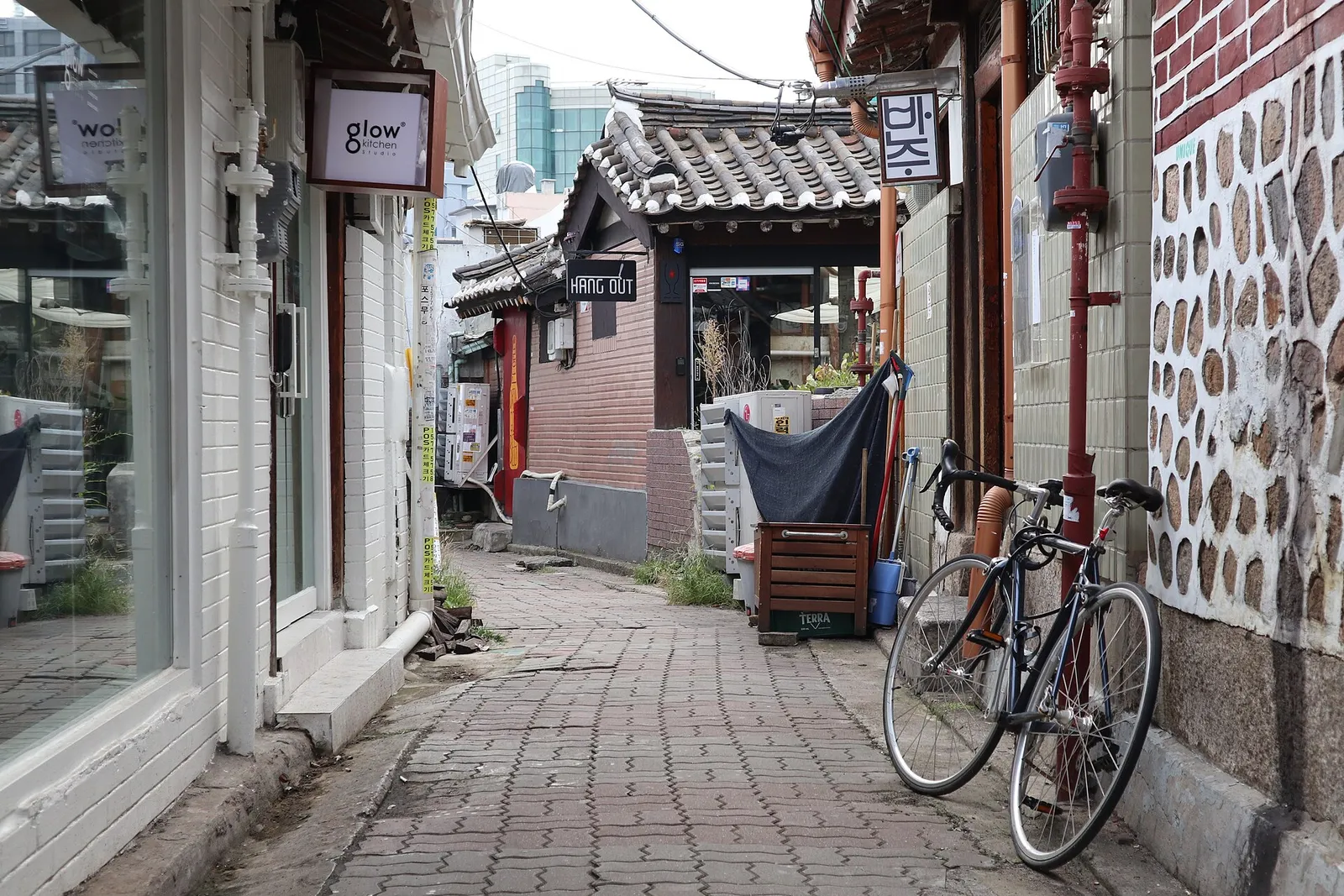
Ikseon-dong is a neighbourhood of alleys packed with cafes and restaurants made out of converted hanok. But the first thing this post has to say is not about prices.
People live here. Jongno-gu has set out promises it asks visitors to keep, and those come first.
The four things Jongno-gu asks
This notice is posted on the Ikseon-dong page of Jongno-gu’s official tourism site.
Parts of the alley walking course are places where residents actually live. For the walk to be enjoyable for everyone, we need your considerate behaviour.
Promise 1. Do not startle or disturb residents by shouting or taking photographs carelessly. Promise 2. If you make rubbish, you must take it with you. Promise 3. Mind even small noises, and never use a loudspeaker or a microphone. Promise 4. Do not peer into residents’ hanok or homes, or photograph them without permission.
The alleys are narrow, and in many places you cannot tell a cafe door from somebody’s front gate. That is what the fourth promise is about.
Do not confuse this with Bukchon
You may have read online that “Seoul’s hanok village now has visiting-hour limits and fines”. That is Bukchon, not Ikseon-dong.
| Bukchon red zone | Ikseon-dong | |
|---|---|---|
| Visiting-hour limits | Yes (10:00 to 17:00 only) | No |
| Fines | Yes | No |
| Request for quiet | Yes | Yes, as guidance |
Bukchon is designated a special management area, and since 1 November 2024 visiting hours for tourists have been restricted across about 34,000 square metres around Bukchon-ro 11-gil. Ikseon-dong has no such regulation. There is guidance, though.
Cafe prices
The Seoul Tourism Organization publishes prices for Ikseon-dong’s cafes. These are not estimates but official listings.
- Scones 4,700-5,800 won (about $3.50-4.35)
- Cake 8,000-8,300 won (about $6.00-6.25)
- A meal is in the 10,000s of won (from about $7.50)
The price includes the cost of the converted hanok space. You may find it expensive, but that is the going rate in this neighbourhood.
One street over it is different
This is probably the most useful part of the post.
These are the published prices under the Ministry of the Interior and Safety’s “good price” scheme. All of them are within a ten-minute walk of Ikseon-dong. Checked on 22 September 2026.
| Restaurant | Area | Published price | From Ikseon-dong |
|---|---|---|---|
| Eulmildae (Somunnan Gukbap Jeonmun) | Nakwon-dong | Ugeoji haejangguk 3,000 won (about $2.25) | about 270m |
| Insadong Kalguksu | Insa-dong | Kalguksu, doenjang jjigae and sundubu, 7,500 won each (about $5.60) | about 510m |
| Suin Insadong Dakhanmari | Gyeongun-dong | Samgyetang 13,000 won (about $9.75) | about 420m |
A 3,000-won hangover soup and an 8,300-won cake are ten minutes apart from the same subway exit. A fivefold difference.
Some places open from four in the morning. Eulmildae is listed as 04:00 to 22:00.
This is the floor, not the average
The usual caveat. The criterion for the “good price” scheme is “items priced below the average for the surrounding local trade area”. Only places cheaper than their neighbours are included, so this is the floor, not the average.
There are no certified restaurants inside Ikseon-dong
This was a surprising find.
Not a single officially certified restaurant sits inside Ikseon-dong as a legal neighbourhood.
- The “good price” scheme - 0 in Ikseon-dong out of 86 in Jongno-gu
- Model restaurants - 0 in Ikseon-dong out of 74 in Jongno-gu
- Safe restaurants - 0 in Ikseon-dong out of 200 in Jongno-gu
Every certified place is across the road in Nakwon-dong and Insa-dong.
This is not a criticism. Most of Ikseon-dong’s businesses are recently opened cafes and dining rooms, and these schemes are aimed at long-established places or cheap ones. But it is worth knowing before you come that if you are looking for “a place the government has certified”, Ikseon-dong does not have one.
The Nakwon-dong braised monkfish street
It is right next to Ikseon-dong and completely different in character.
“The Jongno 3-ga Nakwon-dong braised monkfish street” is the official name, written out on the Seoul Future Heritage certificate.
The Seoul style of braised monkfish differs from the Masan style. It uses fresh monkfish and is thickened with starch, so it keeps a shallow pool of sauce. Midodeok sea squirts and bean sprouts go in, and you finish with fried rice made in the pan.
It is 167m from exit 5 of Jongno 3-ga Station.
One of the restaurants there holds all three certifications: Seoul Future Heritage (2019), Oraegage (2024) and Centennial Shop.
Things worth knowing
Every restaurant and cafe is entirely non-smoking, regardless of floor area, since 2015.
There is no tipping, and the menu price is the final price. Whether it is a “good price” listing or a tourism organization listing, all prices are written inclusive of VAT.
Refusing a card payment is illegal. That said, very old shops may not accept foreign-issued cards, so it is safer to carry a little cash.
Ikseon-dong gets crowded in the evening. The alleys are narrow, so when a queue grows it ends up outside somebody’s front gate. That is what promises 1 and 3 are for.
What could not be verified
Honestly stated.
No guarantee can be given about whether any individual shop in Ikseon-dong is still trading. One dumpling restaurant introduced on the Seoul Tourism Organization page was already marked “Closed”. Businesses turn over quickly here.
Jongno-gu’s food and drink page has gone. As of September 2026 that address now serves a page about hanok instead, so this post does not cite it.
The safe restaurant list stops at the 2020 edition. It was a temporary Covid-era programme.
No law or regulation governing noise or trading hours inside Ikseon-dong could be found. What Jongno-gu has posted is guidance, not regulation.
Wrapping up
- Jongno-gu asks visitors to keep four promises. People live here.
- The visiting-hour limits and fines belong to Bukchon. They do not apply in Ikseon-dong.
- Cafes run to 4,700-5,800 won for a scone and 8,000-something for cake.
- Across the road in Nakwon-dong there is a 3,000-won hangover soup. Ten minutes apart, five times the price.
- There are 0 officially certified restaurants inside Ikseon-dong. They are all in Nakwon-dong and Insa-dong.
- “The Nakwon-dong braised monkfish street” is an official Seoul Future Heritage name.
In one line: take your photographs in Ikseon-dong and eat in Nakwon-dong.
More in this series: the Ikseon-dong overview, things to do in Ikseon-dong and where to stay in Ikseon-dong