 Now, Yeogi
Seochon: The Neighbourhood Whose Height Was Frozen for 47 Years (2026)
A first-visit overview of Seochon, set out from official records: the height limit that held from 1977 until 2024, the three redevelopment zones cancelled ex officio in 2015, why franchises cannot open here, and why one neighbourhood carries three different names.
Places in this post
- Address
- 14 legal-status neighbourhoods around Cheongunhyoja-dong and Sajik-dong, Jongno-gu, Seoul
- Menu
- Admission Free
- Tip
- Exit 2 of Gyeongbokgung Station is the Tongin Market side. The area is about a third the size of Bukchon.
- Address
- 18 Jahamun-ro 15-gil, Jongno-gu, Seoul
- Hours
- Customer satisfaction centre, weekdays 11:00-15:00; closed Mondays
- Menu
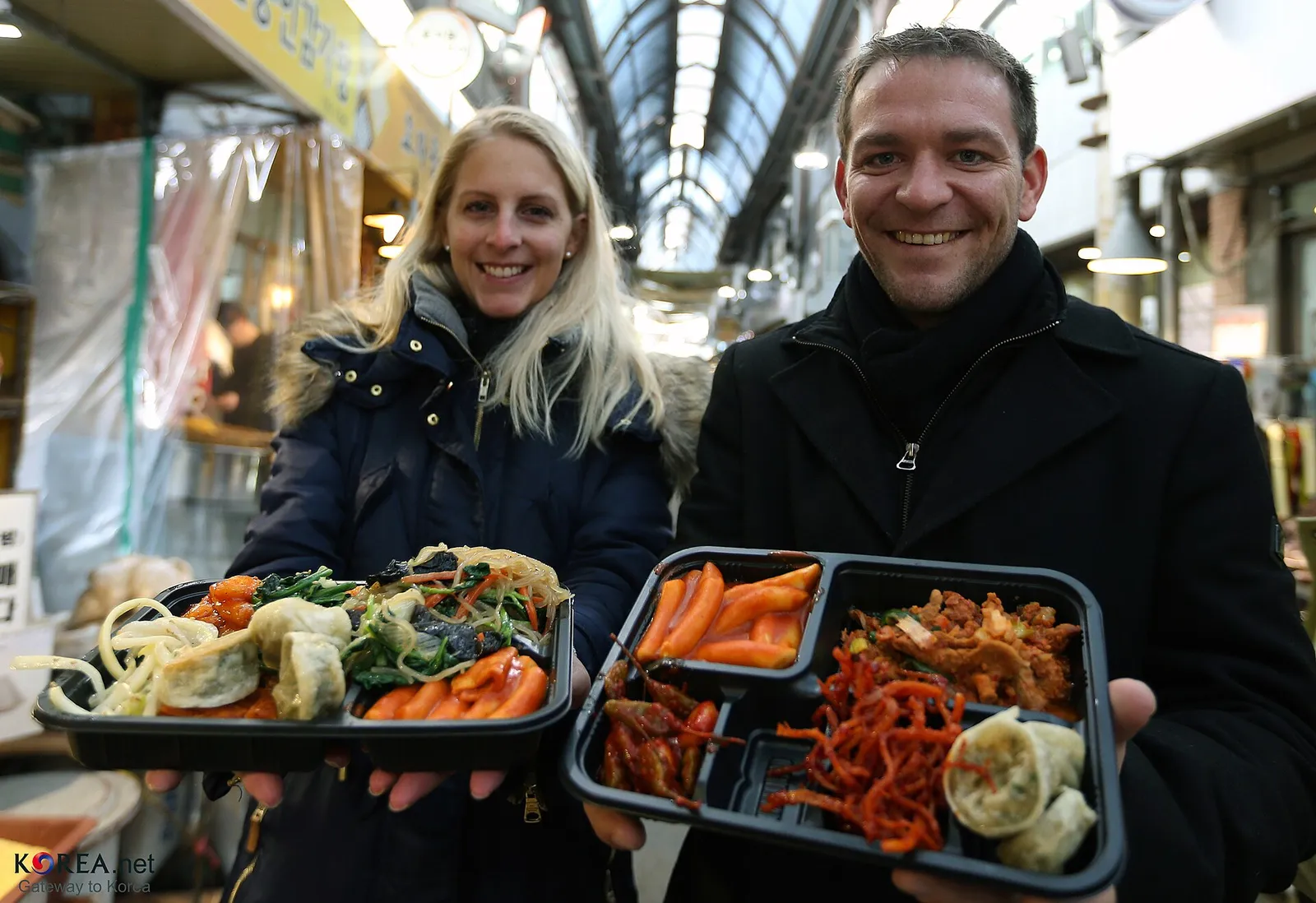
- Yeopjeon coin 500 won each
- Tip
- 515m from exit 2 of Gyeongbokgung Station.
Seochon is the neighbourhood whose height was frozen for 47 years.
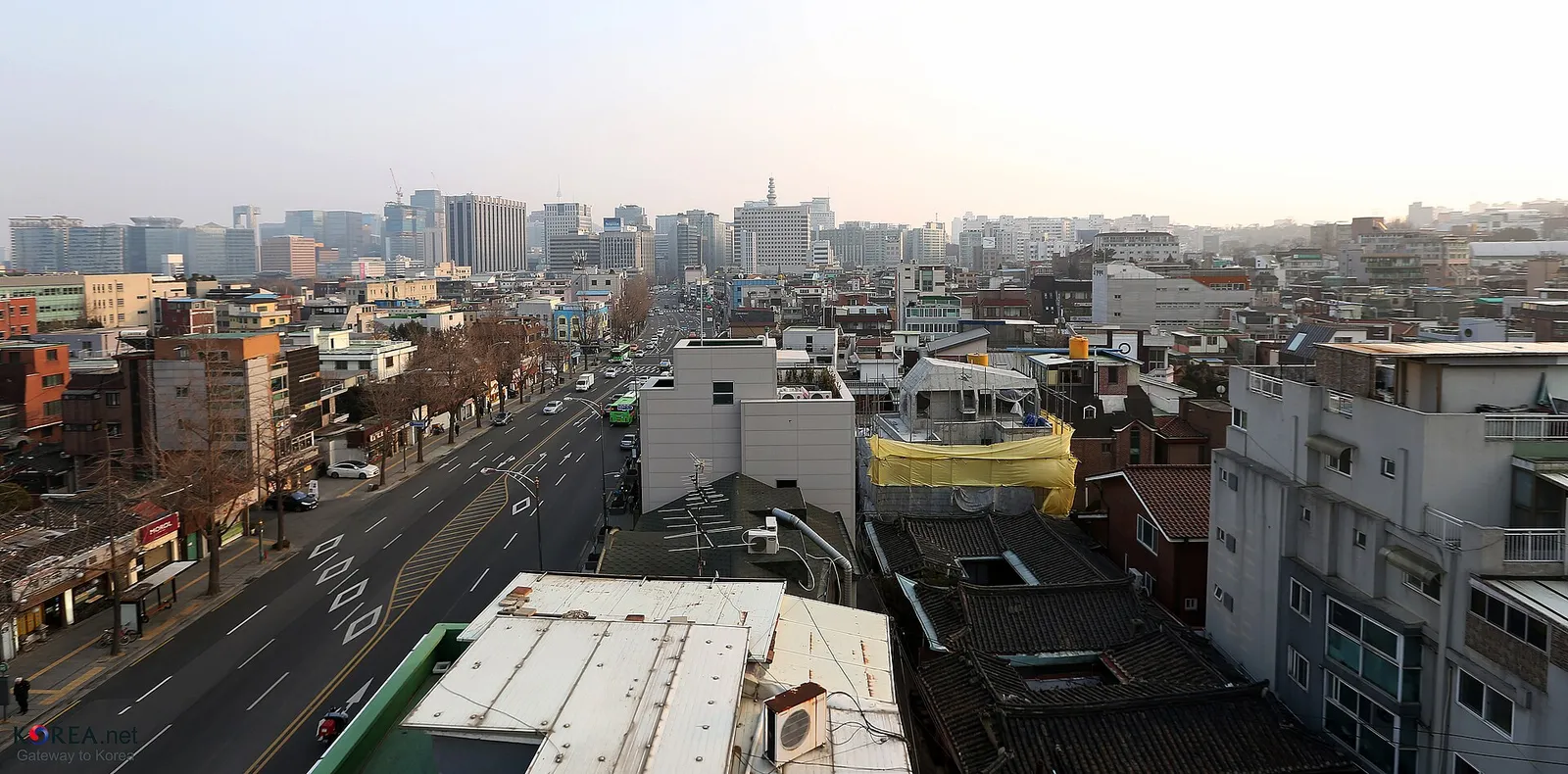
It sits beside Gyeongbokgung Palace, so it has been a maximum height district since 1977, and that rule was eased for the first time only in 2024. While most of Seoul was rebuilt in the meantime, nothing here could go up.
The photograph above is the result. Low roofs run on and on, and the city towers appear only far behind them.
It has three names
Start with this, because the same place is called three different things.
Seochon is what people call it.
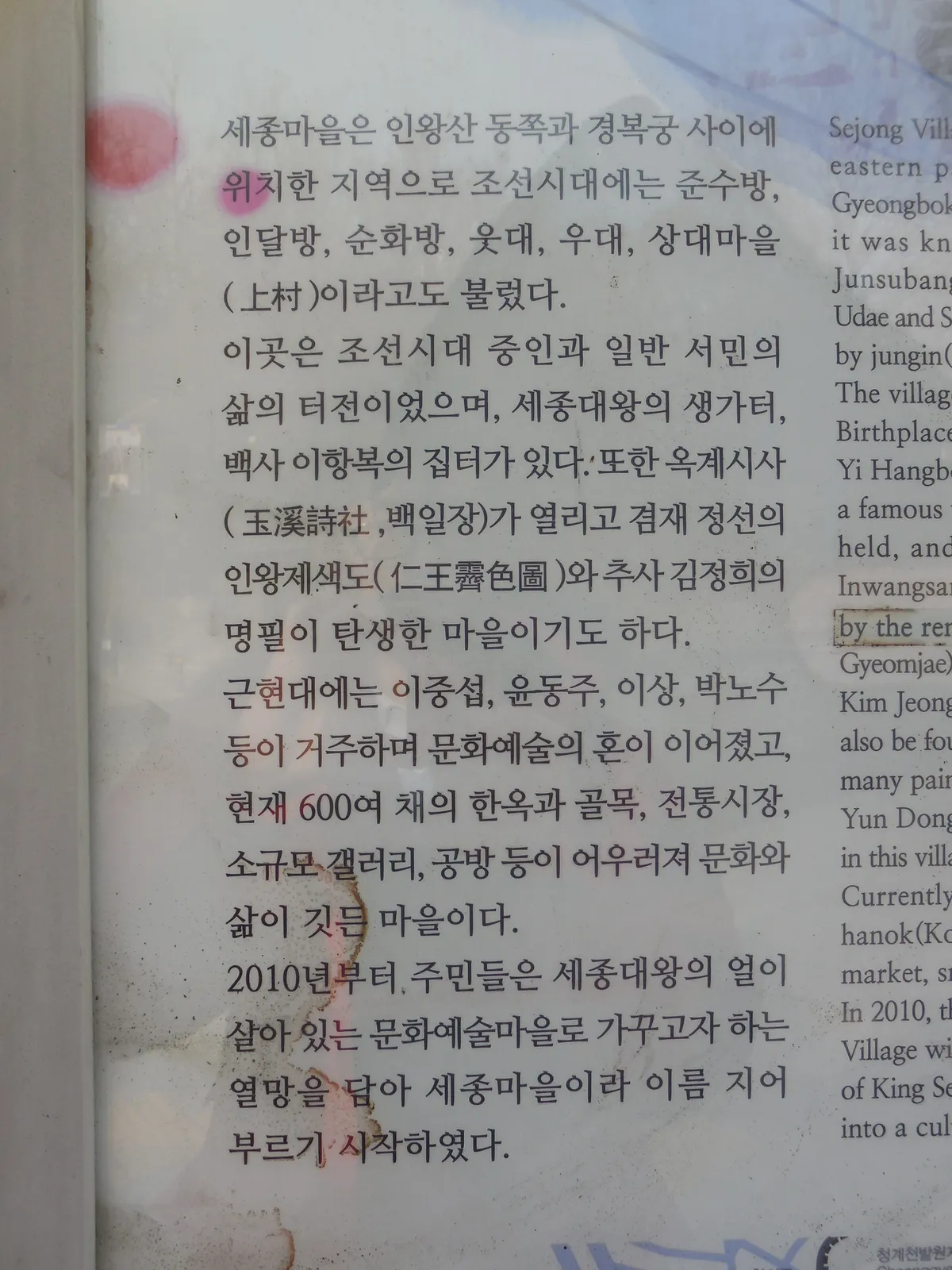
Sejong Village is the name the residents gave it. The information board on site puts it this way.
From 2010 the residents, wishing to cultivate a village of culture and art in which the spirit of King Sejong lives on, began to name and call it Sejong Village.
It was not conferred by the authorities. The residents started using it. King Sejong’s birthplace is here.
Gyeongbokgung West is the official name in the city’s administrative documents. It is not a village name but a location label.
Gyeongbokgung West district unit plan area Gyeongbokgung West residential environment management zone
If you ever go looking for the urban planning documents, you have to search for “Gyeongbokgung West” to find them.
How far does Seochon go
Here is the Seoul Hanok Portal’s description.
Gyeongbokgung West is the area running from the west side of Gyeongbokgung Palace to the foot of Inwangsan, an old residential district of densely packed hanok formed in the Joseon period. It takes in 14 legal-status neighbourhoods in Jongno-gu, Seoul, including Hyoja-dong and Ogin-dong, and is about a third the size of the Bukchon area.
A third of Bukchon. It is smaller than you would expect.
Why it is still low
A timeline makes it clear.
| Date | What happened |
|---|---|
| 9 May 1977 | A maximum height district around Gyeongbokgung Palace is designated for the first time |
| 15 April 2010 | The district unit plan area is designated |
| 24 June 2010 | The hanok concentration area is designated |
| 17 February 2015 | Development permits are restricted |
| 8 October 2015 | Three planned redevelopment zones are cancelled ex officio |
| 14 July 2016 | The district unit plan is revised, and franchises are barred from opening |
| 27 June 2024 | The first height easing in 47 years (20m to 24m) |
From 1977 to 2024 the legal maximum height in Seochon was 15 to 20m. Four to six storeys was the physical ceiling.
In 2024 part of the area (80,747 square metres) was released to 24m. The city’s press release describes it like this.
For the first time since the height district was first designated in 1977, part of Seochon is eased from 20m to 24m
The first time in 47 years.
There was redevelopment, and it was cancelled
This is the part I had wrong at first. Seochon had redevelopment plans too.
Three areas - Pirun, Chebu and Nuha - were designated as planned housing redevelopment zones, in 2006 and 2007. And on 8 October 2015 they were cancelled ex officio.
So “regulation made development impossible from the start” is only half right. The route to development did open, and then it closed.
A preservation-minded plan arrived the following year. The district unit plan revision of 14 July 2016 created a residential environment management zone of 563,151.2 square metres, set a maximum development scale of 200 to 1,200 square metres, and barred franchise restaurants from opening.
Compared with the other three neighbourhoods
The four central Seoul neighbourhoods this blog has covered were each given a different prescription.
- Euljiro - a decision to demolish
- Ikseon-dong - the redevelopment zone lifted in 2018, with preservation measures attached the same day
- Seochon - height regulation in 1977, ex officio cancellation in 2015, a preservation plan in 2016
- Seongsu-dong - a 2015 ordinance to hold down rents
Seochon was three years ahead of Ikseon-dong.
There are no franchises
You notice this as soon as you walk. The Seoul Future Heritage description explains why.
From the restoration of Suseong-dong Valley in 2012 Seochon came to be celebrated as a new scenic destination. However, excessive commercialisation brought side effects such as damage to key landscape assets and gentrification. In response, in May 2016 … building heights were limited to four storeys and franchise bakeries and restaurants were restricted from opening.
The absence of chains is not taste. It is planning.
Getting there
Line 3 Gyeongbokgung Station. Knowing which exit helps.
| Where you are going | Exit |
|---|---|
| Tongin Market and the Sejong Village food street | Exit 2 (515m to the market) |
| Suseong-dong Valley | Exit 3, then the Bus 9 Jongno 09 village bus |
| Start of the official Jongno-gu walking course | Exit 1 |
There is an airport bus
The airport limousine Bus 6011 stops at Gyeongbokgung Station. The stop is opposite the Seoul Metropolitan Police Agency at exit 1.
- First bus 04:31, last bus 20:48
- Adult 17,000 won (about $12.75)
Route 6011 is the only airport route that stops at Gyeongbokgung Station. The same route also stops at Changdeokgung Palace and Anguk Station, which is useful for the hanok stays over there.
Watch out for Mondays
This is the trap in Seochon. The palaces close on Tuesdays, but Seochon’s venues close on Mondays.
These are shut on Mondays.
- The Yun Dong-ju Literature House
- The Park No-soo Art Museum
- Sangchonjae
- The Hwanghakjeong traditional archery exhibition hall
- Cheongun Literature Library
- The Inwangsan forest rest area
Come on a Monday and there is almost nothing indoors to see. One exception: Sajikdan Altar is open all year and free, which makes it the Monday fallback.
The reverse also works. Gyeongbokgung closes on Tuesdays, so Seochon becomes the alternative that day. If you are pairing the two, pick the day to suit.
A day here
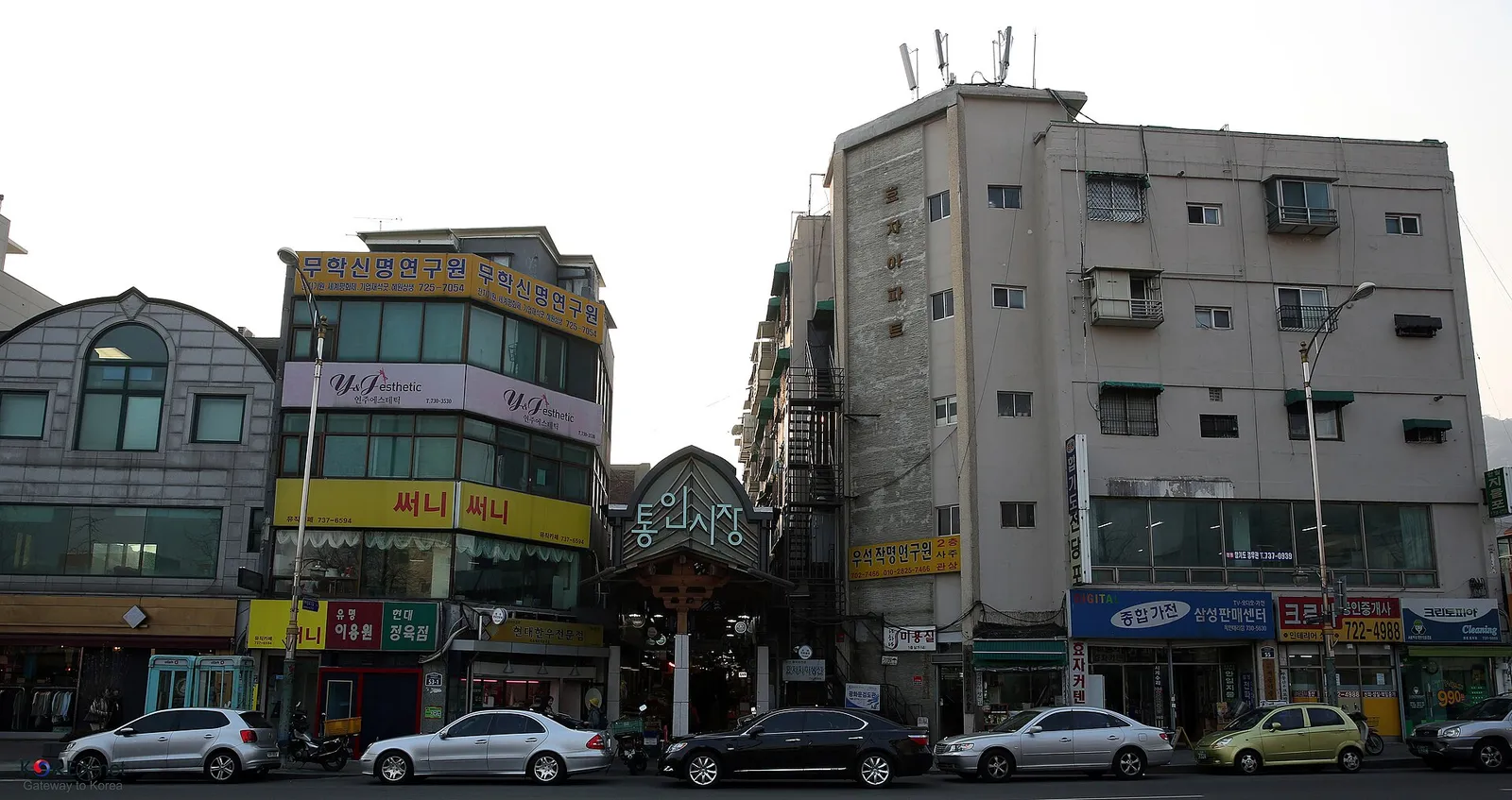
Seochon is small. Half a day is enough.
- Line 3 Gyeongbokgung Station, exit 2 - the yeopjeon lunchbox at Tongin Market (lunch; closed Mondays)
- Walk the alleys - between hanok and low buildings
- Suseong-dong Valley - the village bus from exit 3, or walk up
- The Yun Dong-ju Literature House or the Park No-soo Art Museum (closed Mondays)
- Dinner on the Sejong Village food street
Because it adjoins Gyeongbokgung Palace, the commonest pairing is the palace in the morning, Seochon in the afternoon. But remember: Gyeongbokgung closes on Tuesdays.
Who this suits
It suits you if:
- You like walking a low-rise neighbourhood
- You want to add half a day to a Gyeongbokgung itinerary
- You want to see a neighbourhood without chain stores
- You want to sleep in a hanok. A quarter of Seoul’s hanok stays are here
It does not suit you if:
- You are expecting shopping or large facilities. There are none
- You come on a Monday, when almost everything indoors is closed
- You are expecting something the size of Bukchon. This is a third of it
Wrapping up
- The height was frozen for 47 years, from 1977 to 2024.
- Three planned redevelopment zones were cancelled ex officio in 2015, and a preservation plan followed the next year.
- Since 2016 franchise bakeries and restaurants cannot open here.
- It has three names: Seochon, Sejong Village (from the residents, since 2010) and Gyeongbokgung West (administrative).
- It is about a third the size of Bukchon.
- Exit 2 of Gyeongbokgung Station is the market side, and the airport bus is route 6011.
- Seochon’s venues close on Mondays, the palaces on Tuesdays.
In one line: Seochon is low not because it was left alone but because it could not go up, and in the meantime it became a place worth keeping.
More in this series: things to do in Seochon, Seochon food, where to stay in Seochon and the Ikseon-dong overview