 Now, Yeogi
Where to Eat in Seochon: A Brass-Coin Lunchbox and Alleys Without Chains (2026)
What to eat in Seochon, set out from official sources: how the yeopjeon lunchbox at Tongin Market actually works, the 2,000-won americano and the 5,000-won noodles listed under the government's good price scheme, and why the city restricted franchises from opening here in 2016.
Places in this post
- Address
- 18 Jahamun-ro 15-gil, Jongno-gu, Seoul
- Hours
- Customer satisfaction centre, weekdays 11:00-15:00; Saturday 11:00-16:00; closed Mondays
- Menu
- Yeopjeon coin 500 won each; 5,000 won per person suggested
- Tip
- 515m from exit 2 of Gyeongbokgung Station. It is a recognised market with 72 shops, and Seoul Future Heritage 2015-040.
- Address
- Around 5 Jahamun-ro, Jongno-gu, Seoul
- Menu
- Size 103 shops; 4m wide, 160m long
- Tip
- It is a car-free street. 38 of the 103 shops have a QR menu in five languages, with allergy information.
The places the authorities vouch for in Seochon are not the ones you see on Instagram. They are a 60-year-old tteokbokki shop and a noodle place charging 5,000 won.
And that is not a coincidence. The rules are designed that way. Start there.
The city kept the franchises out
This is from the Seoul Future Heritage description of the Seochon hanok concentration area.
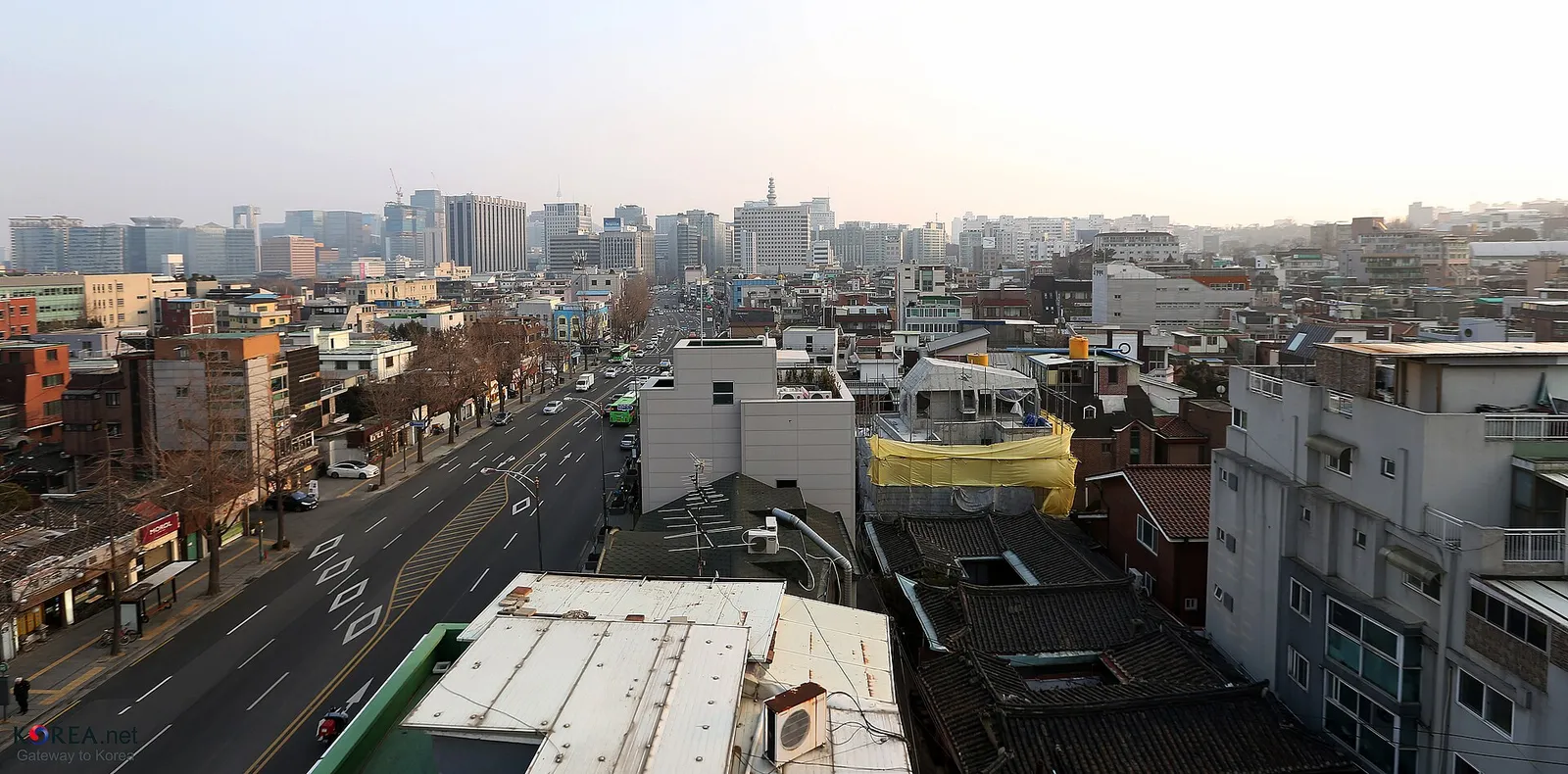
From the restoration of Suseong-dong Valley in 2012 Seochon came to be celebrated as a new scenic destination. However, excessive commercialisation brought side effects such as damage to key landscape assets and gentrification. In response, in May 2016 a draft revision of the Gyeongbokgung West district unit plan was drawn up which limited building heights to four storeys and restricted franchise bakeries and restaurants from opening.
Since May 2016 franchise bakeries and restaurants cannot open here. The absence of chains in Seochon is policy, not taste.
Ikseon-dong listed cafes as a recommended use and drew them in; Seochon restricted franchises and kept them out. Same district, opposite directions.
Tongin Market
The centre of Seochon. First, the precise description.
It is not a registered market but a recognised one. That is how it appears in Jongno-gu’s traditional market guide, and the Seoul Future Heritage certificate also records that it was formally registered as a recognised market in 2005.
- 72 shops (Jongno-gu figure, updated 29 June 2026)
- 18 Jahamun-ro 15-gil
- Seoul Future Heritage 2015-040
- 515m from exit 2 of Gyeongbokgung Station
Other sources put the figure at around 80, so treat the number as approximate.
How the yeopjeon lunchbox works
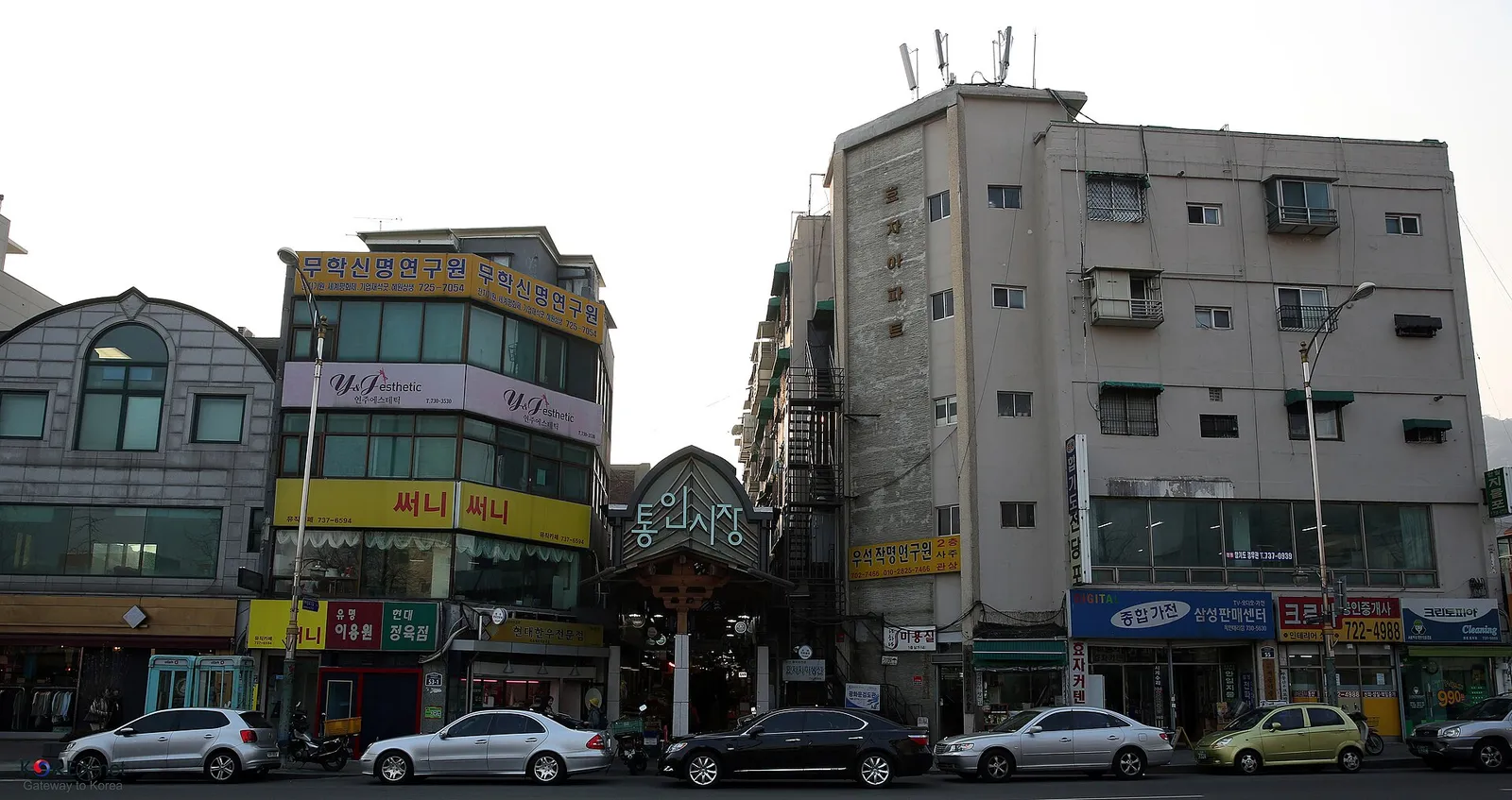
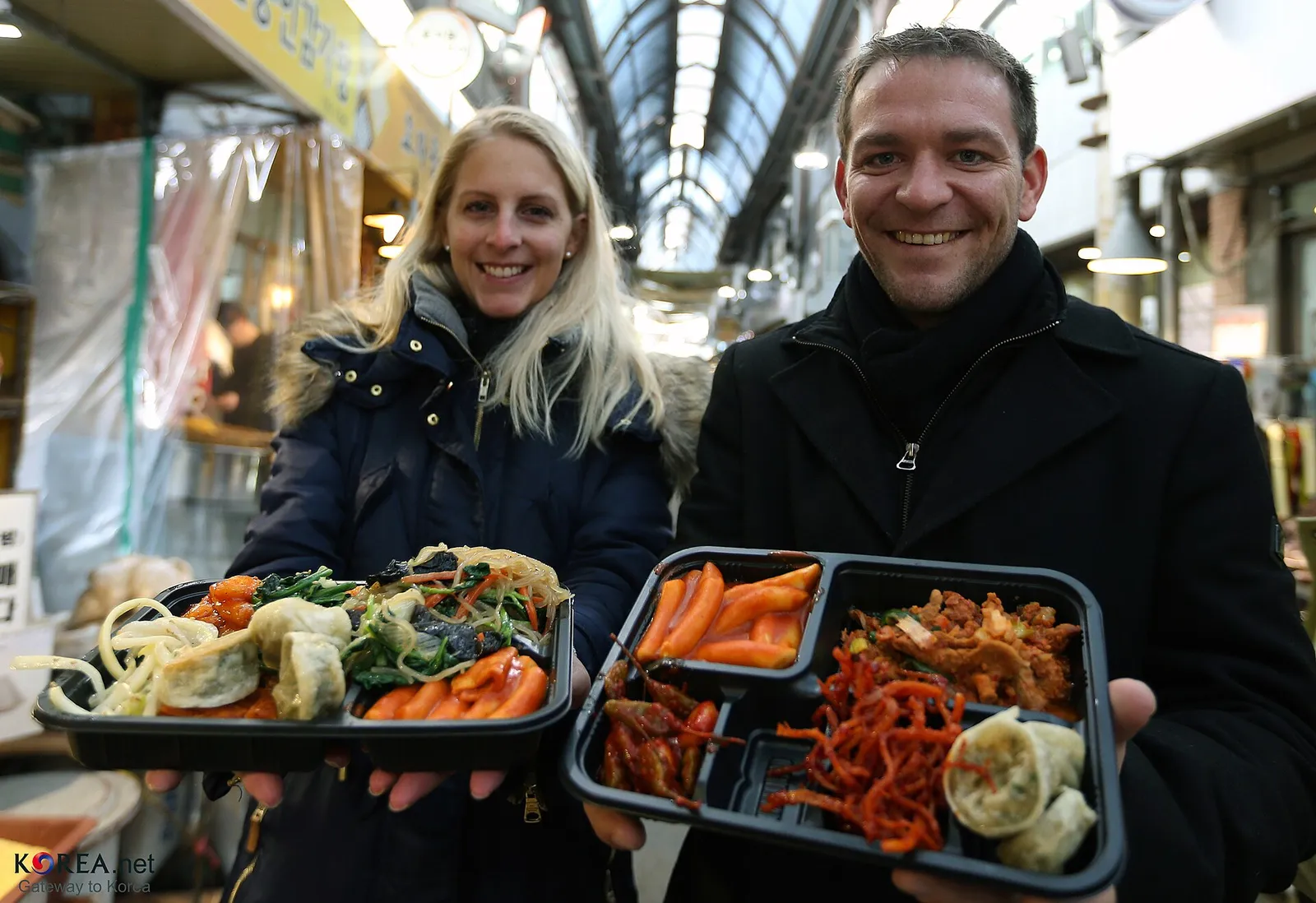
This is what the market is famous for. Instead of cash you buy yeopjeon, old brass coins, and use them to pick out side dishes.
- One yeopjeon is 500 won (about $0.38)
- About 5,000 won (about $3.75) per person is suggested
- You buy the coins on the second floor of the customer satisfaction centre, and eat what you have bought there
- Only participating shops accept the coins
The order goes like this. Buy your coins at the customer satisfaction centre and take an empty lunchbox, walk the market handing over coins and filling the compartments, then come back to the centre to eat.
The opening hours differ from source to source. The Seoul Tourism Organization gives weekdays 11:00-15:00, Saturday 11:00-16:00, closed Mondays, but other official pages say something different, and one page contradicts itself.
Avoid Mondays, and go at lunchtime to be safe. Go late and the side dishes run out.
The last official count of participating shops is 24, in 2020. The current number could not be confirmed.
The Sejong Village food street
The eating alley next to Tongin Market. Strictly speaking this one is a shopping street rather than a “restaurant street”.
- 103 shops
- 4m wide and 160m long, car free
- From 5 Jahamun-ro to 32 Jahamun-ro 1-gil
- Its old name was Geumcheongyo Market
Four metres wide and 160m long is less than a block. It is far smaller than you would expect.
The number of shops has fallen from 112 in 2015 to 103 now, and the documents record that Jongno-gu created the street out of concern about gentrification.
There are menus in other languages
This is the part that is useful to foreign visitors. Jongno-gu has introduced a multilingual QR menu.
- 38 of the 103 shops take part (roughly one in three)
- Five languages - Korean, English, simplified and traditional Chinese, and Japanese
- It gives spice level, main ingredients and allergy information
The allergy information matters. Ordinary restaurants in Korea are under no obligation to label allergens.
But only one shop in three takes part, so it is not in every place.
What it costs
These are the prices published under the Ministry of the Interior and Safety’s “good price” scheme, as listed on 23 September 2026.
| Shop | Where | Published price |
|---|---|---|
| Chakhan Coffee Factory | Nuha-dong | Americano 2,000 won; cafe latte 3,500 won |
| Chebu-dong Janchijip | Chebu-dong | Janchi guksu 5,000 won; bibim guksu 6,000 won |
| Jungguk | Cheongun-dong | Jjajangmyeon 6,000 won; jjamppong 8,000 won |
| Tori Bakery | Ogin-dong | Makgeolli milk bread 4,000 won |
| Hyoja Wang Jokbal | Tongin-dong | Bossam set menu at lunch 9,000 won |
| Samhwa Sikdang | Tongin-dong | Kimchi jjigae and doenjang jjigae, 10,000 won each |
| Seochon Inwang Sikdang | Tongin-dong | Sagol mandu-guk 12,000 won |
An americano at 2,000 won (about $1.50) right beside Gyeongbokgung Palace.
The Chinese restaurant in Cheongun-dong opens only from 10:00 to 13:00 and closes when the ingredients run out. It is shut on Sundays. Tori Bakery closes on Mondays.
This is a floor, not an average
The usual caveat. The criterion for the scheme is “how cheap the price is relative to the average in the surrounding commercial area”, so only places cheaper than their neighbours get in.
One more thing. Franchises cannot be designated under the good price scheme. The rules say plainly that franchisees are ineligible. In Seochon franchises cannot open in the first place, so the point is doubly moot.
Everything on the official lists is old
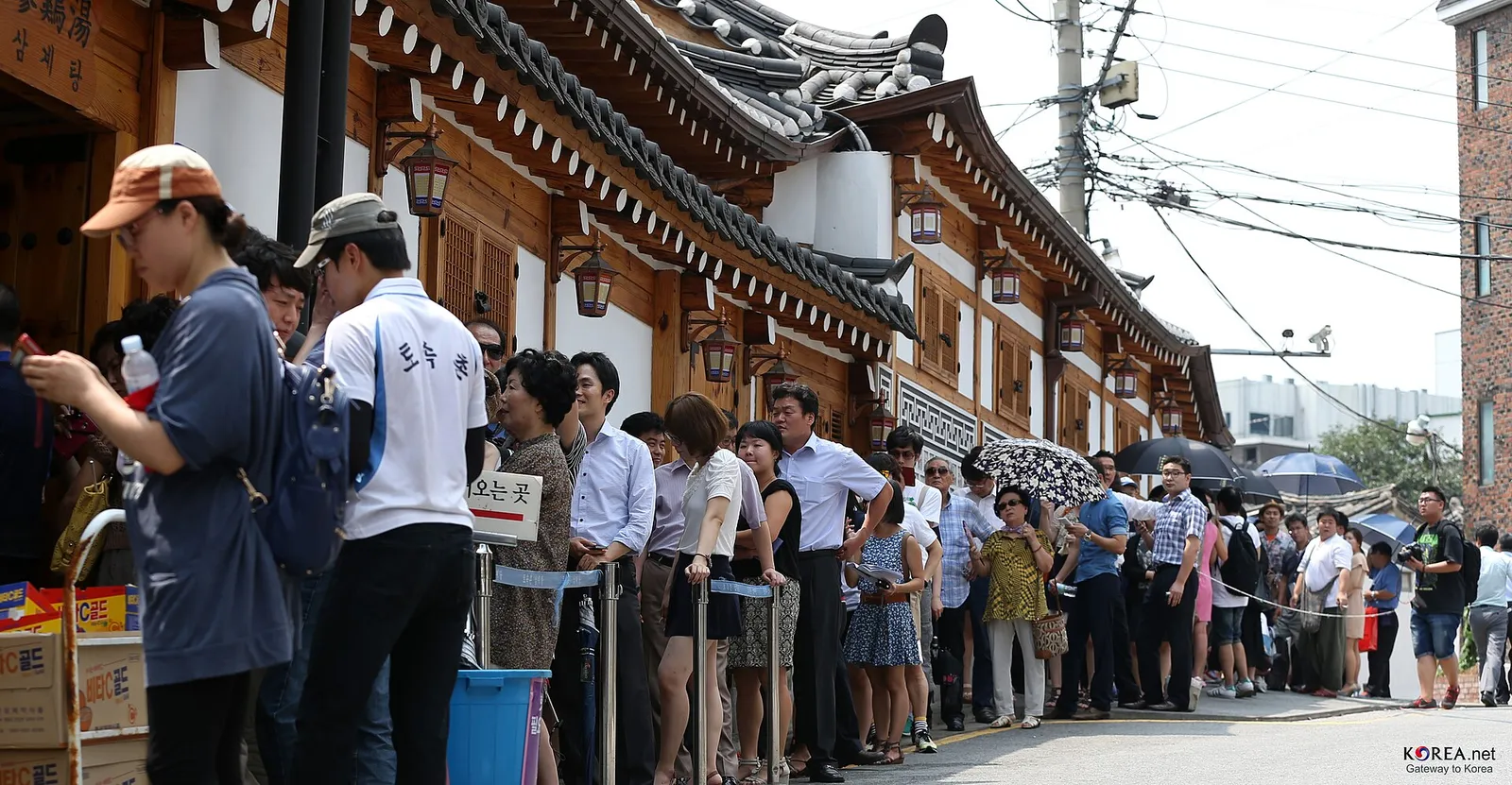
Put together the restaurants in Seochon that hold an official certification and the character is unmistakable.
- Seoul Future Heritage - an oil-tteokbokki shop that started in 1956 and is now in its third generation
- Oraegage, the city’s listing of long-running shops - a bakery from 1987, a peanut shop, a gimbap shop
- The good price scheme - a noodle shop, a kimchi jjigae shop, a dumpling soup shop
A market founded in 1941, tteokbokki from 1956, a bakery from 1987. The recent cafes and dining rooms that made Seochon famous barely appear in official documents.
The only cafes listed at all are the two under the good price scheme, and they are there because they are cheap, not because they are well known.
So if you arrive with the government’s list in hand, the place you saw on Instagram will not be on it. That is what this neighbourhood’s rules produce.
Which exit
Gyeongbokgung Station is on Line 3.
| Where you are going | Exit |
|---|---|
| Tongin Market, and lunch | Exit 2 (515m) |
| The Sejong Village food street | Exit 2 |
| Suseong-dong Valley | Exit 3, then the Bus 9 Jongno 09 village bus |
| Start of the official Jongno-gu walking course | Exit 1 |
Things worth knowing
Every restaurant and cafe is entirely non-smoking, and has been since 2015.
There is no tipping, and the price on the menu is the final amount.
Refusing a card payment is illegal, but cash is easier inside the market. You may need cash to buy the yeopjeon as well.
People live in Seochon too. The request for quiet that Jongno-gu posts for Ikseon-dong appears in the same spirit on the Seochon course page. The full text is reproduced in the Ikseon-dong food post.
What could not be verified
The opening hours for the yeopjeon lunchbox differ between official pages. One page contradicts itself. It is worth checking before you go.
The 500 won per coin is the figure in the July 2026 update, and Jongno-gu publishes no separate price list. It may have gone up.
The last official count of participating shops is 24, in 2020.
The number of shops in Tongin Market also varies by source. The Jongno-gu table says 72; others say around 80.
Wrapping up
- Since May 2016 franchise bakeries and restaurants cannot open in Seochon.
- Tongin Market is a recognised market, with 72 shops, and is Seoul Future Heritage 2015-040.
- One yeopjeon is 500 won, and about 5,000 won per person is suggested. Closed Mondays; go at lunchtime.
- The Sejong Village food street is 4m wide and 160m long, and 38 of its 103 shops have a QR menu in five languages.
- An americano at 2,000 won and janchi guksu at 5,000 won are on the published list, but that is a floor, not an average.
- Every officially certified restaurant is an old one. The rules are designed that way.
More in this series: the Seochon overview, things to do in Seochon and where to stay in Seochon