 Now, Yeogi
What to Eat in Gapyeong: Dakgalbi, Makguksu and Pine Nuts (2026)
Eating around Gapyeong and the Nami Island wharf: why dakgalbi is really a Chuncheon dish, what makguksu is, the pine nut dishes the county is known for, and what things cost in 2026.
Gapyeong’s food is simpler than its attractions, and there is one honest thing to say at the start: the dish everybody eats here was invented an hour further down the line.
Prices are typical 2026 ranges. Where a figure comes from restaurant listings rather than an official source, this guide says so.
Dakgalbi, and whose dish it is
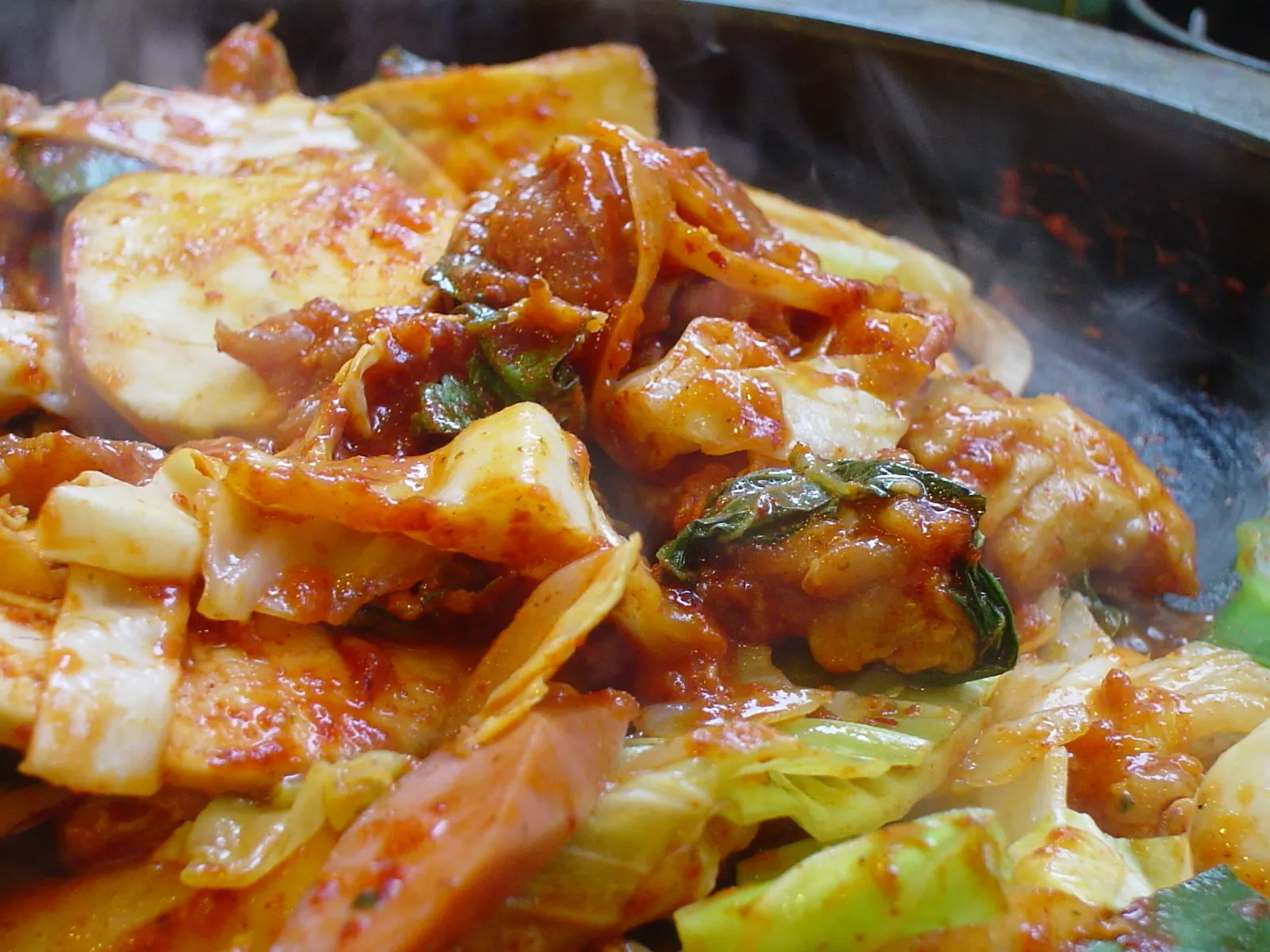
Dakgalbi (닭갈비) is chicken stir-fried on a wide iron plate with cabbage, sweet potato, rice cake and perilla leaf in a red chilli marinade. You cook it at the table, then at the end you have the staff fry rice in the leftover sauce.
It is a Chuncheon dish, not a Gapyeong one. The national tourism board traces the name to Hongcheon and the dish itself to Chuncheon’s Jungang-ro in the early 1960s, where it was grilled over charcoal before moving onto the iron plate with vegetables in the 1970s. It was cheap and filling, students and soldiers passing through Chuncheon took it home, and it spread nationally from there.
Gapyeong sits on the same railway between Seoul and Chuncheon, so it serves the dish as the regional staple. If you are coming from Seoul for the day, you will eat it here, and it will be good. If you are going all the way to Chuncheon, eat it there instead.
Expect ₩12,000 to ₩16,000 per person. Chuncheon’s local press reported prices reaching the upper end of that range, up about a quarter from 2021.
Makguksu
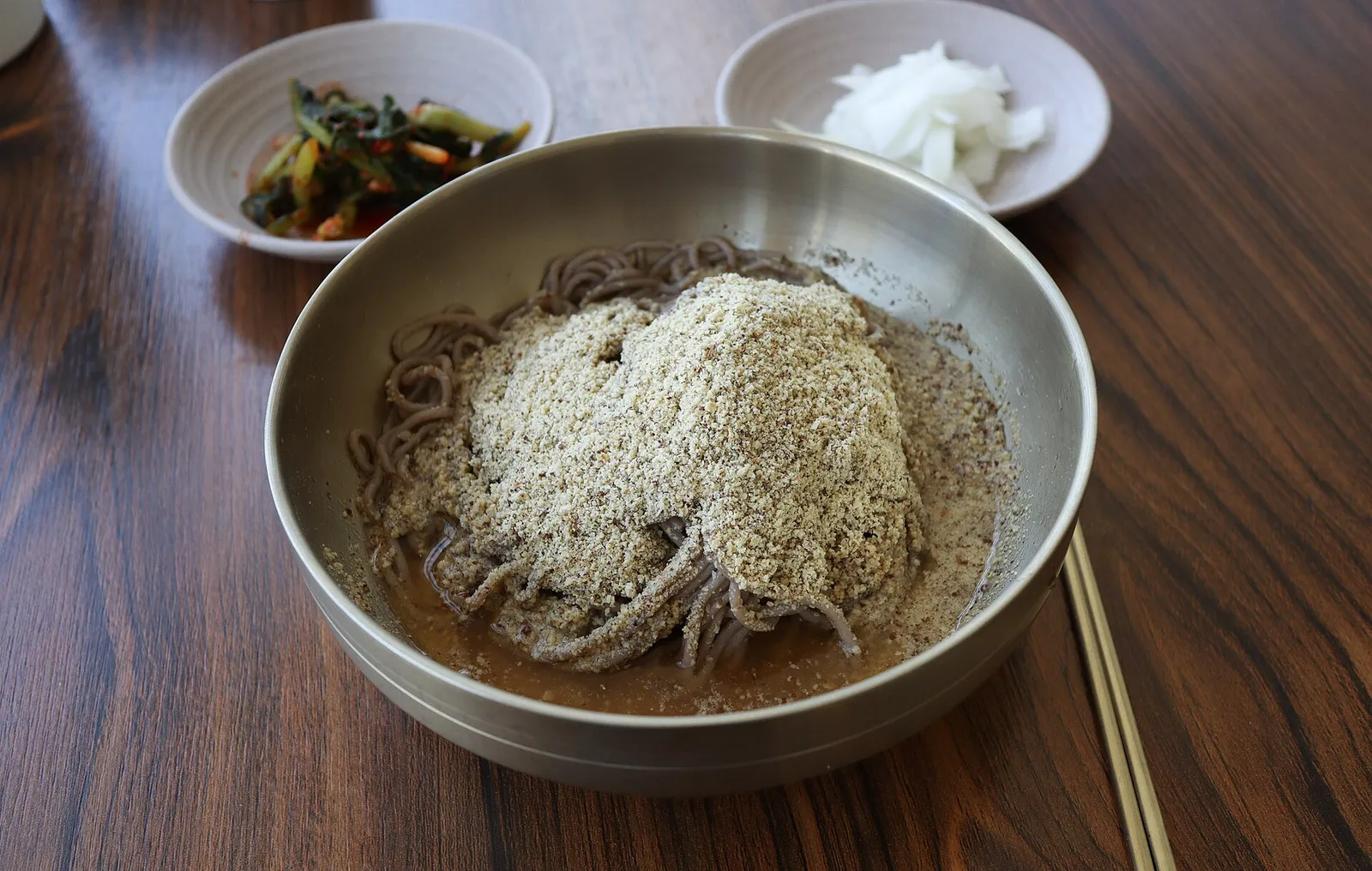
Makguksu (막국수) is chilled buckwheat noodles, served either in a cold broth or in kimchi brine, with cucumber, pear and sometimes an egg. It is a Gangwon province speciality and it travels with dakgalbi almost everywhere, to the point that the tourism board describes the two as needle and thread.
Around ₩7,000 to ₩9,000, though that figure comes from restaurant listings rather than an official price survey.
A regional variant worth ordering if you see it is deulkkae makguksu, served under a thick layer of ground perilla seed, which turns a sharp cold dish into a nutty one.
Pine nuts
Gapyeong’s own product is jat (잣), Korean pine nuts, historically presented to the Joseon court and still the thing the county puts on its signs.
Two honest notes. First, older tourism material claims Gapyeong produces a very large share of Korea’s pine nuts, and those figures are now badly out of date. Local output collapsed over the last decade because of pine nut bug and nematode damage, so treat any percentage you read with suspicion. Second, the nuts are still genuinely the local speciality, and the dishes built on them are real rather than souvenir-shop inventions.
What to look for:
- Jat guksu (잣국수) — noodles in a chilled, milky pine nut broth. Nutty, mild, and unlike anything else on a Korean menu.
- Jat juk (잣죽) — pine nut porridge, gentle and slightly sweet.
- Jat kalguksu (잣칼국수) and jat baeksuk, chicken simmered with pine nuts.
- Jat makgeolli (잣막걸리) — rice wine with pine nuts. A Gapyeong producer’s version was served at a state banquet in 2018.
- Jat gangjeong, pine nut brittle, and pressed pine nut oil, both sold as gifts.
The national tourism board names restaurants in Buk-myeon and Seorak-myeon that specialise in pine nut noodles, both away from the main tourist route.
Where people actually eat
There is no official food street in Gapyeong, so here is the practical picture.
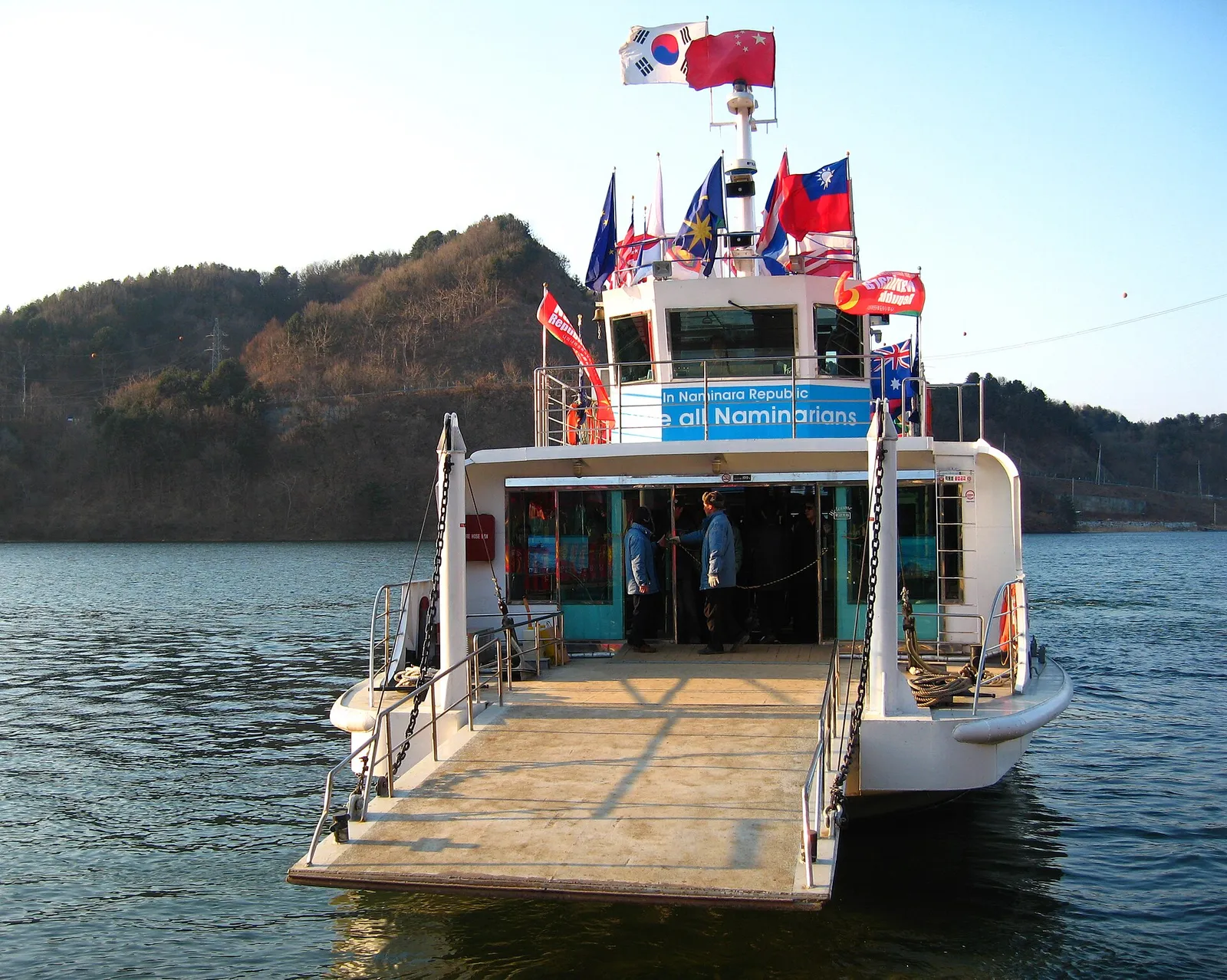
The wharf cluster is where most visitors end up. Along Bukhangangbyeon-ro in Dalcheon-ri, on the approach to the Nami Island ferry, dakgalbi and makguksu restaurants line both sides of the road. It is convenient and it is priced for tourists.
Around Gapyeong Station there are restaurants on the main roads, about five minutes from the wharf by car and a twenty-minute walk.
On Nami Island itself there are several restaurants and cafés covering Korean, Asian and Western food, so you are not obliged to eat before you cross.
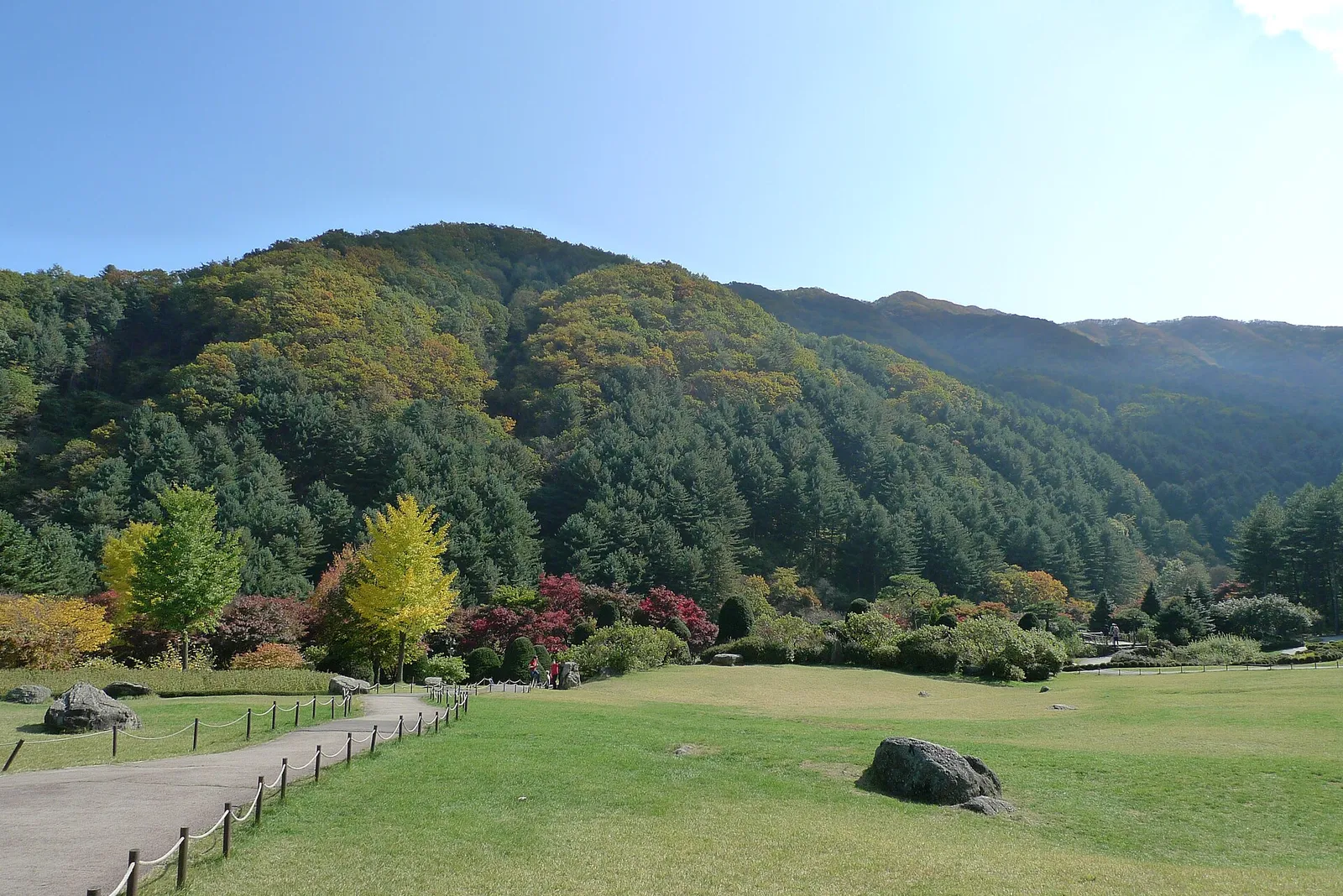
Cheongpyeong, if your day is built around the Garden of Morning Calm, has its own cluster near the station and terminal.
Practical notes
- Dakgalbi is usually a two-person minimum. Solo travellers may be steered towards the single-portion version or makguksu instead.
- Order the fried rice at the end. It costs a couple of thousand won more and it is the point of the meal.
- It is spicy. Some places offer a soy-based or cheese version if that matters.
- Vegetarians will struggle. Makguksu broth is usually meat or anchovy based; pine nut porridge is the safer order.
- Eat before the last ferry. The wharf restaurants wind down earlier than city ones.
Wrapping up
Have dakgalbi with makguksu at the wharf because that is what the day calls for, and order something with pine nuts in it if you see one, because that is the part of the meal that is actually from Gapyeong.
More in this series: the Gapyeong overview, Nami Island and the other attractions.