 Now, Yeogi
Jinju Travel Guide: Getting There, Getting Around, October Festivals (2026)
Jinju in one day: the station trap, the Busan day trip, and the two October festivals.
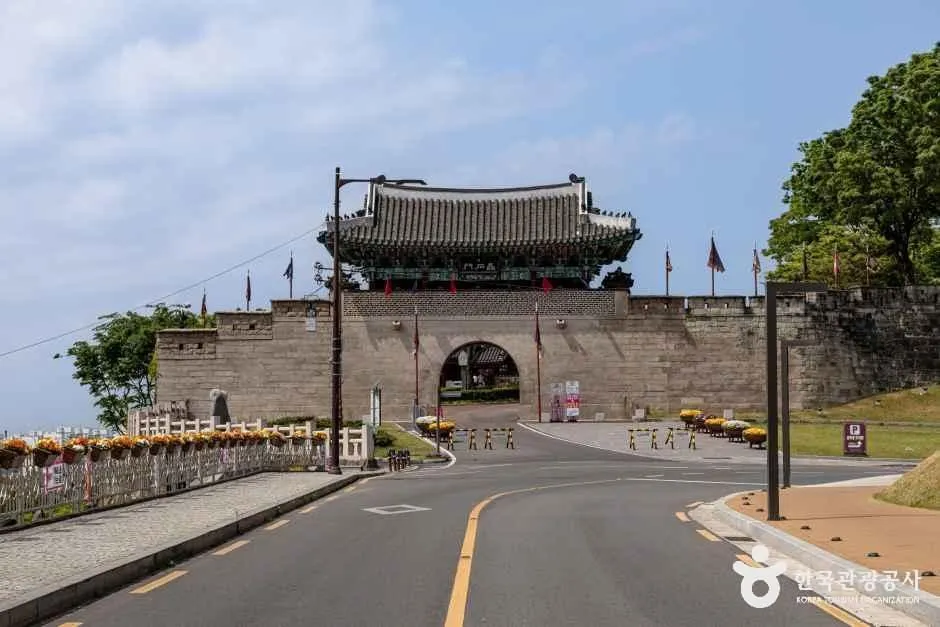
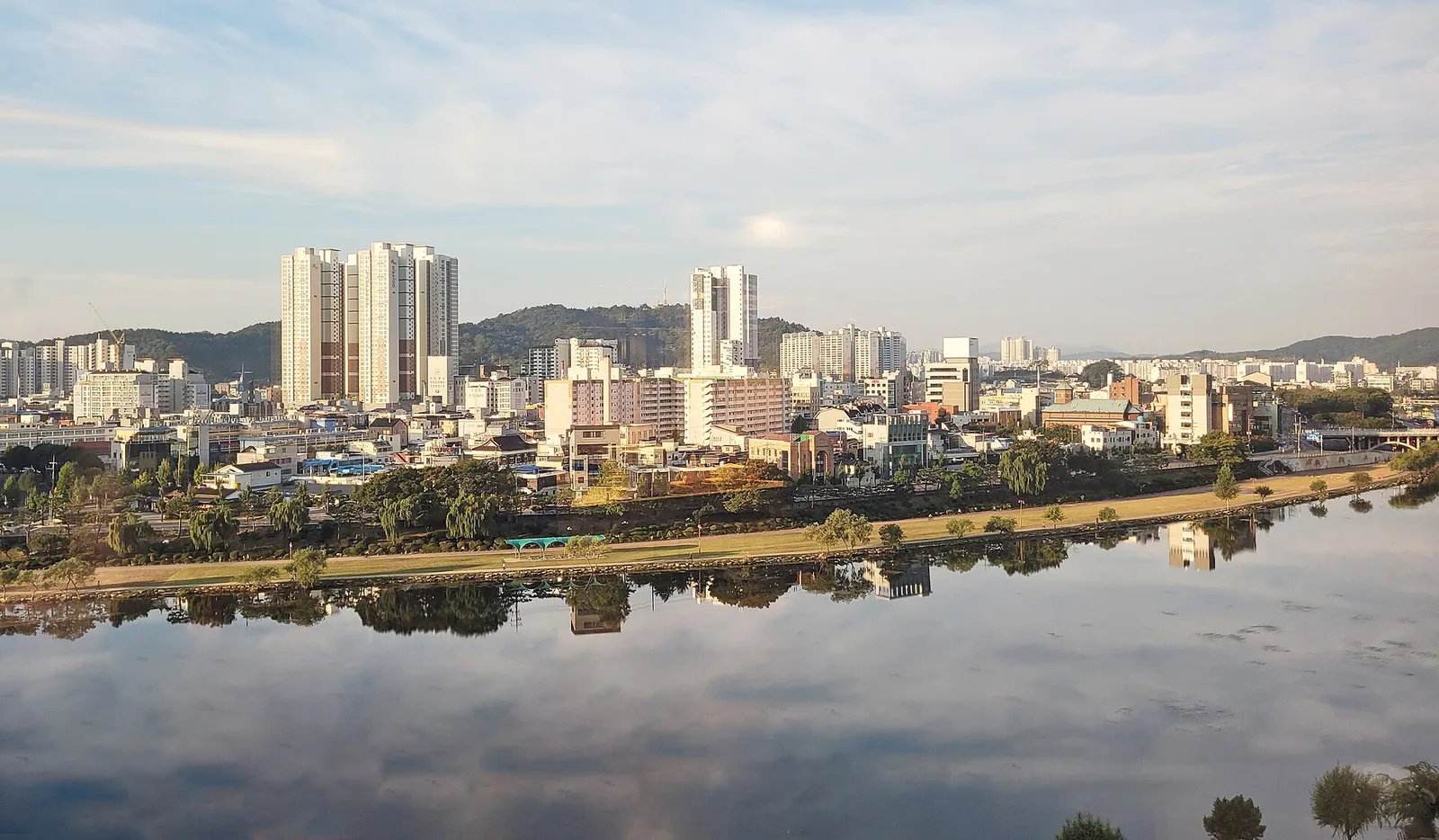
Jinju is the main city of western Gyeongnam: 335,939 people as of 31 December 2025, on 712.94 square kilometres, or 6.8 percent of the province, according to the city’s own profile.
As a destination its shape is unusually clear. The sights are concentrated at Jinju Fortress, and two festivals land in the same month of October. One night is enough, and from Busan a day trip genuinely works. Fares and times are as of September 2026.
Getting there from Seoul
By train
High-speed trains run directly into Jinju Station on the Gyeongjeon Line — KTX from Seoul Station and SRT from Suseo. Services were increased on 1 September 2026, and according to the city’s announcement there are now 18 Jinju–Seoul services on weekdays and 22 at weekends, plus 8 Jinju–Suseo services daily — up from 16 and from 4 respectively.
This guide cannot give you the standard-class fare or the exact journey time. Korail’s site blocks the query, so there was no official figure to verify. Check when you book, and do not trust a number you read elsewhere.
Know where Jinju Station actually is before you go. It is at 130 Jinjuyeok-ro in Gajwa-dong, a different neighbourhood from Bonseong-dong, where the fortress is. You do not step off the train into the sights. There is a tourist information office inside the station.
By bus
The verified route is the intercity bus from Seoul Nambu Terminal. Korea runs intercity (sioe) and express (gosok) coaches as separate networks from separate terminals, worth knowing when you search timetables.
- Journey time 3 hours 35 minutes
- Udeung (business class) ₩33,100 (about $25); premium ₩39,700 Mon–Thu, ₩43,000 Fri–Sun; late-night udeung ₩39,700
- From 04:40 to 22:10, every 30 to 40 minutes
You arrive at Jinju Intercity Bus Terminal, 712 Namgang-ro, Jangdae-dong. Whether an express bus also runs from Seoul Express Bus Terminal could not be confirmed: the Kobus site was unreachable.
By car
On the city’s official figures, Seoul to Jinju is 337.7 km, about 4 hours 6 minutes by car, or roughly 3 hours 53 minutes by public transport.
By air
The nearest airport is Sacheon Airport, and the name is the point: it is in Sacheon, not Jinju (1971 Sacheon-daero, Sacheon-eup). It has two routes.
- Gimpo ↔ Sacheon: six round trips daily, four on Sem Air and two on Jin Air.
- Jeju ↔ Sacheon: one round trip on Korean Air, Monday, Wednesday, Friday, Saturday and Sunday only.
But how you get from Sacheon Airport into Jinju could not be confirmed — the airport’s public transport page returned nothing usable. Work that leg out before booking a flight.
Getting there from Busan
A day trip is realistic — possibly the single most useful fact about visiting Jinju.
| From | Journey time | Regular | Udeung |
|---|---|---|---|
| Busan Seobu (Sasang) | 1 hr 30 min | ₩9,200 | ₩12,000 |
| Dongnae | 1 hr 25 min | ₩9,200 | ₩12,000 |
| Nopo-dong (Dongbu) | 1 hr 50 min | ₩10,600 | ₩13,800 |
| Gimhae Airport | — | — | ₩11,500 |
Work from Sasang. Buses run every 20 to 30 minutes from 05:50 to 21:00, with late services at 22:00 and 24:00. Three hours of travel still leaves time for the fortress, the museum and a meal. The city puts Busan at 107.7 km, 1 hour 29 minutes by car.
Getting around
There is no subway. The city’s tourist transport page lists buses, driving, flying, trains and car rental — no urban rail at all. You move by bus or taxi.
Adult city bus fares are ₩1,700 in cash and ₩1,650 by transport card (about $1.25). The card you used in Seoul works here: T-money and Cashbee are both accepted, along with Mybi, Hanaro and eB card, and most postpaid credit cards.
One transfer within 30 minutes of alighting is free, if you pay by card and tag both boarding and alighting. Two services on the same route do not count.
The eastern districts also have a route-based demand-responsive service, Hamocall Bus.
The city in one paragraph
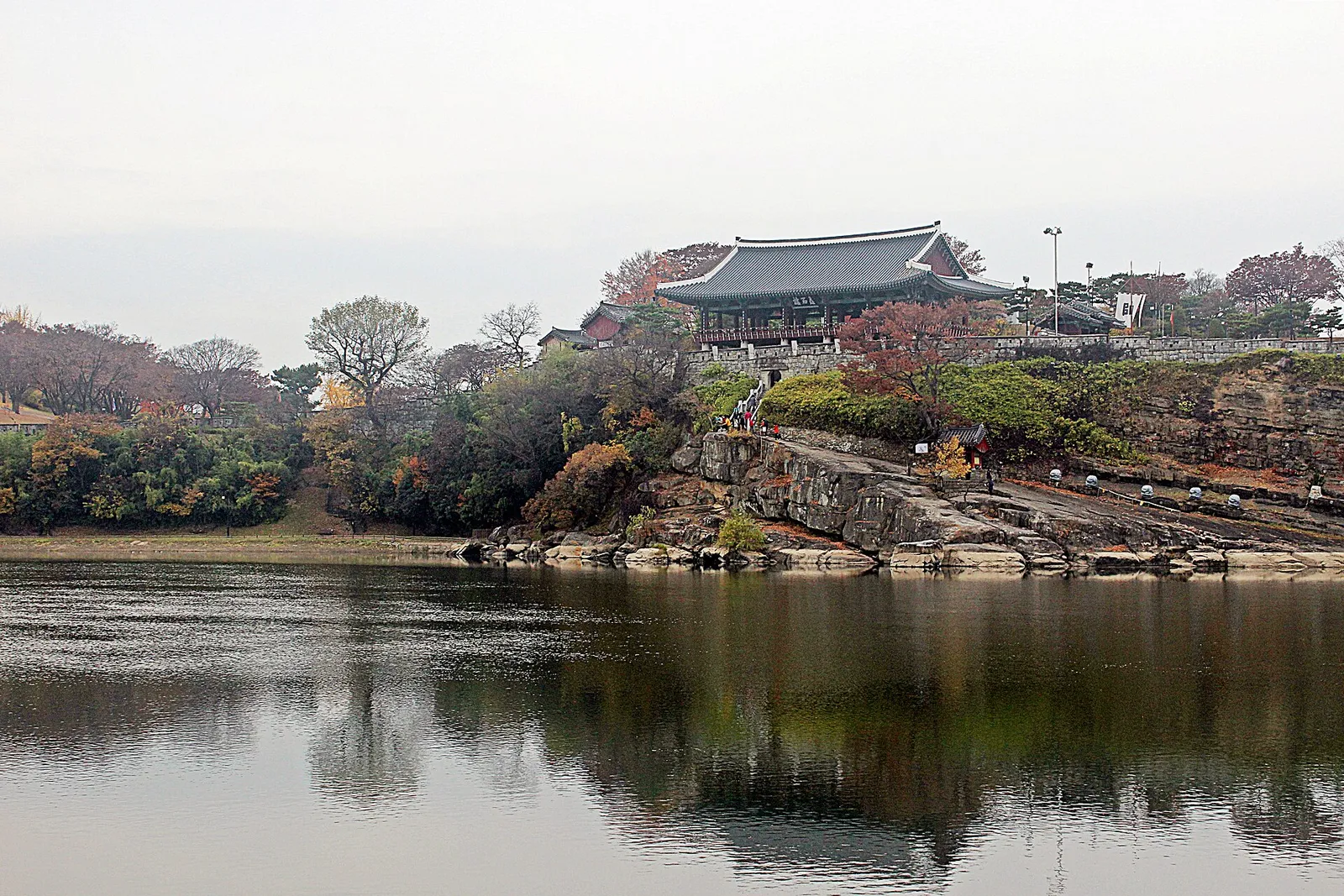
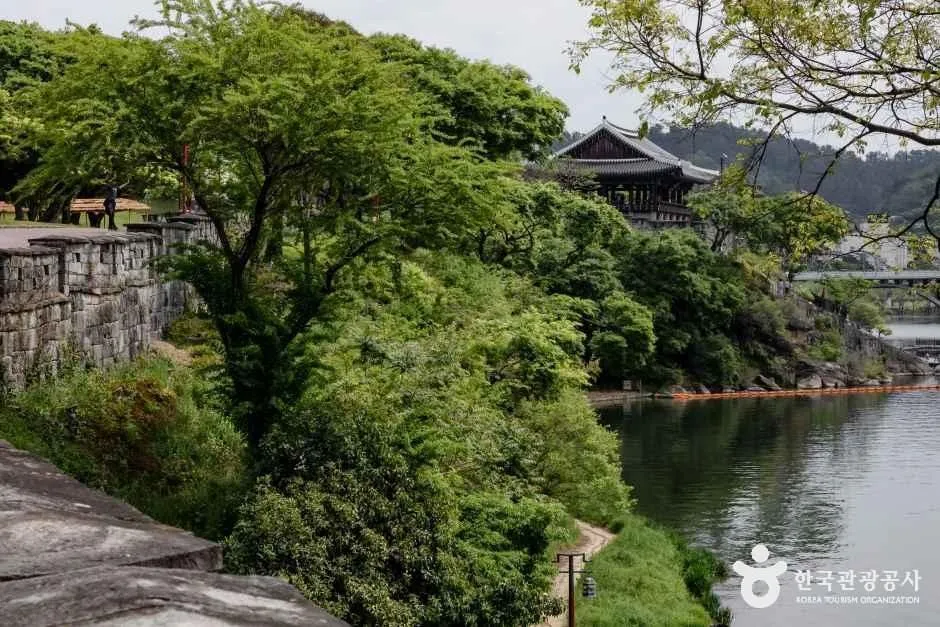
Jinju Fortress, Chokseongnu (촉석루), Uiam, Uigisa and the Jinju National Museum are all at or around one address, 626 Namgang-ro. The Jinju Daecheop History Park and the tourist office are next door at 7 Nongae-gil, and the intercity bus terminal sits on the same road at 712 Namgang-ro. Across the river in Manggyeong-dong are the Yudeung Exhibition Hall and the Travel Lounge.
The exception is the train station, out in Gajwa-dong, nowhere near any of this. Arrive by bus and you get off beside the sights; arrive by train and you have one more transfer to make.
Two festivals in the same month
The Gaecheon Arts Festival has confirmed 2026 dates. The 75th edition runs Friday 9 October to Sunday 18 October 2026, at venues across the city. It is described as Korea’s first regional general arts festival, founded in 1949 as the Yeongnam Arts Festival and renamed at its tenth edition in 1959. At its core are competitions in gugak, dance, literature, fine art, photography, theatre and sijo singing.
The Jinju Namgang Yudeung (lantern) Festival now has 2026 dates too. A city press release puts it at 3 to 18 October, across Jinjuseong and the Namgang riverside. It was named a Ministry of Culture “global festival” for 2026.
That overlaps the Gaecheon Arts Festival by ten days. Come between 9 and 18 October and you get both at once.
One gap remains: the 2026 admission fee could not be confirmed. The press release says nothing about pricing, and the festival’s own site is unreachable. The “free” shown on the city’s tourism database page is the 2025 figure and should not be relied on. Check with the organising committee on 055-761-9111.
On the lanterns’ origin: the city says that during the Jinju Fortress battles of the Imjin War, sky lanterns were flown and lanterns floated on the Namgang as military signals and to send word to families — though it writes “it is said”, so treat that as tradition rather than record. Officially, lanterns were floated to honour the 70,000 who died when the fortress fell in 1593, and the practice continued from there.
In spring, the Jinju Strawberry Festival runs 10 to 12 April 2026 at Jinseo Middle and High School and around Sugok-myeon.
Weather and timing
The city describes itself as having “very few weather-related disasters — snow, rain or wind”, an average annual temperature of 13.5°C and rainfall of 1,493 mm. Month-by-month normals are not here: the figures could not be retrieved from the Korea Meteorological Administration site.
October is the peak season, with both festivals and good weather. The trade-off is that rooms get tight. For quiet, spring or November is better.
Practical notes
- One night is enough. Everything worth seeing is clustered at the fortress.
- Day-trip it from Busan if you can — 1 hour 30 minutes each way from Sasang.
- Coming by train means one more leg. The station is in a different part of town.
- Bring a transport card. T-money and Cashbee work, and card fares beat cash.
- Avoid Mondays. The Jinju National Museum and the Yudeung Exhibition Hall both close.
- Wear hanbok and the fortress is free to enter.
Wrapping up
Jinju is not a city you stay in for days. It is a city where a single day can be used very densely: one fortress holds two battles of the Imjin War, the Nongae story and a national museum of the objects from it, all within a walk.
Come in October and two festivals overlap; at any other time the lanterns are still on display at the exhibition hall. Adding a day to a Busan trip is the most realistic way to use it.
More in this series: what to see, what to eat and where to stay.