 Now, Yeogi
What to See in Jinju: Jinjuseong, Chokseongnu and the Namgang Lanterns (2026)
Jinju Fortress hours and tickets, Chokseongnu, Nongae at Uiam, and the lantern question.
Places in this post
- Address
- 626 Namgang-ro, Bonseong-dong, Jinju, Gyeongsangnam-do
- Hours
- Gates open 05:00–23:00 March–October, 05:00–22:00 November–February / Paid viewing 09:00–18:00
- Menu
- Adult ₩2,000 · Teenager / soldier ₩1,000 · Child ₩600
- Tip
- Admission is free if you are wearing hanbok. Guided commentary must be booked in advance on 055-749-7449.
- Address
- 626-35 Namgang-ro, Jinju, Gyeongsangnam-do (inside Jinjuseong)
- Hours
- 09:00–18:00, last entry 17:30. Closed every Monday.
- Menu
- Museum admission Free
- Tip
- The museum is free, but it stands inside Jinjuseong, so you still pay the fortress admission to reach it.
- Address
- 207 Manggyeong-ro, Manggyeong-dong, Jinju, Gyeongsangnam-do
- Hours
- 10:00–21:00 March–November, 10:00–18:00 December–February. Closed every Monday.
- Menu
- Adult ₩2,000 · Teenager / soldier ₩1,000 · Child ₩500
- Tip
- You can see the lanterns outside the festival period. It opened in 2023.
Sightseeing in Jinju is concentrated in one place. Jinjuseong (진주성), the fortress on the Namgang, holds the walls, the pavilion, the shrine and a national museum between them, and the autumn festival happens on the river directly in front of it. One day is enough; two is comfortable. Prices and times below are as of September 2026.
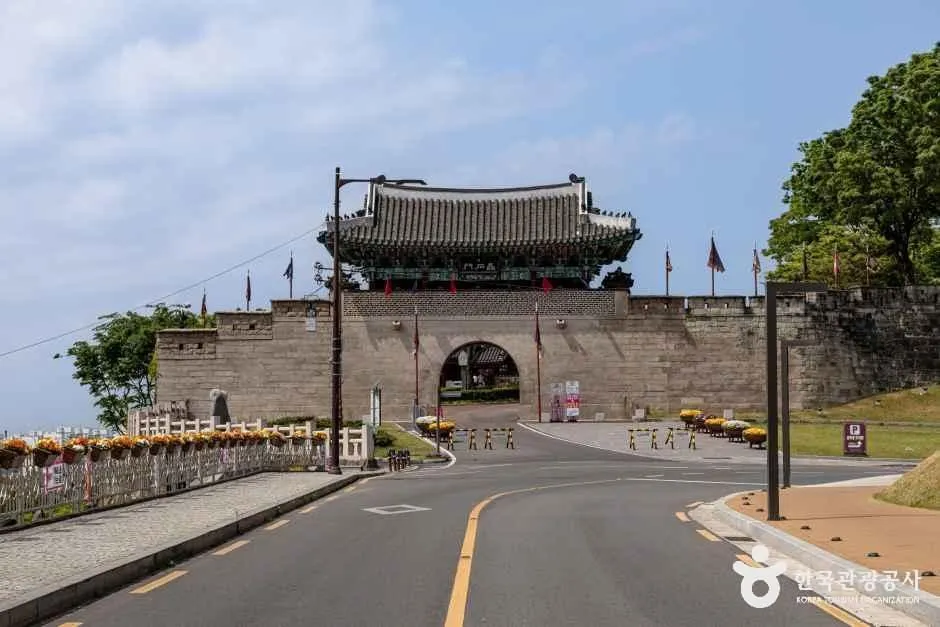
Jinjuseong
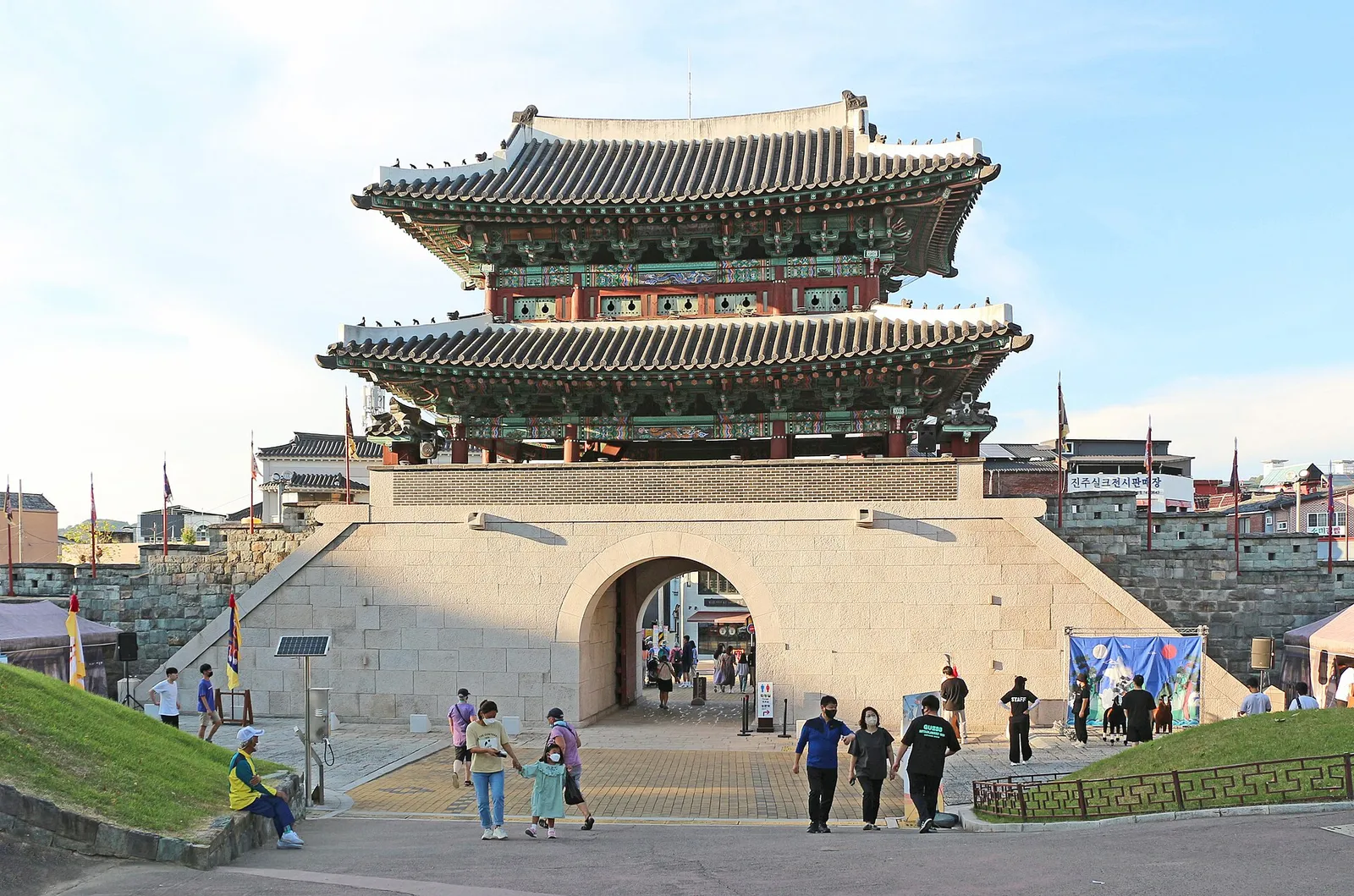
The address is 626 Namgang-ro and the wall runs 1,760 metres around. Designated a Historic Site on 21 January 1963, it began as an earthwork and was rebuilt in stone in 1379 by the Jinju magistrate Kim Jung-gwang.
The gates open at 05:00, closing at 23:00 from March to October and 22:00 from November to February. But the paid viewing hours are 09:00–18:00, which is a different thing: early in the morning or late in the evening, some sections are only open to walk through.
Admission is ₩2,000 (about $1.50) for adults, ₩1,000 for teenagers and soldiers, ₩600 for children, less for groups of 30 or more. The exemptions are unusually broad: under-6s, over-65s, Jinju residents, national merit holders and disabled visitors go free — and so does anyone wearing hanbok, which applies to travellers as much as locals and is worth planning around.
Parking is ₩500 per 30 minutes (₩1,000 for a large vehicle), and the tour bus car park opposite the west gate ticket office is free. No bicycles, scooters or pets inside the walls, and guided commentary needs advance booking on 055-749-7449.
What happened here
Taken at face value this is a well-restored wall. Knowing the story changes it.
October 1592, the first battle. Magistrate Kim Si-min held the Japanese off with 3,800 men. Sources differ on the size of the Japanese force: the Korea Heritage Service puts it at about 30,000, material from the city’s Yudeung Exhibition Hall at about 20,000. This is the Battle of Jinju, one of the three great victories of the Imjin War, Japan’s invasions of Korea.
June 1593, the second battle. The Japanese came back with around 100,000 men and the fortress fell. The records say 70,000 soldiers and civilians died.
The site kept its official role long afterwards: the Right Gyeongsang military command moved here in 1604 and the Gyeongsangnam-do provincial government sat here until 1925. What you see today was completed by rebuilding Chokseongmun gate in 1972 and Gongbukmun gate in 2002.
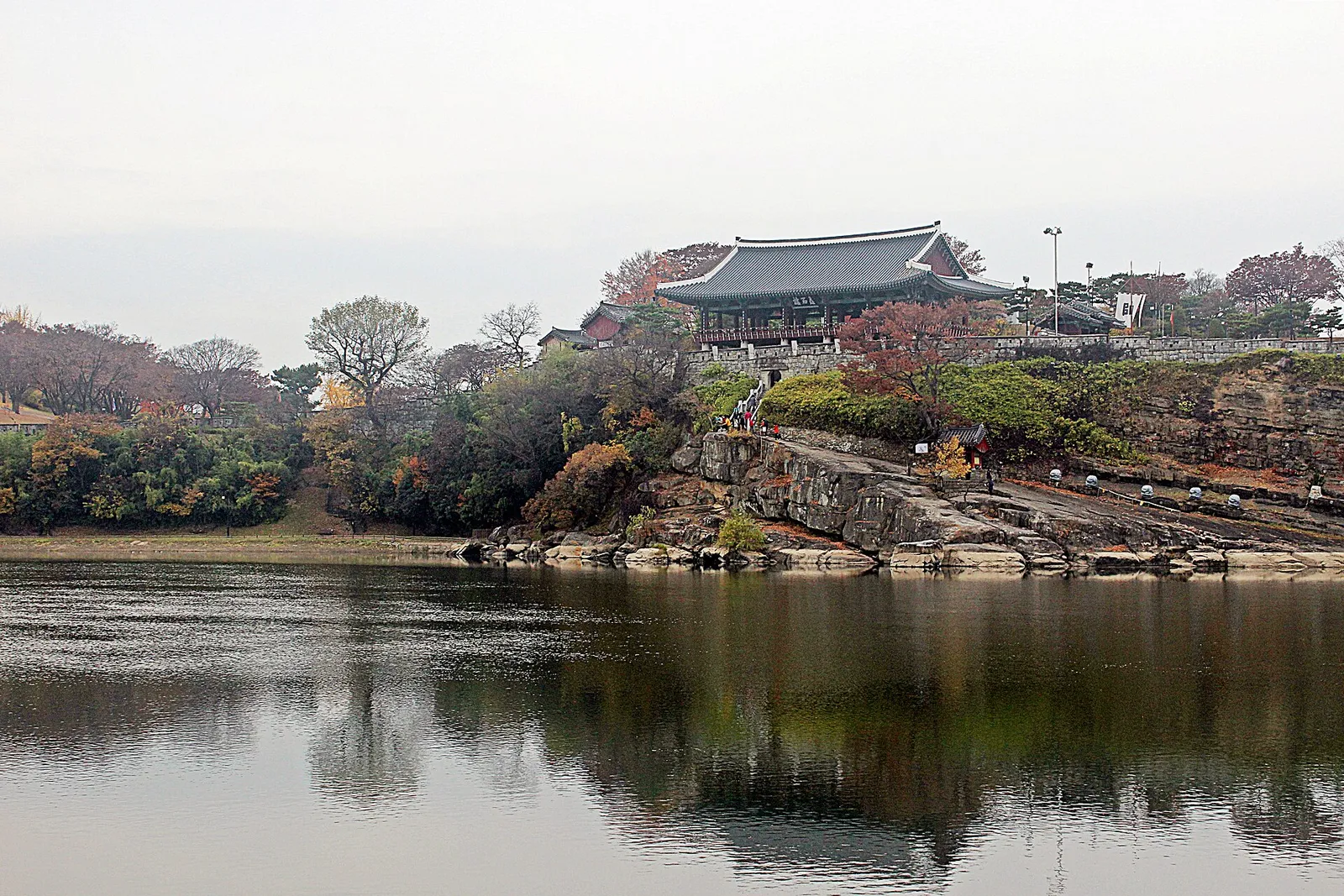
Chokseongnu
The first of the Eight Scenic Views of Jinju, built in 1241 by the magistrate Kim Ji-dae. In wartime it was the command post for the southern side of the fortress; in peacetime a place of scholarly leisure and a civil service examination hall — hence its other names, Namjangdae and Jangwollu. Five bays by four under a hipped-and-gabled roof, designated Gyeongsangnam-do Tangible Cultural Heritage on 11 June 2020.
One thing is worth knowing before you go. The building standing there now was built in 1960. The original burned in the Imjin War and was rebuilt in 1618; it was designated a National Treasure in 1948, then burned again in the Korean War in 1950. The present pavilion was reconstructed in 1960 by the Jinju Historic Site Preservation Society, with national, provincial and city funds plus donations from citizens.
Uiam and Nongae
At the water’s edge below Chokseongnu is a rock called Uiam, the second Scenic View, a Gyeongsangnam-do Monument since 2001, its surface measuring 3.65 by 3.3 metres.
After the fortress fell in 1593, Nongae is said to have seized a Japanese commander and jumped with him from this rock into the river. In 1629 a Jinju scholar, Jeong Dae-ryung, carved the two characters 義巖 into the rock’s west face; on the cliff beside it is the inscription “Ildae janggang, cheonchu uiyeol”. Next to Chokseongnu stands Uigisa, the shrine to Nongae, founded in 1740 and rebuilt in 1956 with citizen donations.
The Nongae story has to be read in two parts.
What the records confirm. Nongae was a government kisaeng of Jinju-mok, she died in 1593, and her year of birth is unknown. The orally transmitted story first reached writing in Yu Mong-in’s Eou yadam, around 1620, twenty-eight years after her death. The Uiam stele was erected in 1722 and Uigisa founded in 1740, at which point uigi, “righteous kisaeng”, became her official title.
What was added from the 19th century on. That she came from Jangsu in Jeolla-do; that she was born into a yangban family; that her surname was Ju; that she was Choe Gyeong-hoe’s lover. On these the Encyclopedia of Korean Culture states explicitly that with the documentary evidence this thin, excessive romanticising should be treated with caution. Even City Hall writes the story of the rings on her ten fingers as something “handed down”.
Jinju National Museum
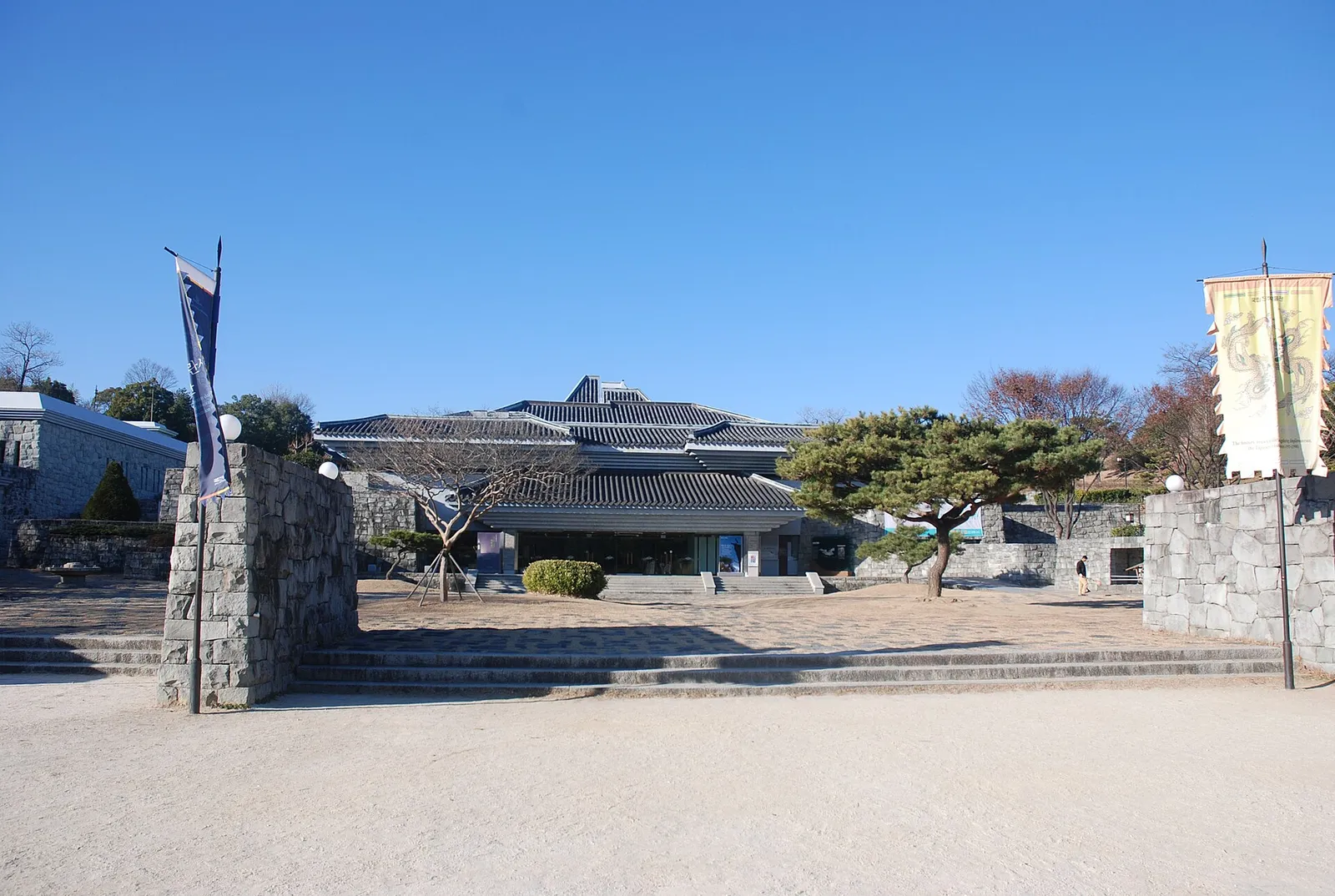
It is inside Jinjuseong, at 626-35 Namgang-ro. It opened in 1984 and changed direction in 1998 to become a museum specialising in the Imjin War, which makes the natural order obvious: see the walls, then the objects from the battle fought over them.
The permanent galleries are the Imjin War Hall, the History and Culture Hall, the Duam Hall and an outdoor exhibition area. Hours are 09:00–18:00 every day it opens, last entry 30 minutes before closing, closed every Monday, 1 January, and the days of Seollal and Chuseok. If a Monday is a public holiday it opens and closes the next weekday instead.
The pricing is easy to misread, so plainly: the museum itself is free, but because it stands inside Jinjuseong, you pay the fortress admission to reach it. The museum’s own visitor information points this out separately.
Foreign-language access is limited: the 25 audio guides lent out free of charge support Korean only, and for other languages you ask at the information desk on 055-740-0698.
The Namgang Yudeung Festival
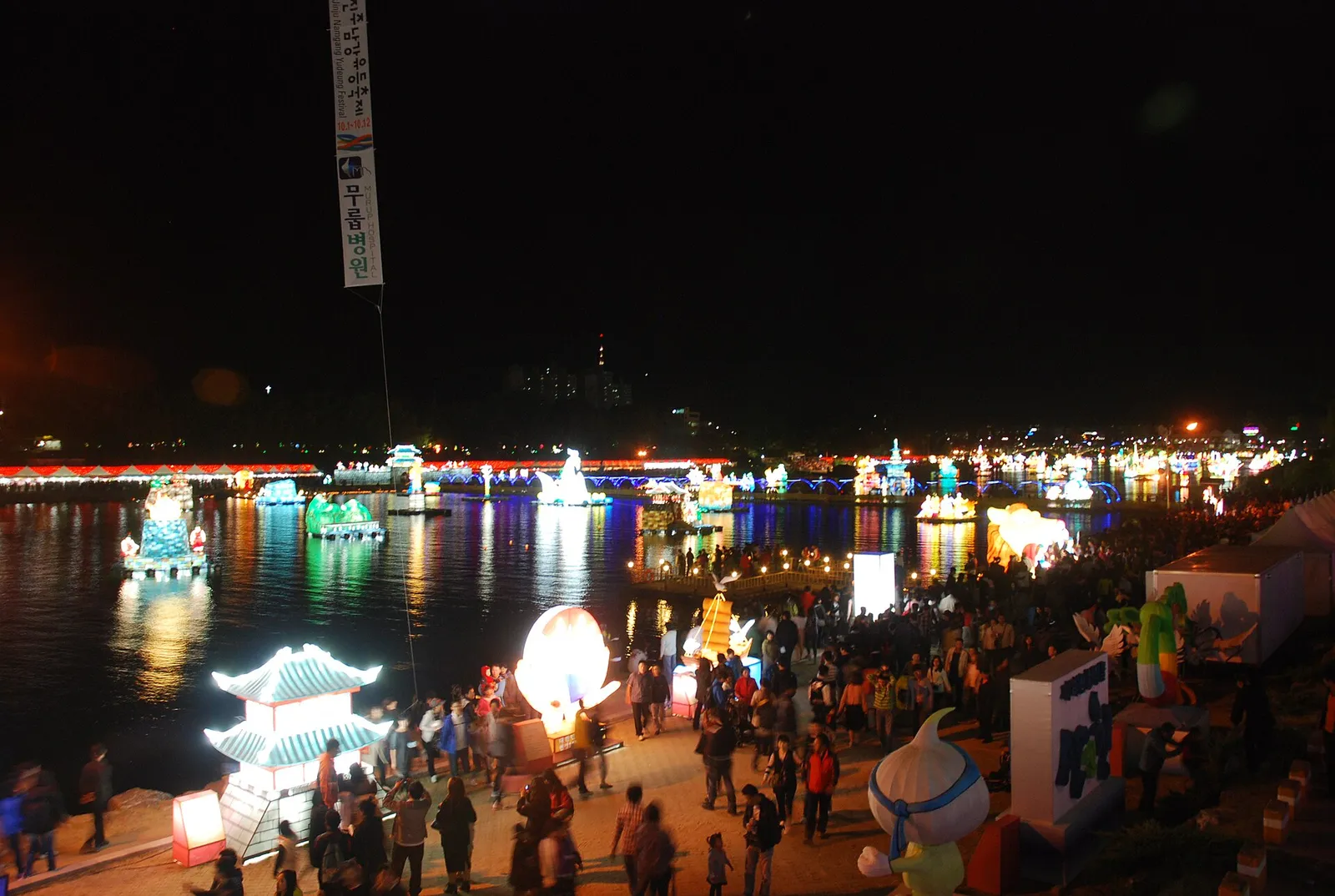
Jinju’s signature festival takes place around Bonseong-dong and entry is free, with large lanterns floated on the Namgang and more set up inside the fortress.
The 2026 dates are 3 to 18 October, confirmed in a Jinju city press release. The site is Jinjuseong and the Namgang riverside, and the festival was named a Ministry of Culture “global festival” for 2026. It overlaps the Gaecheon Arts Festival (9–18 October) by ten days.
The admission fee for 2026 could not be confirmed, though: the press release is silent on pricing and the festival’s own site is unreachable. The “free” on the city’s tourism database is the 2025 figure. Check with the organising committee on 055-761-9111.
Missing it is not fatal. The Jinju Namgang Yudeung Exhibition Hall opened in 2023 and shows lanterns year-round, at 207 Manggyeong-ro: ₩2,000 adults, ₩1,000 teenagers and soldiers, ₩500 children, open 10:00–21:00 March to November and 10:00–18:00 December to February, closed Mondays. To make a lantern yourself, the Yudeung Experience Hall at 15 Manggyeongbuk-gil 43beon-gil runs 09:00–17:00 on weekdays; weekends need a booking for 10 or more.
Outside the city centre
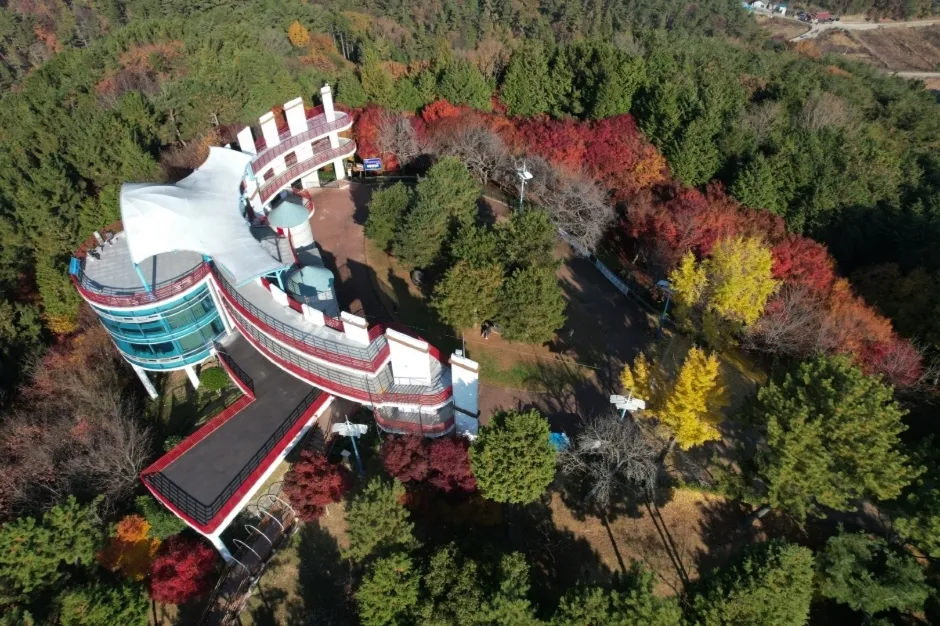
- Jinyangho Park wraps the artificial lake where the Deokcheongang and Gyeonghogang meet; “sunset over Jinyangho” is the eighth Scenic View. Observation tower, woodland, sunset deck trail.
- Jinyangho Zoo, the province’s first, holds about 290 animals across 45 species. 09:00–18:00 March–October, 09:00–17:00 November–February, closed Tuesdays. ₩1,000 / ₩800 / ₩500.
- Traditional bull fighting, two bulls pushing against each other, runs at a 3,000-seat arena at 100 Panmun-odong-gil every Saturday at 13:30, April to September; a free national competition runs during the October festival.
- Gyeongsangnam-do Arboretum in Ibanseong-myeon covers 102 hectares with some 3,340 species. ₩1,500 / ₩1,000 / ₩500, free parking.
- Munsan Catholic Church, Jinju’s first from 1905, has a 1923 church with a Korean tiled roof standing alongside a Western-style church of 1937 in the same compound. Registered heritage since 2002; hours and admission are not given in official sources.
Practical notes
- Jinjuseong alone takes half a day. The walls, Chokseongnu, Uiam, Uigisa and the museum are all inside the fortress or directly below it.
- Hanbok gets you into Jinjuseong free. Whether there are rental shops in town is something we could not confirm.
- Avoid Mondays, when the museum and the Yudeung Exhibition Hall both close. The zoo closes Tuesdays instead.
- Five tourist information centres, among them Jinju Daecheop History Park (7 Nongae-gil), the Manggyeong-dong Travel Lounge, Jinju Station and the Jinyangho observation tower.
- The grounds are not flat. Four wheelchairs and three pushchairs can be borrowed at the Gongbukmun ticket office.
Wrapping up
Jinju is not a city with a great many sights. What it has instead is one site of unusual density: the walls, the pavilion, the story attached to a single rock and a museum of the objects from that story, all within walking distance. Time it with the October festival and the whole river changes; miss it, and the exhibition hall shows you the lanterns anyway.
More in this series: the Jinju travel guide, where to stay and what to eat.