 Now, Yeogi
Where to Stay in Seoul: 8 Neighborhoods Compared for First-Time Visitors (2026)
Myeongdong, Hongdae, Jongno, Gangnam, Itaewon, Seongsu, Jamsil or Dongdaemun? A practical comparison of Seoul's main areas to stay in, with subway lines, airport access, hotel price bands and what is within walking distance.
Seoul is big, but the decision is smaller than it looks. Almost every hotel a visitor considers sits within a 30-minute subway ride of the others, so the real question is not “which area has the best access” — they all do — but what you want to walk out of your hotel and find. Shopping? Bars? Palaces? Quiet cafés? This guide compares the eight areas most visitors actually choose, with the trade-off each one makes.
Prices below are rough per-night bands for a double room in low-to-mid season, taken from booking-site averages as of September 2026. Expect 20–40% more in April–May and September–October, and less in December–February.
The 30-second answer
- First trip, want everything nearby → Myeongdong
- Nightlife, cheap eats, young crowd → Hongdae
- Palaces, hanok, traditional Seoul → Jongno / Insadong / Bukchon
- Shopping, K-pop, business → Gangnam
- International food, walkable bars → Itaewon / Hannam
- Cafés, design, current trends → Seongsu
- Family with kids, big attractions → Jamsil
- Late-night shopping, cheap rooms → Dongdaemun
Comparison at a glance
| Area | Best for | Subway | From Incheon Airport | Typical hotel |
|---|---|---|---|---|
| Myeongdong | First-timers, shopping | Line 4 Line 2 | Bus 6001 direct, or AREX to Seoul Station + 1 stop | ₩90,000–220,000 |
| Hongdae | Nightlife, budget | Line 2 Gyeongui-Jungang Line AREX | AREX all-stop, direct | ₩60,000–160,000 |
| Jongno / Bukchon | Palaces, culture | Line 1 Line 3 Line 5 | Bus 6002, or AREX + Line 1 | ₩70,000–250,000 |
| Gangnam | Shopping, K-pop | Line 2 Line 9 Sinbundang Line | Bus 6103 to COEX, or AREX + Line 9 | ₩150,000–500,000 |
| Itaewon / Hannam | Food, bars | Line 6 | AREX + Line 4 + Line 6, or Bus 6010 to Hannam | ₩90,000–350,000 |
| Seongsu | Cafés, design | Line 2 Suin-Bundang Line | AREX + Line 2 | ₩100,000–200,000 |
| Jamsil | Families, theme park | Line 2 Line 8 | Bus 6006, or AREX + Line 2 | ₩120,000–450,000 |
| Dongdaemun | Late shopping, budget | Line 1 Line 2 Line 4 Line 5 | Bus 6001, or AREX + Line 1 | ₩60,000–200,000 |
Myeongdong — the safe first choice
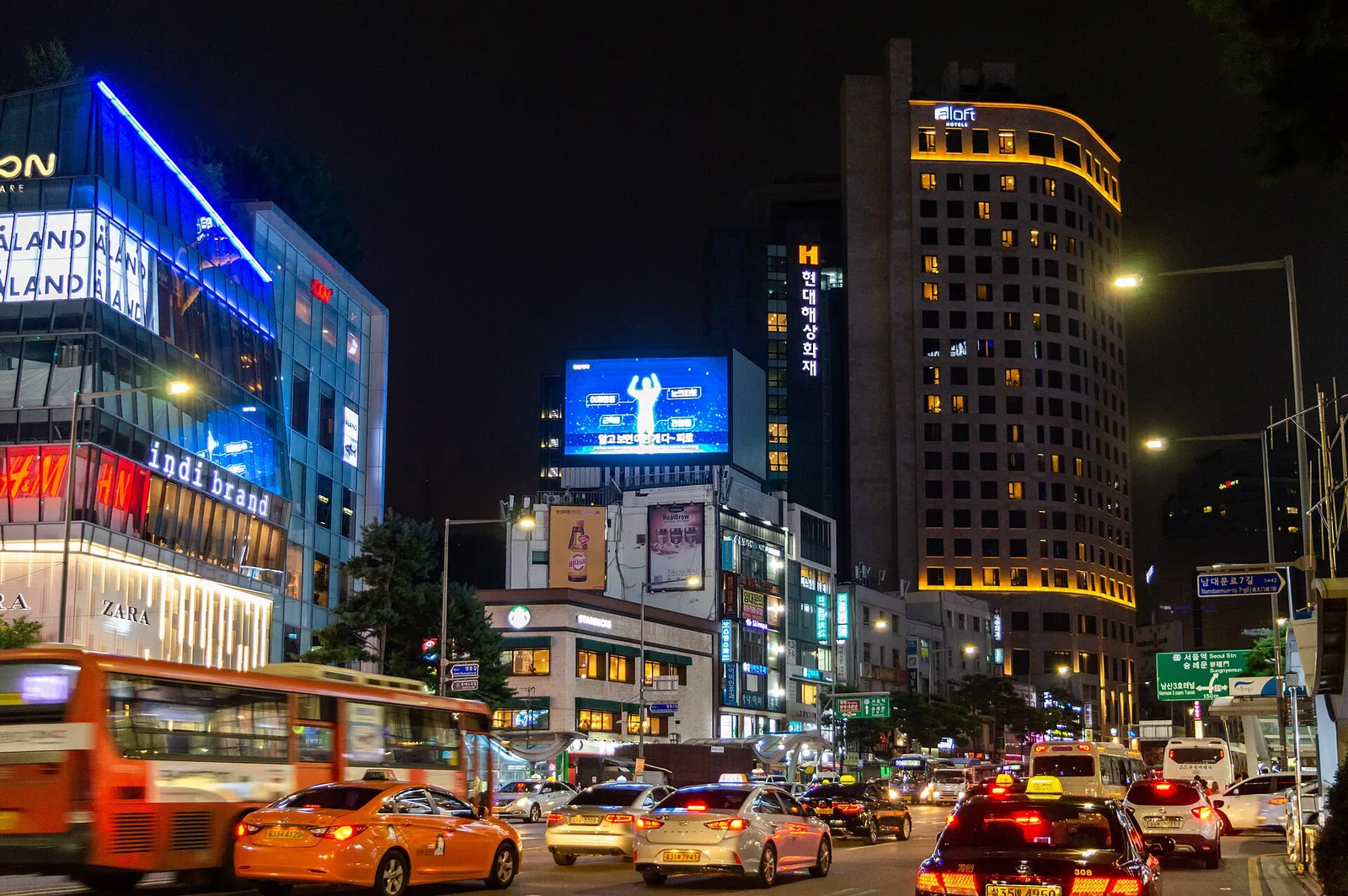
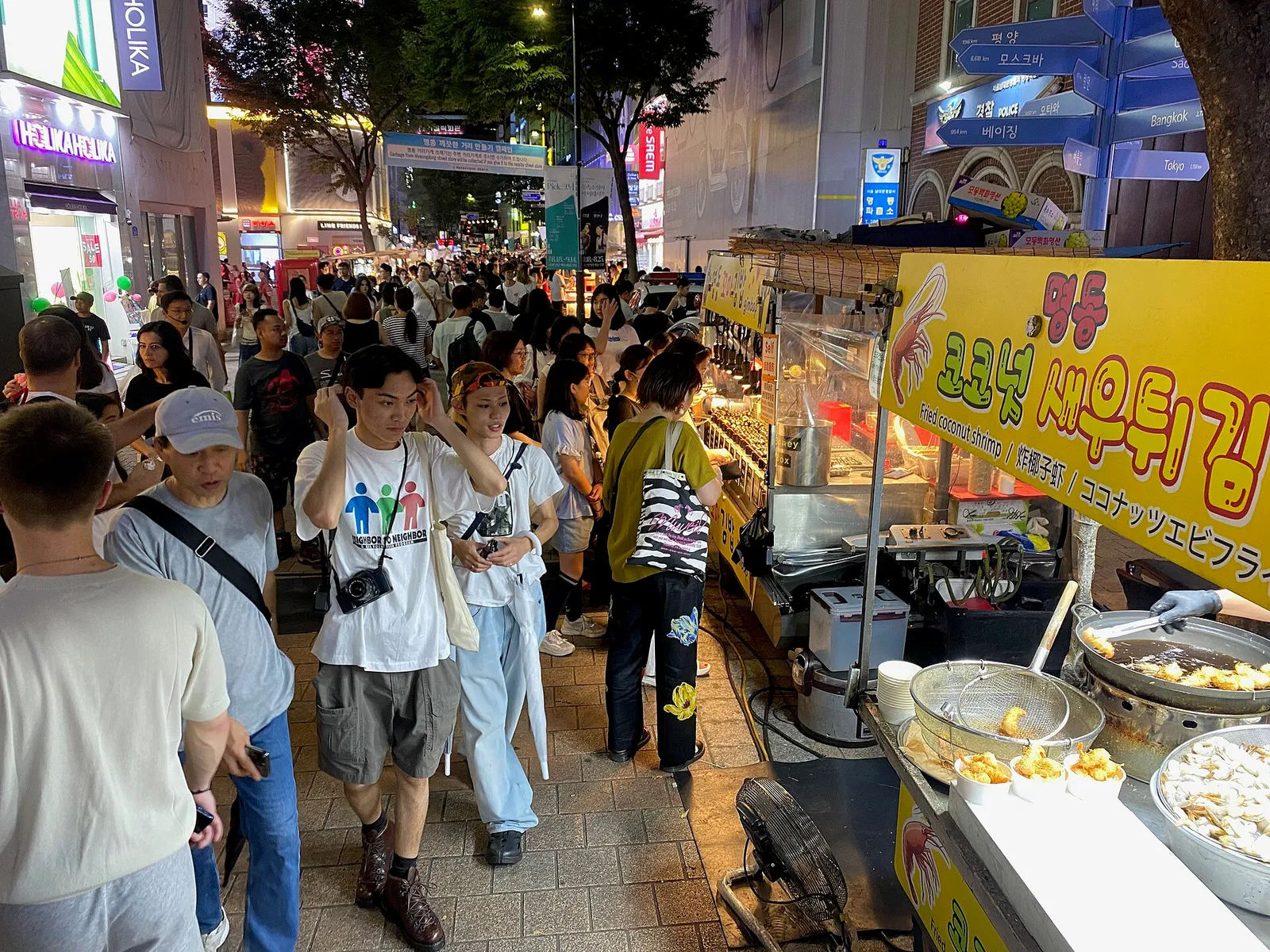
If this is your first trip and you do not want to overthink it, stay here. Myeongdong is a dense grid of cosmetics shops, department stores and street-food carts, wrapped around Myeongdong Station on Line 4 and Euljiro 1-ga on Line 2. Almost every hotel is under ten minutes’ walk from a subway entrance.
Within walking distance: Namdaemun Market, the cable car up to N Seoul Tower, Cheonggyecheon stream, the Olive Young flagship, several duty-free floors. Gyeongbokgung Palace is two stops away.
Airport access is the best in the city. Bus 6001 drops you on the main street, and if you take the AREX train to Seoul Station you are one stop from your hotel.
The catch: it is loud, crowded and priced for tourists. Restaurants on the main drag are not where locals eat. Step one or two streets back toward Chungmuro and prices drop noticeably.
Hongdae — nightlife and the best airport link
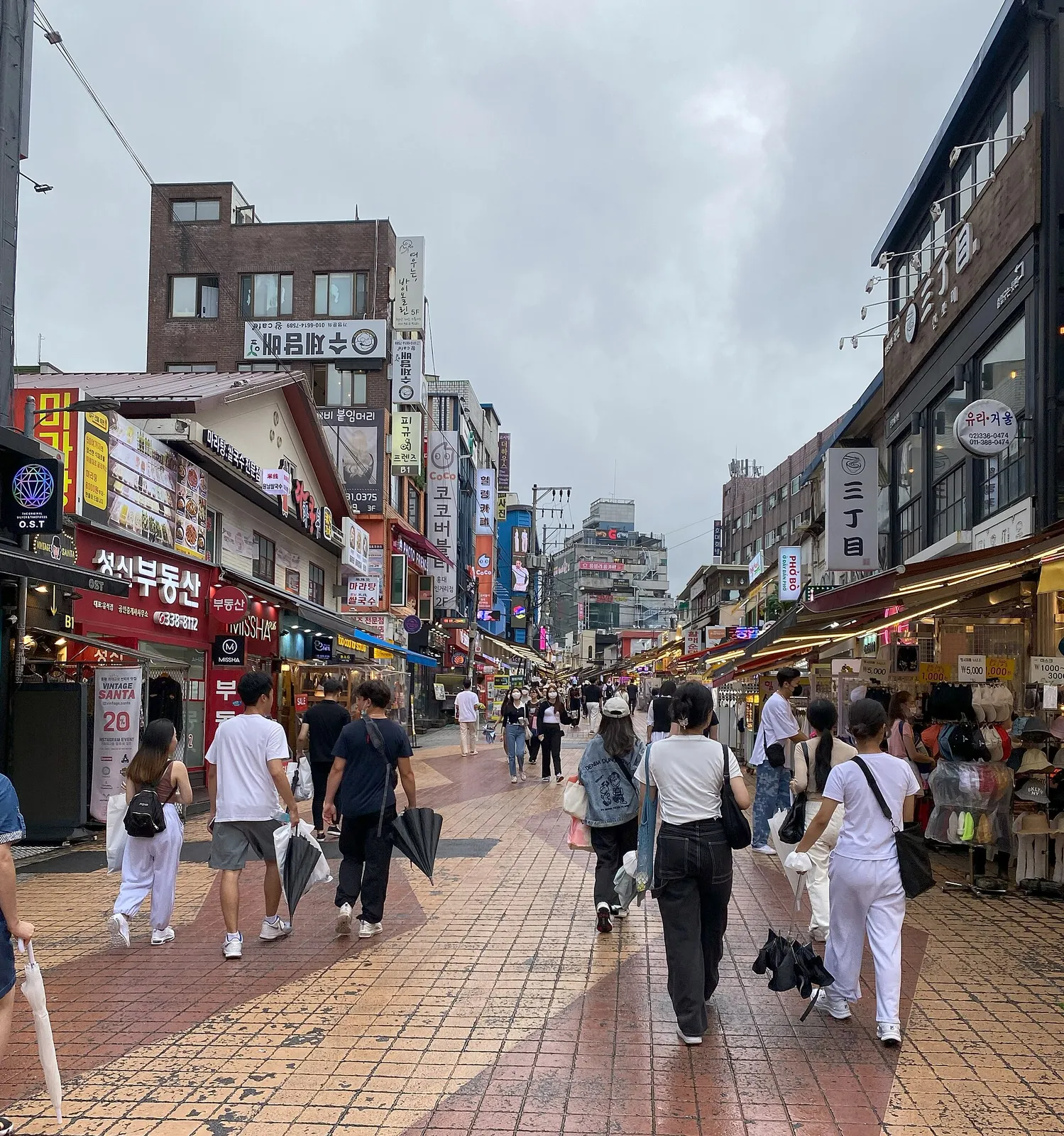
Hongdae grew around Hongik University’s art school and still feels like it: buskers on the pedestrian street, thrift shops, live-music basements, and restaurants that stay open past midnight. It is the cheapest of the central areas for a decent room.
The single biggest practical advantage is the airport. Hongik Univ. Station is on the AREX line, so you arrive from Incheon on one train with no transfer — see our Incheon Airport to Seoul guide for fares. The station also has Line 2 and Gyeongui-Jungang Line, which reach most of the city directly.
Within walking distance: Yeonnam-dong’s café lanes along the old railway park, Mangwon Market, Sangsu’s bar streets, Hongdae’s shopping street.
The catch: noise. Rooms facing the main streets get music until 2am on weekends. Ask for a high floor or a courtyard-facing room, and check whether the building is on a party block before booking.
Jongno, Insadong and Bukchon — old Seoul
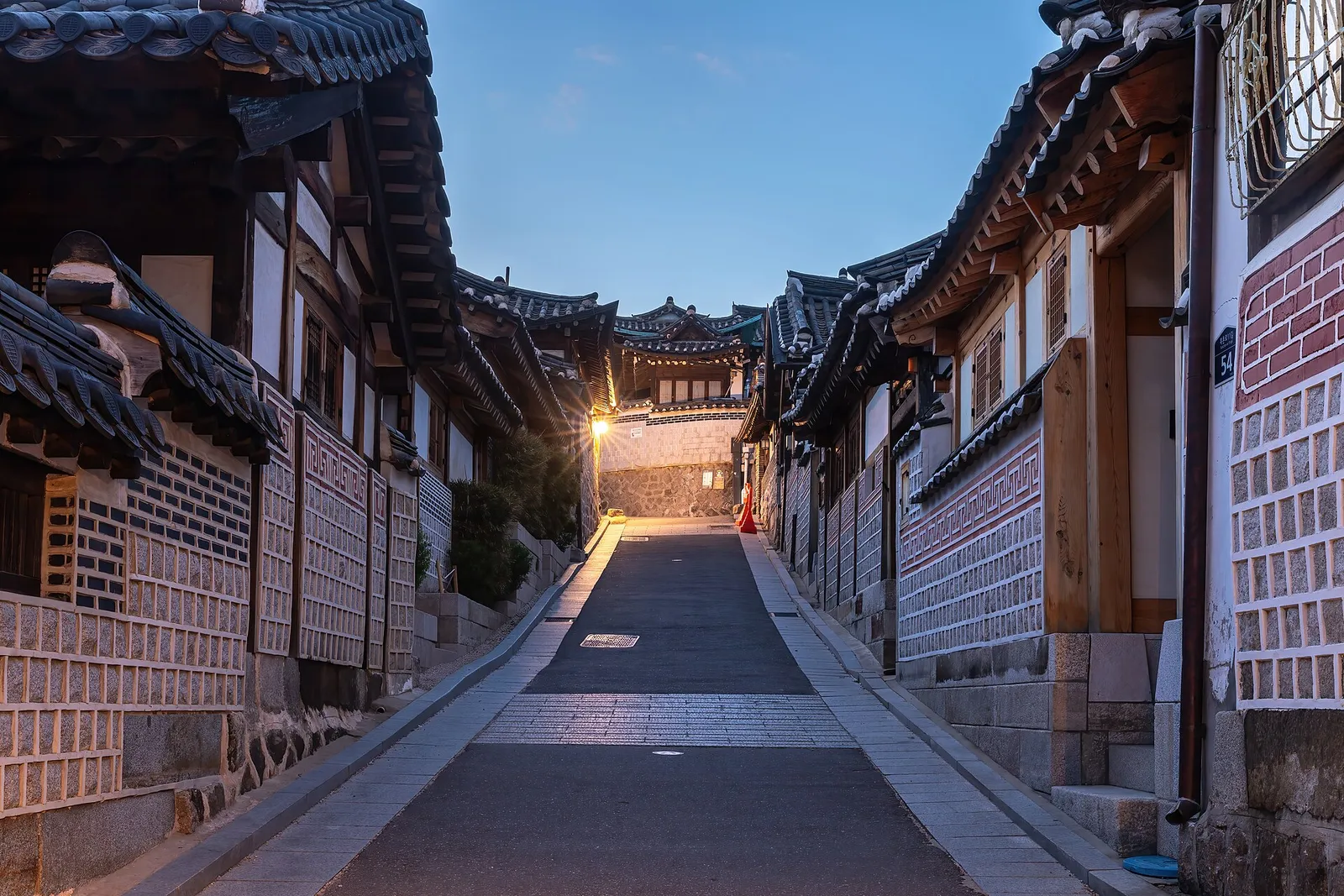
This is where Seoul started. Five royal palaces, the hanok lanes of Bukchon, the tea houses and craft shops of Insadong, and Gwangjang Market’s food alleys are all in one walkable stretch north of Cheonggyecheon.
Accommodation splits into two very different types: international hotels around Gwanghwamun and Jongno 3-ga (on Line 1 Line 3 Line 5), and small hanok guesthouses in Bukchon where you sleep on a heated floor in a courtyard house. The hanok option is memorable and usually cheap, but rooms are small and bathrooms are sometimes shared.
Within walking distance: Gyeongbokgung and Changdeokgung palaces, Bukchon Hanok Village, Insadong, Ikseon-dong’s renovated alley cafés, Gwangjang Market.
The catch: it goes quiet early. If you want a late dinner and a bar afterwards, you will be taking a taxi or the subway to Euljiro.
Gangnam — shopping, K-pop and business
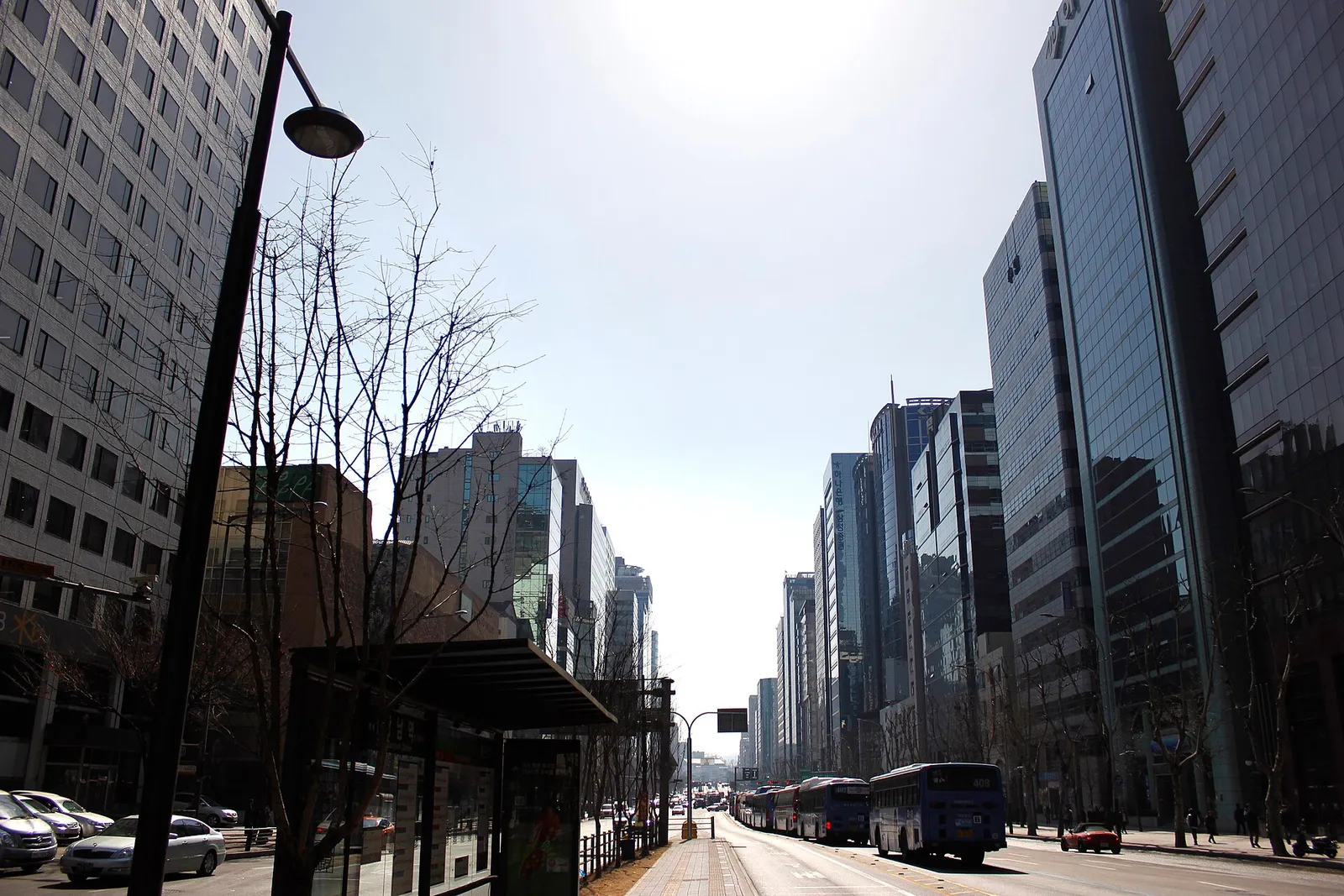
South of the river, Gangnam is wide boulevards, glass towers and the city’s most expensive hotels. It suits you if you are here for shopping at Apgujeong and Garosu-gil, a K-pop concert at one of the arenas, an event at COEX, or a business trip.
The area is spread out, so pick your station carefully: Gangnam Station (Line 2 Sinbundang Line) for shopping and restaurants, Samseong (Line 2) for COEX and the Starfield Library, Sinnonhyeon or Sinsa (Line 9 Sinbundang Line) for Garosu-gil.
The catch: it is the least atmospheric area on this list for a short holiday, and it is the priciest. The oldest parts of Seoul are 30–40 minutes away.
Itaewon and Hannam — food, bars, art
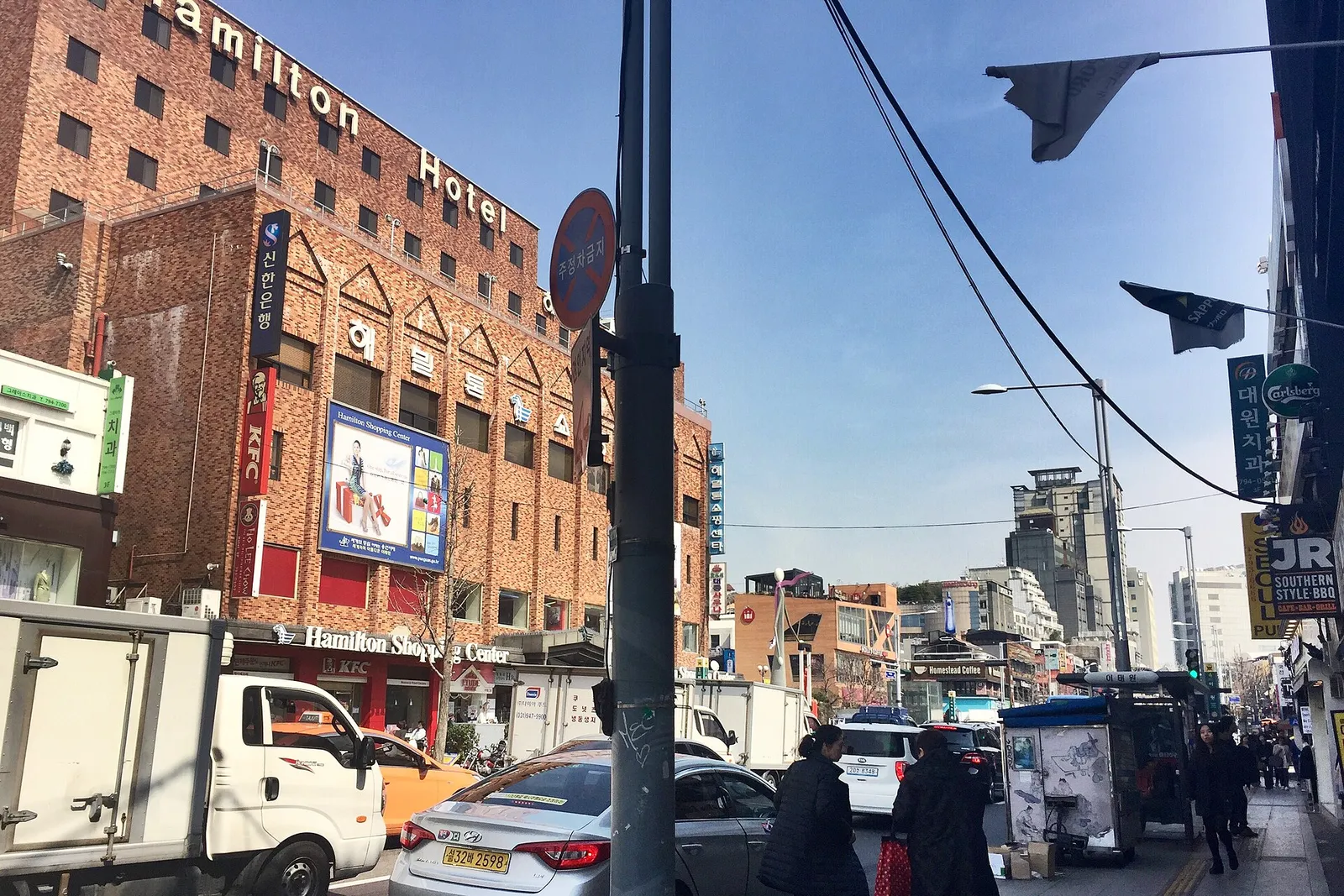
Itaewon is Seoul’s most international neighborhood, and the food shows it: Turkish, Indian, Mexican, halal-certified restaurants, and craft-beer bars, all along one hillside strip on Line 6. Next door, Hannam-dong is quieter and more expensive, with the Leeum Museum of Art, designer boutiques and some of the city’s best coffee.
Within walking distance: Leeum, the War Memorial of Korea, Gyeongnidan-gil’s restaurants, Haebangchon. The National Museum of Korea is two stops away — we have a full guide to visiting it.
The catch: Line 6 is a slow line that does not connect directly to Myeongdong or Gangnam, so expect a transfer most days. The hills are genuinely steep.
Seongsu — the current favourite
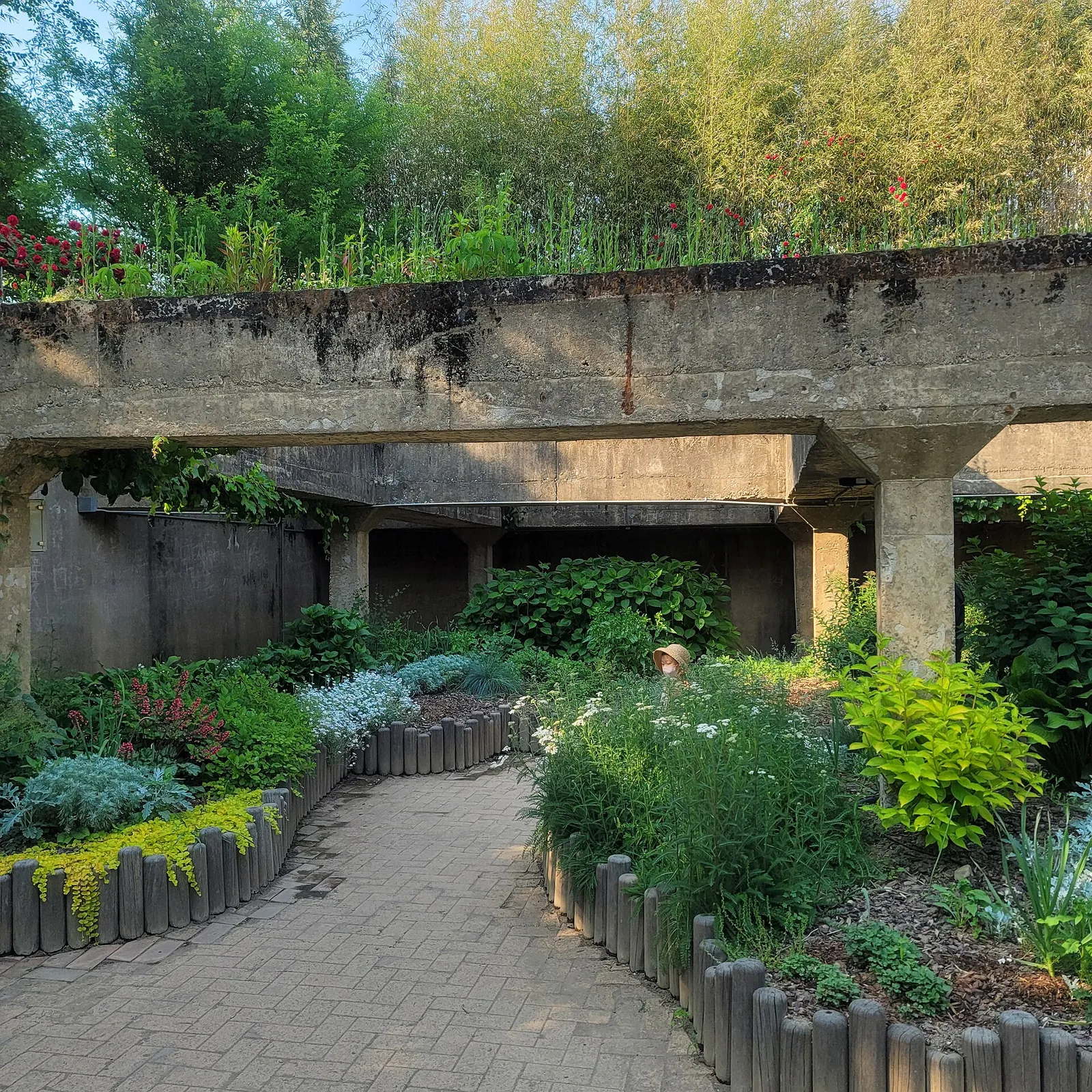
Seongsu was a shoe-factory district and now holds Seoul’s densest concentration of design cafés, concept stores and brand pop-ups, often inside the old red-brick workshops. Seoul Forest is on its western edge, which makes it the greenest of the central options.
Stay here if your trip is about cafés, photography and shopping for things you cannot buy at home. Take Line 2 to Seongsu Station or Suin-Bundang Line to Seoul Forest.
The catch: hotel supply is thin. Most stays are serviced residences or small boutique properties, and the classic tourist sights are 20–30 minutes away.
Jamsil — best for families
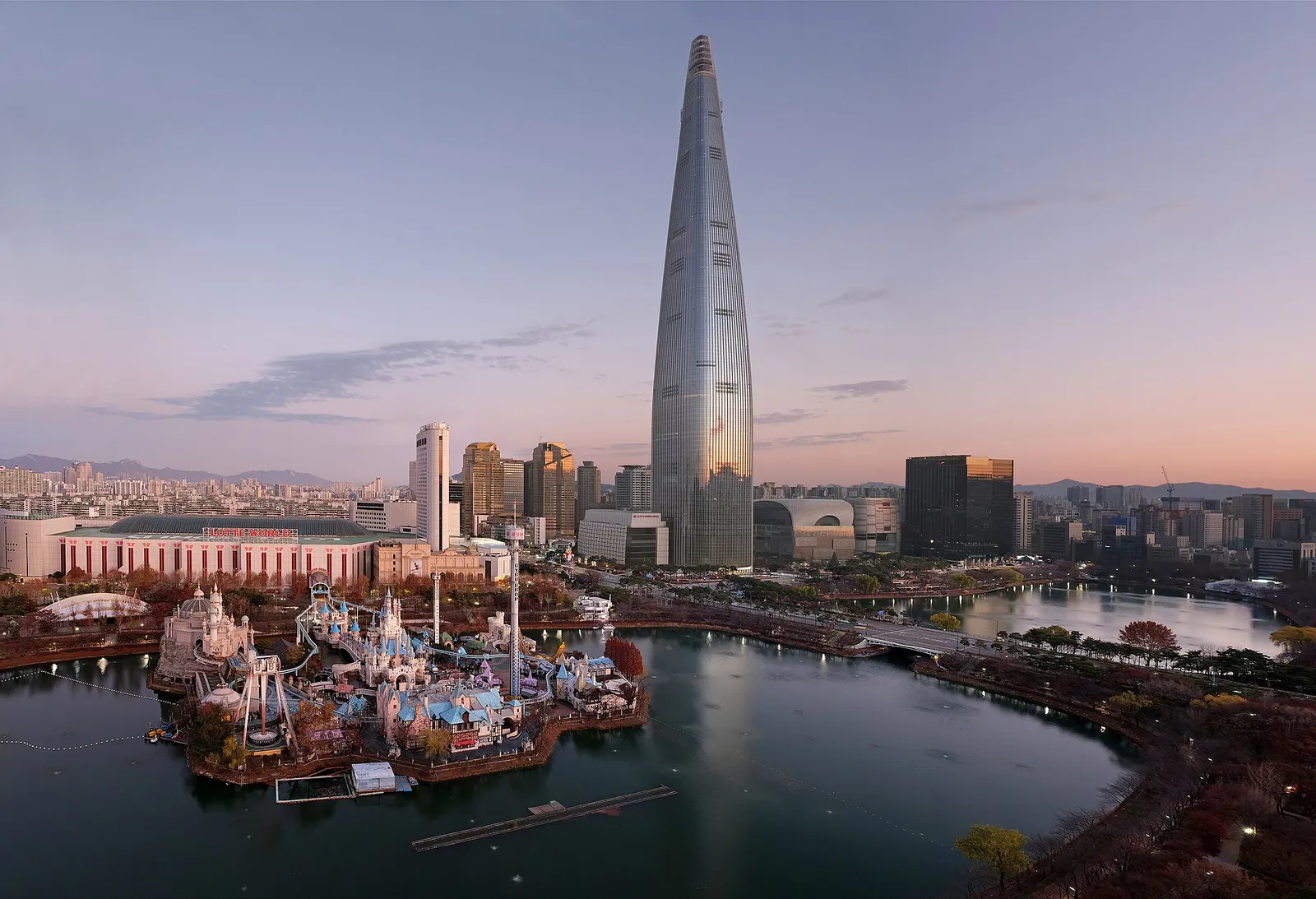
Everything a family needs is stacked in one place: Lotte World indoor and outdoor theme park, Lotte World Tower with the Seoul Sky observatory, an aquarium, a cinema, two department stores and a large mall, plus Seokchon Lake for a walk. Jamsil Station is a Line 2 and Line 8 interchange.
The catch: it is the far south-east corner. Gyeongbokgung is about 45 minutes away, so this works best if your trip is built around the attractions here rather than around old Seoul.
Dongdaemun — shop until 5am
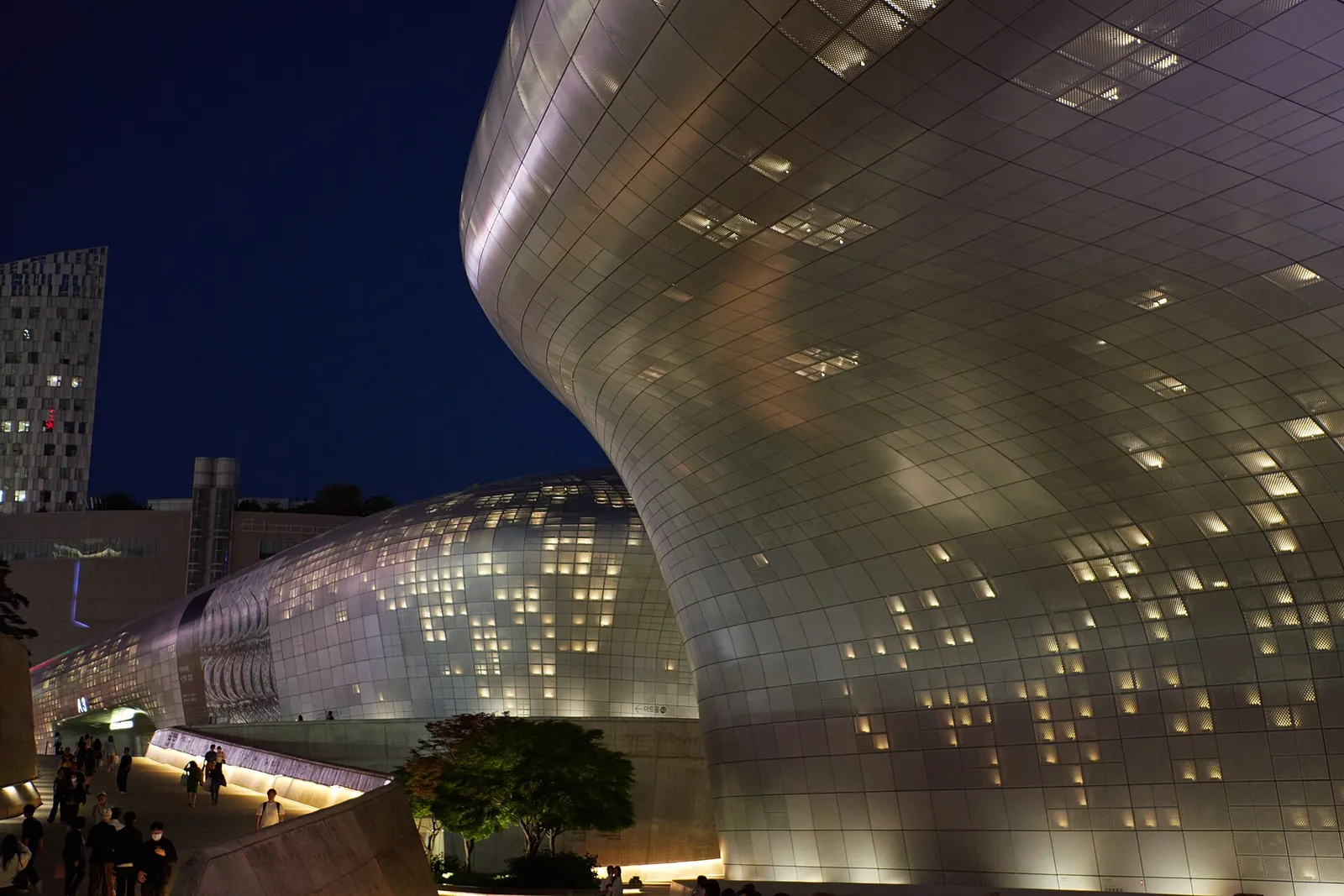
Dongdaemun’s wholesale fashion malls run through the night, some until 5am, and Dongdaemun Design Plaza hosts exhibitions and a night market on the plaza outside. Four subway lines meet here, so getting anywhere is easy, and rooms are among the cheapest in central Seoul.
Within walking distance: DDP, Gwangjang Market, Dongmyo flea market, Naksan Park’s city wall walk.
The catch: outside the malls the streets are more functional than charming, and the area around the wholesale market is busy with delivery traffic at odd hours.
Choose by what your trip is about
- Five days, first time, no strong preferences → Myeongdong, or Jongno if you prefer calm over convenience.
- Two nights only → Myeongdong or Hongdae. Do not spend your short trip commuting.
- Travelling with parents or small children → Jamsil, or a hotel directly above a Line 2 station.
- Nightlife is the point → Hongdae, with Itaewon as a close second.
- You have been to Seoul before → Seongsu or Hannam.
- Tight budget → Hongdae guesthouses or Dongdaemun business hotels.
- Arriving very late or leaving very early → Hongdae (direct airport train) or Seoul Station.
Booking notes
- Check the walk to the subway, not the distance to a landmark. Seoul is hilly, and “800m from the station” can mean a steep ten minutes with a suitcase.
- Rooms are small. A standard double in a mid-range Seoul hotel is often 15–18㎡. If you need space, look at serviced residences, which are common and often cheaper per night for longer stays.
- Peak weeks fill early. Cherry blossom season (early April) and autumn foliage (late October) sell out first, and prices rise 20–40%.
- Many hotels list a “city tax” separately. Compare final totals, not headline rates.
- Check-in is usually 15:00, check-out 11:00, and most hotels will hold luggage on either side at no charge.
Wrapping up
If you cannot decide, book Myeongdong for a first trip and Hongdae for a second one. Both put you a single train from the airport and within 30 minutes of everything else in this guide. Once you know which parts of Seoul you actually like, Seongsu, Hannam and Bukchon are the rewarding follow-ups.
Next in this series: the individual neighborhood guides, starting with where to stay, eat and shop in Myeongdong.