 Now, Yeogi
Staying in Myeongdong: Where to Sleep, Eat and Shop (2026 Guide)
A complete guide to Myeongdong, Seoul's most popular base for first-time visitors: how to get there from Incheon Airport, which streets matter, where to eat, what to see and how to shop the tax refund.
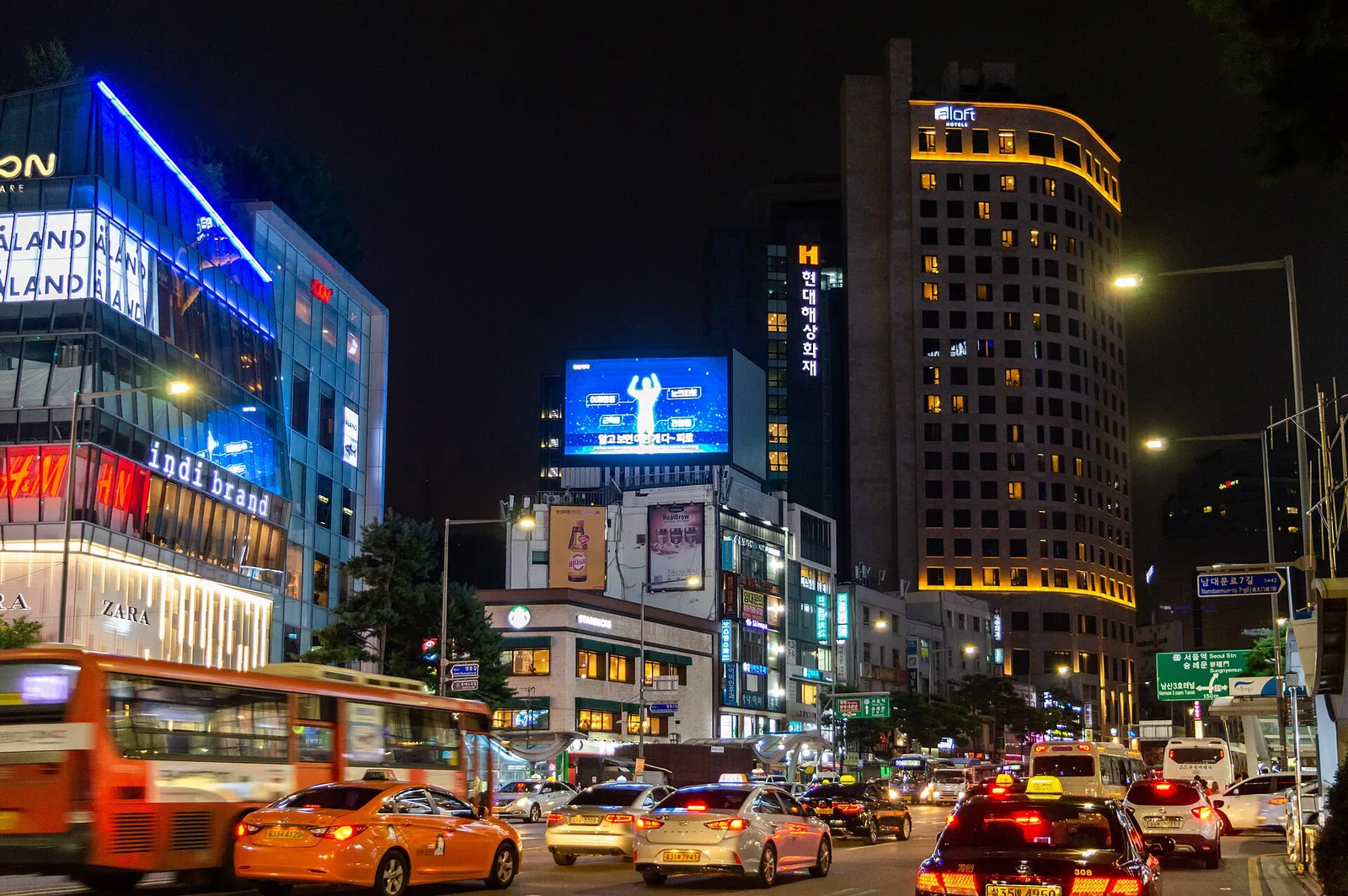
Myeongdong is the square kilometre of Seoul that most first-time visitors end up in, and for good reason: it has the city’s densest cluster of hotels, a direct airport bus, two subway lines, a cathedral, a mountain with a tower on it, and more cosmetics shops than anywhere on earth. This is the hub guide to the area. Three companion guides go deeper on hotels, food and things to do and buy.
Information here is as of September 2026. Prices and hours change, so check official pages before you go.
Where Myeongdong actually is
Myeongdong sits in Jung-gu, the old centre of Seoul, between Namsan mountain to the south and Cheonggyecheon stream to the north. Walk fifteen minutes in any direction and you leave it: west to Namdaemun Market and Seoul Station, north to Euljiro’s bar alleys, south up the hill to N Seoul Tower.
Two subway stations bracket the area:
- Myeongdong Station (Line 4) at the southern end, exits 5–8 for the main shopping streets
- Euljiro 1-ga Station (Line 2) at the northern end, exit 5 or 6 for the Lotte department store side
Both are inside the fare zone covered by the Climate Card pass. Almost every hotel in the area is a ten-minute walk or less from one of them.
Getting here from Incheon Airport
Three options, in order of how easy they are with luggage:
- Airport limousine Bus 6001 — ₩17,000, drops you on the main street near several hotels. Buy the ticket at the counter in the arrivals hall.
- AREX express train to Seoul Station (₩13,000, 43–51 minutes) then one stop on Line 4 to Myeongdong.
- AREX all-stop train to Seoul Station (up to ₩5,350) then the same one stop. Cheapest, but no luggage racks.
Full fares, timetables and how to buy a Climate Card are in our Incheon Airport to Seoul guide.
The streets that matter
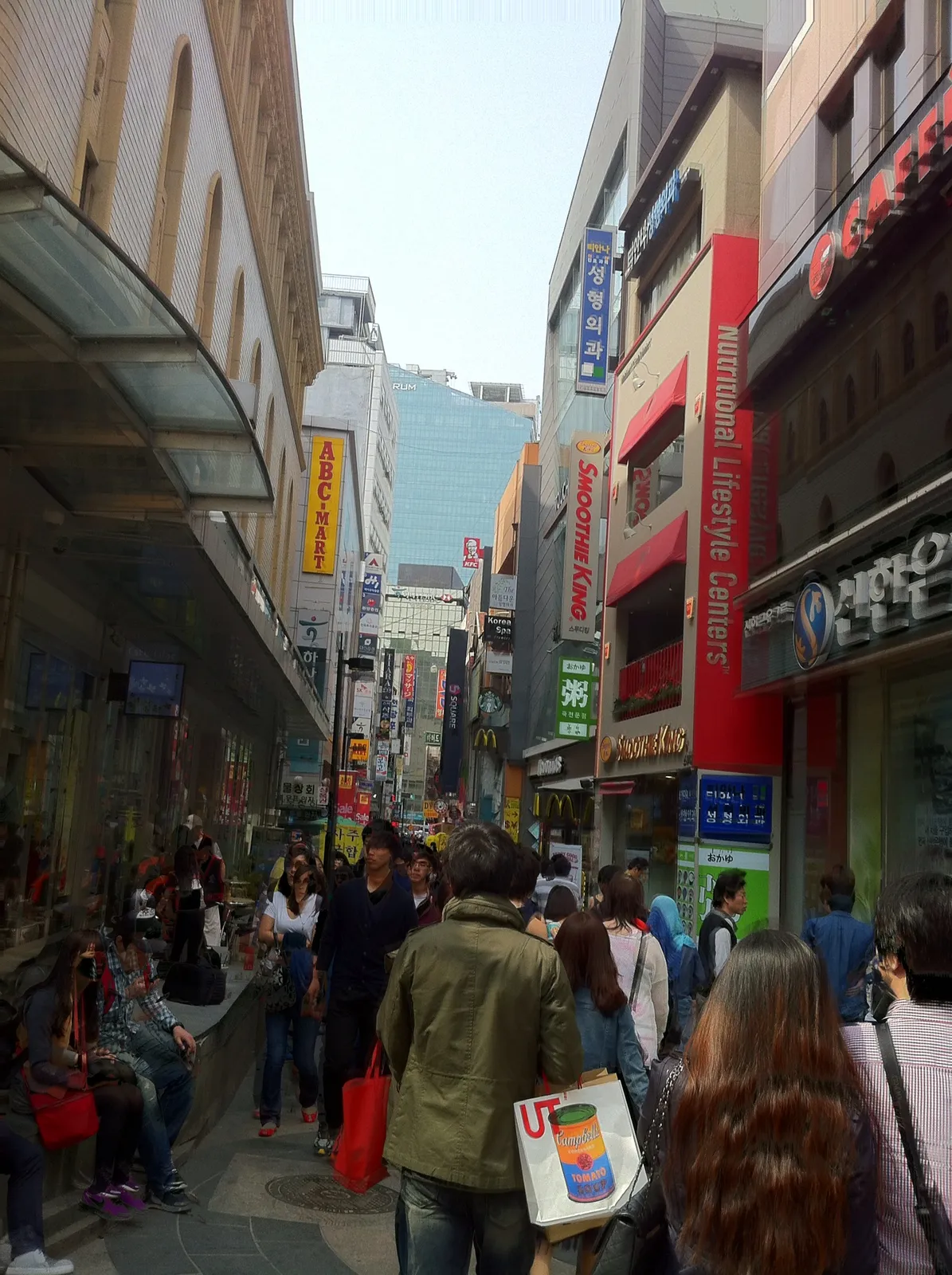
Myeongdong is a grid, and you can learn it in an afternoon.
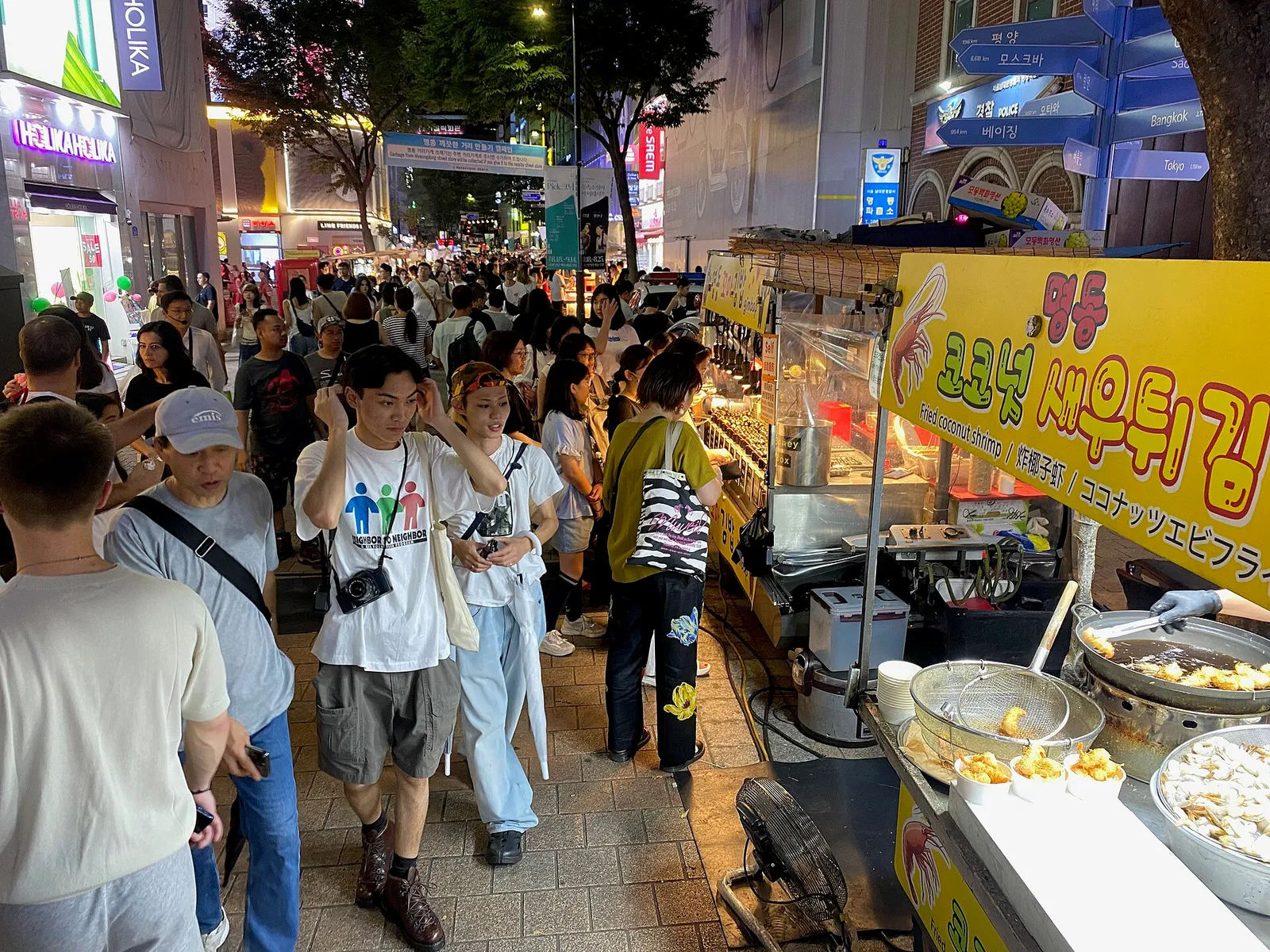
- Myeongdong-gil — the main pedestrian spine running north to south. Cosmetics flagships, fast fashion, and the street-food carts that set up from late afternoon.
- Myeongdong 8-gil — the parallel eating street, where most of the restaurants worth a queue are.
- Namdaemun-ro — the wide road on the west side, with the department stores and the biggest hotels.
- Myeongdong 10-gil — quieter, running past Myeongdong Cathedral. Older restaurants and smaller hotels.
Anything more than two blocks off Myeongdong-gil drops in price noticeably, and the further you go toward Chungmuro the more Korean the customers get.
What a two-day Myeongdong base looks like
Day one: arrive, drop bags, walk Myeongdong-gil end to end to get oriented. Lunch at a noodle house on Myeongdong 8-gil. Afternoon at Namdaemun Market, five minutes west on foot. Evening street food on the main drag, then the cable car up Namsan for the night view from N Seoul Tower.
Day two: morning at Gyeongbokgung Palace (two stops on Line 4 to Anguk area via a transfer, or 20 minutes on foot through Euljiro). Afternoon shopping and the tax refund. Dinner in Euljiro’s alleys, ten minutes north.
That leaves the rest of the city, all of it within 30 minutes, for longer stays. If you are still choosing an area, our Seoul neighborhood comparison puts Myeongdong next to seven alternatives.
Where to stay, in one paragraph
Hotels here run from ₩60,000 business rooms to ₩500,000 suites, and almost all of them are new enough to have decent bathrooms and fast wifi. The trade-off is size: standard doubles of 15–18㎡ are normal. Book on the Namdaemun-ro side for space and quiet, on the Myeongdong-gil side for convenience, and check the walk to the subway rather than the walk to a landmark. The hotel guide breaks this down by budget with specific properties.
Where to eat, in one paragraph
Myeongdong’s reputation for tourist-trap food is half deserved. The main street is expensive and average; one street back are restaurants that have been open for fifty years, including a Michelin Bib Gourmand noodle house. Street food is genuinely good but priced at roughly double what you would pay in a market, and most stalls open from mid-afternoon. The food guide lists eight places within a ten-minute walk, with what to order at each.
What to see and buy, in one paragraph
Within walking distance: Myeongdong Cathedral, the mother church of Korean Catholicism and a quiet break from the crowds; the Namsan cable car and N Seoul Tower; Namdaemun Market; and Cheonggyecheon, the restored stream you can walk along for kilometres. For shopping, the Olive Young Myeongdong Town flagship does instant tax refunds over ₩15,000, and the department stores have refund desks. Details, prices and hours are in the things to do and buy guide.
Practical notes
- Street food is cash-friendly but most stalls now take cards. Carry ₩20,000–30,000 in small notes anyway.
- The carts appear from about 16:00 and run until late. Mornings on Myeongdong-gil are quiet, which is the best time to shop.
- Cosmetics shops hand out free samples aggressively. There is no obligation; a smile and “괜찮아요” (gwaenchanayo, “I’m fine”) is enough.
- Tax refund: spend ₩15,000 or more in one shop, show your passport, and you get the VAT back either instantly at the till or at the airport. Keep receipts and your passport with you while shopping.
- Sunday mornings are the quietest; Saturday afternoons and evenings are the busiest.
- Luggage: most hotels hold bags before check-in and after check-out, and there are coin lockers in both subway stations.
Wrapping up
Myeongdong is not the most interesting neighborhood in Seoul, and nobody would claim otherwise. What it is, reliably, is the easiest: one bus from the airport, two subway lines, a hotel for every budget, and everything a first trip needs inside a fifteen-minute walk. Use it as a base for three or four days, then move somewhere quieter if you come back.
Continue with the hotel guide, the food guide or what to do and buy.