 Now, Yeogi
Staying in Hongdae: Where to Sleep, Eat and Go Out (2026 Guide)
A complete guide to Hongdae, the Seoul neighborhood with a direct airport train, the cheapest central rooms and the city's best nightlife: how to get there, which streets matter, where to stay and what to do.
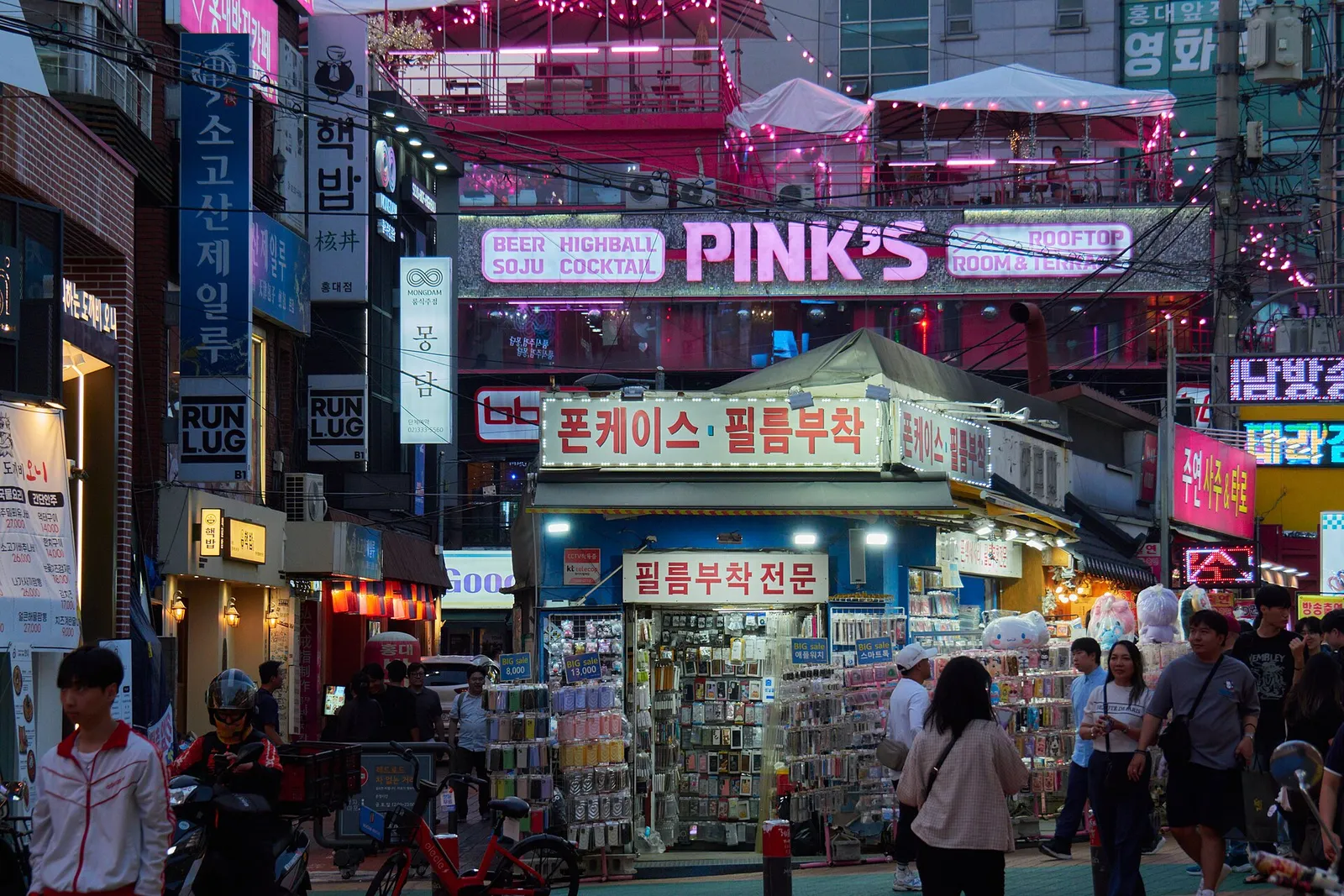
Hongdae is the other obvious base for a first trip to Seoul, and for some travellers it is the better one. It grew around Hongik University’s art school, it has the city’s densest run of bars, live venues and late-night restaurants, and — the practical clincher — the airport train stops here, so you arrive from Incheon without a single transfer.
This is the hub guide. Three companion guides go deeper on hotels, food and what to do. Information is as of September 2026.
Where Hongdae is, and what counts as Hongdae
Officially there is no district called Hongdae. The name covers the area around Hongik University in Mapo-gu, and in practice travellers use it for four connected neighborhoods:
- Hongdae proper — the streets immediately around Hongik Univ. Station: shopping, buskers, clubs.
- Yeonnam-dong — north-east along the old railway park. Cafés, small restaurants, calmer.
- Sangsu and Hapjeong — south. Bars, live music, riverside access.
- Mangwon — west. A traditional market and a residential feel, popular with locals.
You can walk between all four. Hongdae to Mangwon is about 25 minutes on foot, or two subway stops.
Getting here from Incheon Airport
This is Hongdae’s strongest argument.
- AREX all-stop train — AREX runs from both airport terminals directly to Hongik Univ. Station, no transfer, up to ₩5,350. About an hour.
- Airport bus Bus 6002 — ₩17,000, stops at Hongik Univ. Station near the Mercure and L7 hotels, and in Seogyo-dong.
- The AREX express train does not stop in Hongdae; it runs non-stop to Seoul Station.
Fares, timetables and how to buy a Climate Card are in our Incheon Airport to Seoul guide.
The station and the streets
Hongik Univ. Station is served by three lines: Line 2, Gyeongui-Jungang Line and AREX. That combination reaches most of Seoul without a transfer, which is unusual.
Exits worth knowing:
- Exit 9 — the main shopping and busking streets. Most hotels signpost from here.
- Exit 3 — toward Yeonnam-dong and the railway park.
- Exit 1 — the Gyeongui line side, quieter.
The streets that matter:
- Hongdae Walking Street (걷고싶은거리) — the pedestrian spine, buskers from late afternoon.
- Eoulmadang-ro — the main shopping road, fashion and cosmetics.
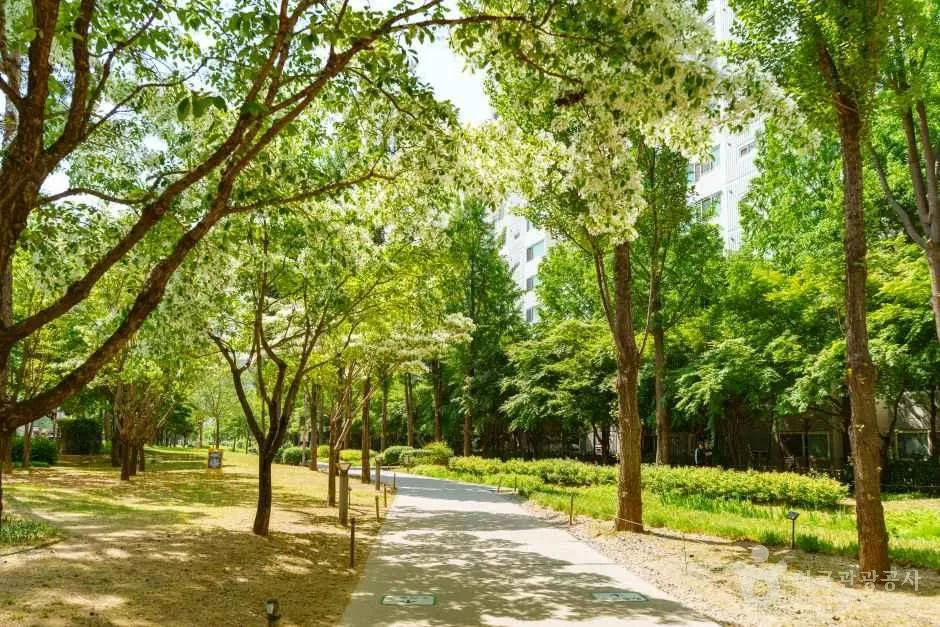
- Yeonnam-dong’s Gyeongui Line Forest Park — a two-kilometre strip of grass where a railway used to run, lined with cafés. Locals call it “Yeontral Park”.
- Sangsu-dong’s bar alleys — south of the station, smaller and less touristy than the main drag.
What a Hongdae day looks like
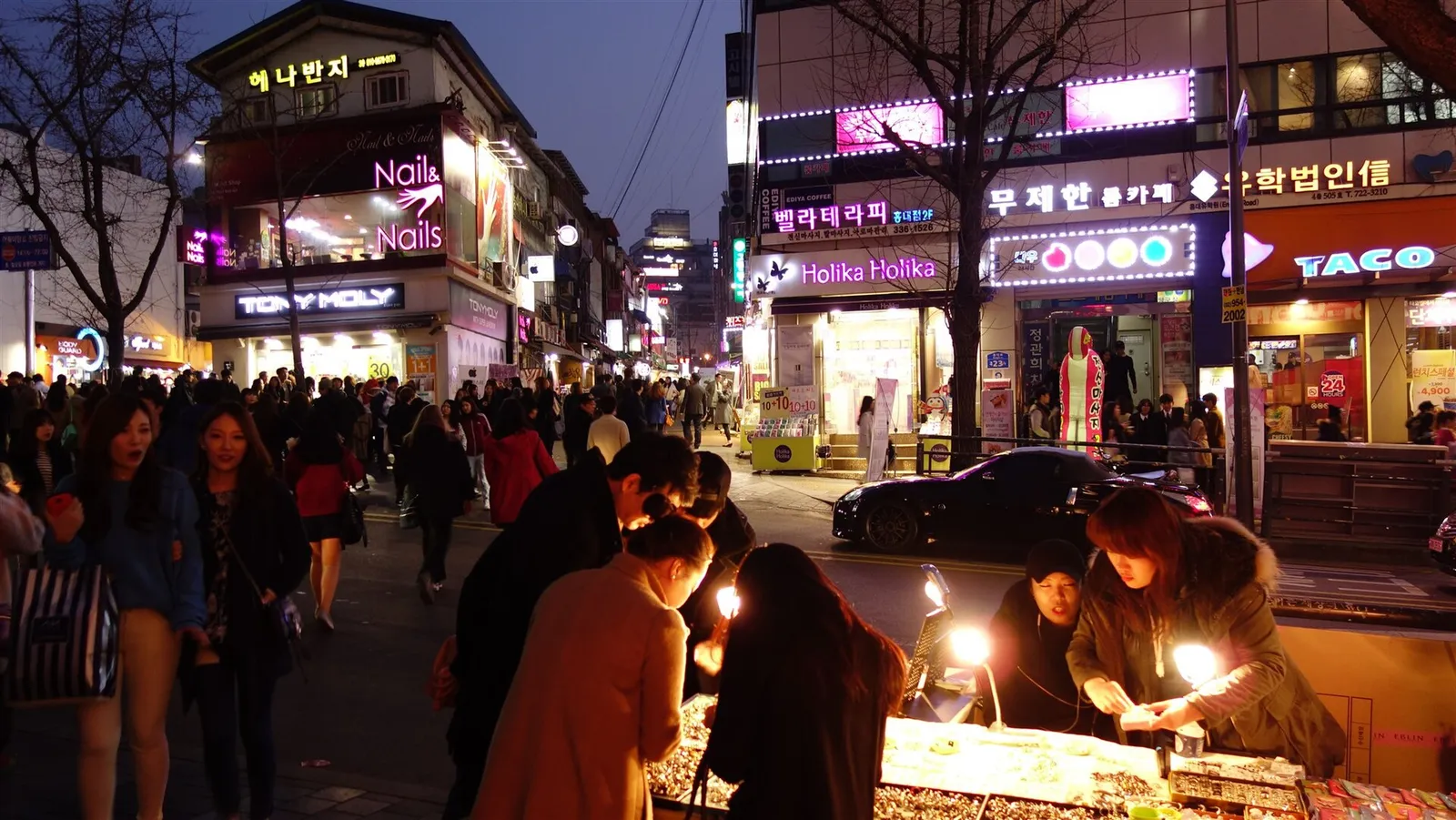
Morning: coffee in Yeonnam-dong, then walk the railway park to Mangwon Market for cheap snacks. Afternoon: shopping on Eoulmadang-ro, or a gallery and a bookshop around the university. Evening: Korean barbecue or fried chicken, buskers on the walking street, then bars in Sangsu until whenever.
Hongdae is also the easiest base for day trips west and north, and it is 15 minutes on Gyeongui-Jungang Line to the National Museum of Korea area if you change at Yongsan — we have a full museum guide.
Who Hongdae suits, and who it does not
It suits you if: you are under about 40 or travelling like it; you want to eat late; you are on a budget; you value the direct airport train; you would rather be around students than shoppers.
It does not suit you if: you are a light sleeper; you are travelling with small children; your priority is palaces and museums, which are all on the other side of the city; you want a big hotel room.
If you are still choosing, our Seoul neighborhood comparison puts Hongdae against seven alternatives, including Myeongdong, which we cover in a separate guide.
Where to stay, eat and go, in short
Stay: the cheapest decent rooms in central Seoul, from ₩60,000 business hotels and guesthouses up to a design hotel with a rooftop pool. The catch is noise — the hotel guide explains which blocks to avoid.
Eat: fried chicken and beer, barbecue, and a café scene in Yeonnam-dong that is genuinely one of the best in the city. The food guide covers what to order and where.
Do: buskers, the railway park, Mangwon Market, indie live venues, and the Han River ten minutes south. Details in the things to do guide.
Practical notes
- Nights are loud. Friday and Saturday music runs past 02:00 on the main blocks. Ask for a high floor or a room facing away from the street.
- Streets are busiest 20:00–01:00 at weekends. Weekday afternoons are calm.
- Cash is rarely needed, but market stalls in Mangwon appreciate it.
- Luggage: coin lockers at Hongik Univ. Station, and most hotels hold bags.
- Getting home late: the subway stops around midnight. Buses run later, and taxis are easy to hail on the main road, though surge periods after 01:00 make apps more reliable.
Wrapping up
Hongdae trades polish for energy. You get a direct train from the airport, the cheapest central rooms in Seoul, and a neighborhood that is genuinely alive at night — in exchange for noise and a longer ride to the palaces. For a first or second trip in your twenties or thirties, it is hard to beat.
Continue with hotels, food or what to do.