 Now, Yeogi
Busan Travel Guide: Neighbourhoods, Transport and What to Expect (2026)
A first-timer's guide to Busan: how to get there from Seoul, what each neighbourhood is like, how the metro and airport buses work, and what Korea's second city does better than the capital.
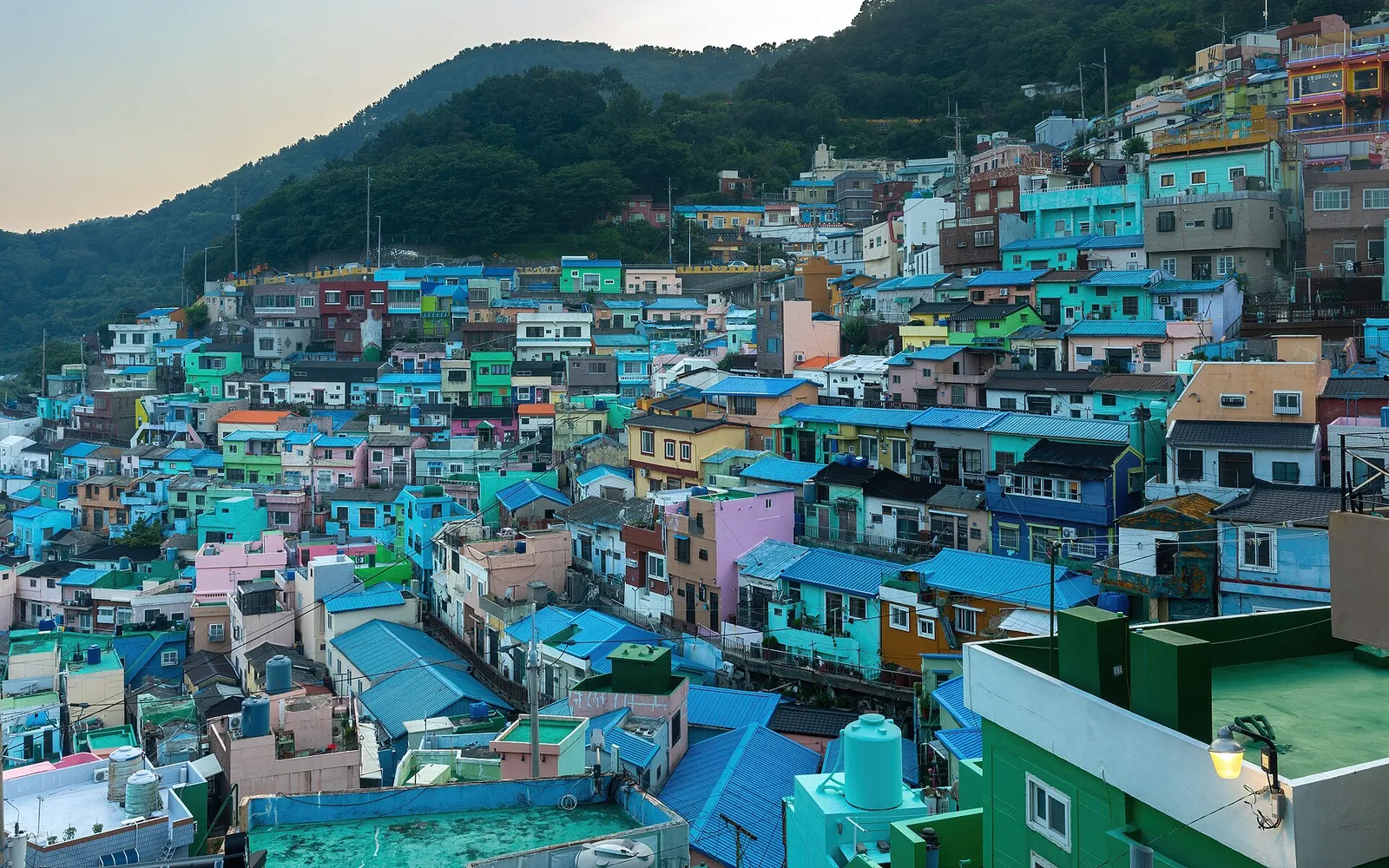
Most first trips to Korea never leave Seoul. That is a reasonable choice for four days and a mistake for eight. Busan is two hours and seventeen minutes away by train, and it is a genuinely different city: a working port wedged between mountains and the sea, with six beaches, the country’s biggest fish market, and food you cannot get properly anywhere else.
Prices and times below are as of September 2026.
Where Busan is and what shape it is
Busan sits on the southeast corner of the peninsula, about 325 km from Seoul. Around 3.3 million people live there, which makes it Korea’s second city by a wide margin.
The thing to understand before booking is that Busan is long and thin. Mountains run down to the water, so the city stretches roughly 30 km along the coast rather than spreading out in a circle. Two places that both say “Busan” can be an hour apart.
The areas worth knowing:
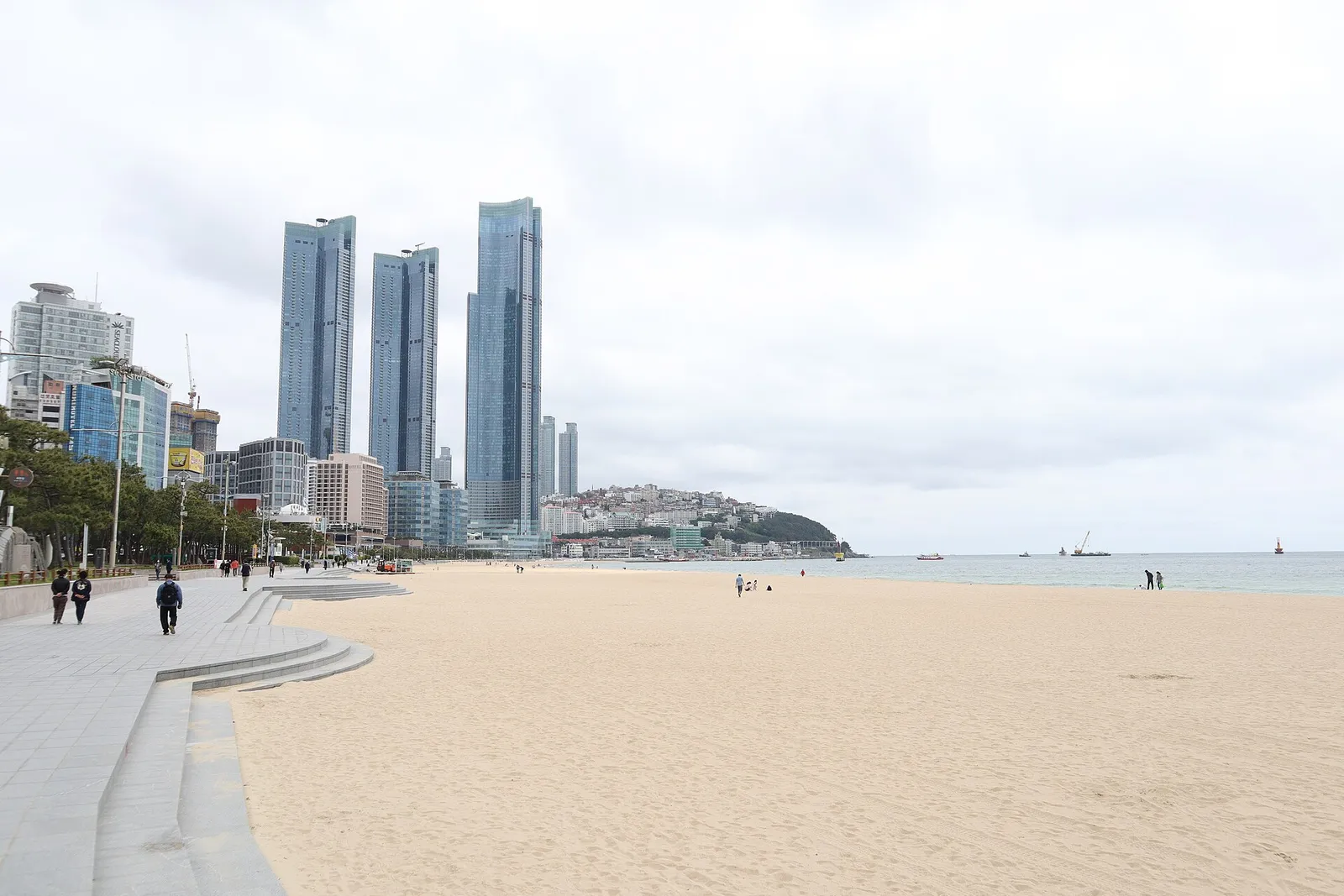
- Haeundae (해운대) — the resort end. The famous beach, the Marine City towers, the big international hotels, the convention centre.
- Seomyeon (서면) — the middle. Shopping, department stores, the densest concentration of restaurants and bars, and the best transport links.
- Nampo-dong and Jung-gu (남포동, 중구) — the old downtown by the port. Jagalchi fish market, Gukje Market, BIFF Square, and the closest base for Gamcheon Culture Village.
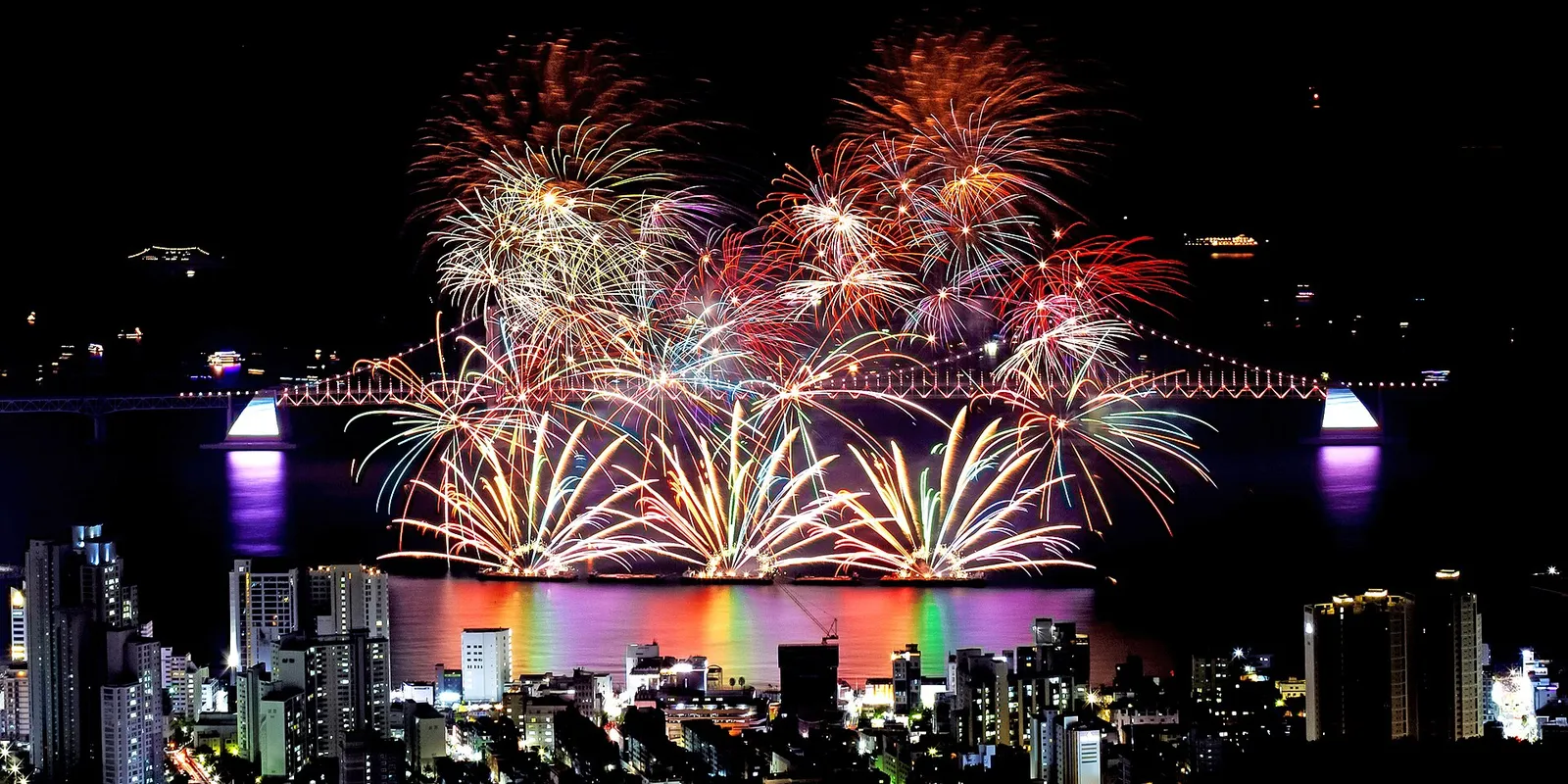
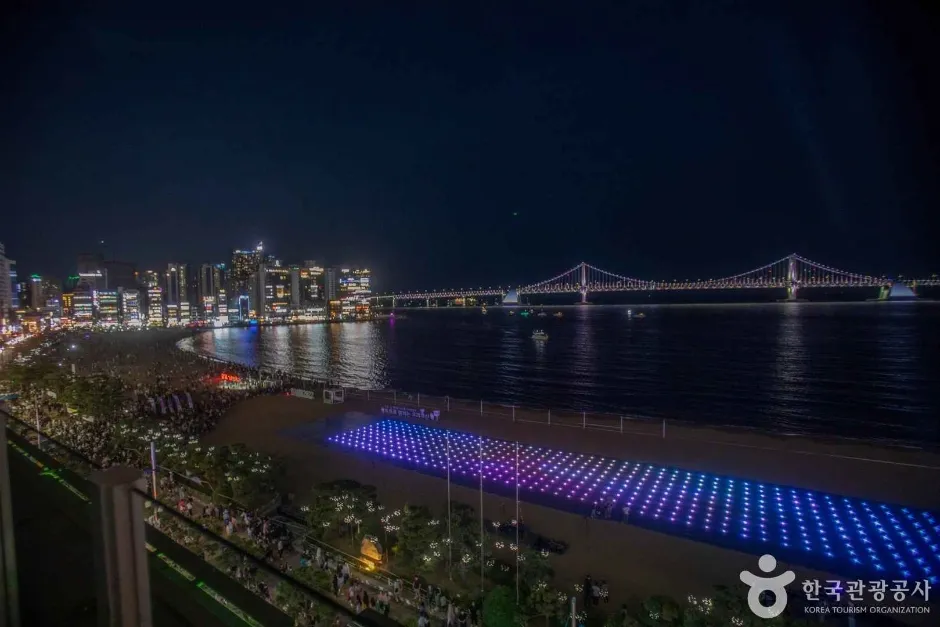
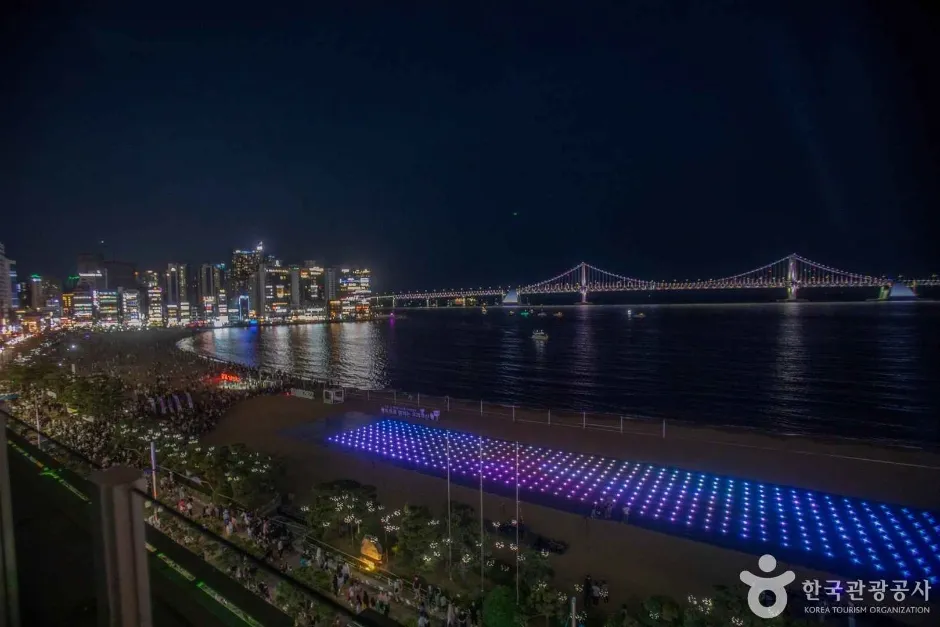
- Gwangalli (광안리) — a crescent beach looking straight at the illuminated Gwangan Bridge. Cafés, bars, and the shellfish restaurants at Millak-dong.
- Songjeong (송정) — a quieter beach past Haeundae, and Korea’s best-known year-round surf spot.
- Gijang (기장) — the rural northeast, where Haedong Yonggungsa temple sits on the rocks.
Getting there from Seoul
By train. This is the obvious choice. KTX runs from Seoul Station to Busan Station in about 2 hours 17 minutes. Standard class is ₩54,400 (about $41).
A note on timing: Korea’s two high-speed operators merged on 1 September 2026, and SRT services now run as KTX under a single booking system. Fares fell by roughly ten percent, and the Seoul–Busan standard fare dropped from ₩59,800 to the current figure. If you are staying in southern Seoul, trains from Suseo Station reach Busan in a similar time.
By bus. Seoul Express Bus Terminal to Busan Central Bus Terminal takes about 4 hours 15 minutes for roughly ₩23,600 (about $18). Departures run every 15 to 30 minutes. It is cheaper and much slower.
By air. Gimpo to Gimhae is about an hour in the air, but once you add airport transfers at both ends the train usually wins on total time.
From Gimhae Airport into the city
Busan’s airport is Gimhae International (PUS), west of the city.
- Light rail. The Busan–Gimhae LRT Busan-Gimhae LRT runs from the airport station to Sasang, where you change to Busan Line 2, or to Daejeo for Busan Line 3. Airport to Seomyeon takes roughly 25 to 35 minutes and costs about ₩2,000.
- Limousine bus. Two routes were restructured in January 2026. Limousine 1 runs to Haeundae and Gijang for ₩9,500, stopping at Jangsan, Haeundae Beach, BEXCO and Centum City. Limousine 2 runs to Seomyeon and Bujeon for ₩6,000 in about an hour. Buy at Gate 4 on the first floor, or through the Bustago app.
- Taxi. Roughly 15 to 20 minutes to Seomyeon and about 40 minutes to Haeundae.
Neither limousine route serves Nampo-dong. For the old downtown, take the light rail and change, or take a taxi.
Getting around
Busan has four metro lines plus two connected railways.
- Busan Line 1 runs north to south through Seomyeon, Bujeon, Jagalchi and Nampo.
- Busan Line 2 runs along the coast through Seomyeon, Gwangan, Centum City and Haeundae.
- Busan Line 3 and Busan Line 4 connect the inland districts.
- Donghae Line is a Korail line that reaches Songjeong and runs on towards Ulsan.
Fares are ₩1,600 for zone 1 with a transport card and ₩1,800 for zone 2. Paper QR tickets cost ₩100 more. A one-day pass is ₩6,000 and a three-day pass is ₩13,000, both bought through the operator’s app.
Your Seoul card works here. T-money, Cashbee and Mybi are all accepted and give transfer discounts, so there is no need to buy a separate Busan card.
Typical journeys: Seomyeon to Haeundae is about 30 to 35 minutes on one line, Seomyeon to Nampo about 15 minutes, and Haeundae to Gwangan about 12 minutes.
What Busan does better than Seoul
Seafood, obviously. Jagalchi is the largest fish market in Korea and the system of buying downstairs and having it sliced upstairs is worth doing once.
Dishes you cannot get properly elsewhere. Milmyeon, the wheat-noodle cold soup invented here by North Korean refugees, runs about ₩6,000 to ₩8,000. Dwaeji gukbap, pork broth over rice, is ₩9,000 to ₩12,000 and Busan has over seven hundred specialist shops. Ssiat hotteok, the seed-stuffed pancake, costs around ₩2,000 at BIFF Square. Our food guide has the full list.
Mountains and sea in the same afternoon. Few cities of this size let you walk a coastal cliff path and a temple hillside on the same day.
Cost. Hotels, meals and taxis all run below Seoul prices for the equivalent quality.
What it does less well
- Distances. The city is stretched out and the metro is slower than Seoul’s.
- Hills. Gamcheon, Huinnyeoul and much of the old downtown are built on slopes.
- Summer. Haeundae in late July and August is extremely crowded.
- English. Less widely spoken than in central Seoul, though signage is good.
When to go
Late September through early November is the best window: warm sea, low humidity, and the festival season. The Busan International Film Festival runs 6 to 15 October 2026, and our autumn festival guide covers the rest.
May and June are also comfortable. July and August are hot, humid and busy, though the beaches are officially open. Winter is milder than Seoul but too cold for the water.
Practical notes
- Two nights is the minimum and three is better. A day trip from Seoul wastes five hours on trains.
- Book Haeundae hotels early for July, August and the film festival.
- Cash is still useful at the markets, though cards work almost everywhere else.
- Download a Korean map app. Google Maps gives poor walking directions in Korea; Naver Map and Kakao Map both have English interfaces.
- The beaches have official swimming seasons with lifeguards. Outside those dates you can walk but not swim.
Wrapping up
Treat Busan as its own trip rather than a side excursion. Base yourself in Seomyeon if you want transport and food, Haeundae if you want the beach and a resort hotel, and Nampo-dong if the markets are the point.
More in this series: where to stay, what to eat and what to see.