 Now, Yeogi
Where to Stay in Busan: Haeundae, Seomyeon or Nampo-dong (2026)
Choosing a base in Busan: how Haeundae, Seomyeon, Nampo-dong, Gwangalli and Songjeong differ, which hotels operate in each, and why the city's shape makes this decision matter more than in Seoul.
In Seoul you can stay almost anywhere and reach the rest of the city in half an hour. Busan does not work like that. The city runs about 30 km along the coast with mountains behind it, so the two ends are an hour apart and your choice of base decides what your trip is actually about.
Price bands below are indicative rather than quoted rates. Hotels here fluctuate more than in Seoul, and July, August and the October film festival can double them.
The short answer
- First visit, want the beach — Haeundae.
- Want to eat well and move around easily — Seomyeon.
- Here for the markets and the old city — Nampo-dong.
- Want the view without the resort prices — Gwangalli.
- Want quiet, or you surf — Songjeong.
Haeundae
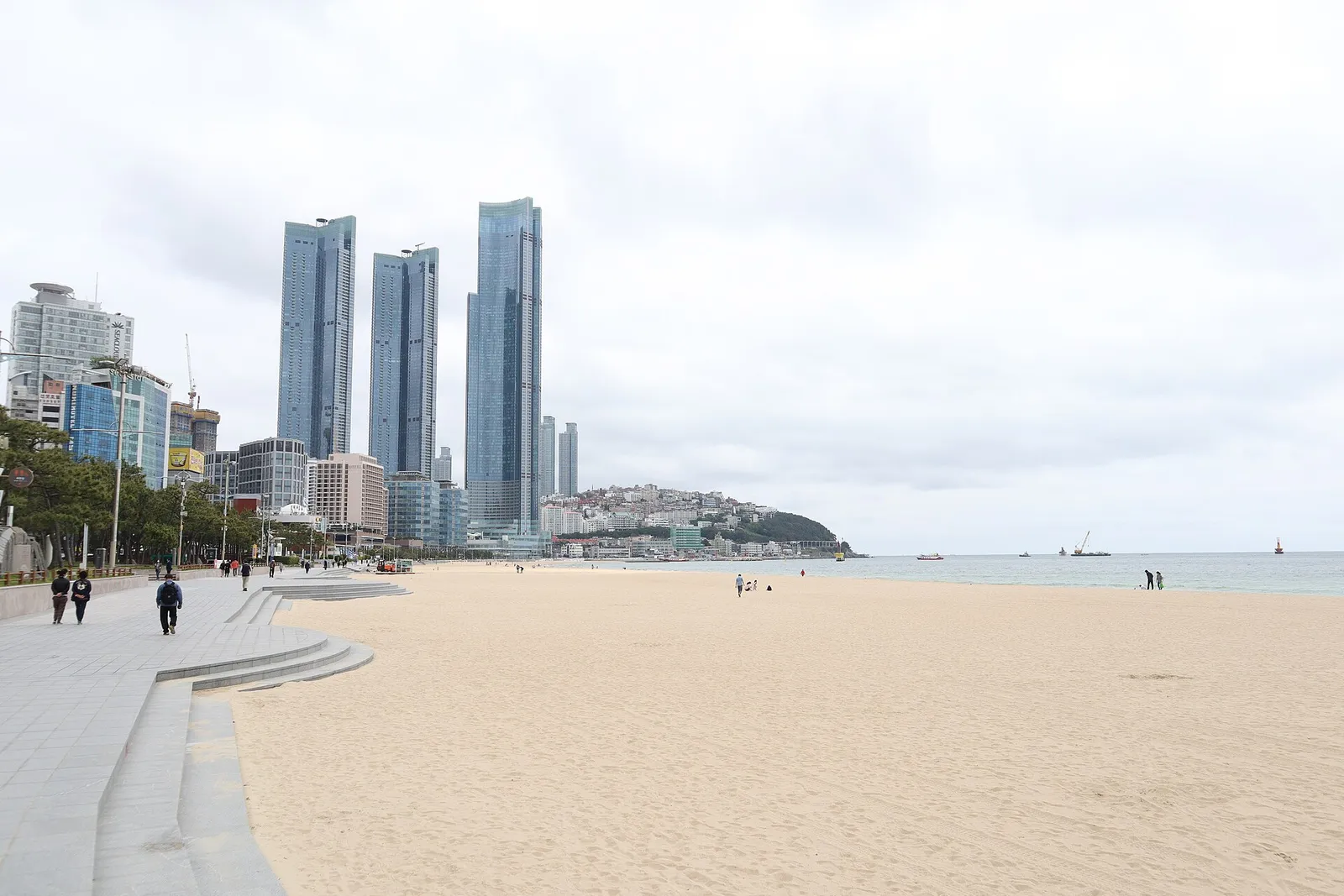
The resort end of the city, and where most international visitors end up. You get the famous beach, the Marine City tower cluster, the convention centre and nearly all of Busan’s five-star stock.
Hotels verified on the city’s own accommodation register include Signiel Busan, Paradise Hotel Busan, The Westin Josun Busan, Park Hyatt Busan, Grand Josun Busan and L7 Haeundae. Below those sit a thick layer of mid-range hotels and serviced residences a block or two back from the sand.
Transport: Haeundae Station on Busan Line 2. Seomyeon is 30 to 35 minutes, Nampo-dong closer to an hour with a change.
Downsides: the most expensive area in the city, the furthest from the historic districts, and genuinely packed in late July and August. Rooms that actually face the sea carry a large premium.
Seomyeon
The geographic and transport centre of Busan, and the area most locals would name if you asked where things happen. Department stores, the largest concentration of restaurants and bars in the city, the pork soup street, and a traditional market that has been there sixty years.
Transport: the interchange between Busan Line 1 and Busan Line 2, which is the single best-connected point in Busan. Nampo-dong is about 15 minutes, Haeundae about 30 to 35.
Accommodation here is mostly business hotels and mid-range chains, which means better value than Haeundae for the same standard of room.
Downsides: no sea, no view, and a fair amount of night-time noise. The hotels are functional rather than memorable.
Nampo-dong and Jung-gu
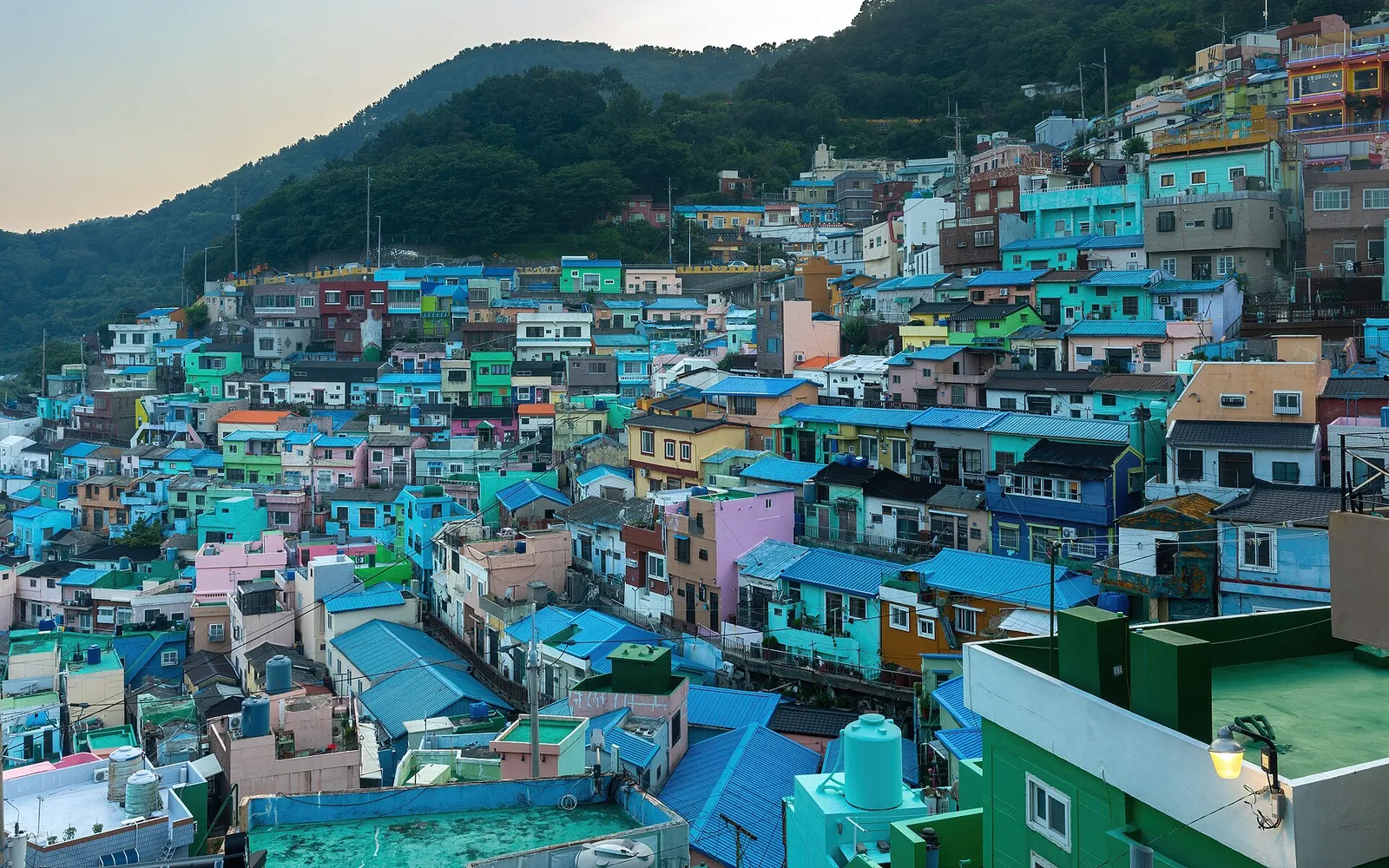
The old port downtown. Jagalchi fish market, Gukje Market, BIFF Square and Yongdusan Park are all within walking distance of each other, and it is the closest base to Gamcheon Culture Village and the Yeongdo cliff villages.
Transport: Busan Line 1 at Jagalchi or Nampo. About 15 minutes to Seomyeon and roughly an hour to Haeundae.
Downsides: the accommodation stock is older and smaller. The area is intensely busy by day and quiet by ten at night. If half your plan is the beach, you will spend a lot of time on the metro.
Gwangalli
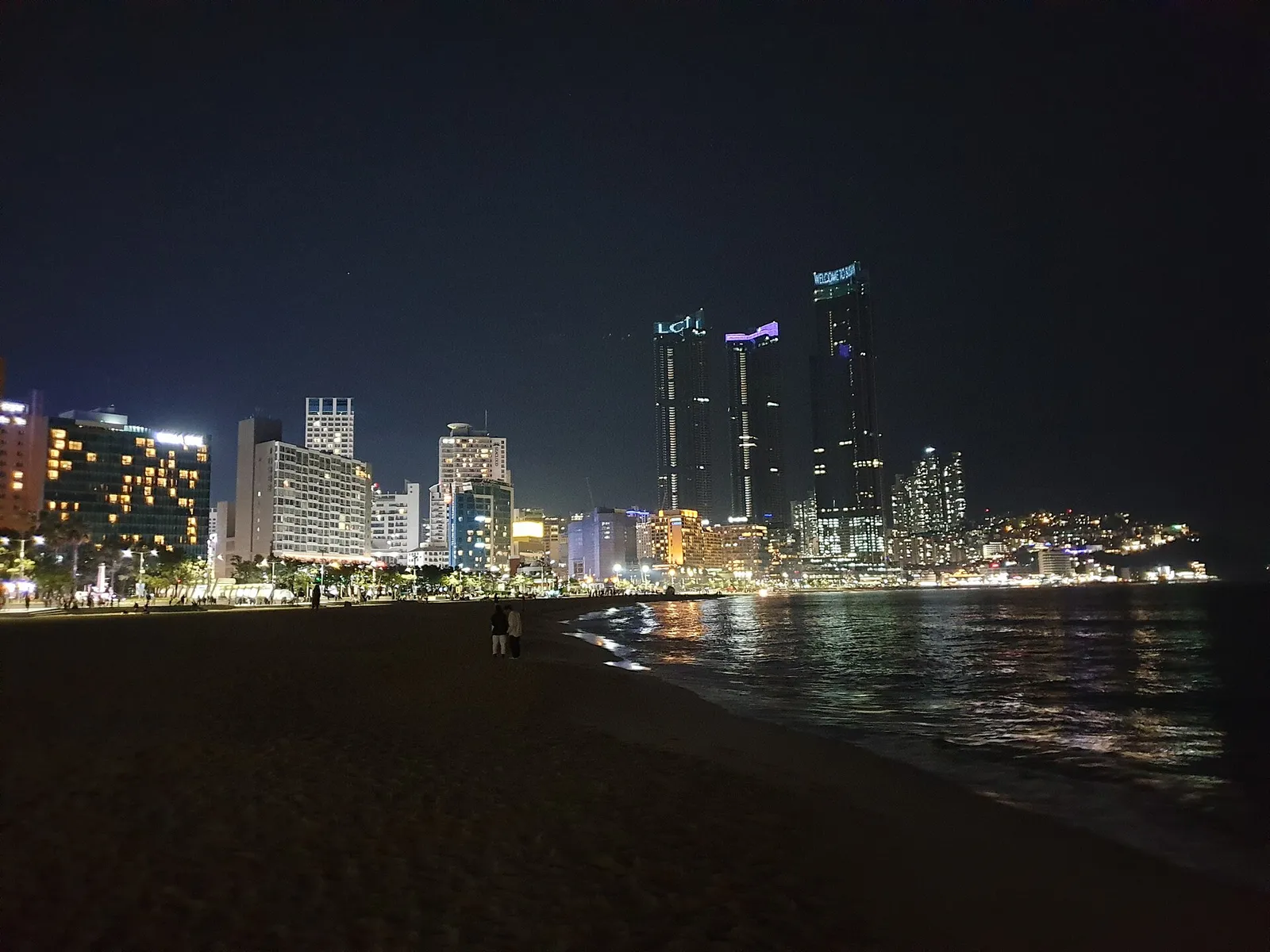
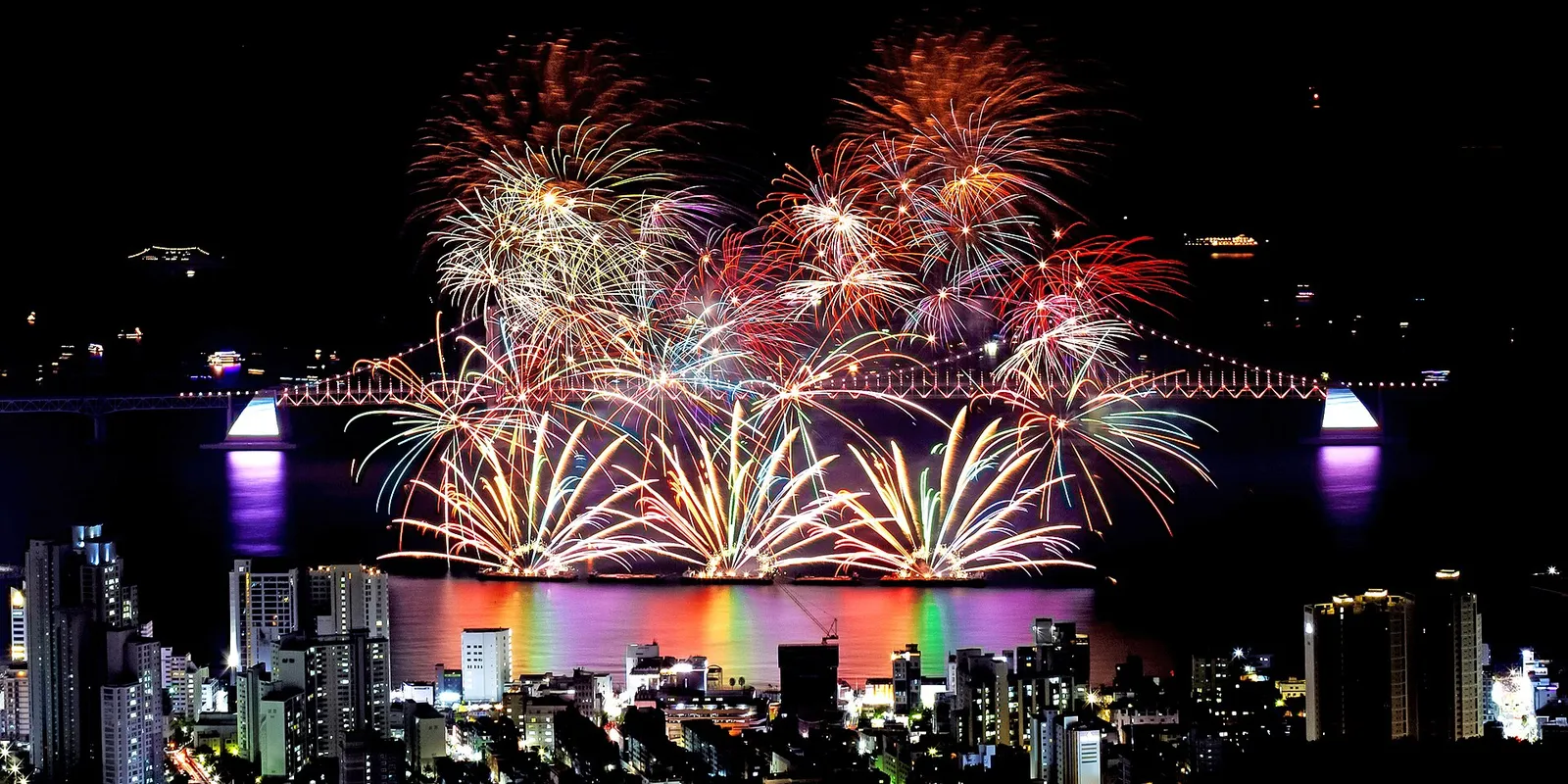
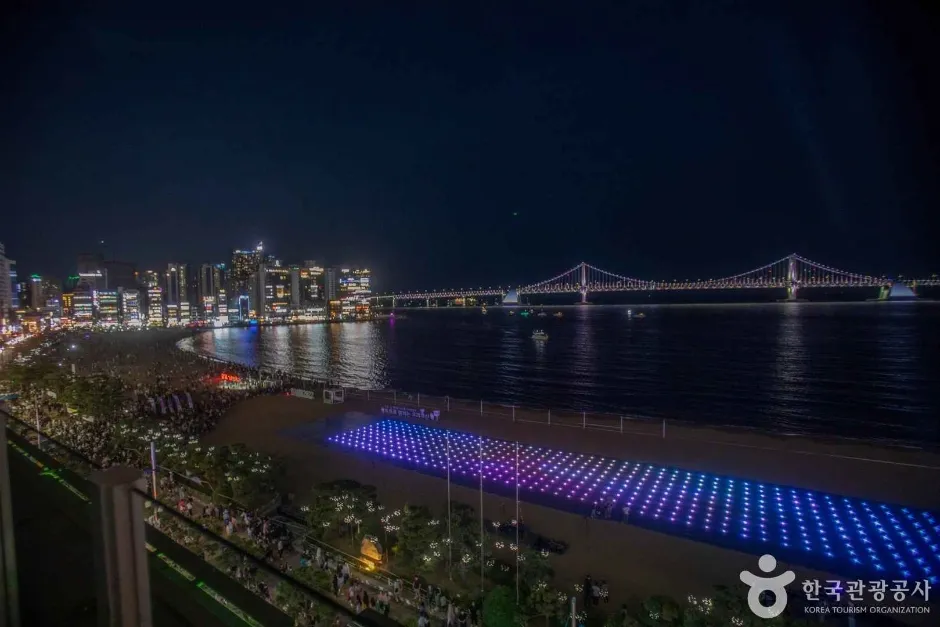
A crescent beach looking directly at the illuminated Gwangan Bridge, with a strip of cafés and bars behind it and the shellfish restaurants of Millak-dong at the far end. The free drone show runs here every Saturday night.
This is the compromise option. You get a sea view and a night scene at prices below Haeundae, and you are twelve minutes from Haeundae on Busan Line 2 if you want the bigger beach.
Transport: Gwangan Station on Busan Line 2, about 13 minutes on foot to the sand.
Downsides: fewer hotels to choose from, and drone show nights bring crowds and noise to the seafront.
Songjeong
A smaller, shallower beach past Haeundae, and Korea’s best-known year-round surf spot. Families like it because the water shelves gently; surfers like it because it works in winter.
Transport: Songjeong Station on Donghae Line, about 17 minutes’ walk, or a bus from Haeundae Station.
Accommodation is guesthouses and surf lodges rather than hotels.
Downsides: the least connected of the five areas, and thin on restaurants and nightlife. Good for a relaxed few days, frustrating as a sightseeing base.
What to check before booking
- Which station, and which line. Listings use “Busan” and even “Haeundae” loosely. Find the actual station name.
- Sea view versus sea facing. A partial diagonal view across a neighbouring building is often sold as the former.
- Whether there is a hill. Nampo-dong and the Yeongdo side are built on slopes, and a listed 500 m walk can be a climb.
- Festival dates. The Busan International Film Festival runs 6 to 15 October 2026 and fills the Haeundae and Centum City hotels.
- Beach season. Haeundae and Songjeong ran 26 June to 15 September in 2026, with supervised swimming from 09:00 to 18:00. Outside those dates the beach is open to walk but not to swim.
Getting to your hotel from the airport
From Gimhae International, Limousine 1 runs to Haeundae and Gijang for ₩9,500, and Limousine 2 runs to Seomyeon and Bujeon for ₩6,000 in about an hour. For Nampo-dong there is no direct bus: take the light rail Busan-Gimhae LRT to Sasang, then Busan Line 2 to Seomyeon, then Busan Line 1. Full detail is in our Busan overview.
Wrapping up
If you are coming for two nights, stay in Seomyeon and let the metro do the work. If you are coming for four and want the trip to feel like a holiday, stay in Haeundae and accept the travel time to the old city. Gwangalli splits the difference and is underrated for it.
More in this series: the Busan overview, what to eat and what to see.