 Now, Yeogi
What to Eat in Gangneung: Seawater Tofu, Coffee and Potato Dumplings (2026)
Gangneung food explained: why the tofu is curdled with seawater, how a beach full of vending machines became a coffee city, potato dumplings, cold raw fish soup and what to find at Jungang Market.
Places in this post
- Address
- 308-23 Chodang-dong, Gangneung
- Hours
- A village of restaurants, open all year with no set hours
- Tip
- The tofu here is curdled with seawater rather than a chemical coagulant, which is the whole point. The first dedicated tofu restaurant opened in 1986.
- Address
- Changhae-ro 14beon-gil, Songjeong-dong, Gangneung
- Hours
- Open all year, individual cafés set their own hours
- Tip
- About thirty cafés on one beach. It became a coffee spot through vending machines in the early 1980s and a roasting district from the 1990s.
- Address
- Geumseong-ro, central Gangneung
- Tip
- Over 300 registered businesses with a fish market in the basement. Official hours are not published, so treat it as a daytime market.
Gangneung is a UNESCO Creative City of Gastronomy, a title it shares in Korea only with Jeonju. Its two signature things are tofu and coffee, which is an odd pairing until you hear how each came about.
Restaurant prices are not published officially in Korea, so this guide names dishes and places rather than quoting figures it cannot source.
Chodang tofu
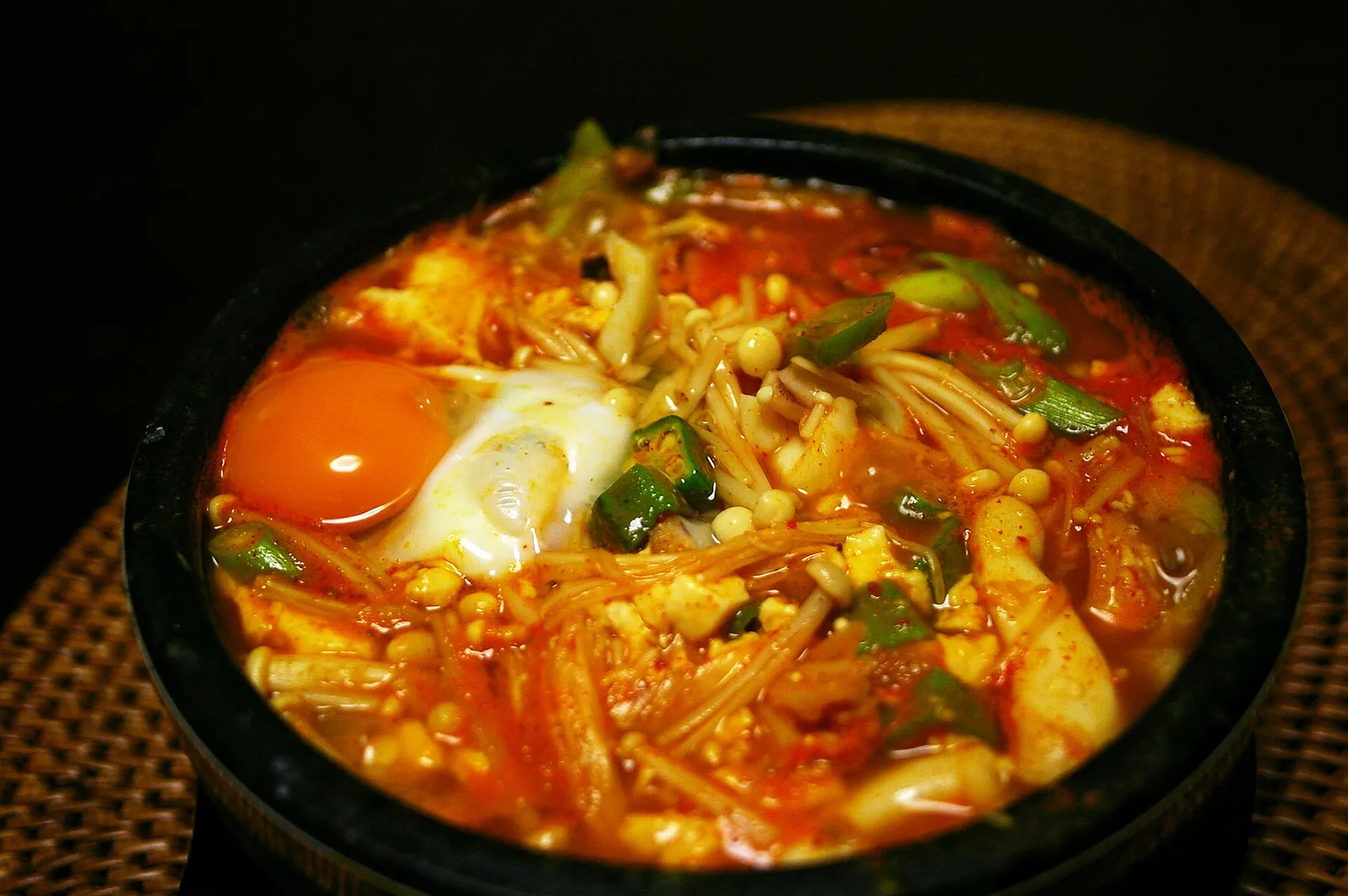
Chodang sundubu (초당순두부) is soft, barely-set tofu, and the Gangneung version differs from every other in one specific way: it is curdled with seawater.
Most tofu is set with a chemical coagulant. Here the sea does the job, which gives a cleaner, faintly saline result. The practice is attributed to Heo Yeop, a sixteenth-century magistrate of Gangneung whose pen name was Chodang, and whose children included two of the most famous writers of the Joseon period. The village is named after him.
Commercially it is more recent than that history suggests. The first dedicated tofu restaurant in Chodang opened in 1986, and the cluster grew from there.
How to eat it. The classic order is plain soft tofu with a soy dipping sauce, eaten hot, plus a stew. Two modern variants have taken hold locally and are worth knowing: jjamppong sundubu, the tofu served in a spicy seafood broth, and tofu gelato, which sounds worse than it is.
Chodang Tofu Village (초당두부마을) is a residential village east of the centre with restaurants along its lanes, open all year.
Coffee
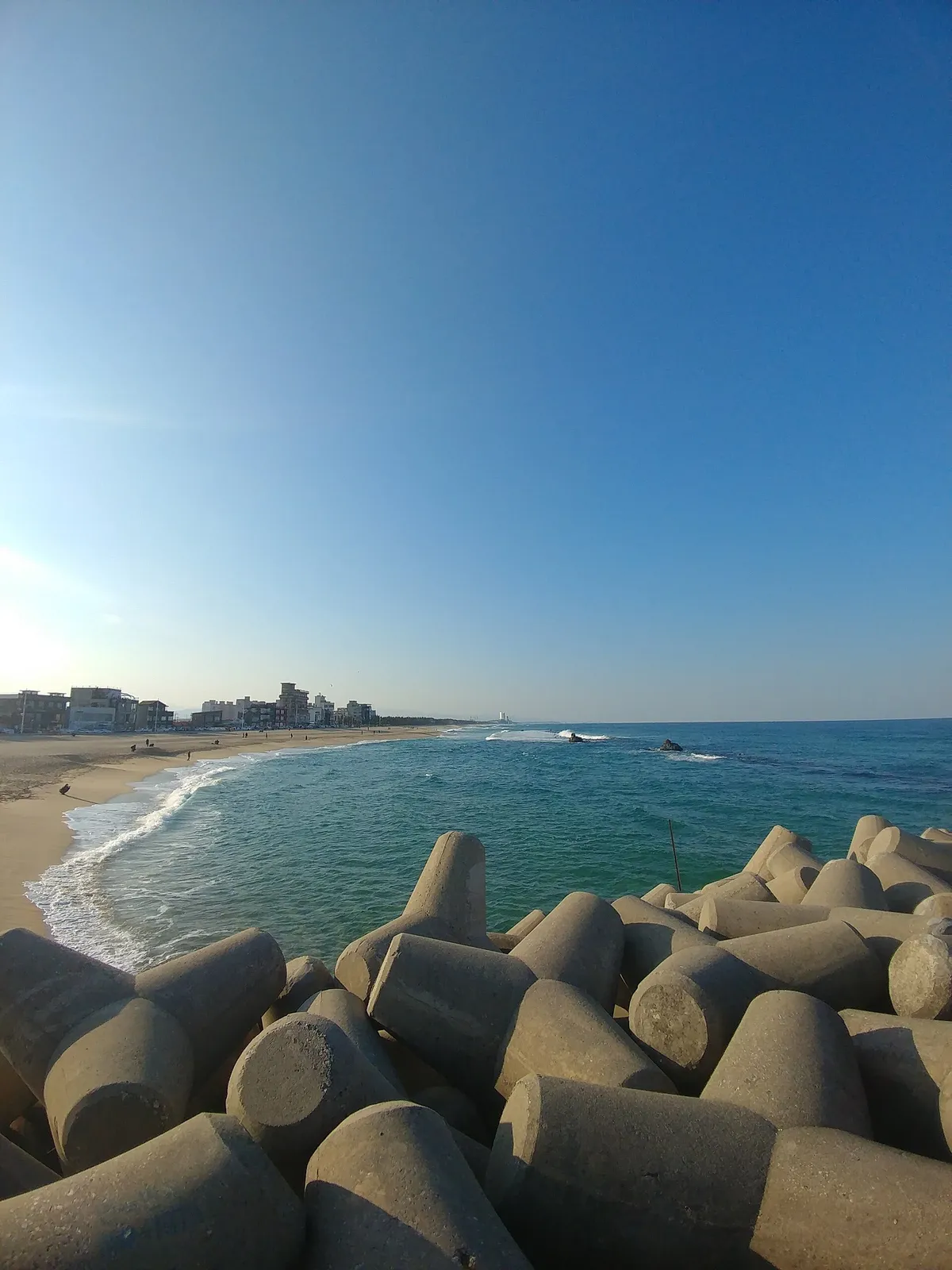
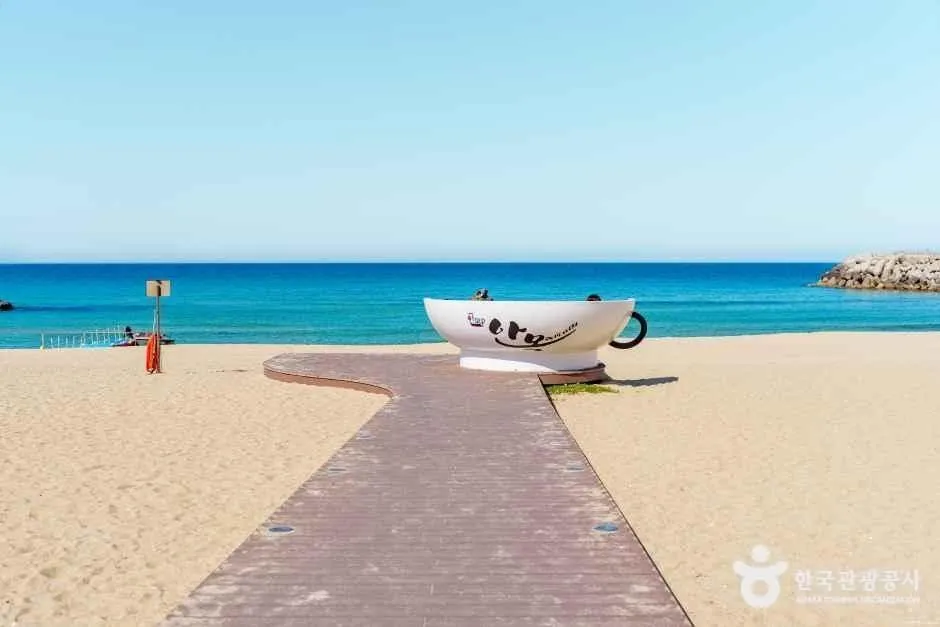
Gangneung’s coffee reputation began with vending machines.
In the early 1980s, Anmok Beach was known for a row of coffee vending machines that people drank from while looking at the sea. It was a local habit rather than a scene. From the 1990s, independent roasters began settling there, and the accidental reputation turned into a real one.
Today Anmok Coffee Street has around thirty cafés along one stretch of beach, and the city runs a Coffee Museum and an annual Coffee Festival, whose 18th edition runs 21 to 25 October 2026.
What to expect: hand-drip and single-origin are standard here rather than special, several of the cafés roast on site, and almost all of them face the water. Order a drip coffee and sit outside. That is the whole activity and it is the right one.
Potato dumplings
Gamja ongsimi (감자옹심이) is the Gangwon province dish to try. Potatoes are grated, squeezed, and rolled into small chewy dumplings, then served in a clear broth. Ongsimi is the local dialect word for the dumpling.
It is usually eaten as ongsimi kalguksu, the dumplings combined with knife-cut noodles, with a potato pancake on the side.
The city points to a cluster of specialist restaurants at Byeongsan Ongsimi Village on Gonghang-gil, out near the airport road, where several houses do nothing else.
Raw fish and mulhoe
The east coast means raw fish, and the Gangneung format worth seeking out is mulhoe (물회): sliced raw fish in a cold, sweet-sour chilli broth, eaten almost like a soup and served icy.
Squid is the usual base here, though flounder and halibut appear too. It comes with a bowl of rockfish and seaweed soup on the side.
The city names Sacheon Mulhoe Village in Sacheon-myeon, north of the city on the coast road, as the place it is done properly. The SEA TEA tour bus passes through Sacheon.
Jungang Market
Gangneung Jungang Market (강릉중앙시장) in the city centre has over three hundred registered businesses and about five hundred stalls, with a fish market in the basement.
What the city lists as market specialities: buckwheat pancakes, potato dumplings, red bean porridge, potato pancakes, octopus, half-dried pollack and jinuari seaweed.
Official opening hours are not published, so treat it as a daytime market. The basement fish market is the part to see.
October is a food month
The city stacks its food festivals into three weeks:
- Gangneung Bread Festival, 9 to 11 October 2026
- Gangneung Noodle Festival, 15 to 18 October 2026
- 18th Gangneung Coffee Festival, 21 to 25 October 2026
If food is the reason you are going, October is the month.
Practical notes
- Tofu is a lunch dish here. Many Chodang restaurants close in the early evening.
- Mulhoe is a summer dish. It is served cold and it is at its best in July and August.
- Anmok gets crowded on weekend afternoons. Go in the morning.
- The market basement is cash-friendly even where cards work upstairs.
- Vegetarians do well with the tofu village, which is unusual for a Korean coastal city. Ask whether the stew base uses anchovy stock.
Wrapping up
Soft tofu for lunch in Chodang, a drip coffee at Anmok in the morning, potato dumplings on a cold day, and mulhoe if it is summer. Four dishes, and three of them exist nowhere else in quite this form.
More in this series: the Gangneung overview, where to stay and what to see.