 Now, Yeogi
Gyeongju Travel Guide: Getting There, Getting Around, What to Expect (2026)
A first-timer's guide to Gyeongju: why the KTX station is 10 km from the old city and the downtown station has closed, which buses actually work, and how to plan two days in the Silla capital.
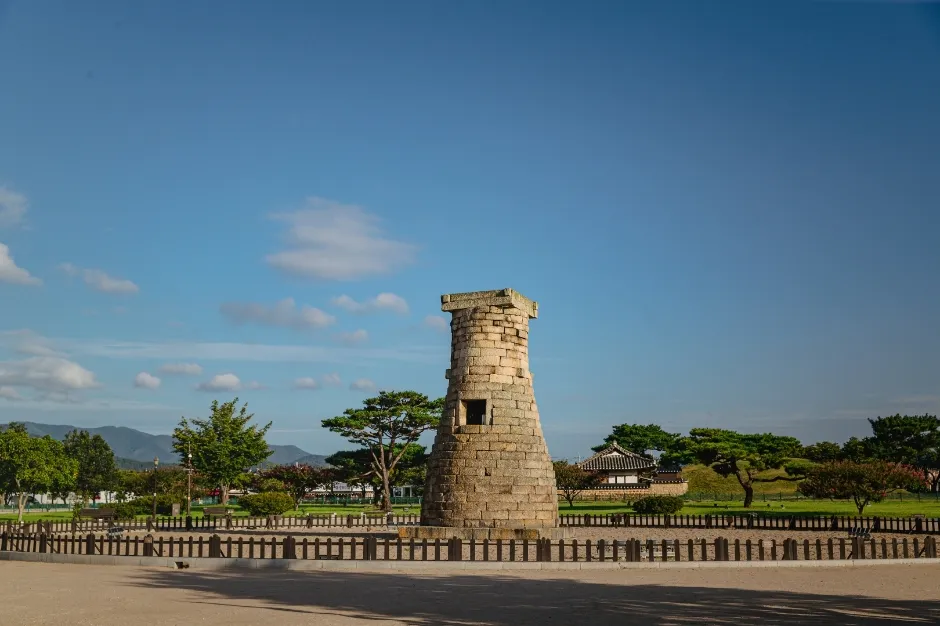
Gyeongju was the capital of the Silla kingdom from 57 BC to AD 935, and unlike most ancient capitals it was never built over. The modern town of about a quarter of a million people grew up around the tombs rather than on top of them, which is why you can stand at a traffic junction and look at a royal burial mound.
It is the one Korean destination where the history is the whole point. Prices and times are as of September 2026.
The station situation, first
This catches out more visitors than anything else in Gyeongju, so it goes at the top.
The old downtown Gyeongju Station closed to passengers on 28 December 2021, when the Donghae Line was rerouted away from the city centre to protect the heritage zone. Bulguksa Station closed the same day.
Two years later, on 28 December 2023, the KTX station previously called Singyeongju was renamed Gyeongju Station.
So there is now exactly one Gyeongju Station, it is the KTX one, and it sits in Geoncheon-eup about 10 km west of the old city, surrounded by farmland. Nothing is walkable from it.
If a guide tells you to take the train to central Gyeongju, it was written before 2022.
Getting there
By KTX. Seoul to Gyeongju takes about 2 hours 10 minutes. The standard fare was ₩49,300 before Korea’s two high-speed operators merged on 1 September 2026, which cut fares by around ten percent on average. Korail has published the new figures only for sample routes, so check the current Gyeongju price when you book rather than trusting a number you read elsewhere. Busan to Gyeongju takes about 30 minutes.
By express bus. Seoul to Gyeongju takes about 3 hours 30 minutes. It is slower, but here is the catch that makes it worth considering: the bus terminal is in Noseo-dong, right beside Daereungwon, in the middle of everything you came to see. For the historic centre, the bus arrives better than the train does.
Airport shuttles run from Gimhae for ₩9,000 and from Incheon for ₩41,300.
From the KTX station into town
Four bus routes do the useful work, all verified against the city’s own transport data.
| Bus | Serves | Running | Frequency |
|---|---|---|---|
| 50 and 51 | Bus terminal, Hwangnidan-gil | 05:00–23:00 | Every 30 min |
| 70 | Hwangnidan-gil, city hall | 05:00–22:55 | Every 25 min |
| 710 | Hwangnidan-gil, Wolji, Bomun | 06:30–20:46 | Every 60 min |
| 711 | Hwangnidan-gil, museum, Bulguksa | 07:07–20:23 | Every 70 min |
For the old city take 50, 51 or 70. For Bomun take 710. For Bulguksa take 711 and skip the town entirely.
Taxis are expensive from this station and it is worth knowing why. A 55 percent surcharge applies beyond five kilometres from the city arts centre, so expect around ₩15,000 to Hwangnidan-gil and ₩29,000 to Bomun. A city official confirmed in September 2026 that the surcharge is staying.
Getting around
City buses cost ₩1,500 in cash and ₩1,450 by card. Teenagers and children ride free with a card. One transfer within 30 minutes is free, as long as it is not the same route. T-money and Cashbee both work.
Buses 10 and 11 run the tourist loop in opposite directions, 40.5 km around, 28 services a day. Bus 10 runs 06:00 to 21:40 and bus 11 from 06:15 to 22:00. The loop links Hwangnidan-gil, Bunhwangsa, Bomun, Bulguksa, the National Museum and Wolji.
Two corrections, because the city’s own tourism page is out of date on both. The headway is 40 to 50 minutes, not the 20 minutes still printed there. And the terminus moved to the Hwangnidan-gil public car park on 5 January 2026, so it no longer starts at the bus terminal. Note also that bus 10-1 turns back early and never reaches Bulguksa.
Cycling is the classic way to do Gyeongju and the terrain is flat. Rental clusters sit by the express bus terminal, near the old station building and around Daereungwon. Official routes include the 12 km Samneung route and the 10.7 km Hwangnyongsa route.
A city tour bus operates with five themed courses, including a night course. It costs ₩25,000 for adults and ₩23,000 for youth and children, with the night tour at ₩20,000, and it needs a minimum of fifteen people. Guides work in English, Chinese and Japanese.
How the city is laid out
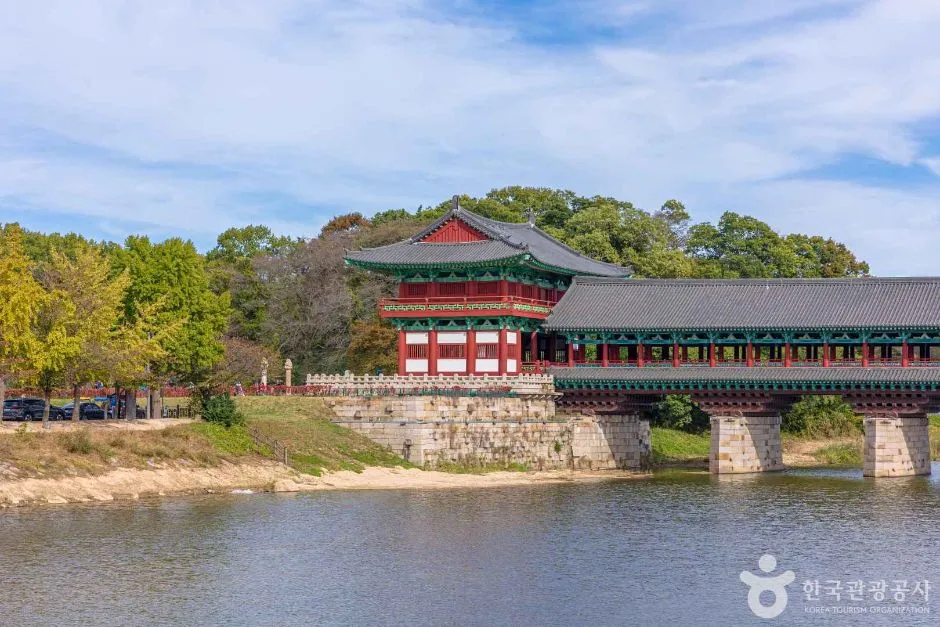
Three zones, and knowing them saves a lot of bus time.
The old city holds Daereungwon, Cheomseongdae, Wolji, Woljeonggyo, Gyochon and Hwangnidan-gil, all within walking distance of each other. This is where to base yourself.
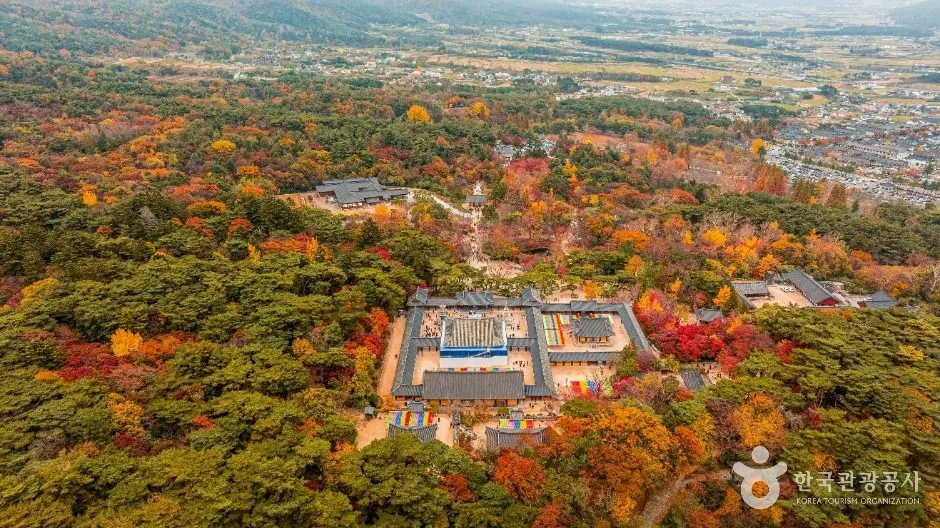
The Bulguksa side, southeast of town, holds Bulguksa and Seokguram. Half a day, reached by bus 10, 11 or 711.
Bomun, ten kilometres east, is the resort district with the large hotels and the lake.
Outside these, Yangdong Folk Village is well to the north and needs its own half day.
Two days that work
Day one, on foot. Daereungwon and Cheonmachong in the morning, Cheomseongdae next door, lunch at Hwangnidan-gil, Gyochon and Woljeonggyo in the afternoon, then Wolji after dark. Almost all of this is free and none of it needs a bus.
Day two, the temples. Bus out to Bulguksa early, bus 12 up to Seokguram, back down for the National Museum in the afternoon.
A third day, if you have it, goes to Yangdong or a walk on Namsan.
What Gyeongju does well
Depth. No other Korean city gives you a thousand years of one kingdom in walking distance.
Cost. Bulguksa, Seokguram, Daereungwon park, Cheomseongdae, Woljeonggyo, Gyochon, Namsan and the National Museum are all free. Two days of sightseeing costs about ₩10,000 in tickets.
Night sights. Wolji and Woljeonggyo lit after dark are genuinely different from the daytime versions, and the old city stays open until 22:00.
Scale. It is small enough to cycle and quiet enough to enjoy.
What it does less well
- The station. Ten kilometres and an expensive taxi.
- Bus frequency outside the main routes, especially bus 12 to Seokguram.
- Rain. Most of the sights are outdoors.
- English. Signage is good, spoken English less so outside the hotels.
When to go
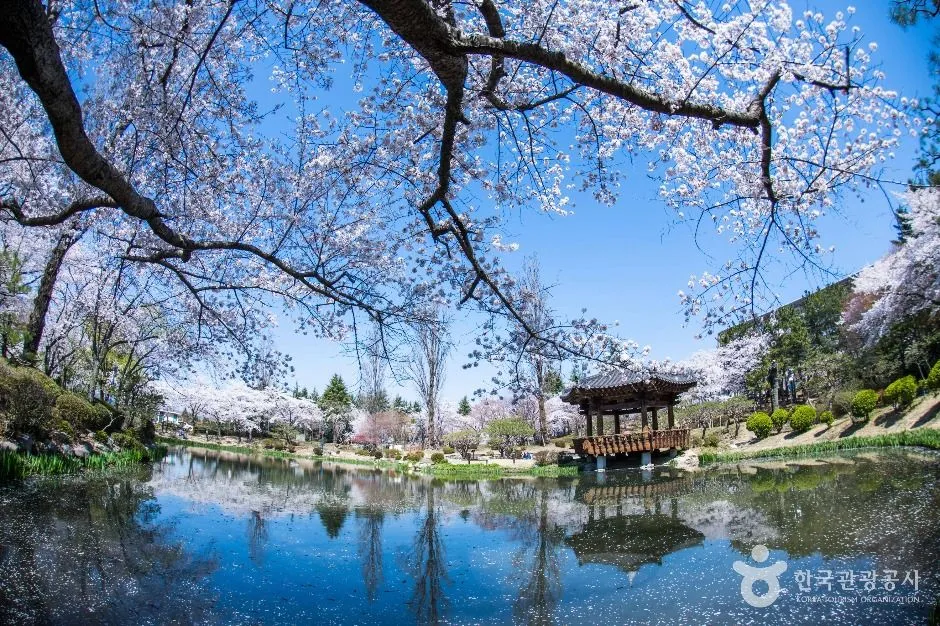
Cherry blossom peaks roughly 1 to 7 April, starting in late March. Bomun lake and the Daereungwon wall path are the places to see it, and accommodation fills months ahead.
October and early November are the other strong window, and the 53rd Silla Cultural Festival runs 9 to 11 October 2026 at Bonghwangdae and Woljeonggyo, free to attend.
Summer is hot and humid. Winter is cold but quiet, and the lit night sites work well in it.
Practical notes
- Two nights minimum. A day trip from Seoul means four and a half hours on trains.
- Consider the bus from Seoul. It arrives in the centre; the train does not.
- Stay in the old city if you have no car.
- Carry a transport card. Cash fares cost more and drivers rarely have change.
- Check the museum’s closing days. They fall on the second Monday of March, June, September and December.
Wrapping up
Gyeongju rewards slowness. Base yourself in the old city, walk or cycle, see the lit sites at night, and treat Bulguksa as a half-day excursion rather than the centre of the trip.
More in this series: where to stay, what to see and what to eat.