 Now, Yeogi
Things to Do in Gyeongju: Bulguksa, Seokguram and the Royal Tombs (2026)
Gyeongju's sites with 2026 hours and prices: Bulguksa and Seokguram are now free, Daereungwon park is free and only Cheonmachong is ticketed, the Wolji night view, Yangdong village and Namsan.
Places in this post
- Address
- 385 Bulguk-ro, Gyeongju
- Hours
- 09:00–18:00, leave by 19:00. Open year-round.
- Menu
- Admission Free
- Tip
- Korea abolished admission charges at heritage temples in 2023, so guides quoting a ticket price are out of date. Take bus 10 or 11 from Hwangnidan-gil, or 711 from the KTX station.
- Address
- 238 Seokgul-ro, Gyeongju
- Hours
- 09:00–18:00, viewing until 19:00
- Menu
- Admission Free · Parking ₩1,000 to ₩4,000 by vehicle size
- Tip
- Bus 12 from Bulguksa runs only about ten times a day between 08:40 and 16:40, with gaps of up to 80 minutes. Photograph the timetable at the stop before you go up.
- Address
- 9 Gyerim-ro, Gyeongju
- Hours
- 09:00–22:00, last admission 21:30. Open year-round.
- Menu
- Daereungwon park Free · Cheonmachong tomb interior Adult ₩3,000, youth ₩2,000, child ₩1,000
- Tip
- Walking the park costs nothing. You only pay to go inside the one excavated tomb, which is worth it for the gold crown replica and the cross-section.
- Address
- 102 Wonhwa-ro, Gyeongju
- Hours
- 09:00–22:00, ticketing and last admission 21:30
- Menu
- Adult ₩3,000 · Youth ₩2,000 · Child ₩1,000
- Tip
- Come for the illuminated reflection after dark. The city warns that arriving close to the 21:30 cut-off on a busy night may mean not getting in, so aim for 30 to 60 minutes before sunset.
- Address
- 93 Yangdongmaeul-gil, Gangdong-myeon, Gyeongju
- Hours
- April–September 09:00–19:00, October–March 09:00–18:00. Ticketing stops an hour before closing. Only the Cultural Centre closes on Mondays.
- Menu
- Adult ₩4,000 · Youth ₩2,000 · Child ₩1,500
- Tip
- Bus 203 from the intercity bus terminal runs about ten times a day. People live in these houses, so treat courtyards as private.
Gyeongju is often called a museum without walls, which undersells how much of it is simply lying about in fields. The Silla kingdom ruled from here for nearly a thousand years and left tomb mounds in the middle of roundabouts.
Two things have changed since most guidebooks were written, and both save you money. Hours and prices below are as of September 2026.
The two free ones that used to cost money
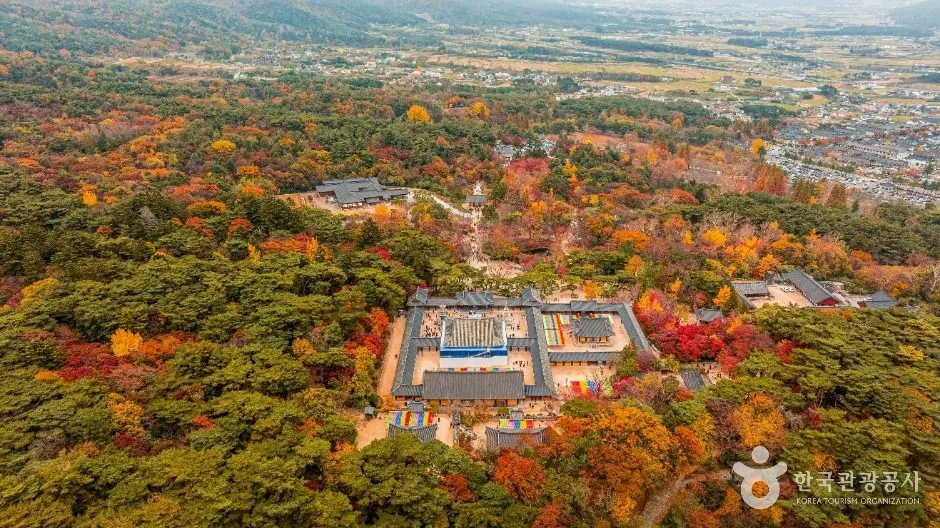
Bulguksa Temple (불국사) is the one everybody comes for: an eighth-century temple of terraced stone platforms and twin pagodas, rebuilt many times, inscribed by UNESCO in 1995. It is now free, open 09:00 to 18:00 with the grounds clearing by 19:00.
Korea abolished admission charges at heritage temples in 2023. Any guide still quoting a ticket price for Bulguksa is out of date.
Take bus 10 or 11 from Hwangnidan-gil, or bus 711 directly from the KTX station.
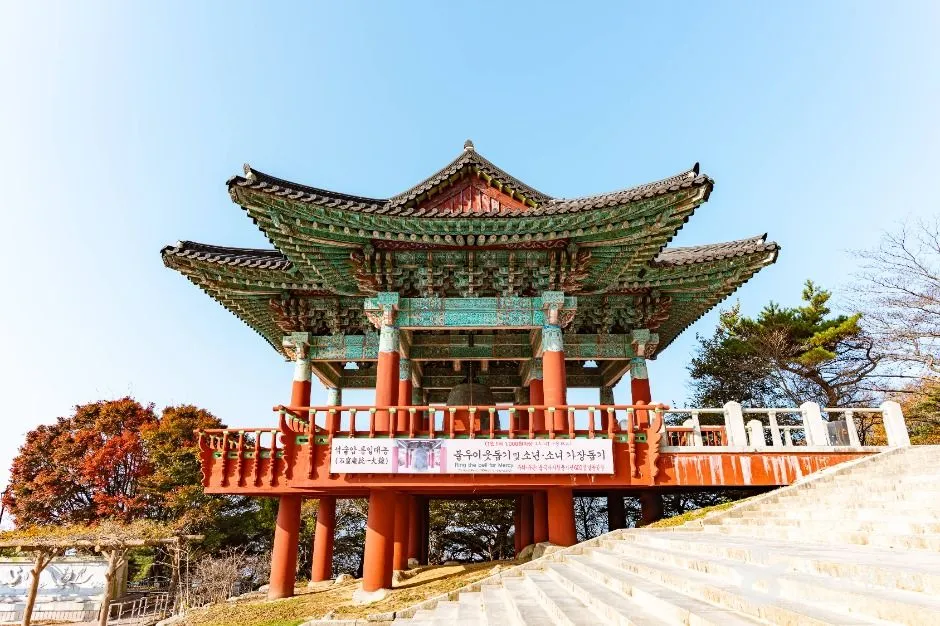
Seokguram Grotto (석굴암) sits above Bulguksa on Tohamsan, a man-made granite chamber holding a seated Buddha that faces the sunrise over the East Sea. It shares the 1995 inscription and it is also free, open 09:00 to 18:00 with viewing until 19:00.
Getting up there is the hard part. Bus 12 from Bulguksa runs only about ten times a day between 08:40 and 16:40, and the gaps reach 80 minutes. Photograph the timetable at the stop. Do not attempt the road on foot: it is nearly eight kilometres of hairpin bends with no pavement.
The tombs
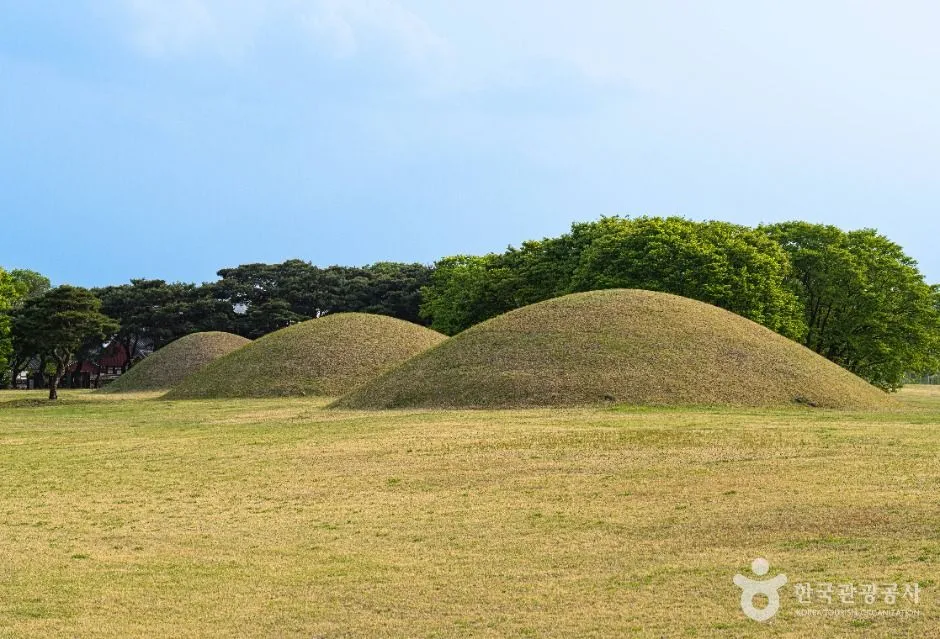
Daereungwon (대릉원) is a walled park of twenty-three grass-covered royal tomb mounds, some of them ten metres high, laid out like green hills on a lawn. It is the image people carry away from Gyeongju.
Here is the second money-saving correction: the park itself is free. Open 09:00 to 22:00 with last admission at 21:30.
You pay only to enter Cheonmachong (천마총), the one tomb excavated and opened as a display, at ₩3,000 for adults, ₩2,000 for youth and ₩1,000 for children. Inside you see the cross-section of the mound’s construction and a replica of the gold crown found there. It is worth the three thousand won.
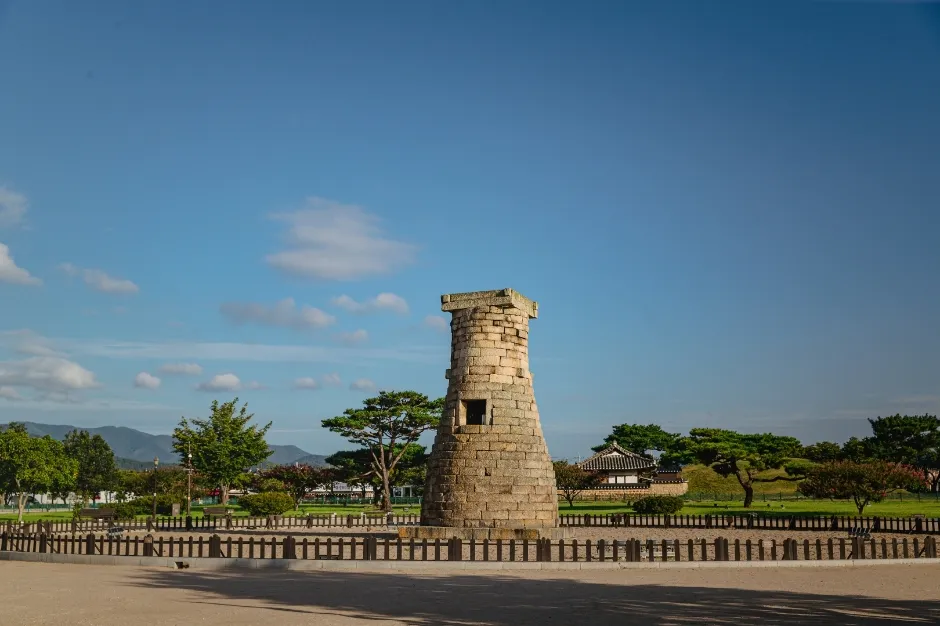
Cheomseongdae (첨성대), a nine-metre stone observatory from the seventh century and one of the oldest surviving in Asia, stands in the field next door. Free, open 09:00 to 22:00 in summer and to 21:00 in winter.
The night view
Donggung Palace and Wolji Pond (동궁과 월지) was the Silla crown prince’s palace and its pleasure lake. What survives is a reconstructed pavilion group beside the water, and the reason to come is that they light it after dark and it doubles in the reflection.
₩3,000 for adults, ₩2,000 youth, ₩1,000 children. Open 09:00 to 22:00, with ticketing and last admission at 21:30.
The city’s own warning is worth repeating: on busy nights, arriving near the cut-off can mean not getting in at all. Aim to be there 30 to 60 minutes before sunset so you see it in both lights.
Woljeonggyo (월정교), a reconstructed covered bridge over the Namcheon stream, is free and open 09:00 to 22:00. It is also lit at night and it is a ten-minute walk from Gyochon.
The museum
Gyeongju National Museum (국립경주박물관) holds what came out of the tombs, including the gold crowns, and it explains the Silla material better than any site signboard.
Free, open 10:00 to 18:00 with last admission 17:30. From 1 March 2026 it stays open Saturdays until 20:00 from March to October.
It closes on 1 January, Lunar New Year and Chuseok, plus the second Monday of March, June, September and December. Check the date before you plan around it.
The villages
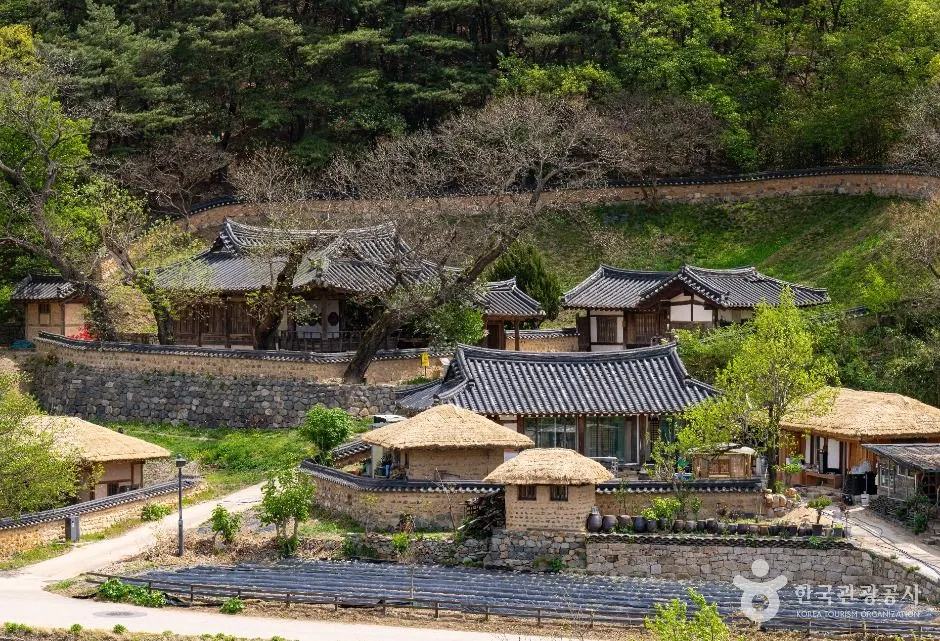
Yangdong Folk Village (양동마을) is a Joseon-era clan village of tiled and thatched houses on a wooded slope, inscribed by UNESCO in 2010 alongside Hahoe. ₩4,000 for adults, ₩2,000 youth, ₩1,500 children. Open 09:00 to 19:00 from April to September and to 18:00 in winter, with ticketing stopping an hour before. Only the Cultural Centre closes on Mondays.
It is well outside town. Bus 203 from the intercity bus terminal runs about ten times a day from 07:30. People still live here, so courtyards are private.
Gyochon Traditional Village (교촌마을) is the opposite: small, central and free, with no fixed hours because it is an open village rather than a gated site. The Choi Clan House inside is open 09:00 to 18:00, closing an hour earlier in winter, also free. The Gyodong Beopju brewery is here too.
Namsan
Namsan (남산) is the mountain south of the city, and it is an open-air Buddhist sculpture park. The official count is 694 relics, including 129 Buddha images and 99 pagodas, scattered across the slopes. It forms one of the five belts of the Gyeongju Historic Areas inscription.
Free. The main trekking trail starts at Woljeonggyo and runs about 10 km as a loop, five to six hours, with trail hours of 09:00 to 18:00. The gentler option is the Samneung (삼릉) trailhead, reached by bus 500, which has no time restriction and puts you among the valley carvings within twenty minutes.
Bomun Lake Resort
Bomun (보문관광단지) is the resort district ten kilometres east. Entering costs nothing and it is open around the clock, though the attractions inside it charge separately. It is at its best in cherry blossom season, and it is where the big hotels are. Our accommodation guide covers it.
What UNESCO actually listed
Three separate inscriptions cover Gyeongju, which confuses people.
- Seokguram Grotto and Bulguksa Temple, inscribed 1995.
- Gyeongju Historic Areas, inscribed 2000, made up of five belts: Mount Namsan, Wolseong, Tumuli Park, Hwangnyongsa and Sanseong Fortress. Cheomseongdae and Wolji fall in the Wolseong belt, Daereungwon in the Tumuli Park belt.
- Historic Villages of Korea: Hahoe and Yangdong, inscribed 2010.
One thing not to bother with
There used to be a combined ticket covering Daereungwon and Wolji. It is no longer sold, and it never saved anything anyway, since the two tickets added up to exactly the same price. Commercial passes sold by tour platforms are not official city tickets.
When to go
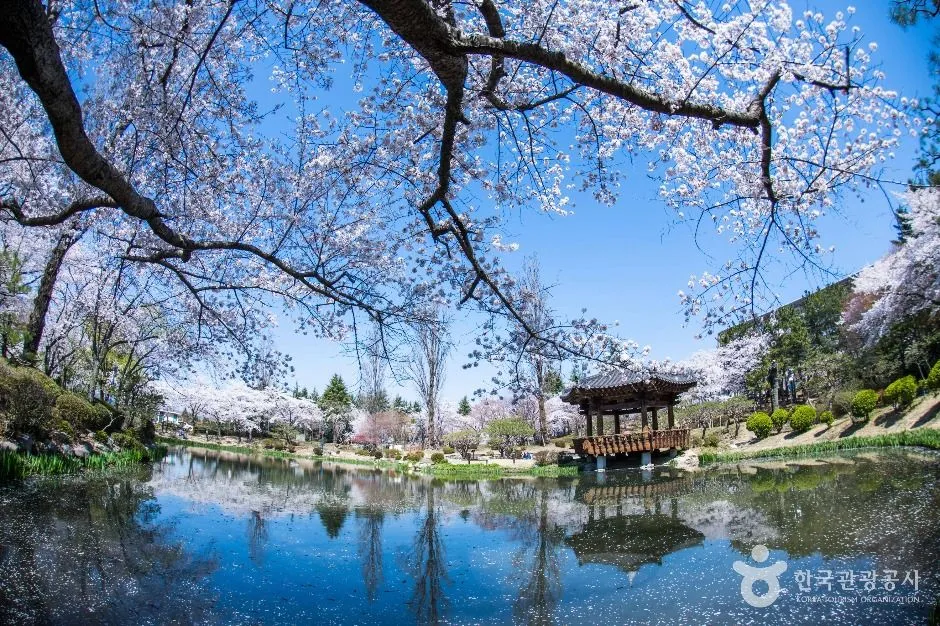
Cherry blossom starts in late March and peaks roughly 1 to 7 April, varying by about a week each year. The blossom spots are Bomun lake, the stone wall path at Daereungwon, Cheomseongdae and Bulguksa.
Autumn is the other strong season, from October into early November.
The 53rd Silla Cultural Festival runs 9 to 11 October 2026 at Bonghwangdae and Woljeonggyo, and it is free.
Practical notes
- Most of it is free now. Budget about ₩10,000 a person for tickets across two days.
- Bus 12 to Seokguram is the bottleneck. Plan that leg first and build the day around it.
- Daereungwon and Wolji are open until 22:00. Do them at night and save daylight for the outlying sites.
- City buses cost ₩1,450 by card, teens and children ride free, and one transfer within 30 minutes is free. T-money works.
- The museum’s closing days are irregular. Check before making it your rainy-day plan.
Wrapping up
Do Daereungwon, Cheomseongdae and Woljeonggyo on foot in the old city, give a half day to Bulguksa and Seokguram, and see Wolji after dark. Add Yangdong only if you have a third day.
More in this series: the Gyeongju overview, where to stay and what to eat.