 Now, Yeogi
Where to Stay in Jeju: City, Seogwipo, Jungmun or the Coast (2026)
Choosing a base on Jeju: why the island's size makes this decision matter, what each region suits, the province's safety-certified guesthouse scheme, and how many bases a week needs.
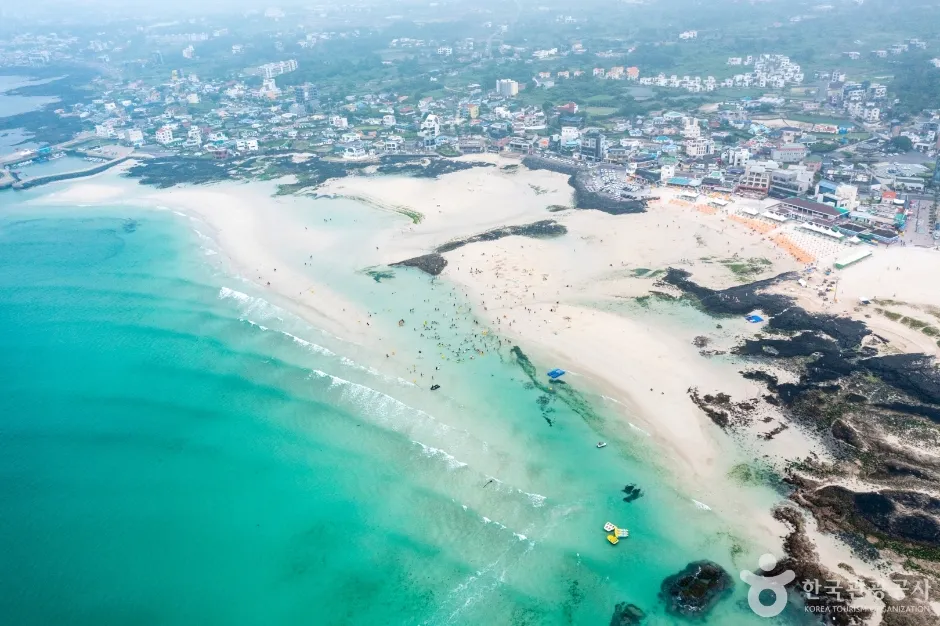
Jeju is bigger than it looks on a map, and the single most common planning mistake is booking one hotel for a week and then driving two hours a day.
This guide does not name hotels or quote prices. Jeju’s official accommodation directory is not machine-readable, and there is no authoritative source for rates. What it can do is explain how the island divides and what that means for your booking.
How the island divides
The official tourism site splits Jeju into two halves with Hallasan in the middle.
North and west: Jeju City, Aewol, Hallim, Hangyeong, Jocheon and Gujwa.
South and east: Seogwipo City, Seongsan, Daejeong, Andeok, Jungmun, Namwon and Pyoseon.
Plus the islets, of which Udo is the one most visitors reach.
Seogwipo City’s own tourism structure groups its visitor zones the same way, with separate listings for Daejeong, Andeok, Jungmun, downtown Seogwipo, Namwon, Pyoseon and Seongsan.
The practical consequence: north and south are different climates and different trips. The south is warmer and wetter, the north is where the airport and the city are, and Hallasan blocks the middle.
Jeju City
The north. The airport is here, the Dongmun night market is here, and this is where the island’s actual urban life happens.
Suits: short trips, late arrivals and early departures, anyone without a car, travellers who want restaurants and a night market rather than a resort.
Downsides: it is a working city, not a holiday destination. The best beaches and the famous scenery are elsewhere, and you will drive to them.
For a two- or three-night trip with an evening flight, this is the sensible base.
Seogwipo
The southern town, about an hour from the airport across the island. It has waterfalls inside the town limits, the Maeil Olle Market, and a milder, wetter climate than the north.
Suits: longer stays, walkers, anyone doing the Olle trail, travellers who want a town rather than a resort or a city.
Downsides: the crossing from the airport eats a couple of hours of your first and last day.
Jungmun
The purpose-built resort complex on the south coast, west of Seogwipo. This is where the large international hotels, the golf courses and the convention centre are.
Suits: families who want a pool and a beach without planning anything, resort holidays, business events.
Downsides: it is a resort enclave. Food is priced accordingly and you leave it to see the island.
Aewol and the west coast
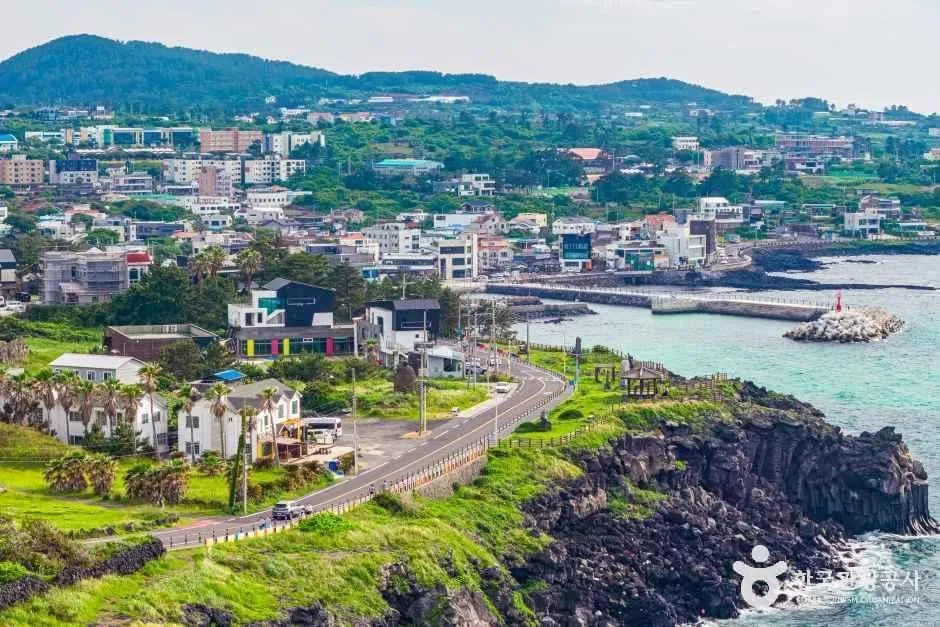
The stretch west of Jeju City that became fashionable over the last decade, with cafés along the shore road, and further west the beaches at Hyeopjae and Geumneung.
Suits: travellers who want the coast road, cafés and sunsets, and who have a car.
Downsides: thin on public transport and on restaurants that are not cafés.
Seongsan and the east
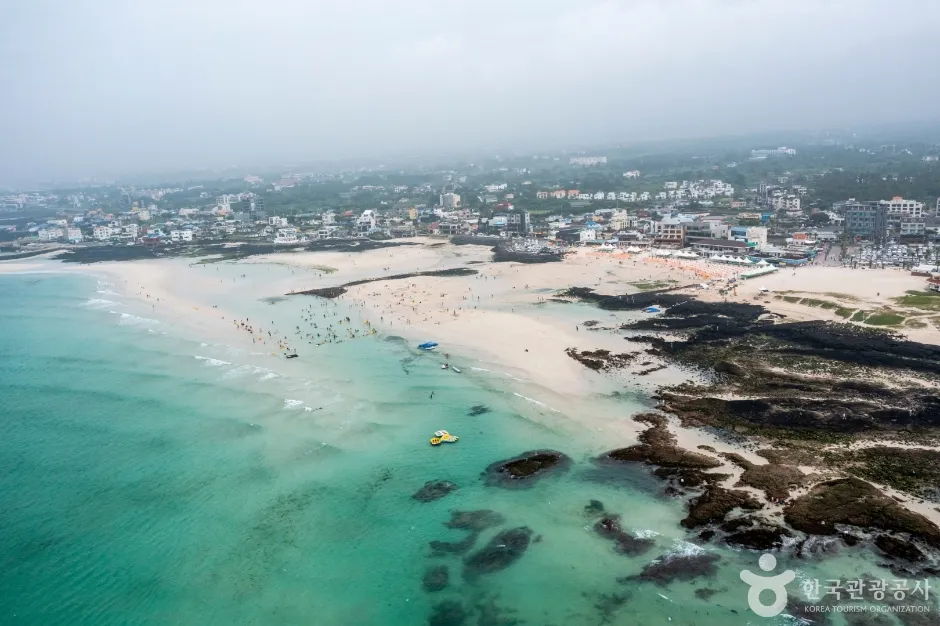
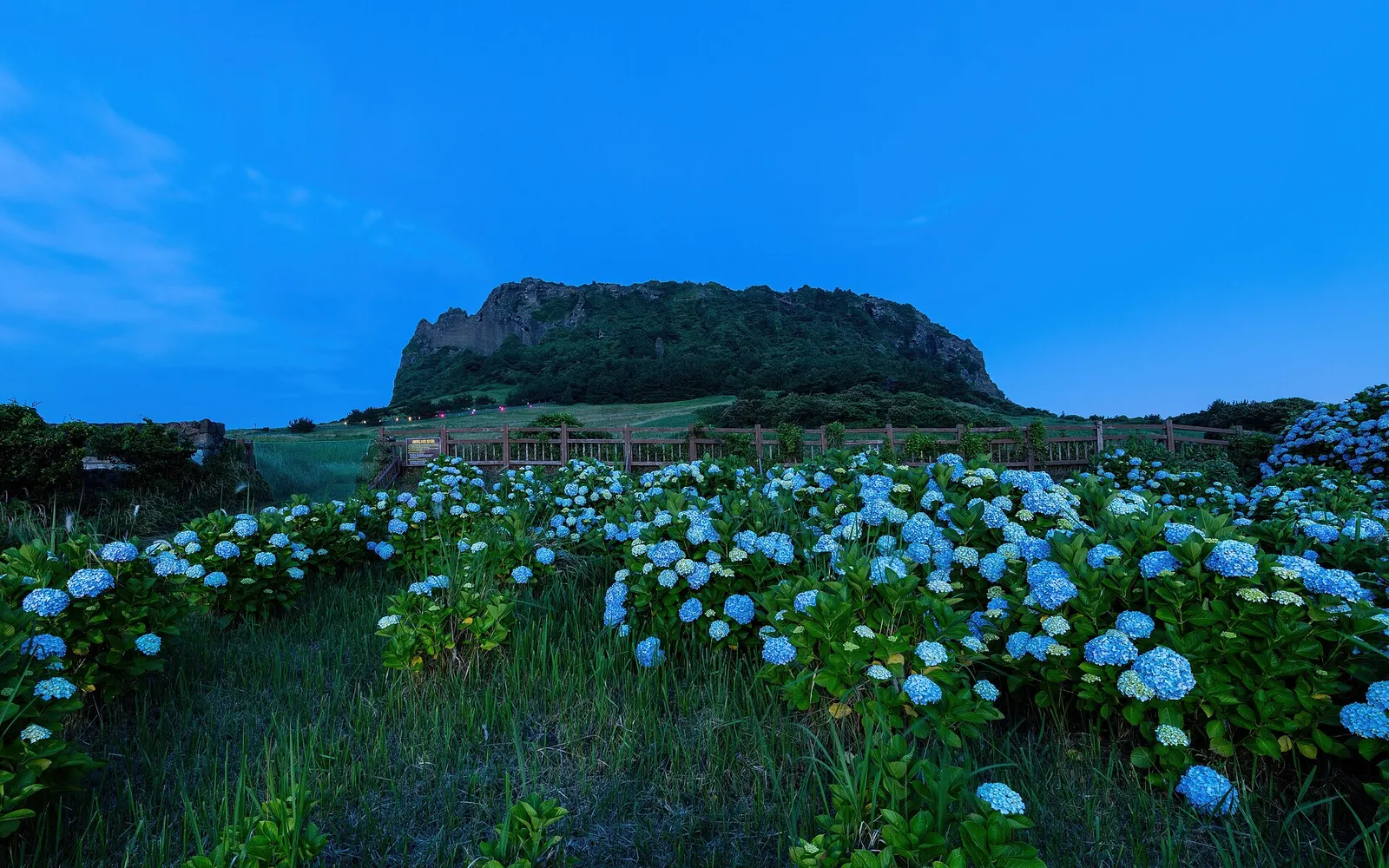
The eastern end, around Seongsan Ilchulbong and the ferry to Udo. Quieter, more rural, and the base for sunrise at the peak.
Suits: anyone who wants to climb Seongsan Ilchulbong at dawn without a two-hour drive, and day trips to Udo.
Downsides: the furthest corner from the airport, and quiet at night.
Guesthouses, and a scheme worth knowing
Jeju has a real guesthouse scene, and unusually it is regulated by the province.
The safety-certified rural guesthouse scheme (농어촌민박 안전인증제) requires that the operator actually lives in and personally runs the house, has CCTV, has completed safety and service training, carries fire insurance, and provides lockable rooms. Certification requires at least 80 out of 100 across five areas and fifteen items.
Certified guesthouses get promoted on the official tourism site and receive low-interest loans. If you are booking a small independent place rather than a hotel, this certification is the closest thing to a quality guarantee the island offers, and the province publishes the list.
How many bases do you need
This is the question that actually matters.
Two or three nights: one base. Jeju City if you fly in late, Seogwipo if you fly in early.
Four to six nights: two bases. North for the first half, south for the second, or east then west. This halves your driving.
A week or more: two or three. Adding an eastern night for the Seongsan sunrise is the one most people are glad they made.
Splitting is more effort at booking and much less effort on the road.
What to check before you book
- Distance to the airport in driving time, not kilometres. The cross-island roads are slower than they look.
- Whether you will have a car. Without one, base yourself in Jeju City or Seogwipo and nowhere else.
- North or south. They have noticeably different weather on the same day.
- Typhoon season. July to September carries real cancellation risk, with August the peak month.
- Certification if you are booking a guesthouse.
Wrapping up
Do not book one hotel for seven nights. Split the island, take the north for the city and the airport and the south for the walking and the waterfalls, and add an eastern night if sunrise at Seongsan Ilchulbong appeals.
More in this series: the Jeju overview, what to see and what to eat.