 Now, Yeogi
Jeju Travel Guide: Flights, Buses, Hallasan and Planning a Trip (2026)
A first-timer's guide to Jeju: the world's busiest flight route, whether you actually need a car, how the bus system works, the Hallasan summit reservation you must book a month ahead, and when to go.
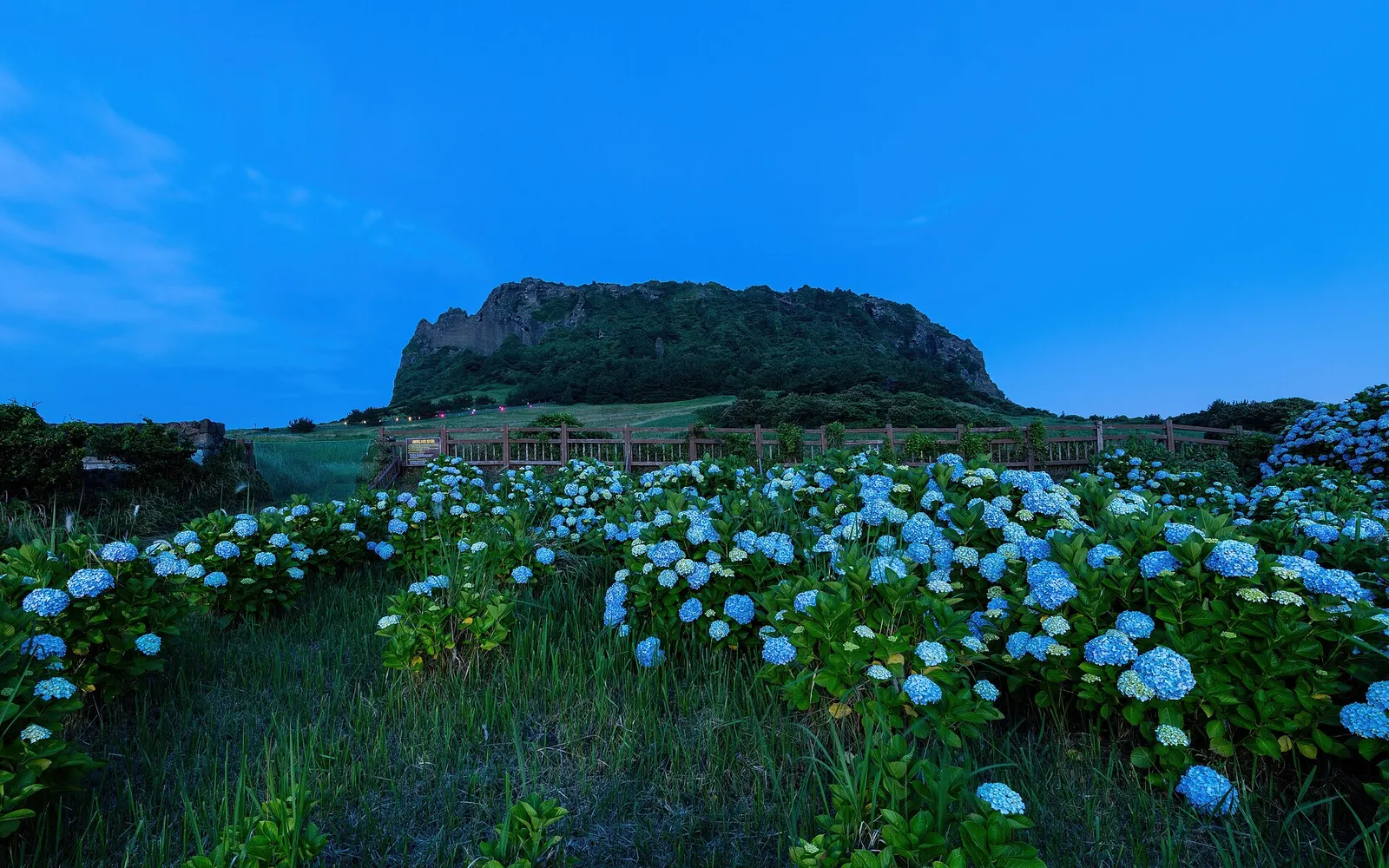
Places in this post
- Address
- Seongpanak and Gwaneumsa trailheads, Jeju
- Hours
- Entry from 05:00. Summit trail cut-off 12:30 April–September, 11:30 October–March.
- Menu
- Park admission No admission fee is published · Parking, small vehicle ₩1,000 first hour, first 30 minutes free, daily maximum ₩13,000
- Tip
- Only the two summit trails need a reservation. Booking opens at 09:00 on the first business day of each month for the whole of the following month. A no-show earns a three-month ban.
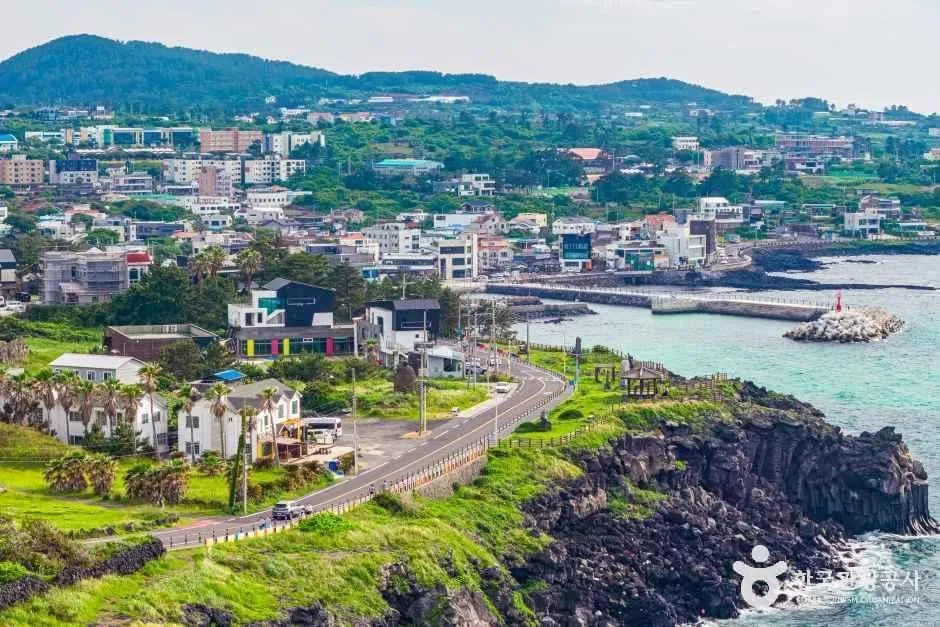
Jeju is a volcanic island off Korea’s south coast, and the flight to it from Seoul is, by scheduled seats, the busiest air route in the world. More than a million seats were scheduled on it for September 2026 alone.
That tells you how Koreans treat Jeju: as a short-haul holiday. For a foreign visitor it is the one part of Korea that feels like somewhere else entirely.
Prices and times are as of September 2026.
Getting there
By air from Gimpo, the flight takes 75 to 85 minutes and there are roughly 115 to 125 departures a day in each direction. Nine airlines fly it, so fares are competitive and schedules are dense enough that you can turn up and fly.
From Incheon there is only one round trip a day, so if you are connecting from an international flight, plan to transfer to Gimpo or accept a long wait.
By ferry, services reach Jeju Port from Mokpo, Wando, Jindo, Nokdong and Samcheonpo. Mokpo takes about 4 hours 30 minutes and Wando about 2 hours 30 minutes. The ferry only makes sense if you are bringing a car.
Do you need a car?
No official source will tell you either way, so here is the honest position.
The bus network genuinely works, and it is cheap. Routes are numbered by type: 1xx are express, 2xx and 3xx and 5xx are trunk routes, 4xx and 6xx are branch routes, 7xx are rural, and 810 and 820 are tourist loops.
Fares are flat at ₩1,150 by card for trunk, branch and tourist-loop buses, with village buses at ₩950. Only the express 1xx routes are distance-based, starting at ₩2,000 and capped at ₩3,000.
T-money works, as do Cashbee, Mybi and several others, and you get two free transfers within 40 minutes.
The catch is time, not money. Buses go where you want but slowly, and the island’s best moments are often at a coastal viewpoint that no bus stops at. A car halves your travel time and doubles what you can reach.
Take the bus if you are staying two or three nights in one town, you cannot drive in Korea, or your plan is Hallasan plus one or two big sights.
Rent a car if you have four nights or more, you want the coast roads, or you are travelling with children or luggage.
From the airport
The 600 limousine runs to Jungmun and Seogwipo. Airport to Jungmun is 52 minutes and to the Seogwipo KAL Hotel terminus 98 minutes, at ₩4,500 to ₩5,500. It runs from 06:00 until late evening every 18 to 27 minutes. Note that the province’s page and the airport’s own page give slightly different last-bus times, so check on the day.
The 800 and 801 run between Jeju terminal, the airport and Seogwipo without going via Jungmun. Express routes 101, 111, 121, 131 and 181 also leave from the airport.
Taxis start at ₩3,000 for two kilometres, with a 20 percent surcharge between 23:00 and 04:00.
How the island is laid out
Two towns and a mountain.
Jeju City is the north: the airport, the ferry port, the Dongmun night market, and most of the island’s actual population.
Seogwipo is the south: smaller, warmer, wetter, with waterfalls inside the town and the Olle trail running through it.
Hallasan sits in the middle and blocks it. Roads go around the island on the east and west ring roads, or across it on the 5·16 road, the Pyeonghwa road, the Beonyeong road, the Namjo road and the 1100 road. The cross-island roads are scenic and slower than they look.
The airport bus figure of 98 minutes to Seogwipo is the most reliable sense of scale available.
Hallasan, and the reservation you must make
Hallasan is 1,950 m and the highest mountain in South Korea. Climbing it is the single most common reason foreign visitors come, and it is the thing most likely to go wrong.
Only the two summit trails require a reservation: Seongpanak and Gwaneumsa. The other trails do not.
Booking opens at 09:00 on the first business day of each month, for the whole of the following month. It is first come, first served, and you get a QR code on your phone. A no-show earns a three-month ban, and a second one a full year.
If you plan to stand on the summit, this is the first thing to arrange, before flights.
| Trail | Distance | Time up | Summit |
|---|---|---|---|
| Seongpanak | 9.6 km | 3–4.5 h | Yes, reservation |
| Gwaneumsa | 8.7 km | 3.3–5 h | Yes, reservation |
| Yeongsil | 5.8 km | 1.5–2.5 h | No |
| Eorimok | 6.8 km | 2–3 h | No |
| Donnaeko | 7 km | ~3.5 h | No |
Entry cut-offs are early. The summit trails stop admitting at 12:30 from April to September and 11:30 from October to March, with the summit gate itself closing two hours later. Trails open at 05:00.
No admission fee is published for the park. Parking costs ₩1,000 for the first hour with the first 30 minutes free.
If you want the mountain without the nine-hour day and the reservation, Yeongsil is the answer: under three hours to a ridge with a genuinely spectacular view, no booking needed.
What Jeju holds
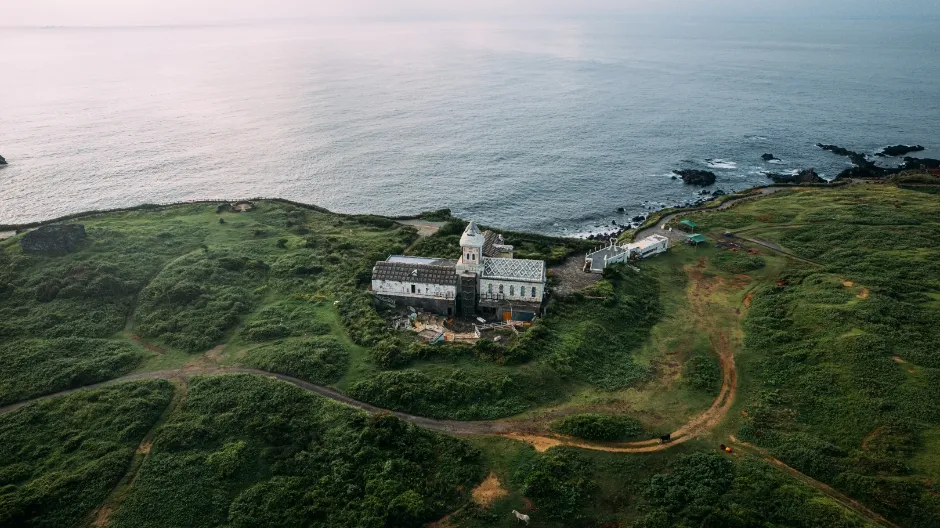
Jeju carries an unusual stack of UNESCO designations.
- A World Natural Heritage site covering Hallasan, the Geomunoreum lava tube system and Seongsan Ilchulbong
- A Biosphere Reserve, designated in 2002, covering 387,194 hectares
- A Global Geopark with eleven listed geosites
- The culture of the Jeju haenyeo, the free-diving women, inscribed on UNESCO’s intangible heritage list in 2016
The Jeju Olle Trail is the other thing to know: 26 routes totalling 422 km around the island’s edge, waymarked and walkable in sections of one to eight hours. Route 1 passes Seongsan Ilchulbong, Route 7 follows the Seogwipo coast.
Details and prices for the individual sights are in our things to do guide.
When to go
Spring is the best season for most people. Cherry blossom and canola flowers overlap in late March and early April, and Seogwipo runs festivals for both.
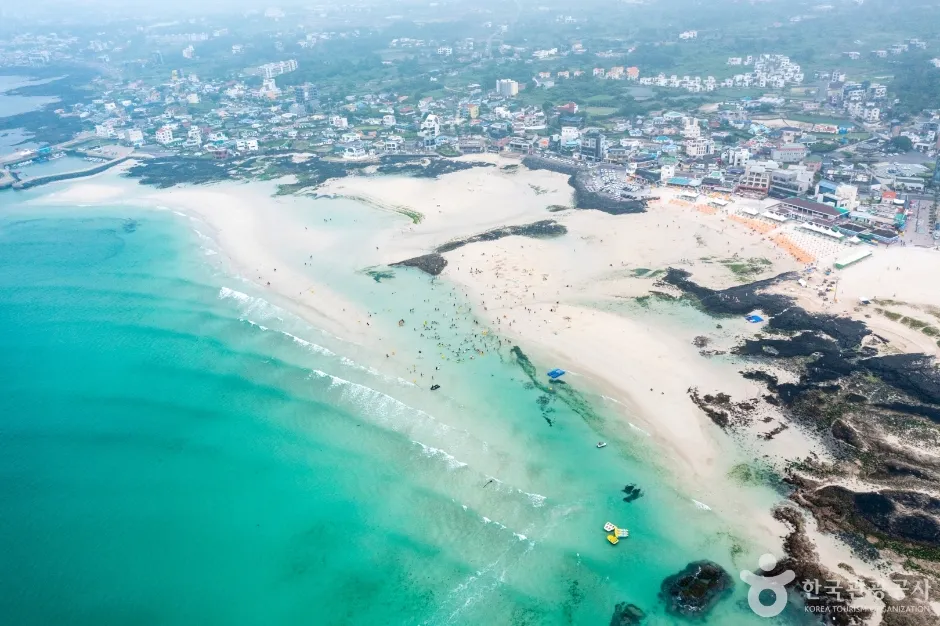
Summer is beach season, with the official swimming period running 24 June to 6 September in 2026.
Autumn is stable and clear.
Typhoons are the real planning risk. About three affect Korea each year and ninety percent arrive in July, August and September, with August the peak. A Jeju trip in those months carries genuine cancellation risk, and flights are the first thing to stop.
Practical notes
- Book the Hallasan summit slot first if you want it, on the first business day of the month.
- Two or three bases, not one, for a trip of five nights or more.
- T-money works on the buses.
- North and south have different weather on the same day. Pack for both.
- Check the sights’ closing days. Several close on a fixed Monday or Wednesday each month.
Wrapping up
Fly from Gimpo, decide honestly whether you will drive, and if Hallasan matters to you, book it before anything else. Then split your nights between the north and the south rather than driving across the island every day.
More in this series: where to stay, what to see and what to eat.