 Now, Yeogi
Things to Do in Jeju: Seongsan Ilchulbong, Waterfalls and Forests (2026)
Jeju's sights with 2026 hours and prices: the sunrise peak and its monthly closure, the three Seogwipo waterfalls, Bijarim and Saryeoni forests, Udo island, and why Manjanggul may still be shut.
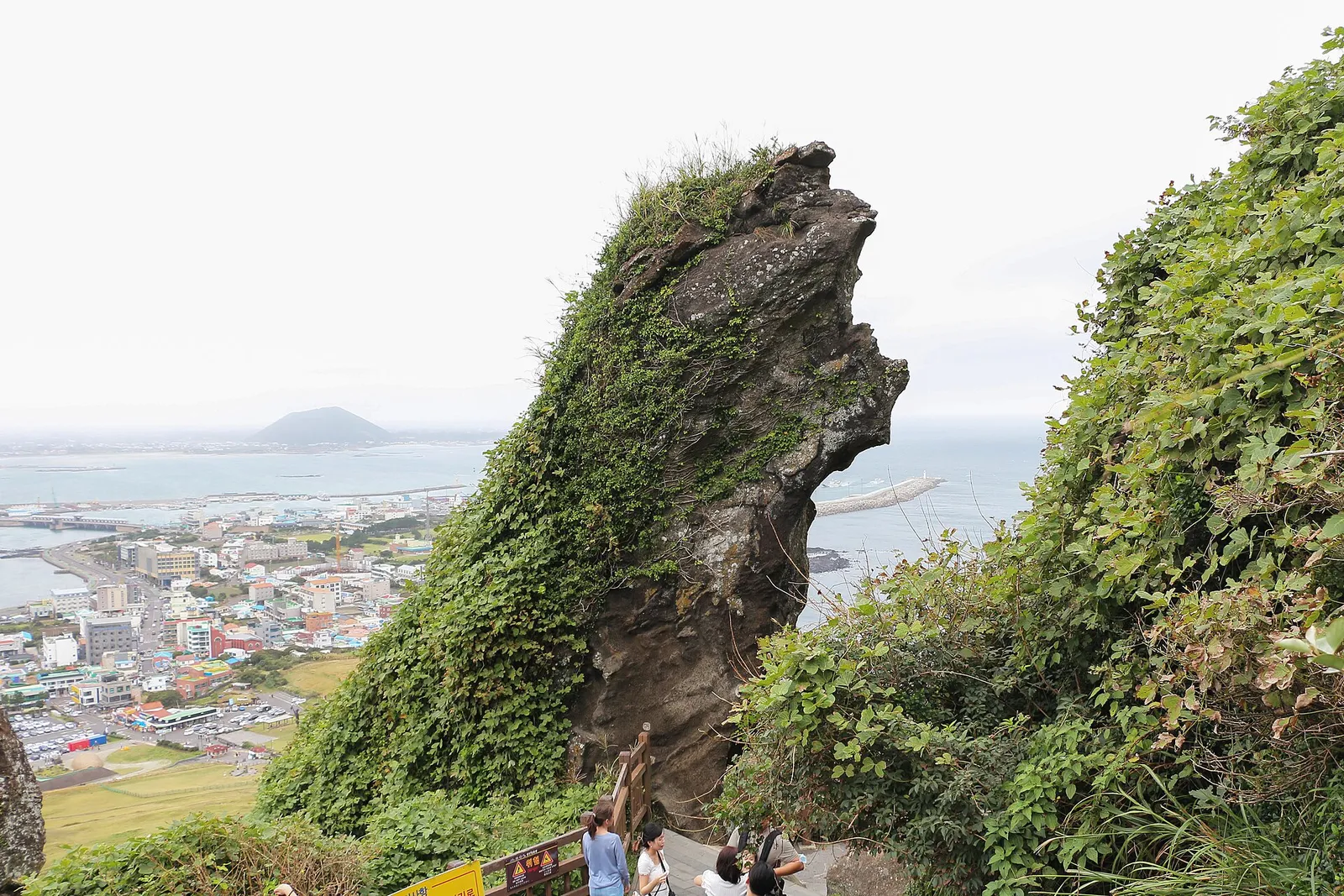
Places in this post
- Address
- 284-12 Ilchul-ro, Seongsan-eup, Seogwipo
- Hours
- May–August 04:30–20:00, March–April and September–October 05:00–19:00, November–February 06:00–18:00. Ticketing ends an hour before closing.
- Menu
- Adult ₩5,000 · Youth, child and military ₩2,500
- Tip
- Closed the first Monday of each month. A free coastal trail runs alongside the paid summit path, so you can walk the headland without a ticket.
- Address
- 2-15 Namseongjung-ro, Seogwipo
- Hours
- 09:00–22:00, last entry 21:20
- Menu
- Adult ₩2,000 · Youth and child ₩1,000
- Tip
- The only one of the three waterfalls open at night, and it is lit. It is inside Seogwipo town, so no drive is needed.
- Address
- 55 Bijasup-gil, Gujwa-eup, Jeju City
- Hours
- 09:00–18:00, last entry 17:00, open year-round
- Menu
- Adult ₩3,000 · Children and teenagers ₩1,500
- Tip
- A forest of ancient nutmeg yew trees on flat, easy paths. No pets and no food allowed inside.
- Address
- Ferries from Seongsan Port, 112-7 Seongsandeungyong-ro, Seongsan-eup
- Hours
- Crossing takes 10 to 15 minutes
- Menu
- Marine park fee, adult ₩1,000 · Ferry Charged separately
- Tip
- Visitor vehicles are banned on Udo from 1 August 2026 to 31 July 2029, so plan to hire a scooter or electric cart on the island or walk.
Jeju’s sights are volcanic: a tuff cone, lava tubes, waterfalls cutting through basalt, and forests growing on old lava. Almost all of them are cheap, and several are free.
Hours and prices are as of September 2026 and come from official listings.
Seongsan Ilchulbong
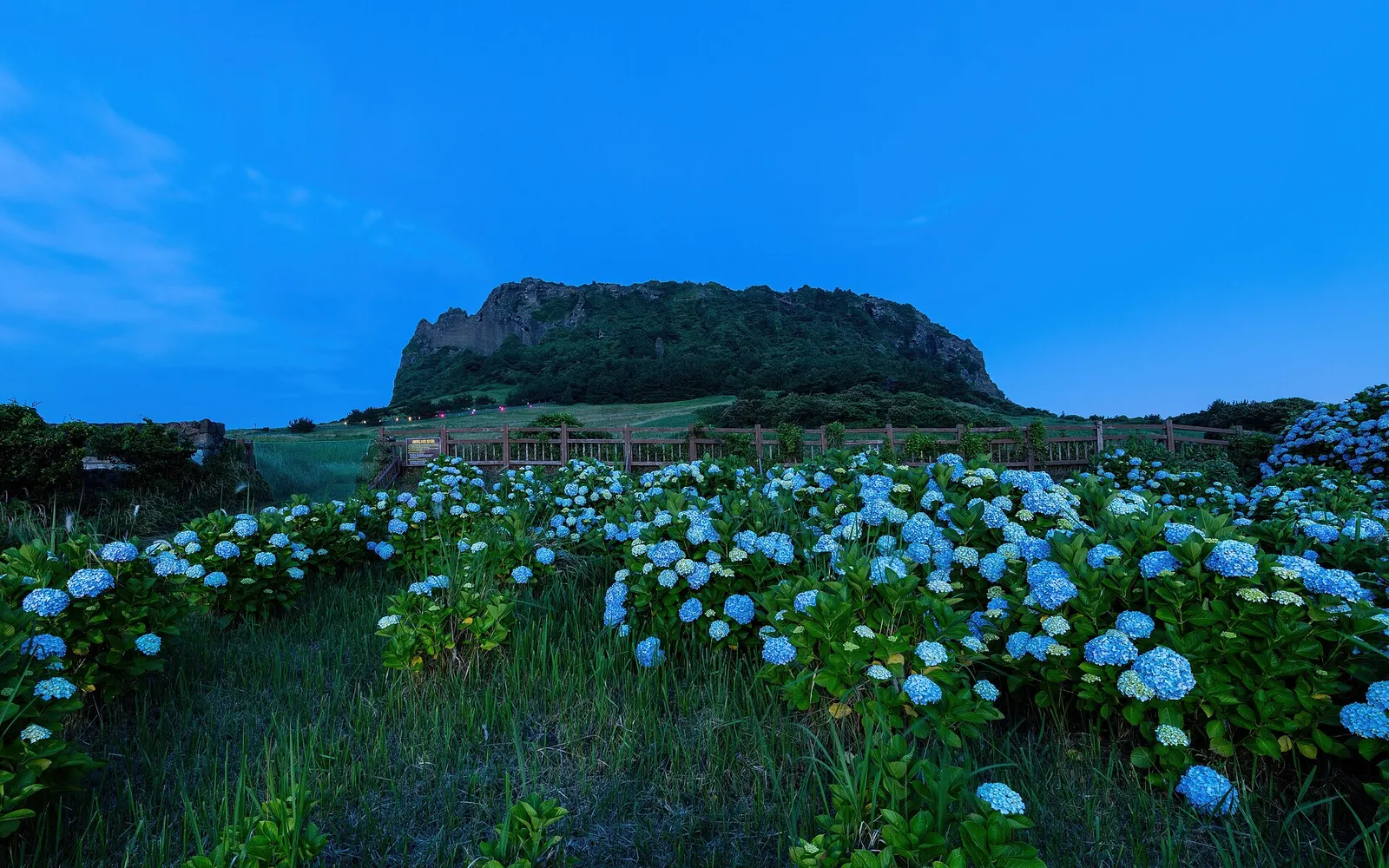
Seongsan Ilchulbong (성산일출봉) is a tuff cone that erupted from the seabed, now a flat-topped crater 182 m high at the island’s eastern tip. It is part of Jeju’s UNESCO World Heritage listing and it is the island’s defining image.
₩5,000 for adults and ₩2,500 for youth, children and military. Hours shift with the season: 04:30 to 20:00 in summer, 05:00 to 19:00 in spring and autumn, 06:00 to 18:00 in winter. Ticketing stops an hour before closing.
It closes on the first Monday of each month. Check the date before driving out there.
Two things worth knowing. The name means sunrise peak, and the summer opening at 04:30 exists so you can be at the top for it. And a free coastal trail runs along the headland beside the paid summit path, so if you only want the view of the cone rather than the view from it, you need no ticket at all.
The climb takes about 25 minutes on stairs.
Manjanggul, and a warning
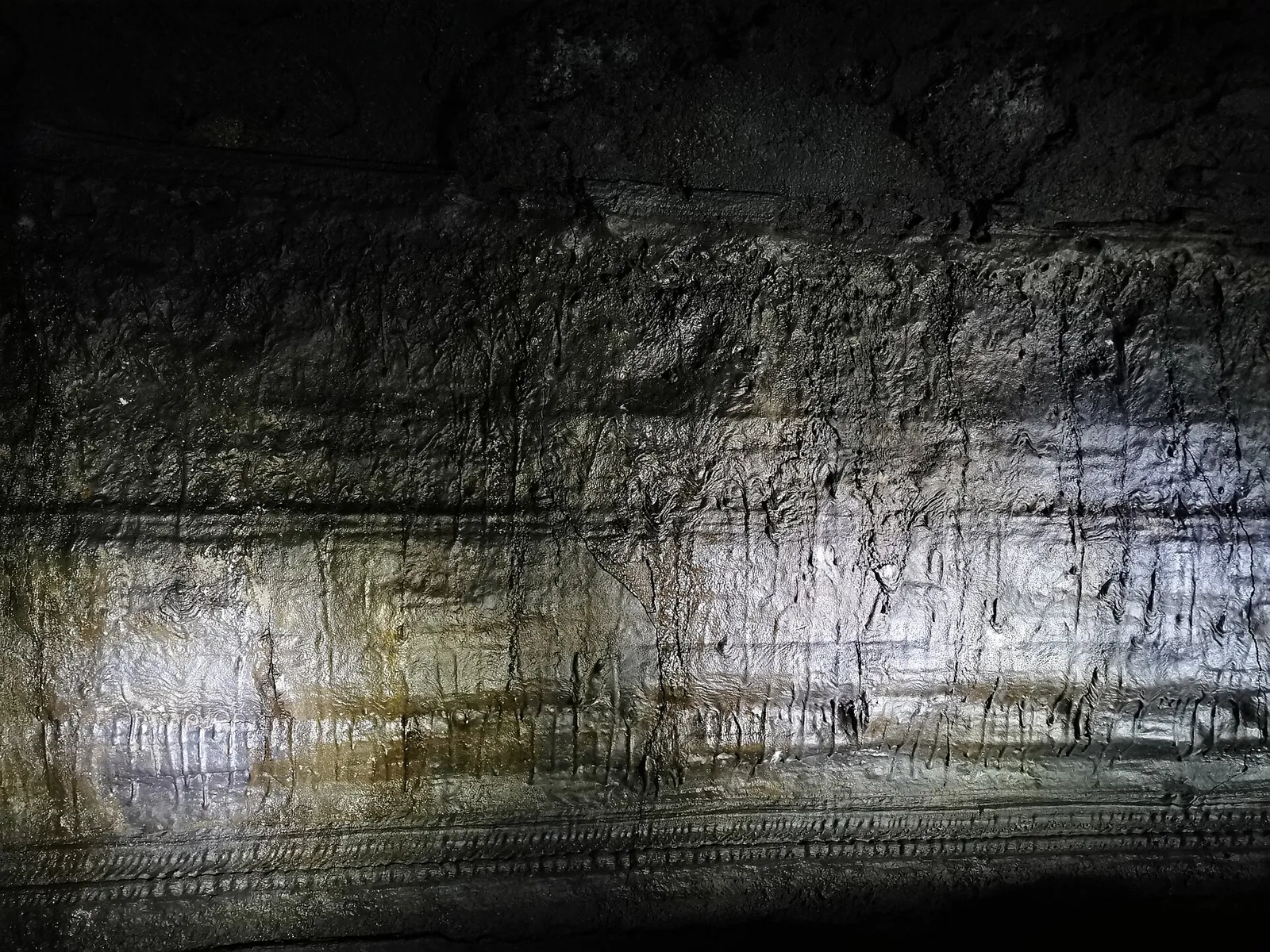
Manjanggul (만장굴) is one of the world’s finest lava tubes and part of the same World Heritage listing. Roughly one kilometre from the second entrance is normally open to visitors, with a walkway through a passage large enough to drive a bus down.
Check before you go. The cave closed on 29 December 2023 for works and remained closed through 2026. A reopening notice was posted in May 2026, but the attraction page still carried the old closure line when this was written and the reopening date could not be confirmed.
When open it is 09:00 to 18:00 with last entry at 17:00, closed the first Wednesday of each month, at ₩4,000 for adults and ₩2,000 for youth and children.
The Seogwipo waterfalls
Three waterfalls sit within a short drive of each other on the south coast, and they are all worth an hour.
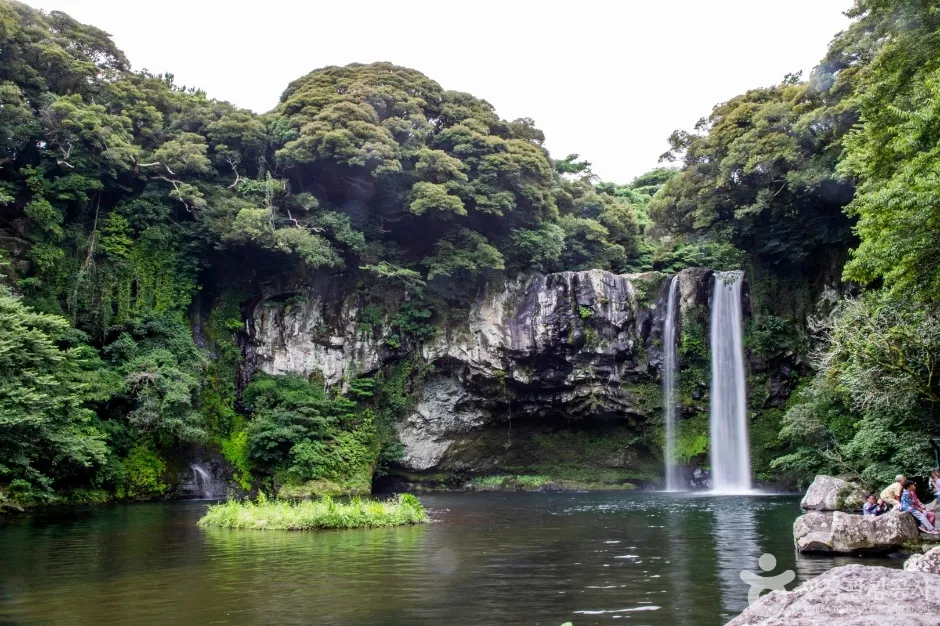
Cheonjiyeon (천지연폭포) is inside Seogwipo town, ₩2,000 for adults and ₩1,000 for youth and children. It is open 09:00 to 22:00 with last entry at 21:20, which makes it the only one you can visit at night, lit after dark.
Jeongbang (정방폭포) is the one that falls directly into the sea, which is rare. 09:00 to 17:50, open every day of the year, ₩2,000 and ₩1,000. Free for under-sevens, over-65s and disabled visitors.
Cheonjeyeon (천제연폭포) is a three-tier fall near Jungmun, 09:00 to 17:50, ₩2,500 for adults and ₩1,350 for youth and children.
If you only do one, make it Cheonjiyeon in the evening.
Jusangjeolli
Jusangjeolli (주상절리) is a cliff of hexagonal basalt columns on the Jungmun coast, formed as lava cooled. ₩2,000 for adults, ₩1,000 for youth and children, free for over-65s and disabled visitors, parking free.
Open 09:00 to 17:50 with last admission at 17:30, year-round. It takes twenty minutes and it sits next to Cheonjeyeon, so pair them.
The forests
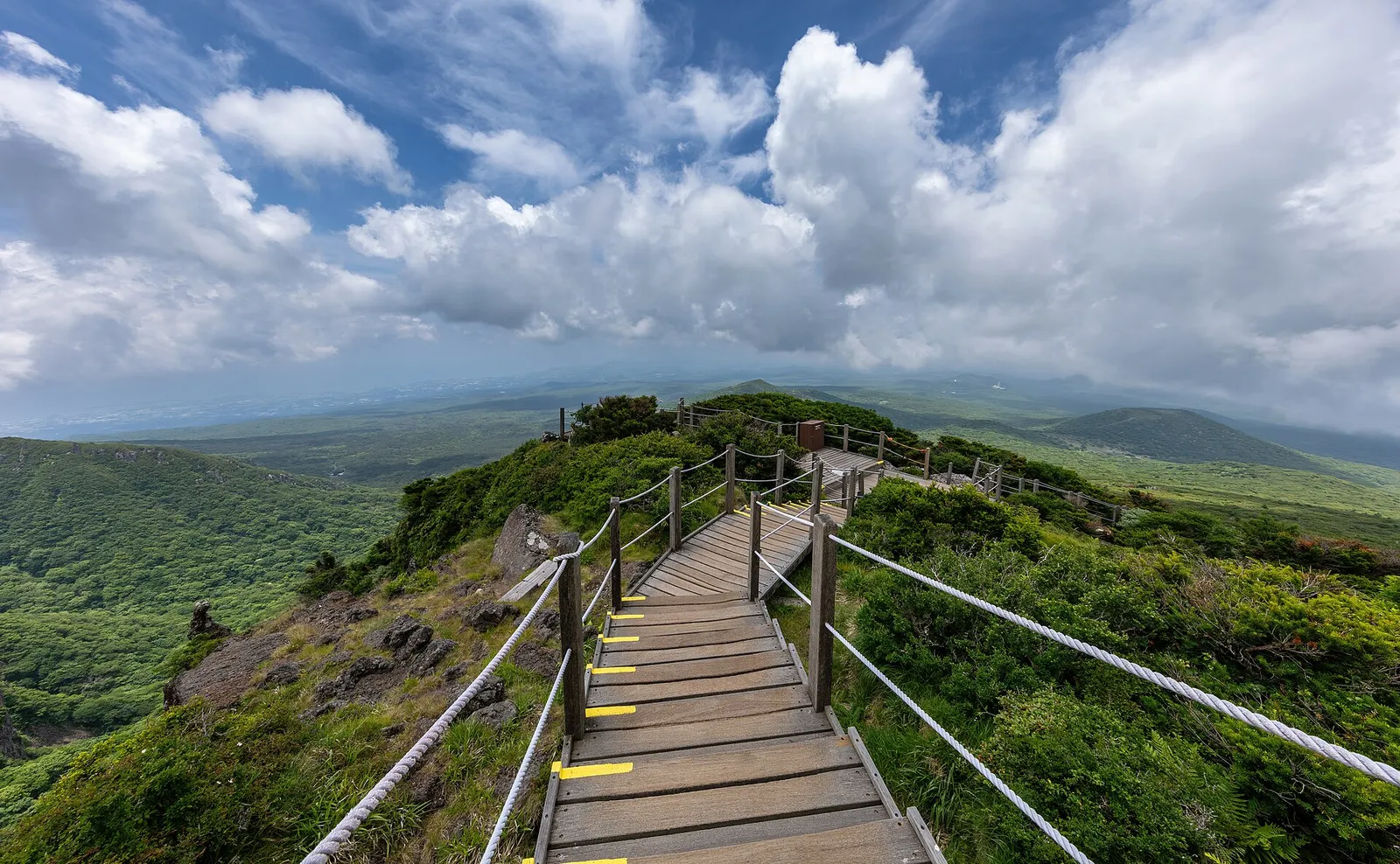
Bijarim (비자림) in the east is a forest of ancient nutmeg yew trees, some of them eight hundred years old, on flat gravel paths. ₩3,000 for adults and ₩1,500 for children and teenagers, open 09:00 to 18:00 with last entry at 17:00, year-round. No pets and no food inside.
Saryeoni Forest Path (사려니숲길) is the other one, and it is free with no reservation needed. Open 09:00 to 17:00, year-round, closing in heavy rain or snow. It is a broad, level track through cedar and deciduous forest, and it is the easiest genuinely beautiful walk on the island.
For Hallasan’s own trails, including the summit reservation system, see our Jeju overview. The short version: Yeongsil gives you the mountain scenery in under three hours with no booking.
Udo
Udo (우도) is the small island off the eastern tip, reached by ferry from Seongsan Port or Jongdal Port in 10 to 15 minutes.
The marine park fee is ₩1,000 for adults, with the ferry charged separately.
One important change: visitor vehicles are banned on Udo from 1 August 2026 until 31 July 2029. Plan to walk, cycle, or hire a scooter or electric cart once you are there.
The beaches
Hyeopjae (협재해수욕장) on the west coast and Hamdeok (함덕해수욕장) on the north are the two most photographed, both with pale sand and unusually clear shallow water.
Both are free and open all year, but the official 2026 swimming season ran 24 June to 6 September, 10:00 to 19:00, with Hyeopjae extending to 21:00 between mid-July and mid-August. Outside those dates you can walk but there are no lifeguards.
Parasol hire is ₩20,000 and a platform ₩30,000. Hamdeok has a pet swimming zone.
Seopjikoji
Seopjikoji (섭지코지) is a green headland on the east coast with a lighthouse, a church built as a film set, and a walk out along the cliff. Free and open year-round, with parking charged at ₩1,000 for the first 30 minutes up to a ₩3,000 daily maximum.
It takes an hour and it is one of the better free things on the island.
The Olle Trail
26 routes, 422 km, following the island’s coastline with waymarks and flags. Sections run from one to eight hours.
The officially featured routes are Route 1 past Seongsan Ilchulbong at 15 km, Route 7 along the Seogwipo coast at 17.6 km, and Route 8 through Jungmun at 19.6 km. The Jeju Olle Walking Festival runs 5 to 7 November 2026.
Practical notes
- Check the monthly closures. Seongsan Ilchulbong closes the first Monday, Manjanggul the first Wednesday.
- Confirm Manjanggul is open before driving out there.
- Cheonjiyeon at night is the best-value ticket on the island.
- Saryeoni is free, and it is as good as the paid forest.
- Udo has no visitor cars until 2029.
Wrapping up
Sunrise at Seongsan Ilchulbong, an afternoon on the Seogwipo waterfalls, a morning in Saryeoni forest, and a day walking one Olle route. That is Jeju without a single expensive ticket.
More in this series: the Jeju overview, where to stay and what to eat.