 Now, Yeogi
What to Eat in Jeju: Black Pork, Pork Noodles and the Night Market (2026)
Jeju food explained: the black pig is a designated natural monument, what the official pork certification scheme means for choosing a restaurant, the island's own dishes, and the Dongmun night market.
Places in this post
- Address
- 1333-5 Ido 1-dong, Jeju City, by Dongmun Market Gate 8
- Hours
- 18:00–24:00, every day, all year. Stalls close early when they sell out.
- Menu
- Entry Free
- Tip
- Opened in March 2018 with 32 mobile stalls. Cards and the Jeju local currency are accepted, and there are QR and kiosk ordering points.
- Address
- 277-1 Seogwi-dong, Seogwipo
- Hours
- Open daily as a permanent market
- Tip
- Established in 1965 and now 232 shops across 25,143 square metres. It is the main market on the south side of the island.
Jeju’s food reputation rests on a pig, and the pig has legal status. That is not a joke: the Jeju black pig was designated a Natural Monument on 17 March 2015.
Restaurant prices in Korea are not published by any authority, so this guide names dishes and explains how to choose rather than quoting figures.
The black pig, and how to pick a restaurant
Heukdwaeji (흑돼지), the Jeju black pig, appears in Chinese records of Korea from 285 AD and in Jeju documents from the 1650s onward. It adapted to the island’s climate over centuries into a hardy, disease-resistant animal distinct from mainland pigs.
It also nearly died out. In 1986 the provincial livestock institute bought five surviving native pigs and began a pure-line restoration programme. The protected heritage population today is around two hundred animals.
Here is the part that matters when you sit down to eat. The monument animal is not what restaurants serve. The heritage line is a conservation population. What you order is commercially raised Jeju pork, which is a different and perfectly good thing.
To tell the difference between a restaurant using genuine Jeju-raised pork and one that is not, look for the province’s own certification: certified Jeju pork retailer (제주 돼지고기 판매 인증점). To qualify, a restaurant must use 100 percent Jeju-raised pork, prove it with purchase records, score at least 85 on a hygiene and facilities audit, and have had no suspension in three years. The province designates them twice a year and publishes the list.
That certification is the single most useful thing a visitor can know about eating pork here.
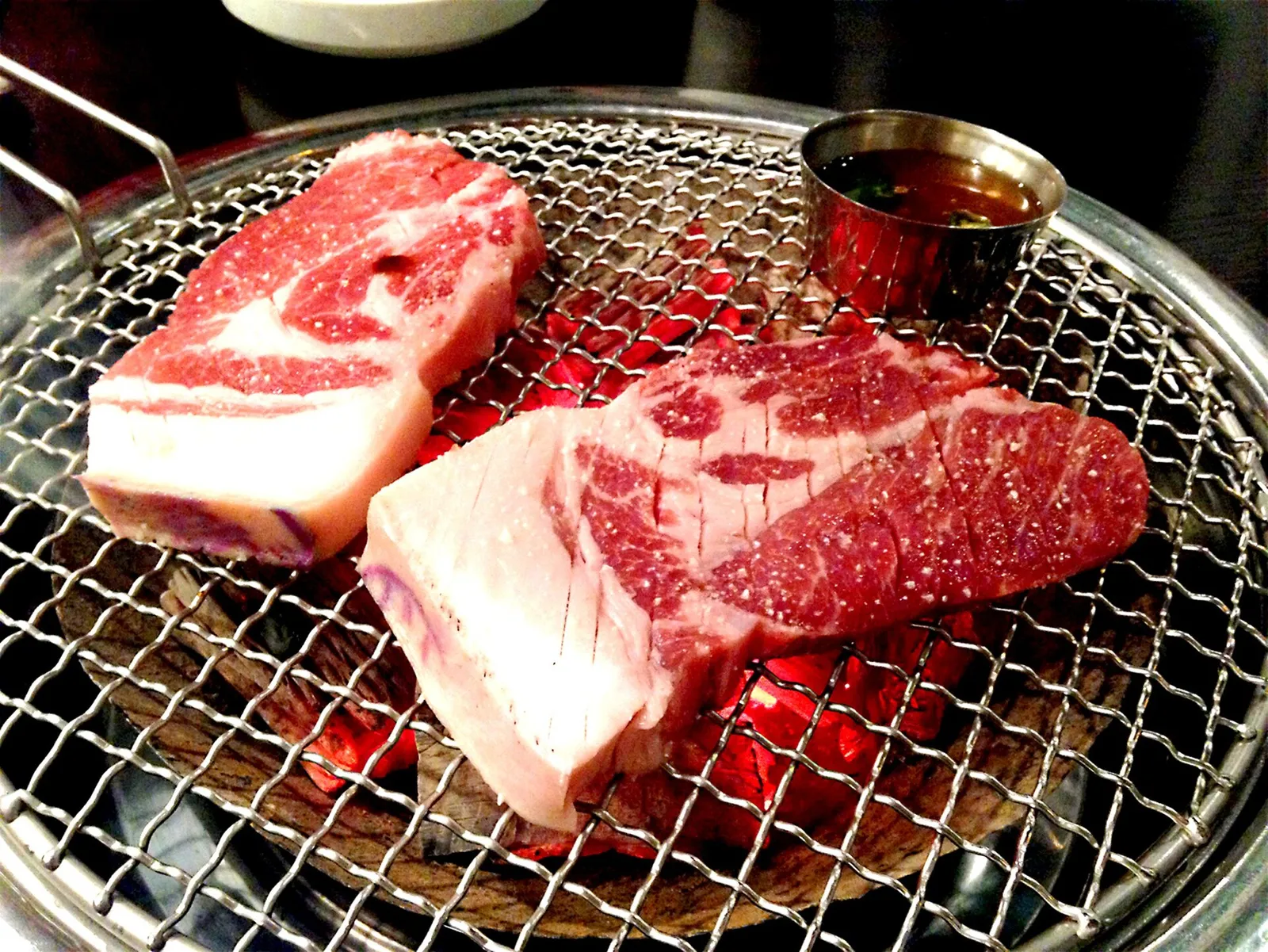
How it is served. Thick-cut belly and neck grilled at the table, eaten with melchi jeot, a salted anchovy sauce that is the Jeju way and startles first-timers. Dombegogi (돔베고기) is the other format: boiled pork sliced on a wooden board.
Gogi guksu
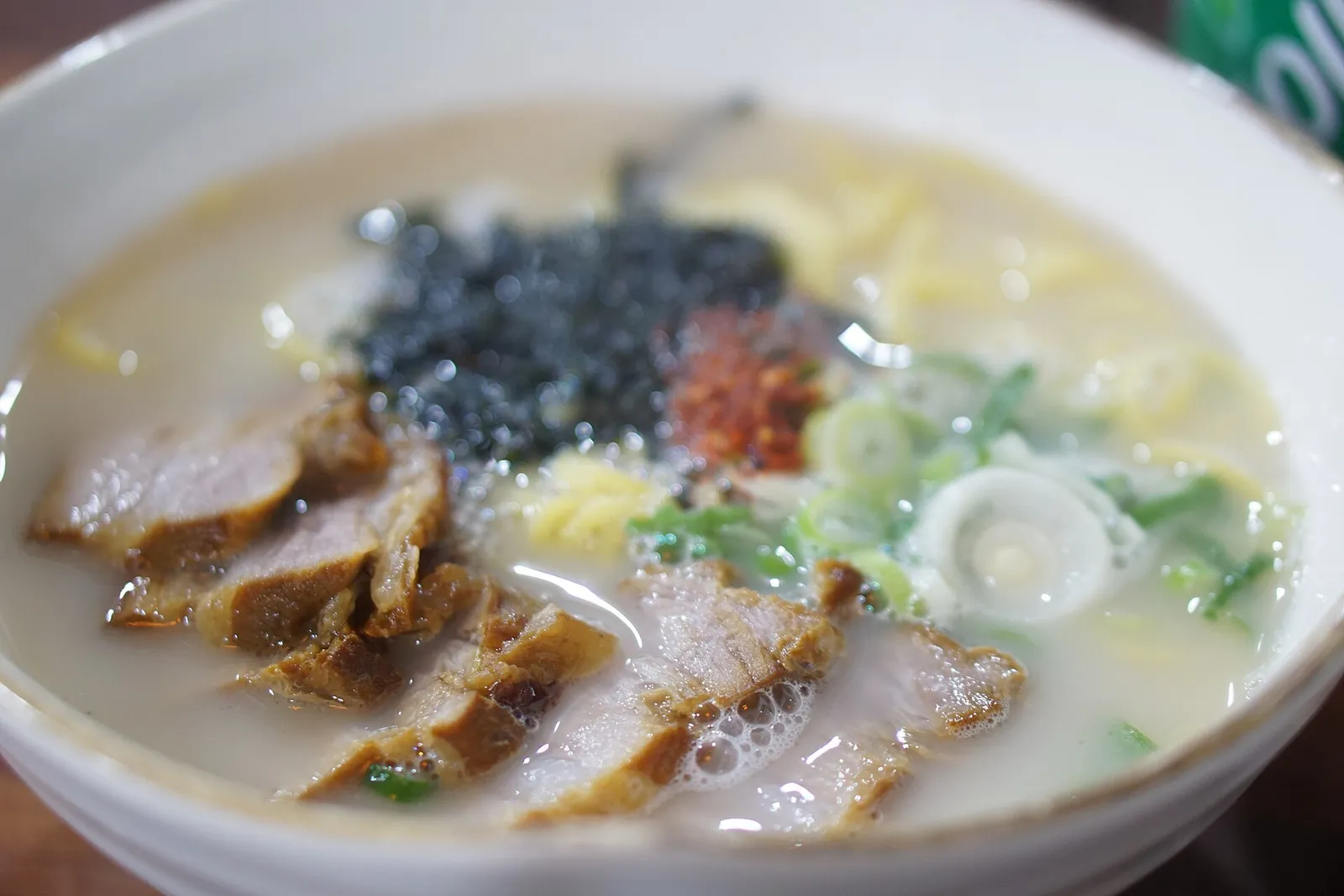
Gogi guksu (고기국수) is wheat noodles in a milky pork bone broth topped with sliced pork, and it is a Jeju dish. The island’s tourism office lists it first among local specialities, ahead of the black pork itself.
It is cheap, filling, and the thing to eat on a day when the weather has cancelled your plans.
The official list
Jeju’s tourism authority publishes its own list of island specialities, and it is a better guide than most rankings:
- Pork noodle soup and grilled black pork
- Dombegogi, sliced boiled pork
- Raw fish
- Okdom (옥돔), tilefish, the island’s prestige fish
- Sora (소라), turban shell
- Momguk (몸국), a soup made with gulfweed
- Haejangguk, hangover soup
- Galchi jorim (갈치조림), braised cutlassfish
- Grilled mackerel
- Hanchi (한치), sword-tip squid
Cutlassfish and tilefish are the two to prioritise if you eat fish. Both are caught around the island and both are noticeably better here than on the mainland.
Horse meat
Malgogi (말고기) is a genuine Jeju product rather than a curiosity, and the province promotes it. There is a certified horse meat retailer scheme parallel to the pork one, requiring 100 percent Jeju horse, slaughter certificates and graded carcasses. Horse carcass grading became national law on 1 July 2019.
The province’s own framing is nutritional: low fat, low cholesterol, high in protein, iron and omega fatty acids. Whether you want to eat it is a separate question, but it is not a tourist gimmick.
The haenyeo
Jeju’s haenyeo (해녀), the women who free-dive for shellfish without breathing equipment, were designated National Intangible Heritage on 1 May 2017. The listing is communal, with no individual holder named, and records of diving women on Jeju go back to seventeenth-century documents.
Their catch is what fills the seafood menus here: abalone, turban shell, sea urchin. The Haenyeo Museum in Gujwa-eup is open 09:00 to 18:00 if you want the history rather than just the dinner.
Dongmun night market
The best single meal in Jeju City is not a restaurant.
Dongmun Market (동문시장) is actually four adjacent markets under one name. The part to plan around is the night market, which opened in March 2018 and runs 18:00 to midnight, every day of the year, from 32 mobile stalls near Gate 8.
What the city itself lists as the signature items: black pork and sweet shrimp skewers, flame-seared black pork sushi, abalone gimbap, sweet-and-sour black pork, grilled pork rib, butter-grilled octopus and squid, cutlassfish cake, squid sundae, Udo peanut hotteok, and fresh hallabong and cheonhyehyang citrus juice.
Stalls close early when they sell out, so go before nine rather than after. Cards work, as does the Jeju local currency card.
Seogwipo Maeil Olle Market
On the south side, Seogwipo Maeil Olle Market (서귀포매일올레시장) is the equivalent. It was established in 1965, covers 25,143 square metres and holds 232 shops, and it trades every day.
Seogwipo also runs several five-day markets on the traditional cycle, including the Seogwipo folk market on the 4th and 9th of each month with 534 stalls, and markets at Jungmun, Daejeong, Goseong and Pyoseon on their own dates.
How to find a good restaurant here
Two official tools beat review sites for a first visit.
The certified Jeju pork list tells you which restaurants verifiably use island-raised pork.
The fair price business scheme (착한가격업소) is a provincial register of restaurants that hold prices down, published by both the province and Jeju City. It is the only place any Korean authority publishes actual prices.
Practical notes
- The night market starts at six. Do not arrive at eleven expecting choice.
- Anchovy sauce comes with the pork. It is meant to, and it is worth trying before you dismiss it.
- Cutlassfish is expensive and priced by the fish, not the portion. Check before ordering.
- Cards work nearly everywhere, including most market stalls.
- Vegetarians will find this hard. Jeju’s cooking is pork and seafood. Momguk and most soups use animal stock.
Wrapping up
Eat pork at a certified restaurant, a bowl of gogi guksu on a rainy day, and dinner standing up at the Dongmun night market. If you eat fish, make one meal braised cutlassfish.
More in this series: the Jeju overview, where to stay and what to see.