 Now, Yeogi
Seoraksan and Sokcho: Hiking Routes, the Cable Car and What Else to See (2026)
Seoraksan's trails with official distances and times: Ulsanbawi, Biseondae and the Towangseong Falls observatory, plus the cable car price, the entry time limits, and Sokcho's lagoon and lighthouse.
Places in this post
- Address
- 1091 Seoraksan-ro, Sokcho
- Hours
- Entry windows are time-limited. April–October the Biseondae direction admits 03:00–14:00; November–March 04:00–12:00. Other trailheads close earlier.
- Menu
- Park admission Free
- Tip
- Take city bus 7 or 7-1. Check the park service's control notices before setting out, because entry windows and closures change.
- Address
- 1085 Seoraksan-ro, Sokcho
- Hours
- Departures roughly every five minutes, 50 people per car. Suspended in high wind.
- Menu
- Return, adult ₩16,000 · Return, child ₩12,000
- Tip
- Tickets are sold same-day at the window only. There is no advance booking and no one-way fare. In foliage season, arrive early.
- Address
- 1137 Seoraksan-ro, Sokcho
- Hours
- Open year-round
- Menu
- Admission Free
- Tip
- The bronze Great Unification Buddha stands 14.6 m tall on a 4.3 m pedestal and took ten years to build, from 1987 to 1997. It is a five-minute walk from the park entrance.
- Address
- 51 Jungangbudu-gil, Sokcho
- Hours
- May–October 05:00–23:00, November–April 05:30–22:30
- Menu
- Adult, one way ₩500 · Child, one way ₩300
- Tip
- You pull the barge across yourself using the cable. It is the only way into Abai Village on foot and it carries 32 people at a time.
Seoraksan is Korea’s most visited mountain park and the standard against which Koreans measure other mountains. It became the country’s fifth national park in 1970, covers 400 square kilometres, and has been a UNESCO Biosphere Reserve since 1982.
Distances and times below come from the national park service’s own route data.
Before you go: two rules
Admission is free, and the park service publishes no entrance fee. You may still see old figures of three thousand won or so quoted on secondary pages. Treat those as out of date.
Entry is time-limited, and this catches out more visitors than anything else. Gates admit hikers only within a window, and it closes early.
| Period | Biseondae direction | Osaek and Hangyeryeong |
|---|---|---|
| April–October | 03:00–14:00 | 03:00–12:00 |
| November–March | 04:00–12:00 | 04:00–11:00 |
Holders of shelter reservations get an extra hour or two. The park’s live control notices are worth checking the night before, because closures change.
Take city bus 7 or 7-1 from town to Sogongwon, the main entrance at 1091 Seoraksan-ro.
Sinheungsa
Five minutes inside the entrance is Sinheungsa (신흥사), a temple whose lineage runs back to 652 although the present buildings date from 1644. It is free and open all year.
You will see the Great Unification Buddha (통일대불) before you see the temple. It is bronze, 14.6 m tall on a 4.3 m pedestal, with a halo 17.5 m across, and it took ten years to build between 1987 and 1997.
Even if you are not hiking, this much is worth the bus ride.
The cable car
The Seorak Cable Car climbs 1,128 m to Gwongeumseong, a rocky outcrop with a view back over the ridges and out to the sea. The ride takes about five minutes each way.
₩16,000 return for adults and ₩12,000 for children from 37 months to primary school age. Cars carry 50 people and leave roughly every five minutes.
Two things to plan around. Tickets are same-day and window-only: there is no online booking and no one-way fare. And it suspends in high wind, which on this coast is not rare.
In foliage season the queue forms early. If the cable car is your plan, make it the first thing you do.
From the top station there is a short scramble up to the Gwongeumseong ruins. It is steep and rocky, and the view is the point.
Ulsanbawi
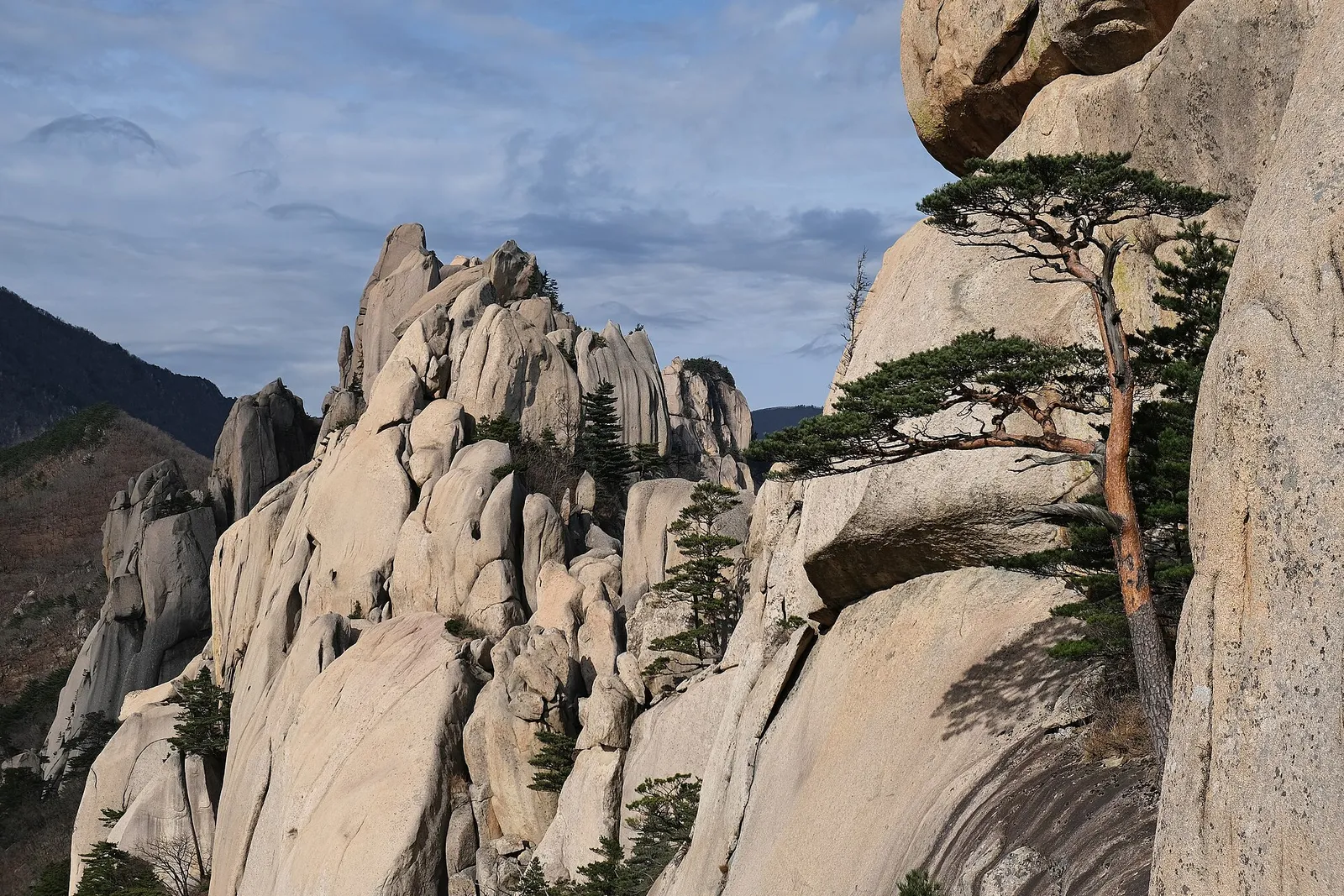
Ulsanbawi (울산바위) is the great granite wall of six joined peaks that defines the Seoraksan skyline, and the hike to it is the park’s signature walk.
3.8 km and two hours each way, so 7.6 km and about four hours in total. It splits cleanly into two halves of very different difficulty.
The first half, 2.8 km to Heundeulbawi and Gyejoam hermitage, takes an hour on decking and stone path. The park service describes it as gentle and suitable for children and older walkers. Heundeulbawi is a boulder balanced so finely that a person can rock it.
The second half is 1.0 km and another full hour, because it is almost entirely steel staircases up the rock face to around 900 m. The park service explicitly warns you to assess your fitness first and notes that rockfall occurs on this section.
If you are unsure, walk the first half to Heundeulbawi and turn around. That is a genuinely pleasant two-hour outing on its own.
The park service recommends this route for foliage from mid-October to early November.
Biseondae and Geumganggul
Biseondae (비선대) is 3.0 km from the entrance, about 1 hour 20 minutes, along a gentle valley. The first third is a wheelchair-accessible nature trail, and this route stays open during the spring fire-risk closures when others shut.
From Biseondae, Geumganggul (금강굴) is another 0.6 km and 40 minutes up steep steel stairs to a cave hermitage in the cliff. Round trip for the whole thing is 7.2 km and about 3 hours 20 minutes.
This is the route to take if Ulsanbawi sounds like too much.
Towangseong Falls observatory
2.8 km one way, about an hour and a half. The first 2.4 km to Biryong Falls takes an hour and the first 1.2 km is passable with a stroller or wheelchair.
The last 0.4 km to the Towangseong Falls observatory takes 30 minutes up steep deck stairs. The observatory reopened after the area had been closed to the public for 45 years, and it looks across at one of Korea’s tallest waterfalls.
In Sokcho itself
Abai Village (아바이마을) at 122 Cheongho-ro was settled by refugees from Hamgyong province after the Korean War. Reaching it on foot means the Gaetbae (갯배), a cable barge that passengers pull across the channel themselves. ₩500 one way, 32 people at a time, running from 05:00 to 23:00 in summer and slightly shorter hours in winter. No pets.
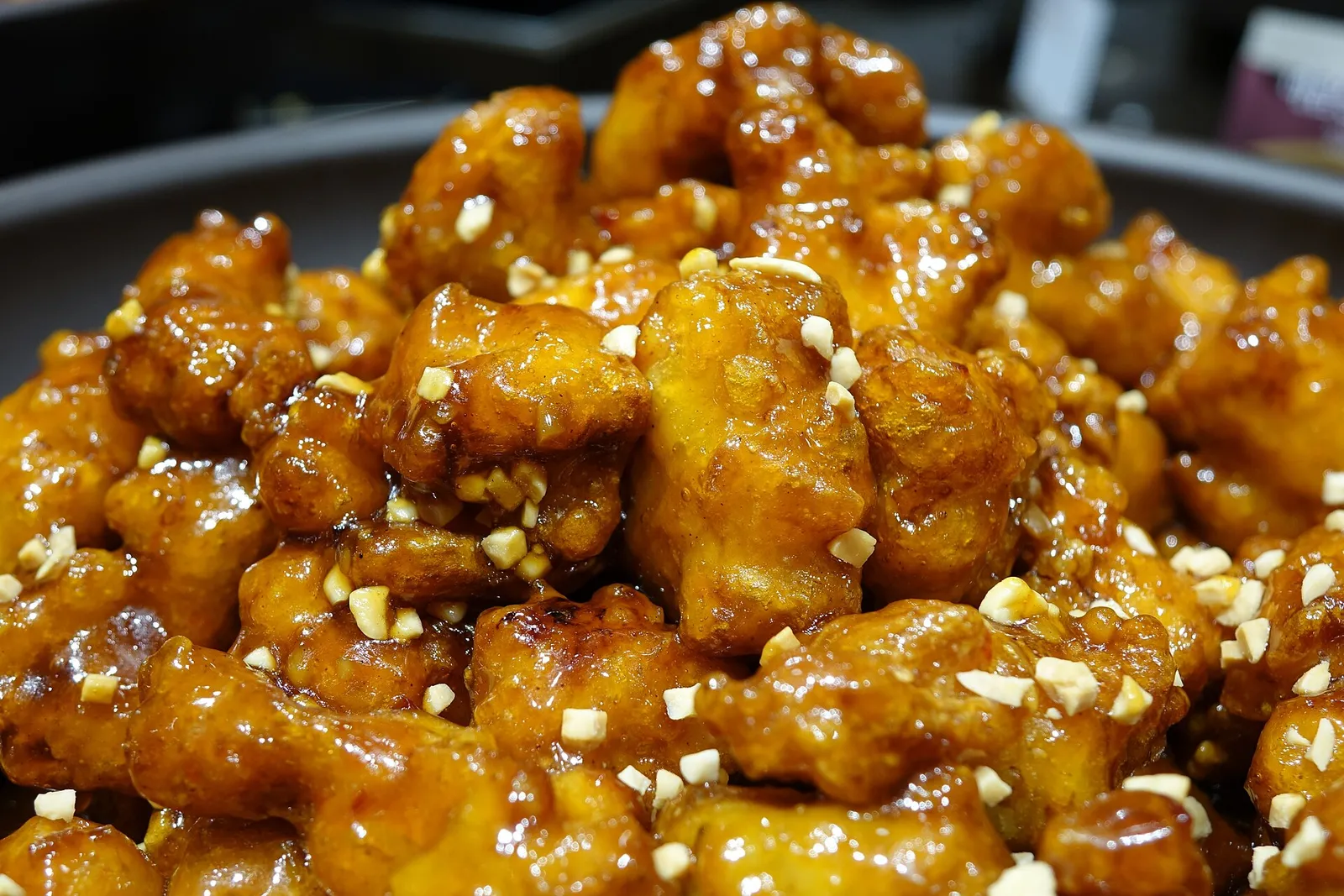
Sokcho Tourist and Fishery Market at 16 Jungang-ro 147beon-gil is free and open all year, with five alleys including the chicken alley that gave the country its dakgangjeong. The basement raw fish floor rests on the second Wednesday of the month.
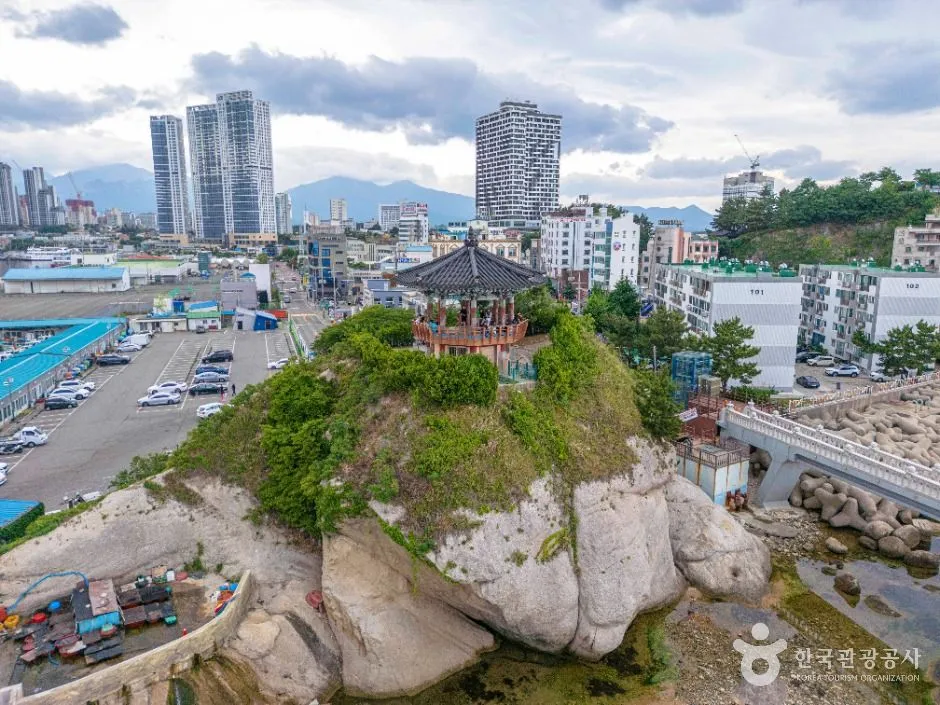
Yeonggeumjeong (영금정) is a pavilion on the rocks at the north end of town, free and open at all hours, and the city’s sunrise spot.
Yeongnangho (영랑호) is a lagoon with a 7.8 km circuit, a wetland park open 09:00 to 18:00 and a 420 m barefoot clay path. All free.
Daepohang (대포항) is the fishing port at the south end, free and open, with its own market running 10:00 to 23:00 every day.
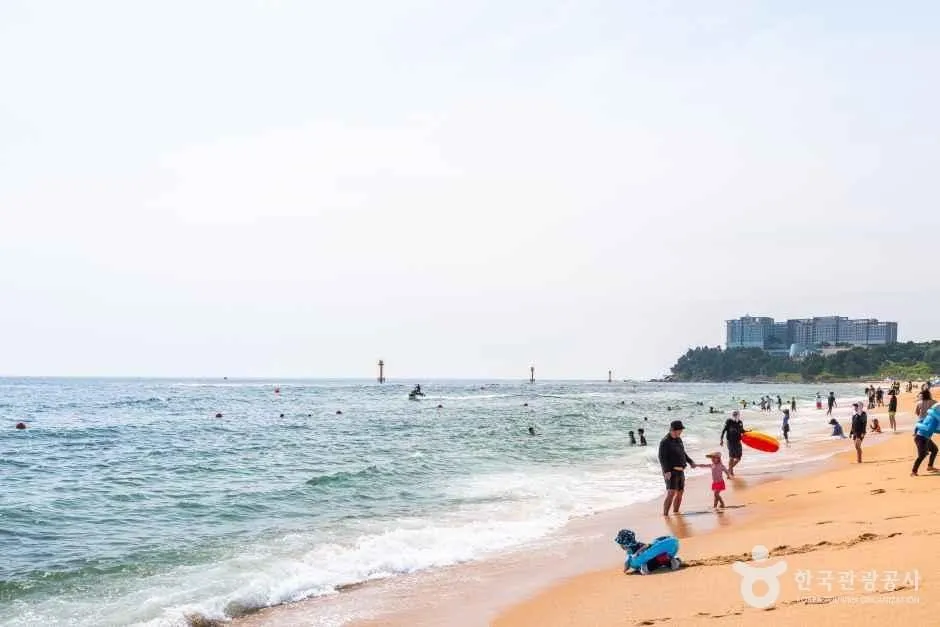
Sokcho Beach is 940 m long and 20 to 80 m wide, five minutes from the express bus terminal.
Practical notes
- The park is free. The cable car is not.
- Entry windows close early. A 15:00 arrival in summer will not get you up Biseondae.
- The cable car cannot be booked. Same-day window sales only.
- Ulsanbawi’s second half is stairs. Know that before you commit.
- Foliage peaks mid-October to early November and the city fills.
Wrapping up
Give Seoraksan a full day. Take the early bus, see Sinheungsa, then choose one of three: the cable car for the view without the effort, Biseondae for a gentle valley walk, or Ulsanbawi if stairs do not frighten you.
More in this series: the Sokcho overview, where to stay and what to eat.