 Now, Yeogi
Sokcho Travel Guide: Getting There, Seoraksan and Two Days (2026)
A first-timer's guide to Sokcho: there is no train, so how the buses work, which of the two terminals you want, how to reach Seoraksan, and what to do with two days on the north-east coast.
Places in this post
- Address
- 51 Jungangbudu-gil, Sokcho
- Hours
- May–October 05:00–23:00, November–April 05:30–22:30. Open year-round.
- Menu
- Adult, one way ₩500 · Child, one way ₩300 · Bicycle or cart ₩500
- Tip
- Passengers haul the barge across on a steel cable themselves. It carries 32 people, takes a couple of minutes and costs five hundred won. No pets.
Sokcho is where Koreans go when they want a mountain and a beach on the same day. Seoraksan National Park starts at the edge of town and the East Sea is fifteen minutes the other way.
The first thing to know is a negative one, and it shapes everything else.
There is no train
Sokcho has no passenger railway station. Not a closed one, not an inconvenient one. There is no line.
Two are being built. The Chuncheon–Sokcho high-speed line, 93.7 km of single track designed for 250 km/h, has been under construction since 2016 with a target of 2027. The Gangneung–Jejin east coast line is on a similar schedule. Neither is open.
Until they are, Sokcho is a bus city, and any guide that mentions taking the train here is wrong.
Getting there from Seoul
Express buses run from Central City in Gangnam, Dong Seoul, Incheon, Gwangmyeong and Cheolsan. The Gangnam service uses the Seoul–Chuncheon expressway and the Misiryeong tunnel and takes around two hours, which is fast for the distance.
Intercity buses from Dong Seoul take about 2 hours 10 minutes.
Fares are not published on a page that can be read without an interactive booking query, so check the current price when you book through Kobus or the intercity system.
Two terminals, and they are different
This catches people out. Sokcho has two bus terminals at opposite ends of town.
The express bus terminal (고속버스터미널) is at 3994 Donghae-daero in the south, and it is five minutes’ walk from Sokcho Beach. It handles the express routes from Seoul and the western cities only.
The intercity terminal (시외버스터미널) is at 16 Jangan-ro, north and more central. It handles the nationwide intercity network, including services to Gangneung, Donghae, Pohang, Daegu and Busan.
Check which one your ticket uses before booking a hotel, because they are not near each other.
From Gangneung, the connection is by intercity bus. There is no rail link.
Getting around
City buses cost ₩1,700 for adults, ₩1,360 for middle and high school students and ₩850 for primary school children. You get one free transfer within 90 minutes if you tag off when leaving, though several routes are excluded.
The city’s official transport page does not name T-money or Cashbee, so carry some cash as a backup rather than assuming your Seoul card will work.
For Seoraksan, take bus 7 or 7-1. Both run from Jangsa-dong to the park, one by way of Yeongnang-dong and the other past the medical centre.
Seoraksan
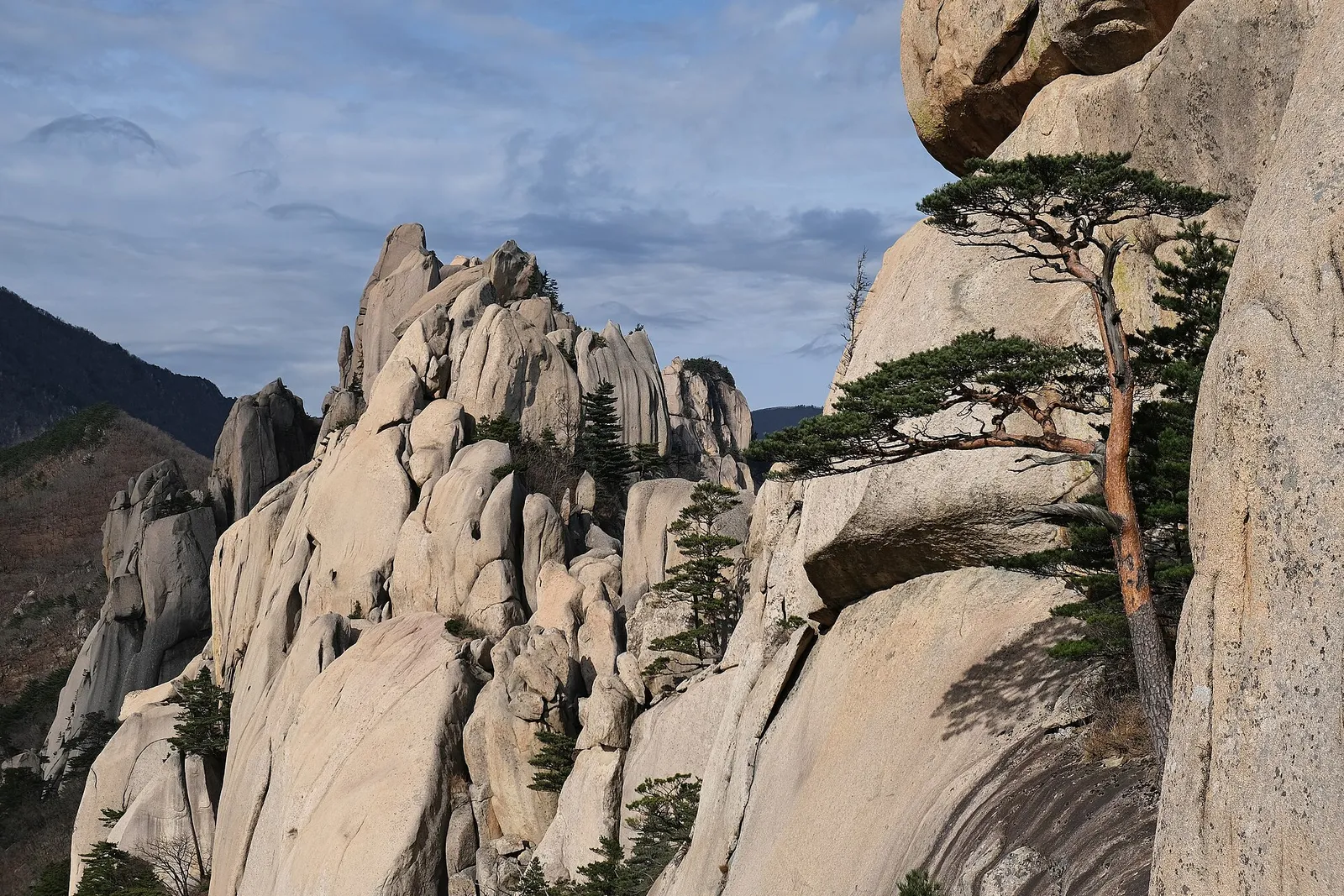
The park is the reason most people come. Admission to Sogongwon, the main entrance, is free according to the city, and the national park service publishes no entrance fee.
Three things to know before you go.
There is a time-limited entry system. In summer the Biseondae direction admits hikers 03:00 to 14:00, and the Osaek and Hangyeryeong routes close earlier. In winter the windows shift an hour or two later and shorter. Check before setting out.
The cable car does not take bookings. The Seorak cable car up to Gwongeumseong costs ₩16,000 return for adults and ₩12,000 for children, sold same-day at the window only. There is no advance reservation and no one-way ticket. It suspends in high wind.
The autumn foliage peaks from mid-October to early November, which is the park service’s own window for the Ulsanbawi route. That is when Seoraksan is at its most spectacular and its most crowded.
Full hiking details are in our things to do guide.
In town
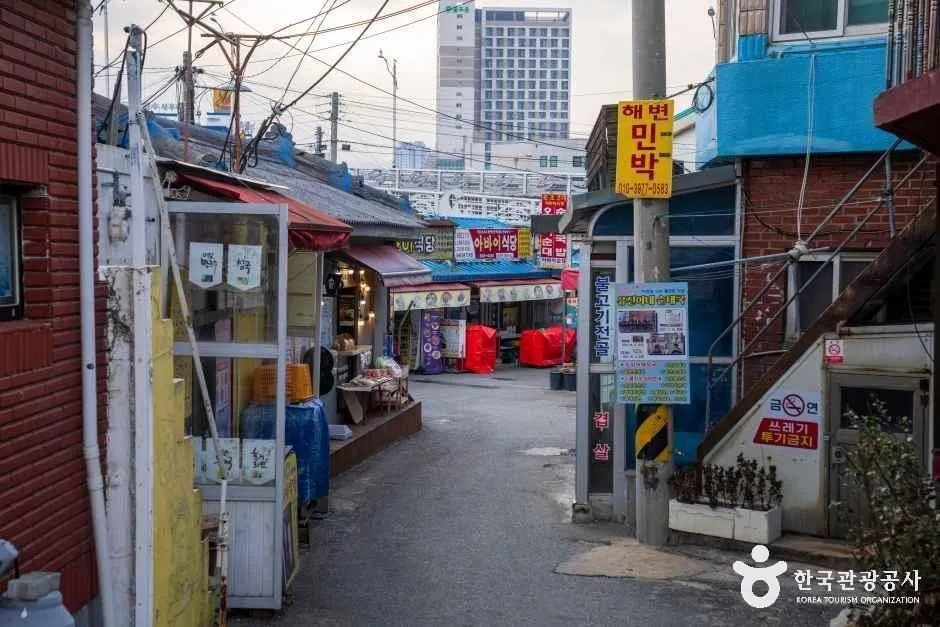
Abai Village (아바이마을) was settled by refugees from Hamgyong province in the north after the Korean War, and it still carries their food and their dialect. To reach it you take the Gaetbae, a hand-pulled cable barge that passengers haul across the channel themselves. ₩500 one way, running from before dawn until late.
Sokcho Tourist and Fishery Market (속초관광수산시장) is the covered market in the centre, free and open all year, and the birthplace of the city’s most exported dish.
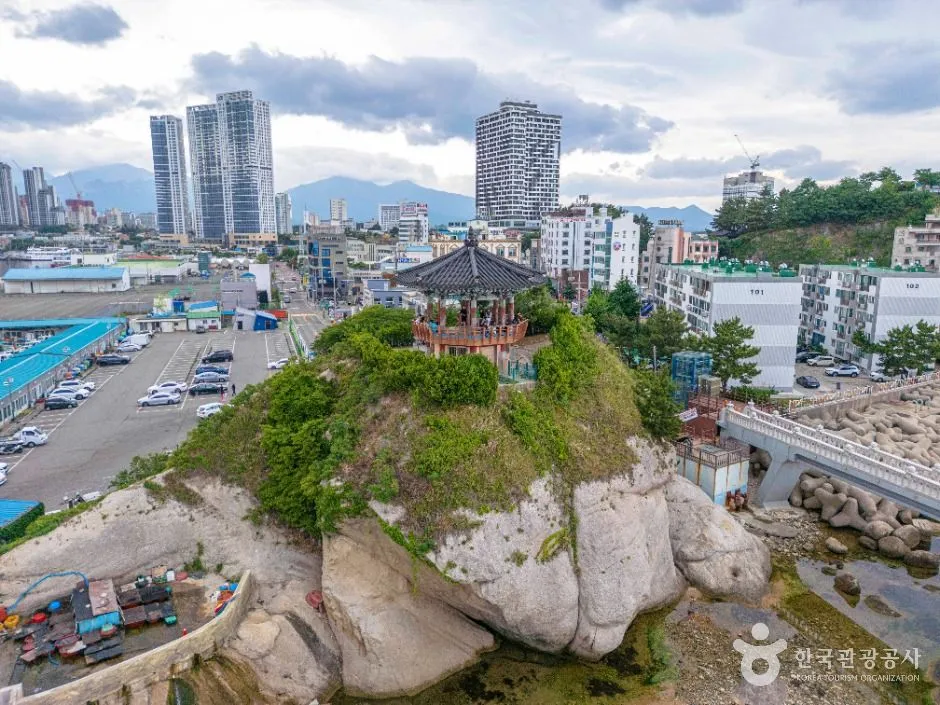
Yeongnangho (영랑호) is a lagoon with a 7.8 km path around it, and Yeonggeumjeong (영금정) is the pavilion on the rocks at the north end of town where people watch the sunrise.
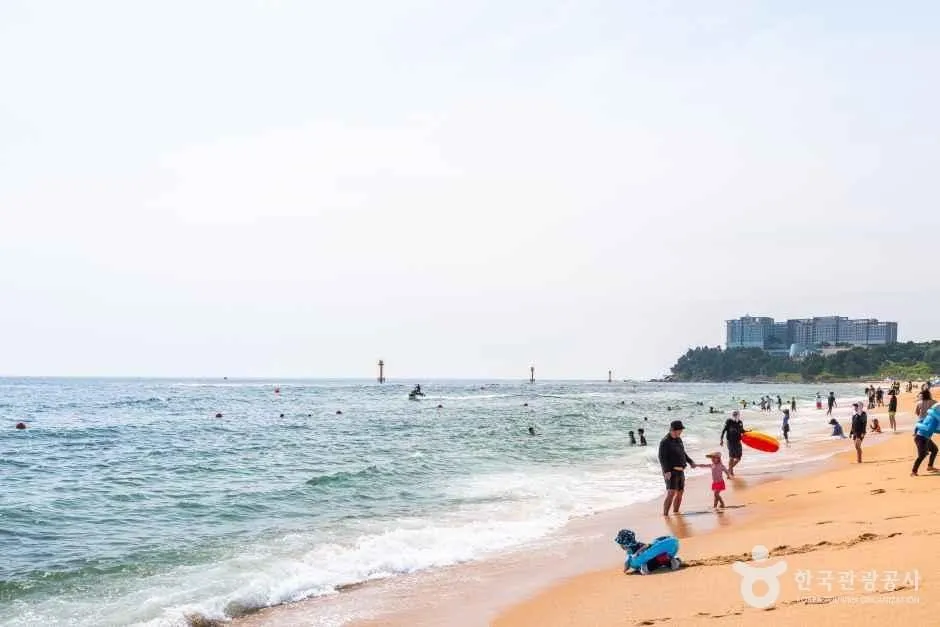
Sokcho Beach is 940 m long and five minutes from the express bus terminal.
What to eat
Sokcho’s food comes from two sources: the sea, and the north.
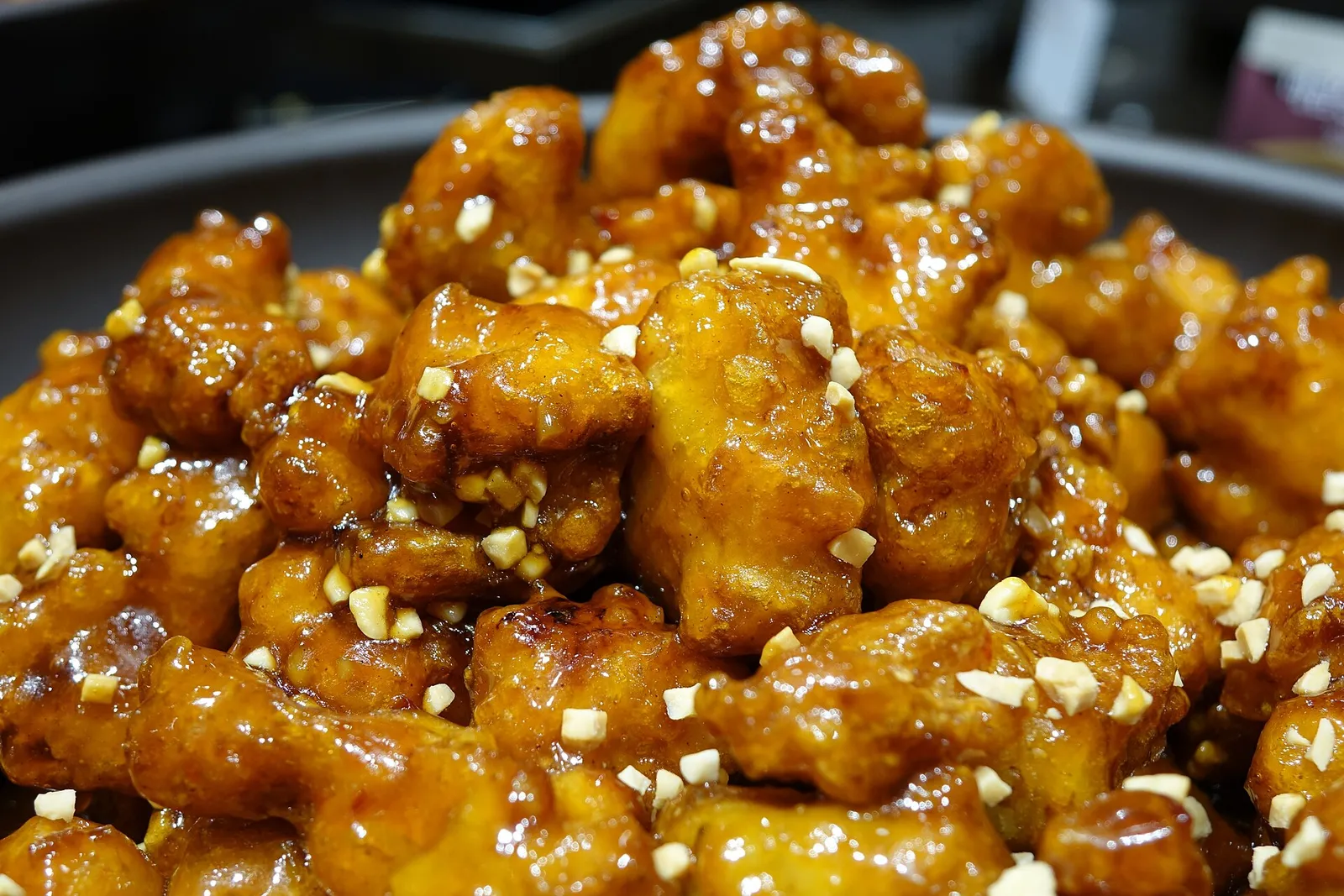
Dakgangjeong (닭강정), sweet crisp fried chicken, comes from the chicken alley inside the fishery market and has spread across the country from there. Abai sundae and squid sundae are northern refugee dishes. Mulhoe, cold raw fish soup, and grilled fish are the coastal staples, and red snow crab is cheaper here than the more famous crab further south.
Our food guide explains each.
Two days that work
Day one, the mountain. Early bus 7 to Seoraksan. Sinheungsa temple and the Great Unification Buddha at the entrance, then either the cable car to Gwongeumseong or the walk to Ulsanbawi. Back in town for grilled fish.
Day two, the town. Market in the morning, Gaetbae across to Abai Village for lunch, Yeongnangho or the beach in the afternoon, sunrise at Yeonggeumjeong if you can manage the hour.
Adding Gangneung makes a good three or four day trip down the coast.
When to go
Mid-October to early November is the peak, for the Seoraksan foliage. It is genuinely worth arranging a trip around, and it is also when every room in the city is taken.
Summer is beach season, and the city runs a summer festival on the beach in August.
Spring brings cherry blossom at Yeongnangho in late March and early April.
The city’s festival pages still carry dates from previous years, so confirm any 2026 festival date before planning around it.
Practical notes
- No train. Book a bus.
- Two terminals. Know which one you arrive at.
- Carry cash for buses. Card acceptance is not officially confirmed.
- The cable car is same-day only. Arrive early in foliage season.
- Check the mountain entry times. The gates close earlier than you expect.
Wrapping up
Two days is right: one for Seoraksan and one for the town. Go in the second half of October if the foliage matters, and book the room before you book anything else.
More in this series: where to stay, what to see and what to eat.