 Now, Yeogi
What to Eat in Sokcho: Dakgangjeong, Squid Sundae and Red Crab (2026)
Sokcho's food comes from the sea and from the north. The fried chicken that started in a market alley, the refugee sausages made with squid, cold raw fish soup and red snow crab, explained.
Places in this post
- Address
- 16 Jungang-ro 147beon-gil, Sokcho
- Hours
- Open year-round. The basement raw fish floor rests on the second Wednesday of the month.
- Menu
- Entry Free
- Tip
- Five alleys: fruit, chilli, sundae, salted seafood and the chicken alley. Parking is free with a validated ticket.
- Address
- 69 Daepohang Huimang-gil, Sokcho
- Hours
- 10:00–23:00, open every day
- Tip
- The fishing port at the south end of town, with its own market that runs late. Parking is charged.
Sokcho’s cooking has two parents. One is the East Sea, which is obvious. The other is Hamgyong province in what is now North Korea, because thousands of people fled south to this coast during the Korean War and stayed.
That second inheritance is what makes the food here different from every other Korean seaside town.
Restaurant prices are not published by any official Sokcho source, so this guide names dishes and places rather than quoting figures.
Dakgangjeong
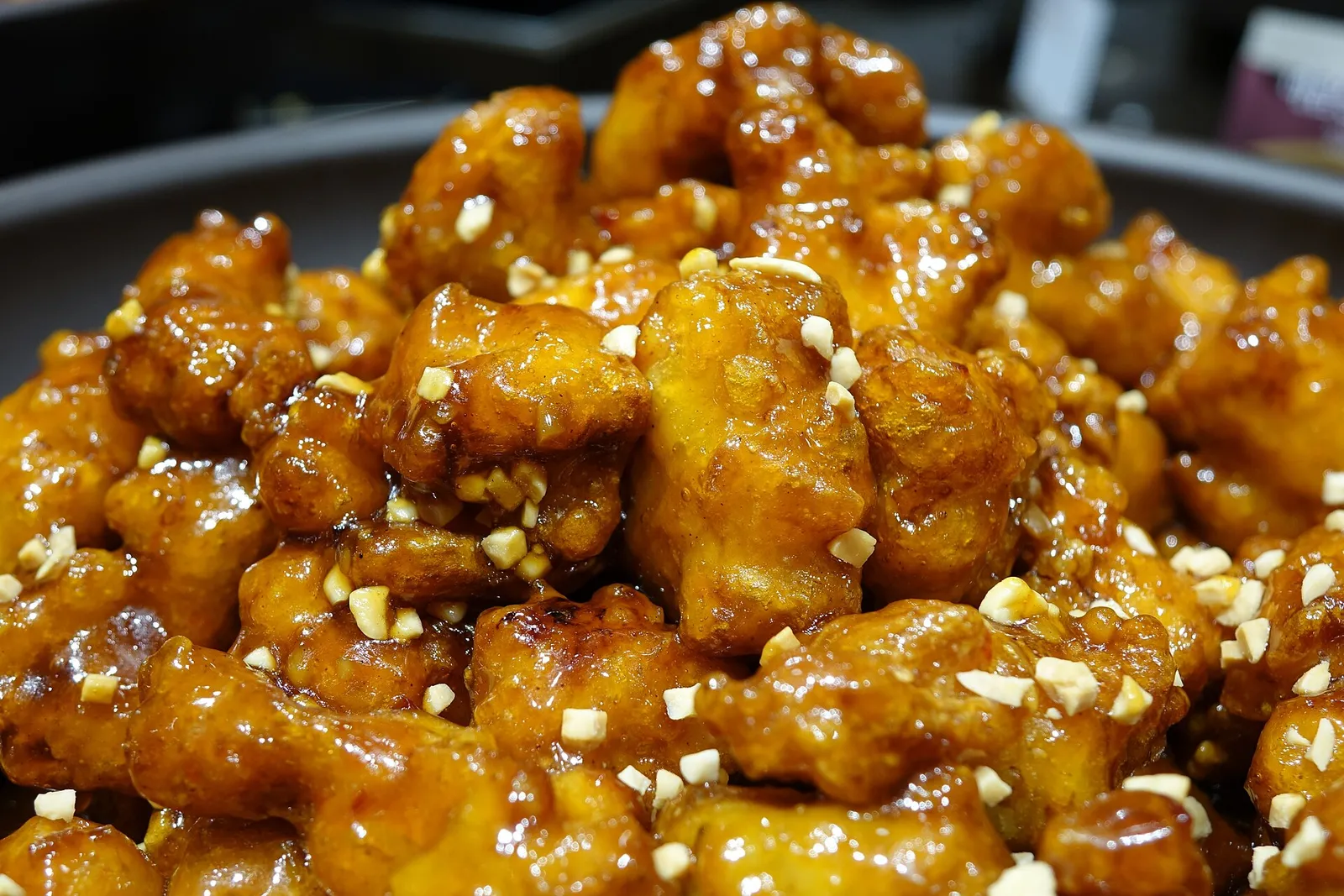
Dakgangjeong (닭강정) is boneless fried chicken tossed in a sweet, slightly sticky sauce and scattered with nuts. It is now sold across Korea, and it comes from here.
More precisely, the city attributes it to the chicken alley (닭전골목) inside Sokcho Tourist and Fishery Market. The market is organised into five alleys, and one of them sold chicken. The shops there developed the dish, and every one of them does it slightly differently: different frying method, different additions, some with perilla leaf, some with deodeok root, some heavier on the nuts.
It is sold by the box, hot or cold, and it travels well enough that people carry it back to Seoul on the bus. Queues at the best-known shops are a normal feature of a weekend.
The northern dishes
Abai sundae (아바이순대) is the refugee dish. Pork large intestine is stuffed with congealed blood, glutinous rice, cabbage leaves and mung bean sprouts, then steamed. Abai is Hamgyong dialect for an older man, and the name attached itself to the village where the refugees settled.
Squid sundae (오징어순대) is the more interesting one, because it exists for a reason. When pig intestine could not be had, cooks used whole squid instead, stuffing the body with glutinous rice, radish greens, carrot, onion and perilla leaf, then steaming and slicing it into rounds. It is eaten with a mustard and vinegar sauce.
Both are found around Abai Village, reached by the hand-pulled Gaetbae ferry for ₩500.
From the sea
Mulhoe (물회) is sliced raw fish in an ice-cold sweet and sour chilli broth, eaten almost like a cold soup. It is a summer dish and the east coast does it best. The city points to Seorakhang, Daepohang, Oeongchihang, Dongmyeonghang, Jangsahang, the Abai Village raw fish centre and the fishery market as the places to eat it.
Grilled fish (생선구이) has its own district. A cluster of restaurants has formed around Abai Village and the Gaetbae landing, and the standard order is a platter of five or six whole fish: mackerel, saury, Pacific mackerel, sand lance, sailfin sandfish and sometimes mero. It arrives as a wall of fish and it is one of the better-value meals on this coast.
Red snow crab (홍게) is Sokcho’s crab. It is noticeably cheaper than the famous Yeongdeok snow crab further south, and the city runs a red crab festival in October alongside the Seoraksan foliage season.
Gomchiguk (곰치국), a clear soup of snailfish with aged kimchi, is the winter hangover dish. It looks unpromising and it is very good.
The rest of the official list
Sokcho’s own tourism office lists these as the city’s representative dishes: live raw fish, abai sundae, squid sundae, soft tofu, Hamhung naengmyeon and makguksu, mulhoe, grilled fish, gomchiguk, red snow crab and dakgangjeong.
The Hamhung-style cold noodles are worth noting alongside the sundae. They are another northern import: chewy sweet potato starch noodles served with a fiery sauce and raw skate, quite different from the Pyongyang style.
Where to eat
The fishery market is the centre of gravity. Free to enter, open all year, five alleys, and the chicken alley at its heart. The basement raw fish floor closes on the second Wednesday of each month. Parking is free with a validated ticket.
Abai Village, across the Gaetbae, is where the northern food and the grilled fish district are.
Daepohang (대포항) at the south end is a working fishing port with its own market open 10:00 to 23:00 every day. It is the late option.
Around Sokcho Beach, five minutes from the express bus terminal, there is a general spread of restaurants aimed at visitors.
The city also maintains official good value and model restaurant lists, which is a more reliable starting point than review sites for a first visit.
Practical notes
- Mulhoe is summer food. In January, order gomchiguk instead.
- Dakgangjeong travels. Buy it as you leave rather than at the start of the day.
- The market’s fish floor closes on the second Wednesday. Check the date.
- Grilled fish sets are usually for two or more. Solo travellers do better with sundae or noodles.
- Vegetarians will struggle, as in most Korean fishing towns. Soft tofu is the reliable order.
Wrapping up
Eat squid sundae because it exists nowhere else, grilled fish across the water in Abai Village, and buy a box of dakgangjeong at the market on your way to the bus. That is Sokcho’s table, and half of it arrived here as refugee cooking seventy years ago.
More in this series: the Sokcho overview, where to stay and what to see.