 Now, Yeogi
Korean Food for Beginners: 12 Dishes to Try and Where to Find Them in Seoul
A first-timer's guide to Korean food: twelve dishes worth ordering, what banchan side dishes are, how spicy things really are, how to order, and where in Seoul to try each one.
Korean food is more varied than the barbecue-and-kimchi reputation suggests, and almost none of it is as spicy as visitors expect. This is the shortlist: twelve dishes that give you a real picture of what Koreans eat, roughly in order of how safe they are for a first try.
Prices are typical ranges in Seoul as of September 2026.
First, the free food
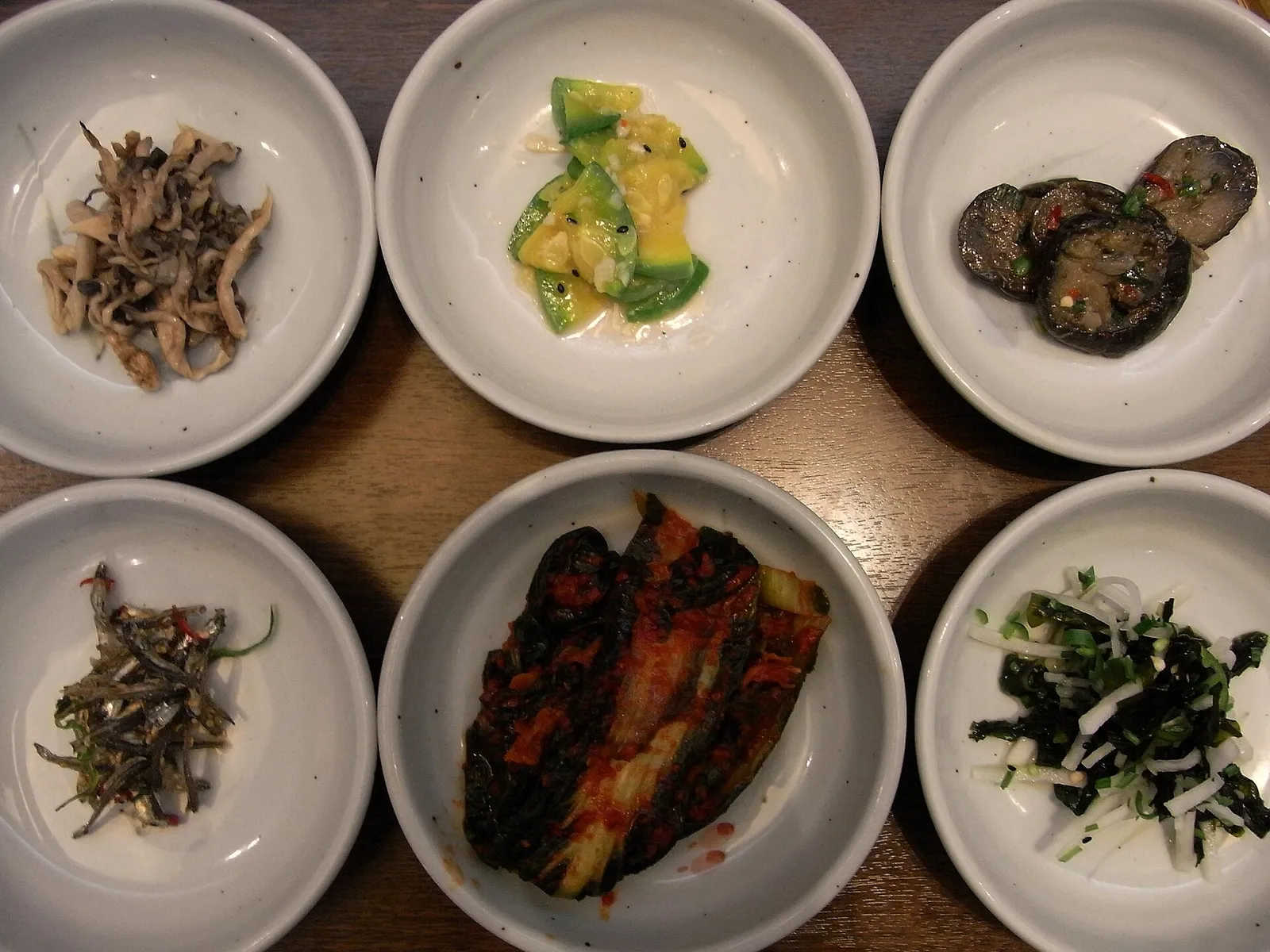
Every Korean meal arrives with banchan — small side dishes that come with the meal and are free, including refills. Expect three to eight of them: kimchi, pickled radish, seasoned spinach, bean sprouts, braised potato, fish cake.
They are not appetisers to finish before the main course. Eat them alongside, in small amounts, throughout. To ask for more, point and say “더 주세요” (deo juseyo, “more please”). Nobody will charge you.
Water is also free and usually self-service from a dispenser near the door, with steel cups stacked beside it.
The twelve
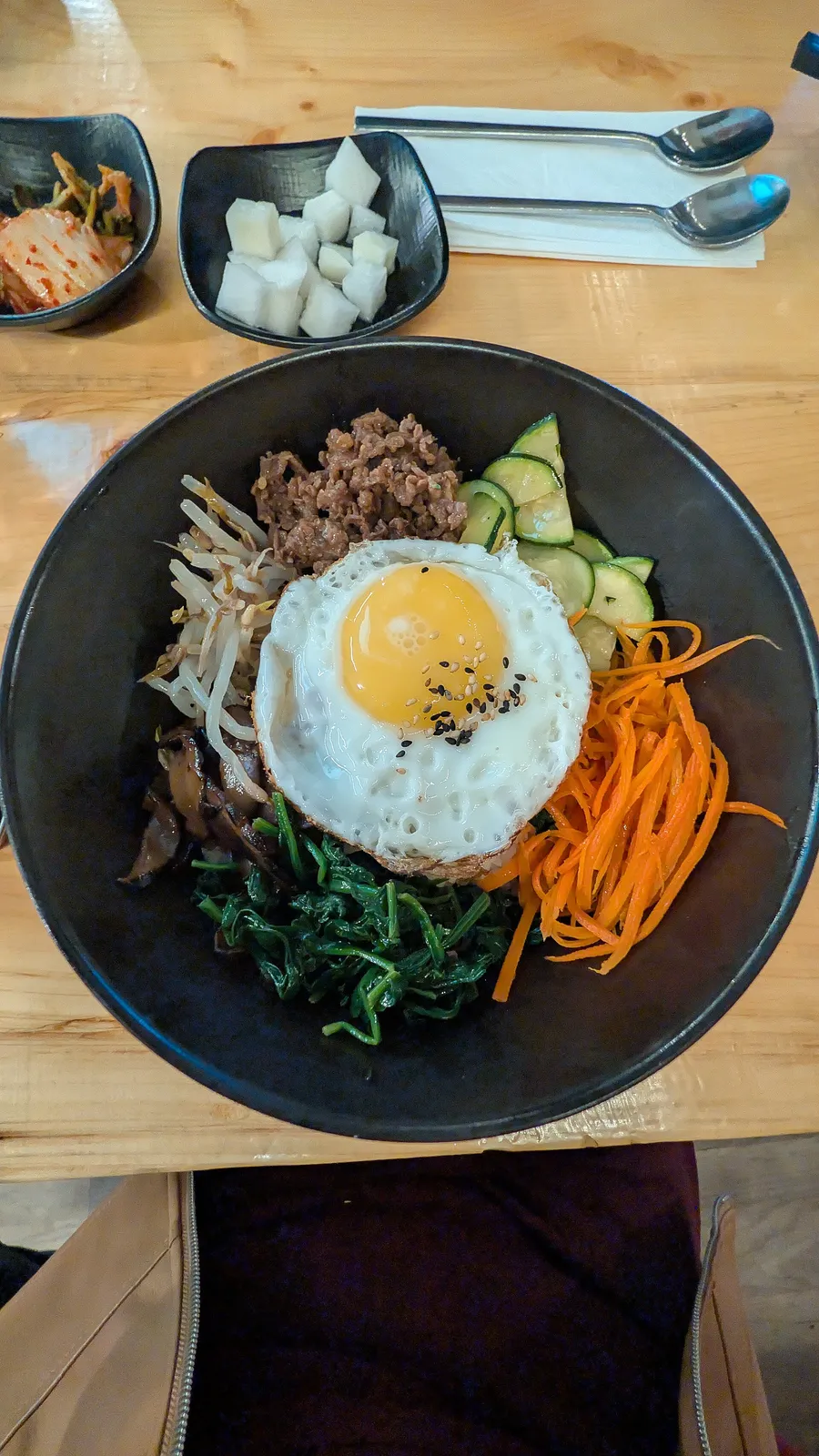
1. Bibimbap (비빔밥) — ₩10,000–15,000
Rice topped with seasoned vegetables, usually beef, and an egg, with gochujang chilli paste served on the side. You mix it yourself — thoroughly, with the spoon. Control the heat by adding only part of the chilli paste.
The dolsot (돌솥) version arrives in a hot stone bowl and crisps the rice at the bottom. Worth the extra ₩1,000–2,000.
2. Bulgogi (불고기) — ₩15,000–20,000
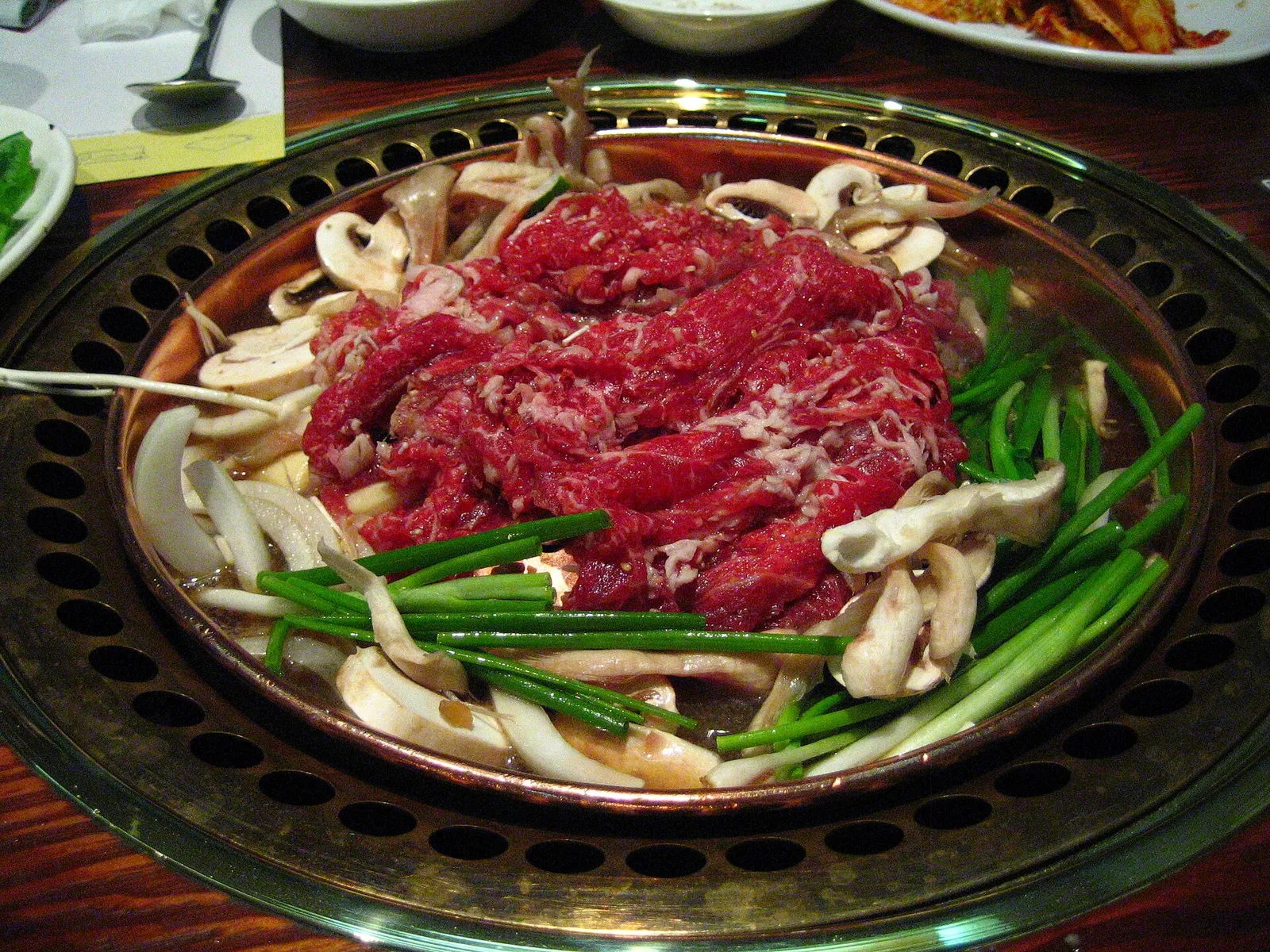
Thin slices of beef marinated in soy, sugar, garlic and pear, grilled or pan-cooked. Sweet, savoury, not spicy at all. The safest thing on any menu, and a good order if you are travelling with children or cautious eaters.
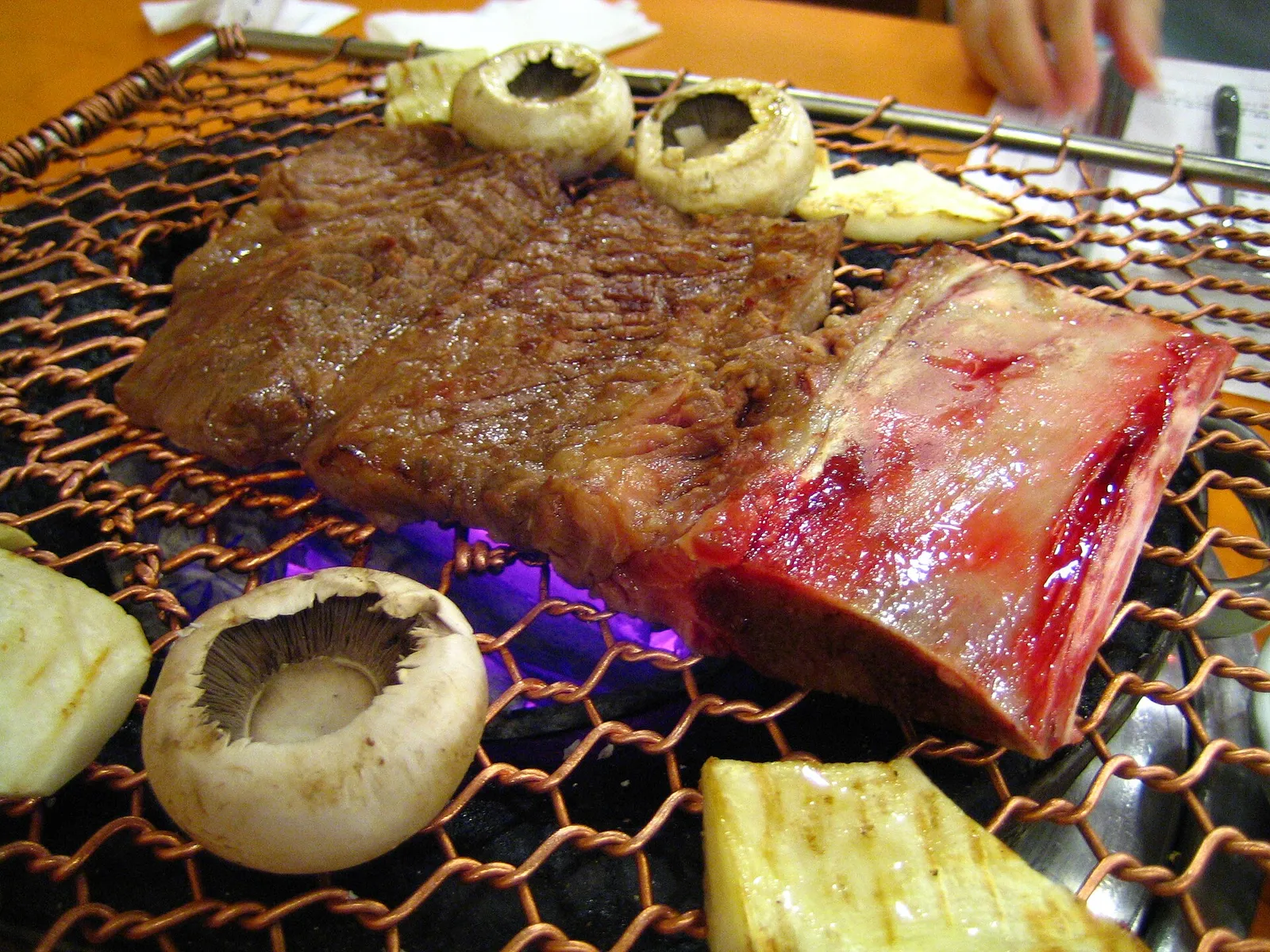
3. Samgyeopsal (삼겹살) — ₩15,000–20,000 per portion
Thick-cut pork belly grilled at your table. You cook it, cut it with scissors, and eat it wrapped in lettuce with garlic and ssamjang paste. Usually a two-portion minimum, so it is a group dish. Finish with kimchi fried rice in the same pan.
4. Kimchi jjigae (김치찌개) — ₩8,000–12,000
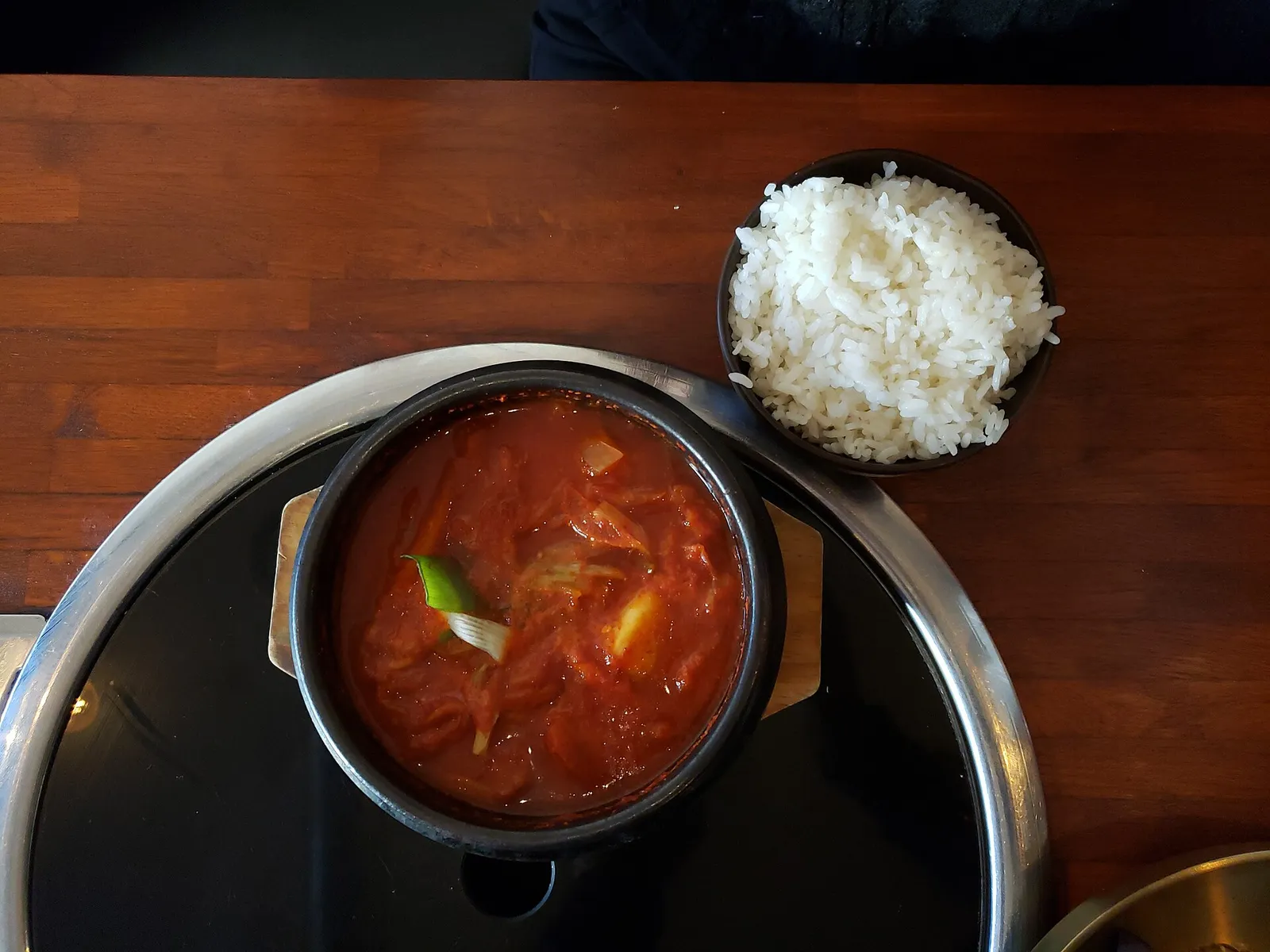
Kimchi stew with pork and tofu, served bubbling with a bowl of rice. Moderately spicy and deeply savoury. This is the everyday Korean lunch, and a good gauge of whether you like the flavour of fermented kimchi cooked rather than raw.
5. Sundubu jjigae (순두부찌개) — ₩9,000–12,000
Soft tofu stew, silkier and usually milder than kimchi jjigae. A raw egg is often cracked in at the table. Ask for 덜 맵게 (deol maepge, “less spicy”) if you are unsure.
6. Kalguksu (칼국수) — ₩9,000–12,000
Hand-cut wheat noodles in a broth of anchovy, chicken or clam. Comforting, not spicy, and one of the cheapest satisfying meals in the city. Myeongdong has the most famous shop for it — see our Myeongdong food guide.
7. Naengmyeon (냉면) — ₩12,000–16,000
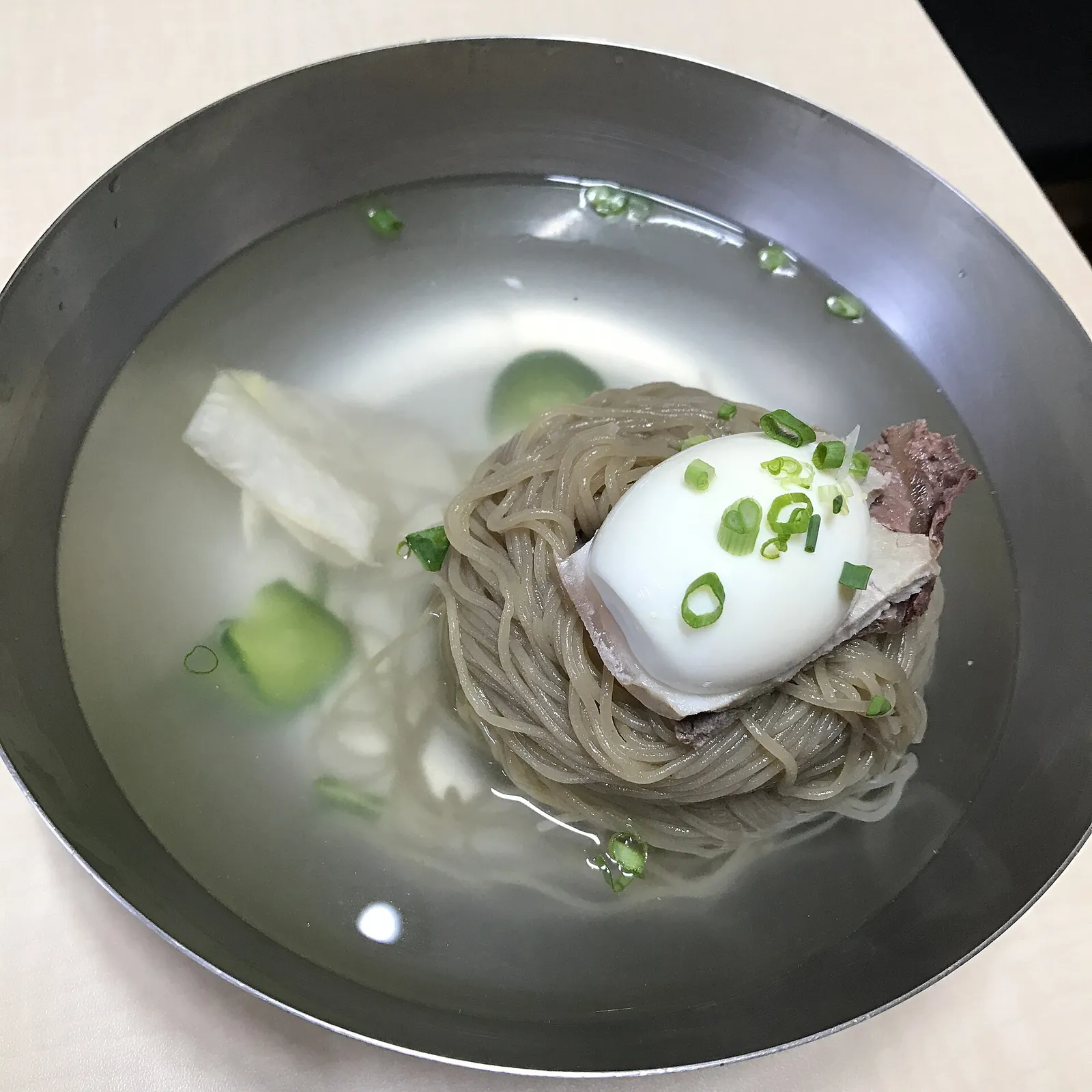
Chewy buckwheat noodles in an icy broth (mul-naengmyeon) or with a chilli sauce (bibim-naengmyeon). A summer dish, and stranger than it sounds — the broth is cold, slightly sour and often slushy. Staff bring scissors because the noodles are genuinely hard to bite.
8. Japchae (잡채) — ₩12,000–16,000
Sweet potato glass noodles stir-fried with vegetables and beef in sesame oil and soy. Sweet, chewy, not spicy. Frequently the dish that converts sceptical visitors.
9. Gimbap (김밥) — ₩3,000–6,000
Rice, vegetables and usually ham or tuna rolled in seaweed and sliced. Cheap, portable, sold everywhere, and the easiest solo meal in Korea. Not sushi — the rice is seasoned with sesame oil rather than vinegar, and nothing is raw.
10. Tteokbokki (떡볶이) — ₩5,000–8,000
Chewy rice cakes in a sweet-hot gochujang sauce, usually with fish cake. The default street snack and the taste most Koreans associate with childhood. Genuinely spicy at some stalls; ask before committing.
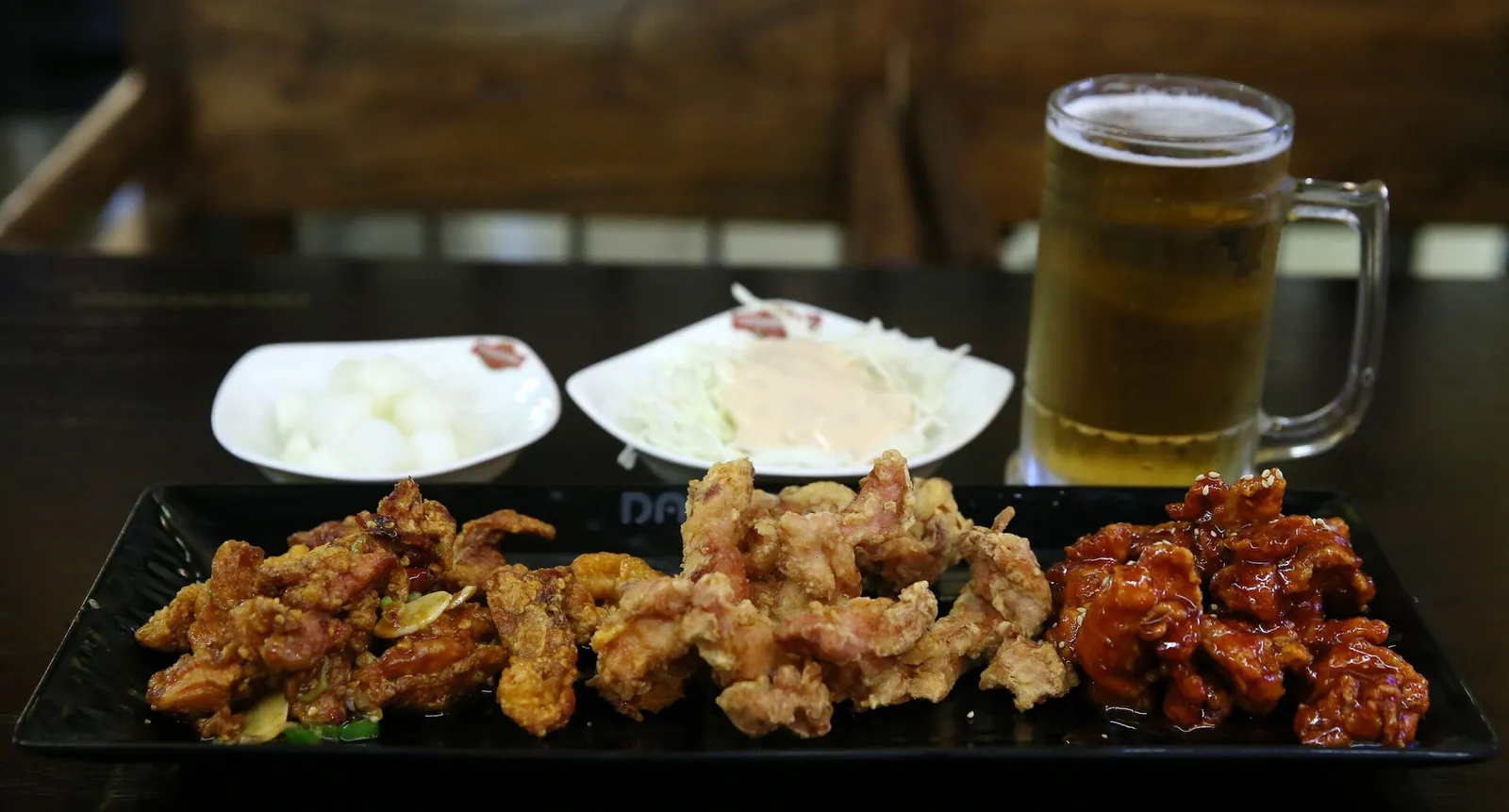
11. Korean fried chicken (치킨) — ₩20,000–28,000 whole
Double-fried, thin-crusted, in plain, soy-garlic or sweet-spicy versions. Ordered with beer and shared. Ask for 반반 (banban) to get two flavours. Hongdae is the neighborhood for it — see our Hongdae food guide.
12. Jjajangmyeon (짜장면) — ₩7,000–9,000
Noodles in a black bean sauce with pork and onion, adapted from Chinese cooking into something entirely Korean. Not spicy, very filling, and what Koreans order for delivery more than almost anything else.
How spicy is Korean food, really?
Less than its reputation. Roughly:
- Not spicy at all: bulgogi, japchae, gimbap, kalguksu, jjajangmyeon, mul-naengmyeon, bibimbap without the paste.
- Mild to medium: sundubu jjigae, kimchi jjigae, most tteokbokki.
- Actually hot: buldak (fire chicken), some tteokbokki stalls, jjamppong seafood noodle soup.
Useful phrases: 덜 맵게 해 주세요 (deol maepge hae juseyo, “less spicy please”) and 안 맵게 (an maepge, “not spicy”). Kitchens will often oblige, though stews that are spicy by definition cannot be changed much.
How ordering works
- Call the staff. Press the table button, or say “저기요” (jeogiyo). Waiting quietly gets you nothing.
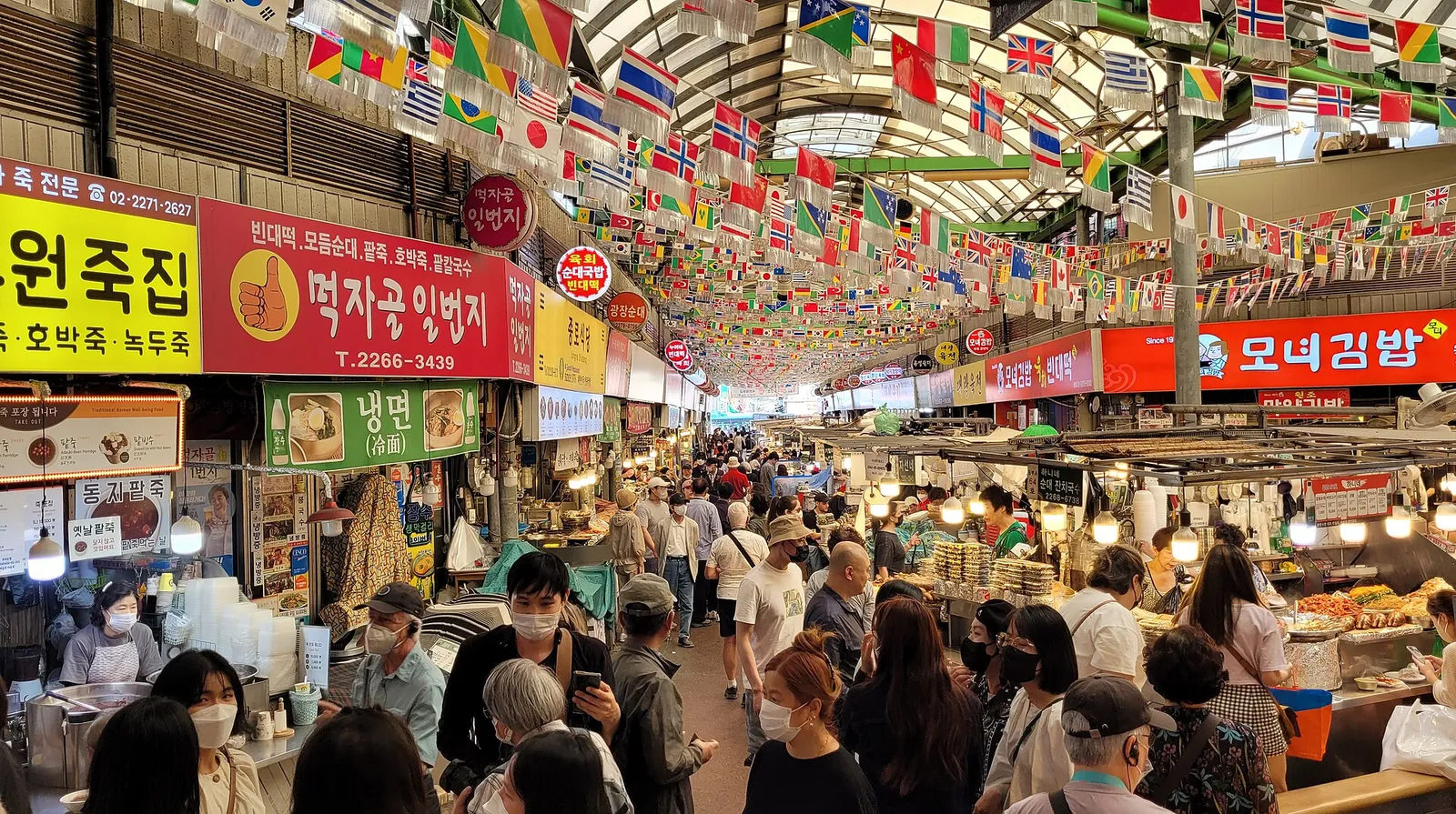
- Many restaurants serve one thing. A kalguksu shop sells kalguksu. This is a sign of quality, not limitation.
- Two-portion minimums are common for barbecue, stews and chicken. Solo travellers do better with noodles, gimbap, bibimbap and rice bowls.
- No tipping. The bill is the total.
- Pay at the counter on the way out at most casual places, not at the table.
- Lunch sets are typically 20–30% cheaper than the same food at dinner.
Vegetarian, vegan and halal
- Most Korean soups and side dishes use anchovy or beef stock by default, even when they look plant-based. Ask; do not assume.
- Temple food (사찰음식) restaurants are fully vegetarian and worth seeking out.
- Reliable vegetarian orders: japchae without meat, vegetable gimbap, sundubu without seafood if the kitchen confirms, and bibimbap without the beef and egg.
- Halal: Itaewon has Seoul’s largest concentration of certified restaurants, and Myeongdong has several. Look for the certification sticker rather than the word “halal” on a sign.
Practical notes
- Chopsticks are metal and flat, which takes a few meals to get used to. Spoons do most of the work with rice and soup.
- Rice bowls stay on the table. Lifting a bowl to your mouth is considered poor manners in Korea, unlike in Japan.
- Soju is ₩4,000–6,000 a bottle in restaurants. Pour for others, not yourself, and hold the glass with two hands when someone older pours for you.
- Convenience-store food is genuinely good, and a fair backup at 02:00.
Wrapping up
Start with bulgogi or bibimbap, work up to kimchi jjigae, and try naengmyeon if it is summer. Eat the banchan as you go, ask for refills, and do not be surprised when a restaurant only sells one dish. That is usually the one to order.
More: what to eat in Myeongdong, what to eat in Hongdae, and where to stay in Seoul.