 Now, Yeogi
Seongsu-dong Food and Cafes: Eating Cheaply in Seoul's Expensive Neighbourhood (2026)
Seongsu-dong is supposed to be expensive, yet an official government list has cafes there selling an americano for 3,000 won. The Seongdong-gu restaurant selection, official prices then and now, the ordinance and sticker holding rents down, and which station exit to use.
Places in this post
- Address
- Yeonmujang-gil area, Seongsu-dong 2-ga, Seongdong-gu, Seoul
- Hours
- Yeonmujang-gil closed to vehicles 1pm-5pm at weekends (78 times planned for 2026)
- Menu
- Official designation Korea Tourism 100 Selection (2025-2026)
- Tip
- Exit 3 of Seongsu Station is the cafe street side. Real-time congestion is shown on Seongsu Live, the YouTube channel run by Seongdong-gu.
- Address
- 273 Ttukseom-ro, Seongdong-gu, Seoul
- Hours
- Open at all times (indoor facilities closed on Mondays)
- Menu
- Admission Free
- Tip
- Exit 8 of Ttukseom Station, or exit 3 or 4 of Seoul Forest Station. It is the site of Seoul's first waterworks reservoir, from 1908.
Seongsu-dong has a reputation for being expensive. That is partly true and partly not.
An official list run by the Ministry of the Interior and Safety includes two cafes in Seongsu-dong selling an americano for 3,000 won (about $2.25). In the same neighbourhood. This post is a summary of those official records.
First, why the neighbourhood looks like this
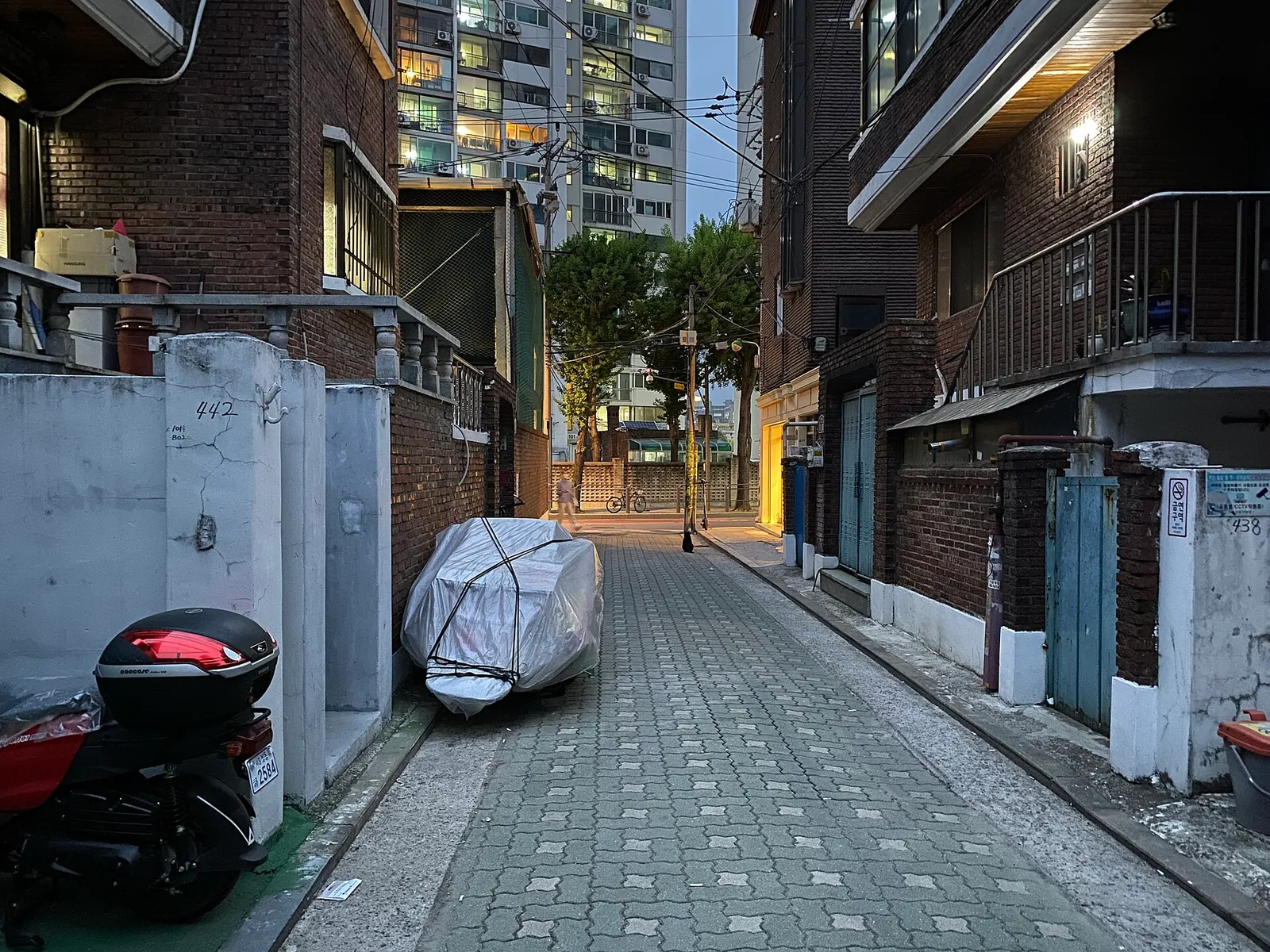
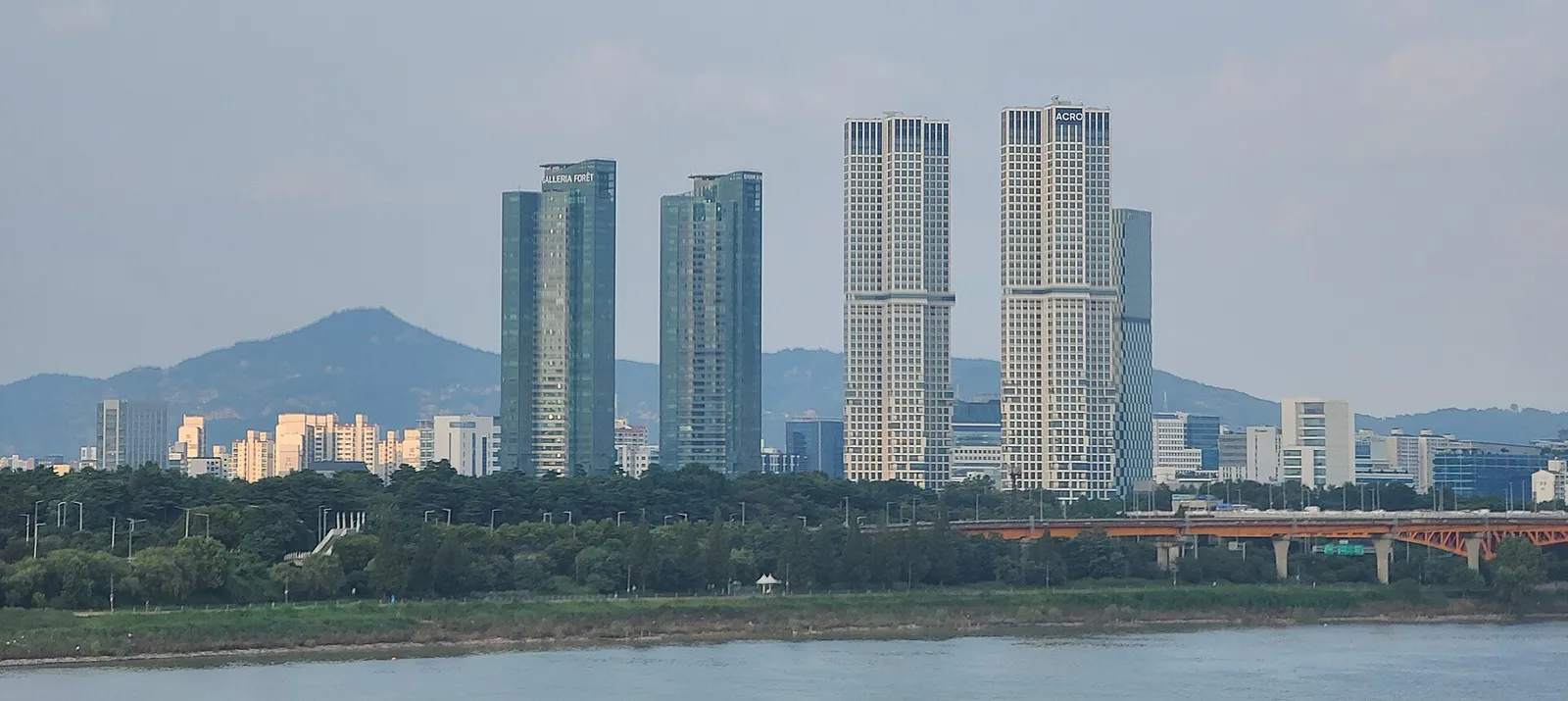
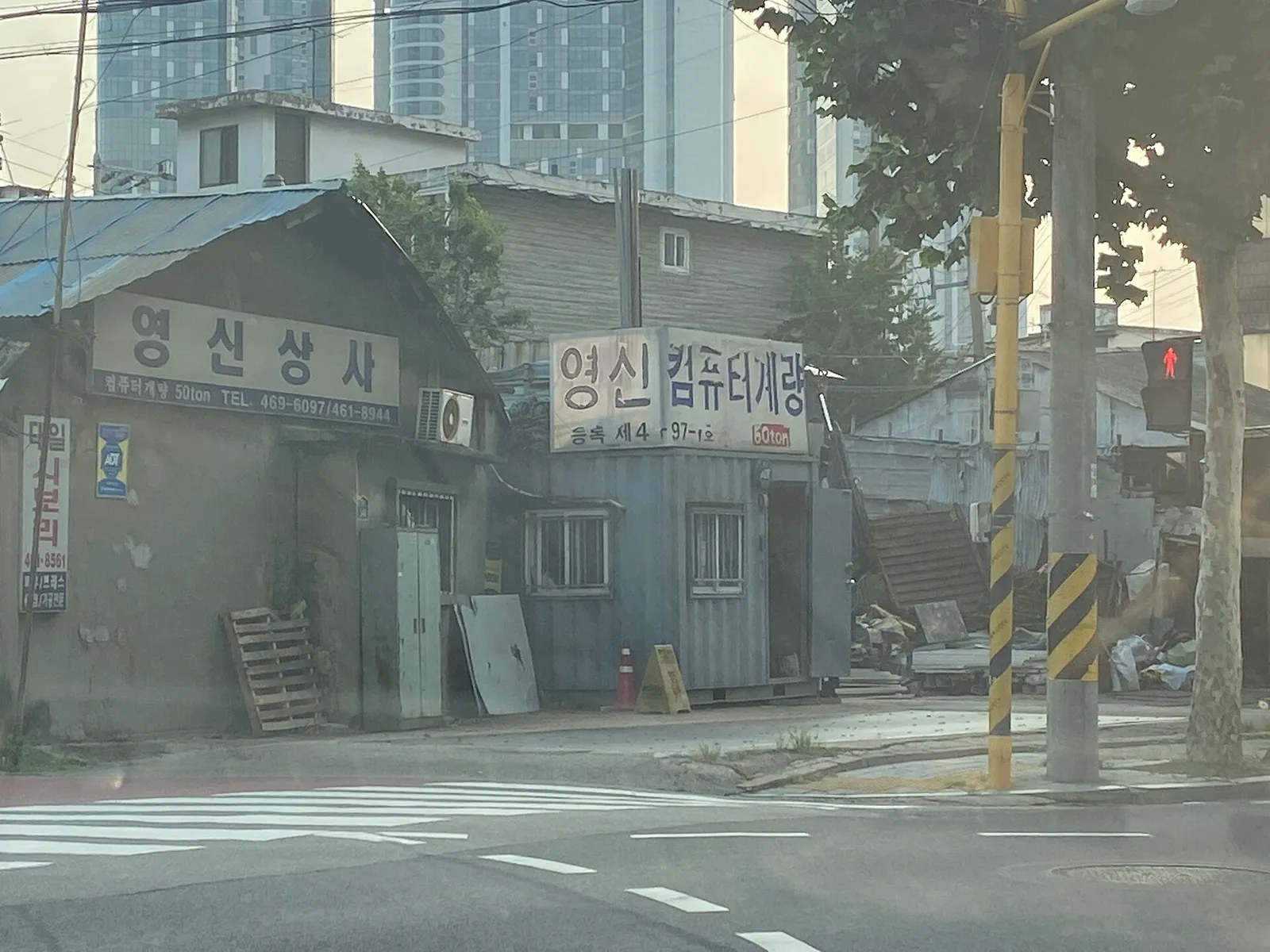
Seongsu-dong was a factory district. It still is one.
This is the official description the Korea Tourism Organization wrote when it put the Seongsu cafe street on the Korea Tourism 100 Selection (2025-2026) list.
Yeonmujang-gil in Seongsu-dong, once known for its old industrial estate and its alleys of shoe workshops, has been reborn as trendy cafes and cultural spaces. The car repair shops, the printing works and the handmade shoe street are all still busy, and as global restaurant brands and concept-store cafes moved in among the clattering factories, an atmosphere found only in Seongsu-dong took shape.
The national tourism agency has written into an official document that the factories are still running. This is not a neighbourhood of cafe lanes and nothing else. There is a cafe next to a repair shop and a bakery next to a printing works. That contrast is the whole of the place.
Is Seongsu-dong really expensive
This is the heart of the post.
The Ministry of the Interior and Safety runs the “good price” scheme and publishes the menu prices of the designated businesses in an official database. These are the published prices for businesses listed in Seongsu-dong 1-ga and 2-ga as of 21 September 2026.
| Business | Published price |
|---|---|
| Changchang Coffee (창창커피) | Americano 3,000 won |
| Keopiro Geurineun Kkum Cooperative (커피로 그리는 꿈 협동조합) | Americano 3,000 won |
| Chakhan Jjajang (착한짜장) | Jajangmyeon 5,500 won, jjamppong 7,000 won |
| Ttukdo Guksu (뚝도국수) | Janchi-guksu 6,000 won, bibim-guksu 6,500 won |
| Chamsae-wa Bangatgan (참새와방앗간) | Budae-jjigae 6,000 won, sundubu-jjigae 6,000 won |
| Ttowa (또와) | Lunch buffet 7,000 won, samgyeopsal 15,000 won |
| Kichinoya (키치노야) | Gyudon, regular 7,800 won |
| Dallimine (달님이네) | Baekban set meal 8,000 won |
| Seongsu Sikdang (성수식당) | Baekban set meal 8,000 won, samgyeopsal 16,000 won |
| Ran Kalguksu (란칼국수) | Kalguksu 9,000 won, yeolmu bibimbap 8,000 won |
| Eldat (엘닷) | Assorted sushi, 8 pieces 6,900 won, salmon sushi 10,900 won |
Prices are in Korean won throughout the table. As a rough guide, 1,000 won is about $0.75.
In other words, the floor for a lunch here runs from 5,500 won to 9,000 won.
But this is a floor, not an average
An important caveat. A “good price” business is by definition one that charges less than the average for the surrounding area. That is the condition for being designated in the first place.
So it is correct to say you can eat for this much in Seongsu-dong, and wrong to say this is what Seongsu-dong costs on average. The warehouse-style cafes in the middle of Yeonmujang-gil will not be charging these prices.
Prices really have risen
Comparing the same official database against its published prices from June 2024 gives this.
- Ran Kalguksu, kalguksu: 8,000 won to 9,000 won (a rise of 12.5%)
- Seongsu Sikdang, baekban: 7,000 won to 8,000 won (a rise of 14.3%)
- Seongsu Sikdang, samgyeopsal: 15,000 won to 16,000 won (a rise of 6.7%)
- Chakhan Jjajang, jajangmyeon: 5,500 won, unchanged
Those are published figures, not an impression.
It is not a neighbourhood of cafes only
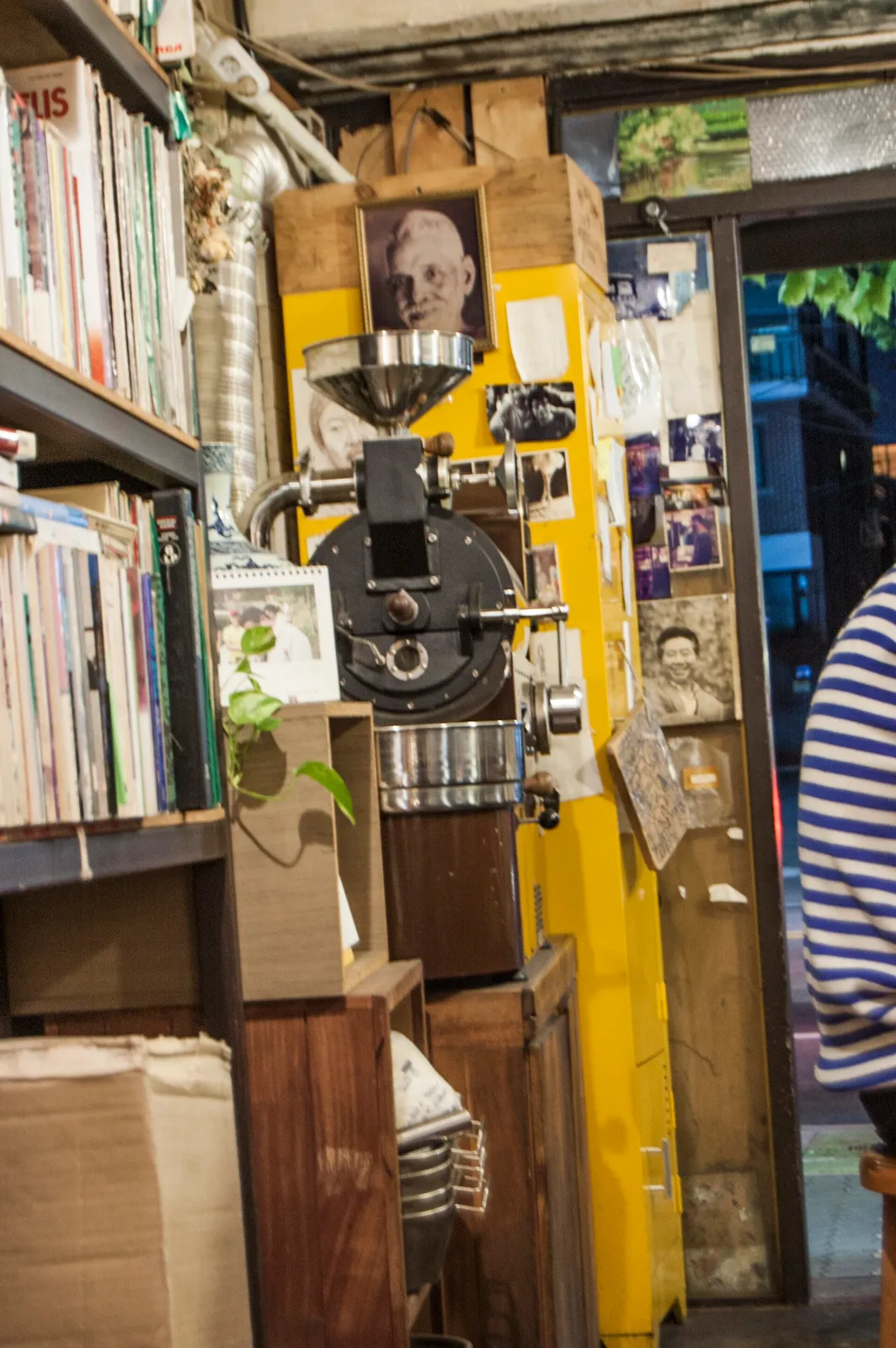
In 2025 Seongdong-gu officially picked 65 places for the Seongdong-gu restaurant selection, with the aim of supporting the restaurant trade and improving food culture.
Of that list, about 19 are in Seongsu-dong and the Seoul Forest area — close to a third. Look at what they serve, though, and it is not what you would guess.
- Western - burgers, gnocchi, lasagne, pasta
- Korean - kalguksu, jokbal, sundae-guk, baekban set meals, jjimdak, mushroom and beef hotpot
- Japanese and Chinese - buckwheat soba, guobaorou, jjamppong, sweet and sour pork tenderloin
- And then - haecheontang, mulhoe, raw horse meat, gimbap
Meat and seafood restaurants in particular are clustered along Sangwon-gil and Sangwon 10-gil. Three jokbal places, pork ribs, pork neck, mulhoe and Jeju food all sit on that one axis. Seongdong-gu’s official list alone makes clear that this is not a cafe street.
Walk two or three blocks off the cafe street. That side is the original neighbourhood.
There is an ordinance holding rents down
Leave this part out and the Seongsu-dong story is only half told.
In September 2015 Seongdong-gu passed its Ordinance on Local Community Mutual Cooperation and the Designation of Sustainable Development Zones. The district office describes it as the first anti-gentrification ordinance enacted anywhere in the country.
The core of it is the mutual-benefit agreement, under which landlords and tenants voluntarily agree not to raise rents excessively. Even though it is a voluntary agreement with no legal force, a survey by Seongdong-gu found this difference.
| Agreement signed | Not signed | |
|---|---|---|
| Average time in business | 79 months (6 years 7 months) | 52 months (4 years 4 months) |
| Rent increase rate | 2.49% | 2.85% |
That is a gap of 27 months — the shop lasts more than two years longer.
As of the end of 2021, 73.3% of landlords in the zone had joined, and 501 buildings had signed.
There is a sign a visitor can look for
Shops that have signed put up a Sangsaeng Seongdong sticker, on the door or in the window.
It is not a guarantee that the food is good. It is a signal that the shop has probably been trading in that spot for a long time. Look out for it as you walk.
Note, though, that the figures above are from the end of 2021, and no updated numbers could be found.
If you are going at the weekend
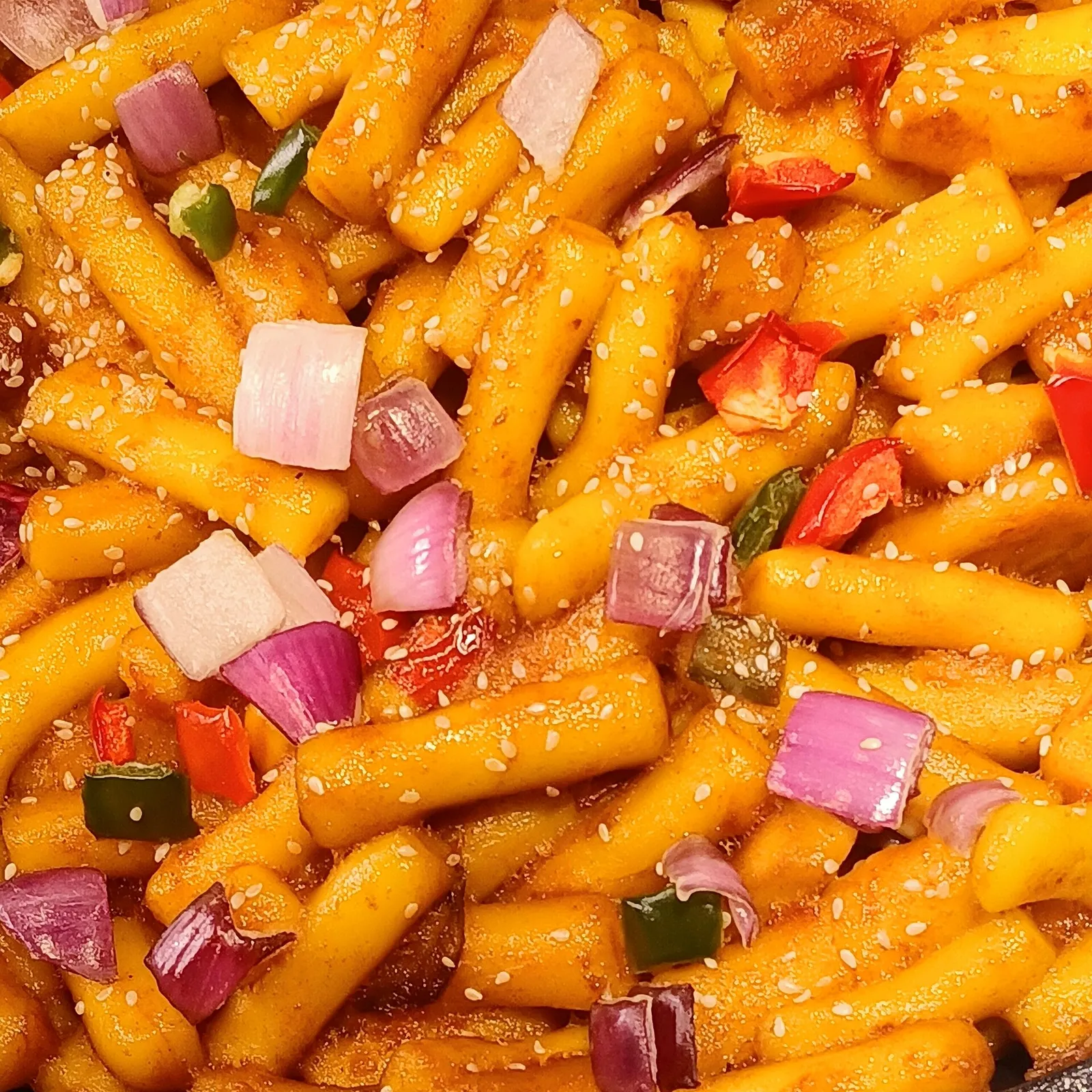
Seongsu-dong gets very crowded. These are Seongdong-gu’s official figures.
- Visitors to Seongsu-dong: about 46 million in 2020, about 70 million in 2024 (up 52%)
- 883 pop-up stores held in 2025
The district office has 96 of its 100 crowd-detection CCTV cameras concentrated in Seongsu-dong, monitored around the clock.
Two things follow from that which are genuinely useful to a visitor.
One: Yeonmujang-gil is closed to cars at the weekend. Seongdong-gu runs what it calls a Seongdong-style pedestrian safety street and blocks vehicles from 1pm to 5pm at weekends. The plan for 2026 is to raise this to 78 times a year. That window is the best time to walk it.
Two: you can see how crowded it is in real time. Seongdong-gu puts out congestion information through a YouTube channel called Seongsu Live and through kiosks and display boards on the street. Worth a look before you set off.
Seongdong-gu officially classifies Halloween and Christmas as crowd-concentration periods. For those it sets up an on-site situation room.
Pop-up store names are left out deliberately
Most Seongsu pop-ups run for a few days to a few weeks. That is how you get to a figure of 883. Any name written down here would have vanished by the time you arrived. Check just before you go.
Which exit to take
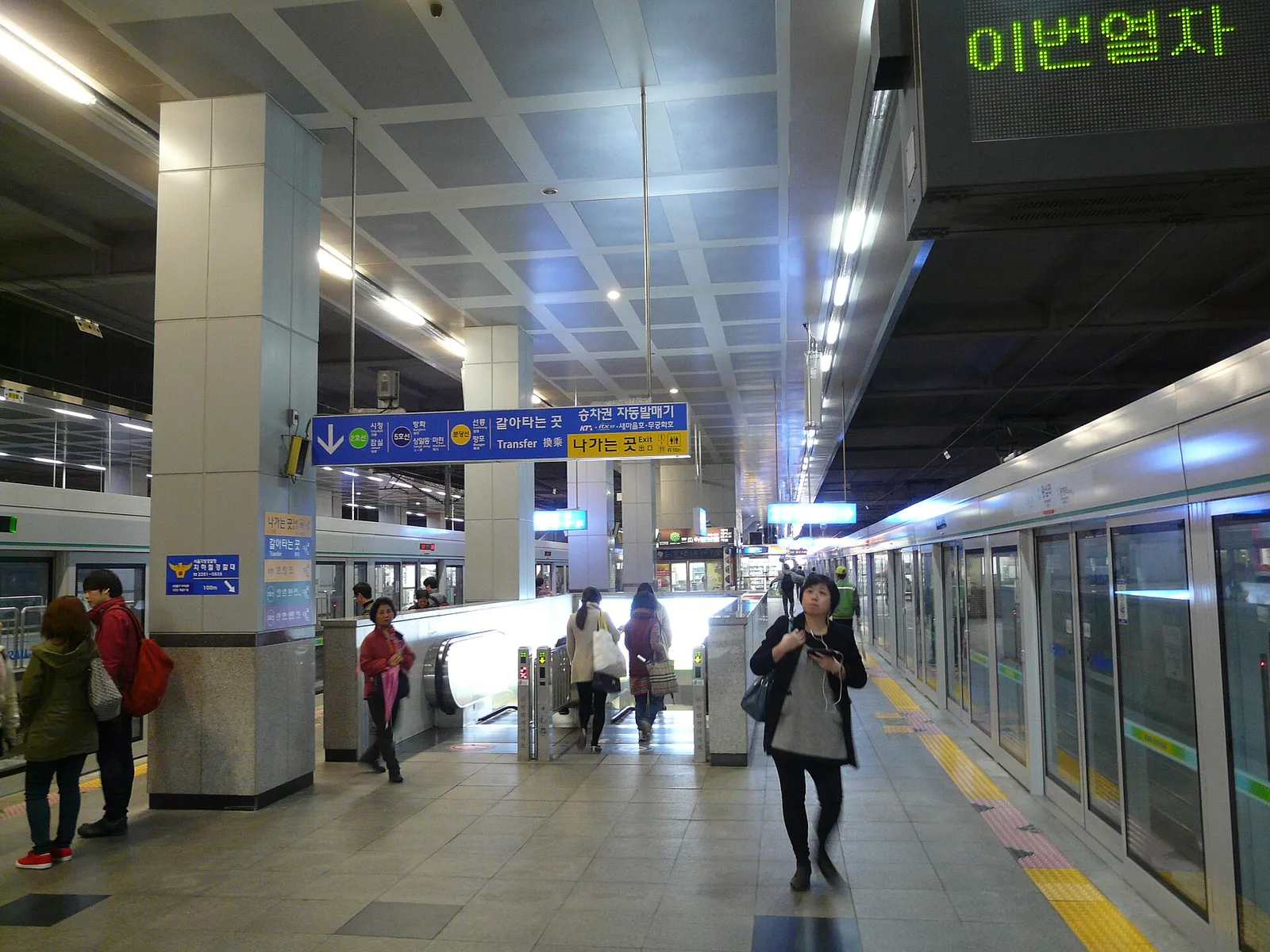
Seongsu has three stations and each one leads somewhere different. This is where people get lost.
| Destination | Station and exit |
|---|---|
| The cafe street (Yeonmujang-gil) | Line 2 Seongsu Station, exit 3 |
| The handmade shoe street | Line 2 Seongsu Station, exits 1 and 2 |
| Shoe Theme Park | Line 2 Seongsu Station, exit 4 |
| Seoul Forest | Line 2 Ttukseom Station, exit 8 |
| Seoul Forest, Bundang line side | Suin-Bundang Line Seoul Forest Station, exit 3 or exit 4 |
For Seoul Forest Station, the official sources contradict each other. The Seoul Metropolitan Government says exit 4, Seongdong-gu says exit 3, and the Seoul Tourism Organization says exits 3 and 4. That is why this post says exit 3 or exit 4.
It is easier to remember by the road. Shoes are on Achasan-ro, cafes are on Yeonmujang-gil, the forest is on Ttukseom-ro.
Seoul Forest
You can walk there from the cafe lanes, and there is no admission charge. It is open at all times; only the indoor facilities close on Mondays.
The Korea Tourism Organization’s description includes this passage.
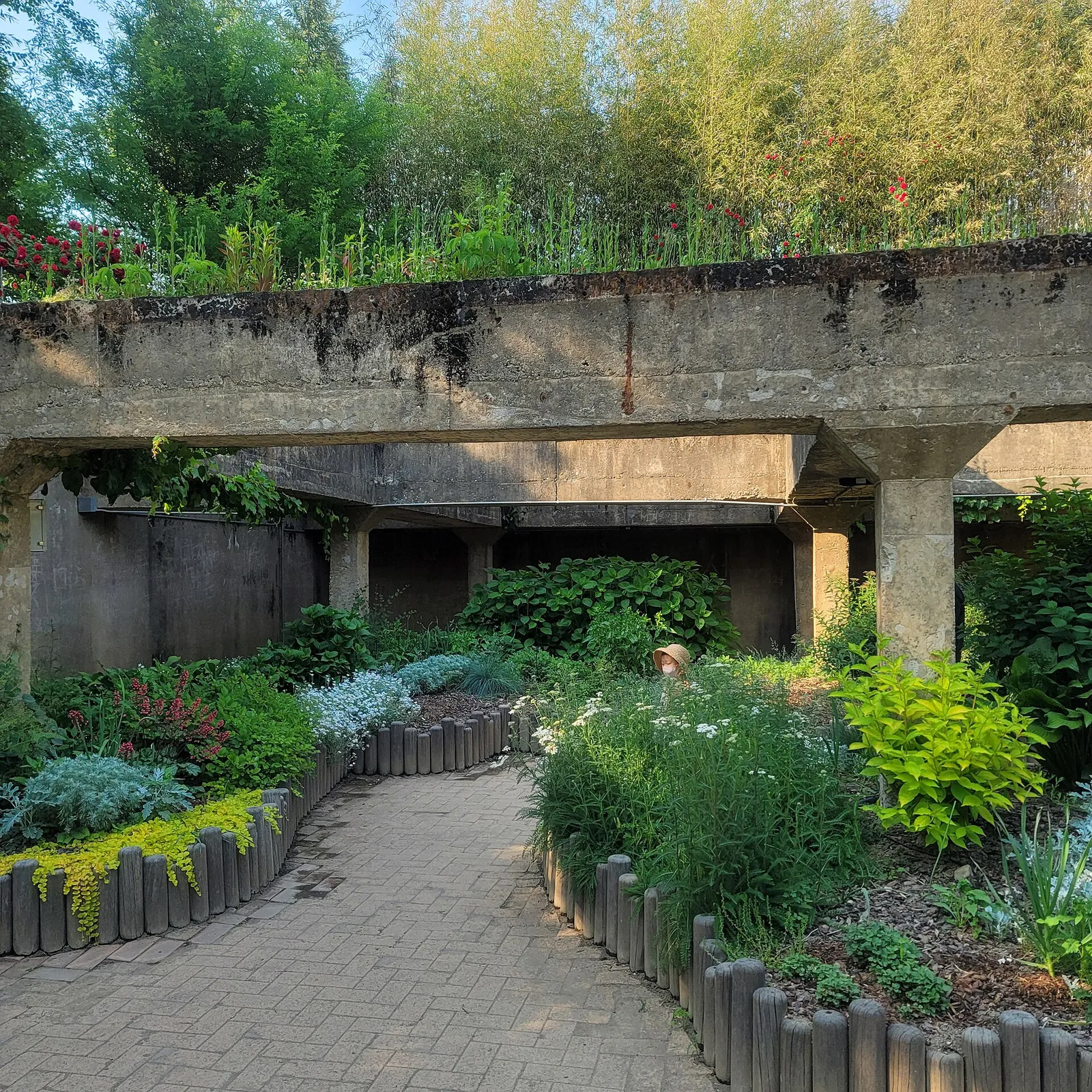
Seoul Forest was the site of Seoul’s first waterworks reservoir, built in 1908, and reopened in 2005 as a large urban forest created out of the Ttukseom sports park area.
The concrete structure in the photograph above is what remains of it. Fittingly for a neighbourhood where factories became cafes, a water treatment plant became a park. Seoul Forest is on the Korea Tourism 100 Selection list as well.
Things worth knowing
These are things you run into in cafes. Only the ones with an official basis are listed.
You cannot have a disposable cup if you are drinking in. The Act on the Promotion of Saving and Recycling of Resources bans single-use items inside the premises. The rule applies to the business, not to the customer. Being handed a mug is the normal outcome.
The 300 won disposable cup deposit is running only in Jeju and Sejong. Seoul is not covered. It has not been abolished, and it is not in force nationwide either.
Every cafe and restaurant is entirely non-smoking, since 1 January 2015, whatever the floor area. The fine for a smoker is 100,000 won.
There is no tipping. And the price on the menu has to be the final amount, with VAT included. Nothing is added at the till.
Refusing a card payment is illegal. Under the Specialized Credit Finance Business Act it carries up to a year in prison or a fine of up to 10 million won. A terminal that will not take a foreign-issued card is a separate problem.
There is no rule about sitting for hours with a laptop. Each shop decides for itself. The Fair Trade Commission has no standard terms for coffee shops, and the consumer dispute resolution standards say nothing about seat time. Follow whatever notice is posted.
What could not be verified
Stated plainly.
There is no official data on average cafe prices in Seongsu-dong. What is above comes from the “good price” list, which is a floor. There is no official data on pop-up admission fees or merchandise prices either.
The cafe street has no official boundary. It is not a gazetted area; it is a street a tourism agency gave a name to.
The mutual-benefit figures are from the end of 2021, and no later numbers could be obtained.
Ordinary restaurants and independent cafes have no allergen-labelling duty. The duty covers packaged food and franchises with 50 or more outlets. If you have an allergy, you have to ask for yourself.
Wrapping up
- The Seongsu cafe street is an official Korea Tourism 100 Selection (2025-2026) destination.
- Two cafes selling an americano at 3,000 won are on the Ministry of the Interior and Safety’s official list. That is a floor, though, not an average.
- The floor for lunch is 5,500 to 9,000 won, and it has genuinely risen over two years.
- A third of Seongdong-gu’s official restaurant list is in Seongsu-dong, and most of it is not cafes. The meat restaurants cluster around Sangwon-gil.
- The first anti-gentrification ordinance in the country dates from 2015, and shops with an agreement last 27 months longer. Look for the Sangsaeng Seongdong sticker.
- Yeonmujang-gil is closed to cars from 1pm to 5pm at weekends, and real-time congestion is on the Seongsu Live YouTube channel.
- Exit 3 at Seongsu Station is the cafes, exit 8 at Ttukseom Station is Seoul Forest.
If you come to Seongsu-dong, do not see only the cafe street. Walk two blocks out and the factories are still running, and next door to them somebody is serving an 8,000 won set meal. That is what the neighbourhood actually is.
Read next: Seoul autumn foliage spots and Korean food for first-timers.