 Now, Yeogi
Seoul Autumn Foliage: The Spots You Can Reach by Subway (2026)
How to see autumn colour without leaving Seoul, using only official sources. Changdeokgung's Huwon booking opens at 10am six days ahead, the city deliberately leaves fallen leaves unswept for three weeks, a 400-year-old Natural Monument ginkgo stands in the centre of town, and Bukhansan National Park is a subway ride away.
Places in this post
- Address
- 99 Yulgok-ro, Jongno-gu, Seoul
- Hours
- Korean tours Mar–Oct, hourly 10:00–16:00 · English Mar–Nov 10:30, 11:30, 14:30, 15:30 · Japanese 13:30 (Wed, Fri, Sun) · Chinese 12:30 (Tue, Thu, Sat)
- Menu
- Huwon tour ₩5,000 (the separate ₩3,000 palace ticket must also be bought)
- Tip
- Online booking opens at 10:00 six days before your visit date; on-site tickets go on sale at 09:00 on the day. In October and November both sell out very fast.
- Address
- 31 Sungkyunkwan-ro, Jongno-gu, Seoul
- Hours
- Mar–Oct 09:00–18:00 · Nov–Feb 09:00–17:00
- Menu
- Admission Free
- Tip
- A Natural Monument (No. 59), roughly 400 years old and 26 m tall. 749 m from Exit 4 of Hyehwa Station on Line 4.
- Address
- 62 Jingwan-dong, Eunpyeong-gu, Seoul
- Hours
- Designated entry-time system: Mar–Nov 04:00–17:00 · Dec–Feb 04:00–16:00
- Menu
- Admission None
- Tip
- The route the Korea National Park Service itself names as worth walking in autumn is the Daenammun Course, 5.8 km one way, about 3 hours.
You do not have to travel all the way to Seoraksan for this.
Seoul turns late. The city centre colours later than the mountains do, which means you can leave it to the end of your trip and still catch it. Everything below comes from what the Seoul city government, the Royal Palaces and Tombs Center and the Korea National Park Service have actually published.
When Seoul turns
Three official sources, laid on top of each other.
- KMA forecast figures quoted by the city of Seoul — peak around 28 October on Bukhansan, and in early November downtown
- Seoul Tourism Organization — Namsan is at its reddest from late October into early November
- Korea National Park Service — 1 October to 15 November is the peak season
So central Seoul centres on early November, with the mountains running about a week ahead of it.
One caveat. Those KMA figures are numbers the city of Seoul quoted in past press releases. The KMA’s own year-by-year observation records for Seoul could not be obtained for this post.
The city deliberately leaves the fallen leaves
This is a Korean habit you will not find in many other cities, and it is written plainly in a Seoul city press release.
So that citizens can take in the feel of autumn along with the crunch of fallen leaves underfoot, a sound heard only at this time of year, the city plans to leave the leaves unswept at 105 locations from Monday the 24th until the middle of next month.
From 24 October to mid-November is the window in which the city officially lets the leaves lie. In practice those dates are Seoul’s viewing season.
Huwon at Changdeokgung — the most famous, and the hardest
It is the first thing in the city to sell out, and the Royal Palaces and Tombs Center warns about it directly.
In April–May and October–November, both the online tickets and the same-day on-site tickets for Huwon sell out very quickly.
Get the booking times exactly right
- Online — from 10:00 six days before your visit date, not counting the visit day itself, until the evening before, first come first served
- On site — from 09:00 on the day of your visit, first come first served
- 100 people per slot, made up of 50 online and 50 on site
Which makes 10am, six days out, the moment that actually decides it.
The foreign-language slots are separate
| Language | Times | Runs |
|---|---|---|
| English | 10:30 · 11:30 · 14:30 · 15:30 | March–November |
| Japanese | 13:30 | Wed, Fri, Sun |
| Chinese | 12:30 | Tue, Thu, Sat |
| Korean | Hourly, 10:00–16:00 | March–October |
Korean nationals cannot join the foreign-language slots. If you are accompanied by a foreign visitor, up to two may come along.
The money, and the traps
Huwon costs ₩5,000 (about $3.75) and you must buy the ₩3,000 (about $2.25) palace-buildings ticket separately. The Huwon ticket alone will not get you in. The minimum is ₩8,000 (about $6). And the combined palace ticket, ₩6,000 (about $4.50), does not cover Huwon either.
One more thing that matters. Wearing hanbok does not make Huwon free. The only free categories in Huwon are children aged 6 and under, national merit recipients and registered disabled visitors. The hanbok exemption stops at the palace buildings.
And one more. Okryucheon is currently closed for repair work, until further notice. That is the deepest, most secluded stream valley in the garden, and you will not see it.
Finally, the practicalities. It is a walk of 15 minutes or more from the ticket office to the Huwon entrance. The tour lasts about 70 minutes, and if you miss your slot there is no entry and no refund. Be inside 20 minutes early.
If you would rather just walk, with no booking
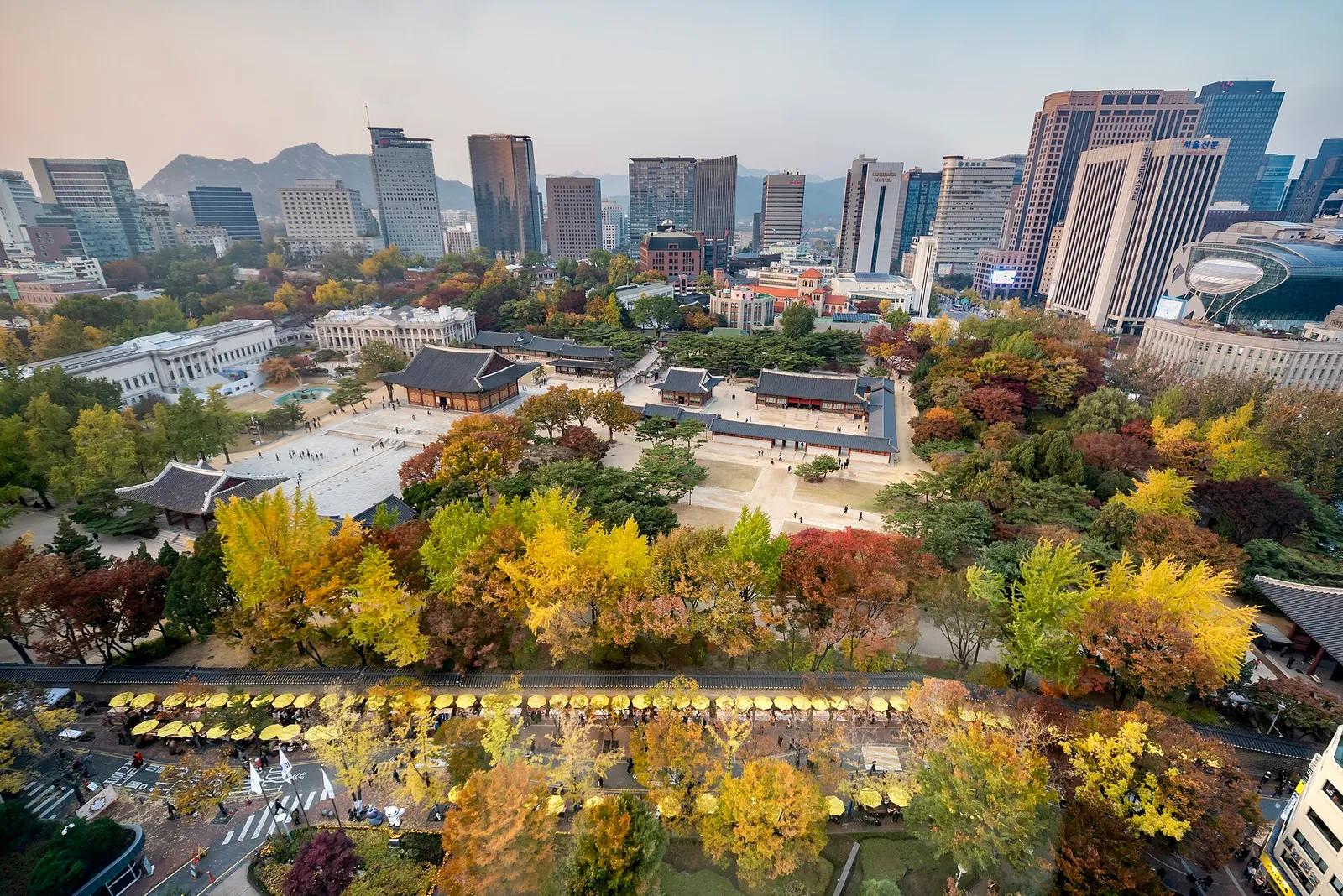
In 2016 the city of Seoul picked out its 105 Best Autumn Foliage Streets. That list is the city’s official one. These are the entries easiest to reach from the centre.
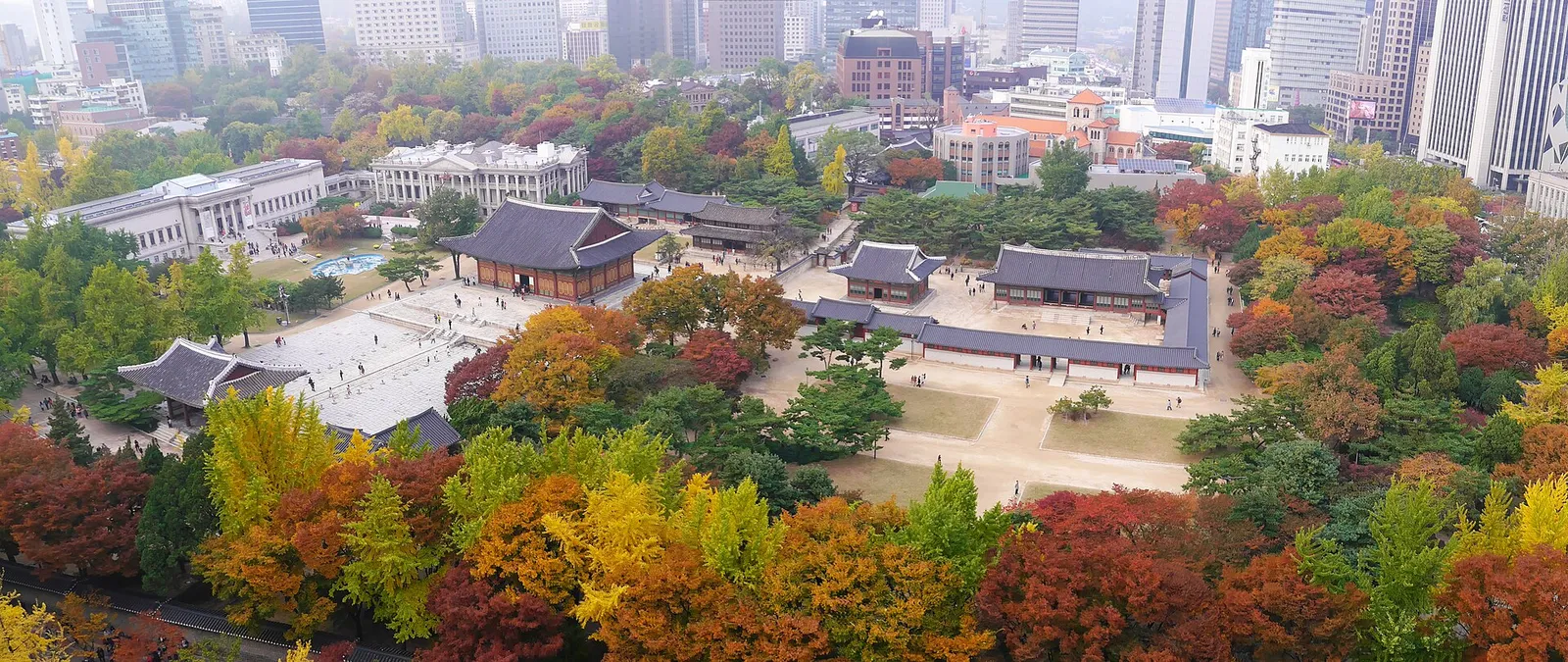
Deoksugung-gil — Line 1 Line 2 City Hall Station, Exit 1. The stone-wall road that runs along the side of Deoksugung Palace. Free.
Hwarang-ro fallen leaves street — Line 6 Hwarangdae Station, 858 m from Exit 4. The Seoul Tourism Organization description is a good one.
On this street the fallen leaves are deliberately left unswept for a set period for the sake of the autumn atmosphere. It has also been named one of Seoul’s streets of autumn foliage and fallen leaves.
Salgoji-gil — Line 2 Yongdap Station, 355 m from Exit 2. It also goes by the name of the ginkgo road. Pair it with Seoul Forest at Ttukseom, in the same district, and you have a route.
Namsan’s autumn foliage road — the Seoul Tourism Organization has given this one the official name “Autumn Foliage Road”. The Namsan South Circular Road runs 1.3 km from the National Theater intersection to the Namsan No. 3 Tunnel. Take the Bus 01 Namsan circular bus from Line 3 Line 4 Chungmuro Station or Line 3 Dongguk Univ. Station. There is no parking inside Namsan Park.
Of the Namsan Trails, the North Circular Road is closed to cars and bicycles, which makes it the easiest to walk. It is Line 4 Hoehyeon Station, Exit 4. The N Seoul Tower observatory costs ₩29,000 (about $21.75), but the trails themselves are free.
These are not on the official list
You will see them recommended all over the internet, but Olympic Park and the Kyung Hee University campus are not in the city’s list of 105. That is not a comment on how they look; it only means they are not official Seoul foliage sites. This post sticks to the ones that are listed.
If you want to see a single tree
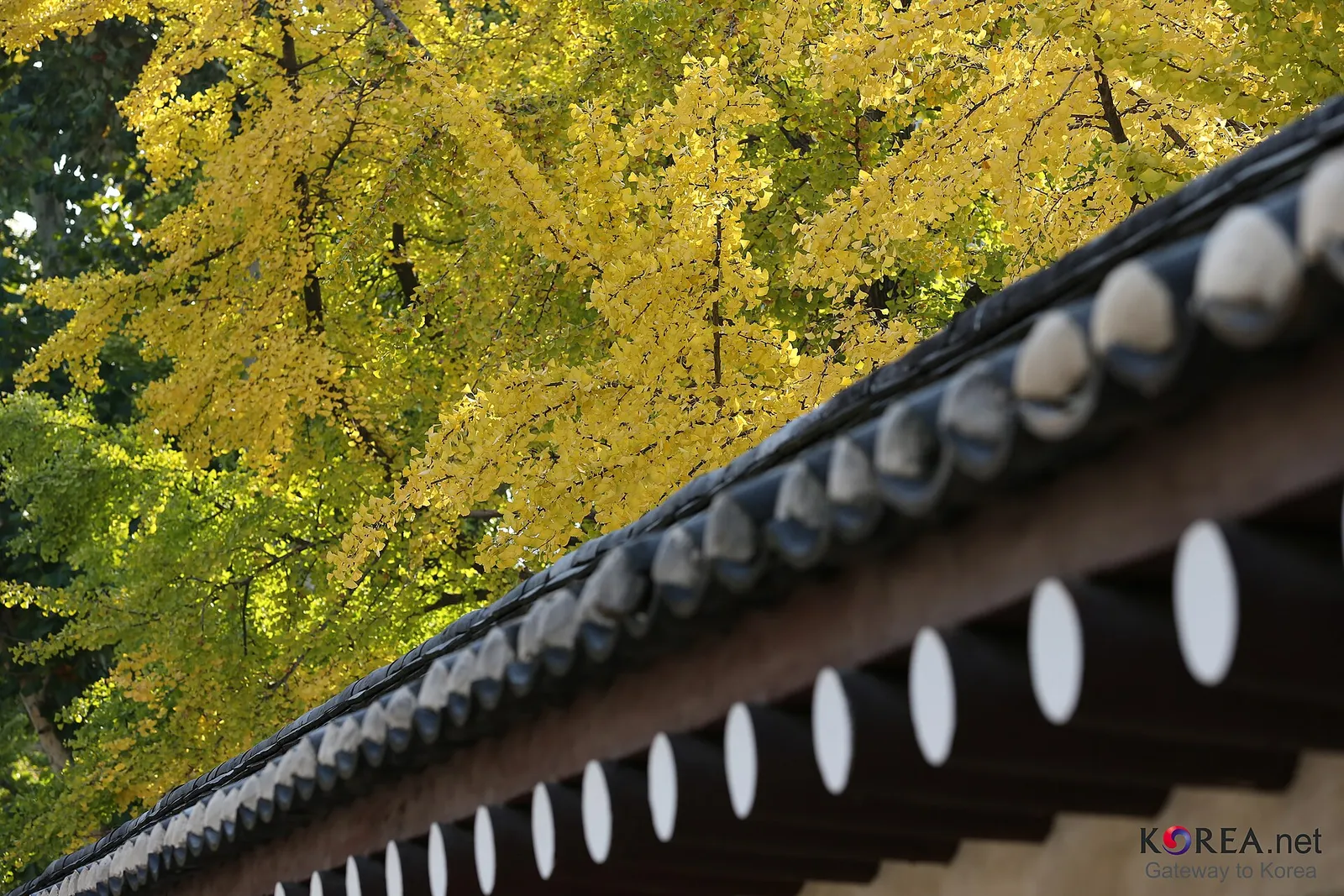
No need to go out to Asan or Hongcheon. There is a Natural Monument ginkgo in the middle of Seoul.
The Seoul Munmyo Ginkgo Tree stands in the front courtyard of Sungkyunkwan Myeongnyundang. This is the Korea Heritage Service description.
Estimated to be about 400 years old, this is an imposing tree of 26 m in height and 12.09 m in girth at chest height … it is thought to have been planted when Munmyo, destroyed by fire during the Japanese invasion of 1592, was rebuilt in 1602.
It is a Natural Monument (No. 59), it was designated in 1962, and admission is free. It is 749 m from Exit 4 of Line 4 Hyehwa Station. Open 09:00–18:00 from March to October, 09:00–17:00 from November to February.
This is the only ginkgo in Seoul that currently holds an active Natural Monument designation. There is none at Deoksugung. Changgyeonggung Chundangji is out of the same Exit 4 at Hyehwa, so the two can be done together.
A national park you reach by subway
You get to Bukhansan on the subway, and there is no admission charge. The park service fee table lists parking and camping only; there is no admission line item at all.
The one route the Korea National Park Service itself describes as “particularly worth seeing in the autumn foliage season” is the Daenammun Course.
- Bukhansanseong Trail Information Center → Daeseomun → Jungseongmun → Daenammun
- 5.8 km one way, about 3 hours
- The park service says: “A long course, but a gentle one that children can manage too”
- Getting there: from Line 3 Gupabal Station take Bus 704 or Yangju Bus 37 and get off at Bukhansanseong Ipgu
There are fixed hours for starting a climb. On Bukhansan it is 04:00–17:00 from March to November, moving to 16:00 from 1 December. In October and November the cut-off is 17:00.
Driving there works against you. 1 October to 15 November is the official peak season, and parking charges go up.
You do not need your own gear
For a foreign visitor this may be the most useful thing in the post. The Seoul Hiking Tourism Center is 300 m from Exit 2 of Ui-Sinseol Line Bukhansan Ui Station.
From the Seoul Tourism Organization:
The centre provides trail routes and information for hiking in central Seoul — Bukhansan above all, along with Bugaksan, Inwangsan and Gwanaksan — in Korean, English, Chinese and Japanese … and it also runs a rental service for hiking gear including boots, hiking clothes, poles, gloves and crampons.
Use of the centre is free, hours are 09:00–18:00, and it is closed on Mondays. A small charge applies only when foreign visitors rent equipment. There are lockers too, both free and paid.
Which means a traveller who arrived with one pair of trainers can borrow a pair of hiking boots and go and see the autumn colour on Bukhansan.
What could not be verified
Stated plainly.
The 105 Best Autumn Foliage Streets list is from 2016. Whether it has been updated since could not be confirmed. That is why this post calls it “the 105 selected by the city of Seoul in 2016” rather than “this year’s selection”.
The KMA’s own year-by-year records of first colour and peak colour in Seoul could not be obtained. The seasonal observation page on the KMA open data portal returned a “content in preparation” message. Every date given above is on the authority of the city of Seoul and the Seoul Tourism Organization.
The nearest subway station for Seoul Forest and the admission price for Seoul Grand Park could not be confirmed on official pages either, so neither appears here.
In short
- Central Seoul peaks in early November; the mountains, Bukhansan included, in late October.
- The city leaves the fallen leaves unswept from 24 October to mid-November.
- Huwon: online at 10:00 six days ahead, on site at 09:00 on the day. 100 people per slot, and hanbok does not make it free.
- Huwon needs a separate palace-buildings ticket, and the combined ticket does not cover it. ₩8,000 minimum.
- The 400-year-old Natural Monument ginkgo at Sungkyunkwan Myeongnyundang is free.
- Bukhansan is reachable by subway and charges no admission. In October and November the last entry is 17:00.
- You can borrow hiking boots at the Seoul Hiking Tourism Center. Four languages, free, closed Mondays.
If the booking feels like too much, skip Huwon. Deoksugung-gil and the Myeongnyundang ginkgo are enough to fill a day on their own, and both are free.
Read next: when the autumn colour arrives across Korea in 2026 and free palace entry in hanbok.