 Now, Yeogi
Where to Stay in Seongsu-dong: Sleeping in a Neighbourhood With No Hotels (2026)
Seongsu-dong has no registered tourist hotel at all, and 186 of its 299 rooms are old-style inns. That leaves the foreign-tourist homestay scheme, which is also where unlicensed lodging turns up. Which kinds of home the law allows, what to check before you book, and the airport bus that stops in Seongsu.
Places in this post
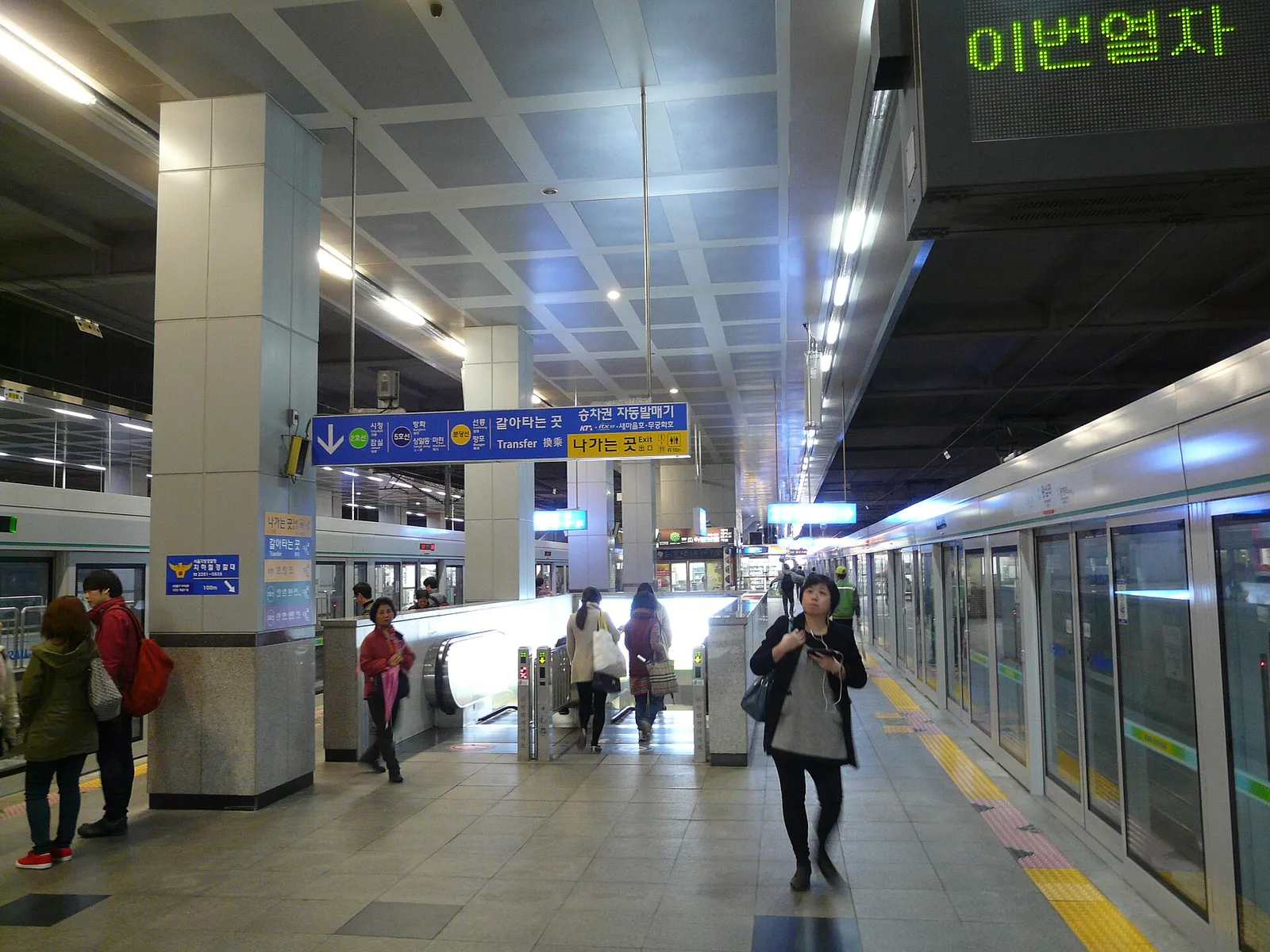
- Address
- 56 Seongsui-ro (basement), Seongdong-gu, Seoul
- Menu
- Gangnam (Samseong Station) 16 minutes, no transfer · Hongik University Station 27 minutes, no transfer
- Tip
- It sits on the Line 2 loop and is also where the Seongsu branch line splits off. Both Gangnam and Hongdae are a direct ride.
- Address
- 17 Wangsimnigwangjang-ro, Seongdong-gu, Seoul
- Menu
- From Seongsu Station 3 stops on Line 2, about 5 minutes
- Tip
- Seongdong-gu's registered tourist hotels are here rather than in Seongsu-dong. Lines 2 and 5, the Gyeongui-Jungang line and the Suin-Bundang line all meet here.
Start with the fact. There is not a single registered tourist hotel in Seongsu-dong.
Seongdong-gu officially lists five registered tourist accommodation businesses, and every one of them has an address in Wangsimni or Yongdap-dong. In Seongsu-dong 1-ga and 2-ga the count is zero. Counting through the Ministry of the Interior and Safety licensing data gives the same picture: of 299 rooms in Seongsu-dong, 186 are in yeogwan and yeoinsuk, the old-style inns, and only one place is hotel grade.
So sleeping in Seongsu-dong means, in practice, sleeping in somebody’s home - and that is exactly why there are things to check before you book.
How many rooms there actually are
These are counts from the Ministry of the Interior and Safety licensing data. In Seongsu-dong 1-ga and 2-ga there are 21 lodging businesses trading, with 299 rooms between them.
Those 299 rooms break down like this.
- 186 rooms (62%) are yeogwan and yeoinsuk, the old-style inns
- Only one place counts as a hotel: a general hotel with 80 rooms
Widen it to the whole of Seongdong-gu and the pattern holds. Of 74 businesses and 1,397 rooms, half - 689 rooms - are in Doseon-dong, over by Wangsimni Station, not in Seongsu.
The official lists make it plainer still.
| Measure | Seongdong-gu | Seongsu-dong |
|---|---|---|
| Registered tourist accommodation (district office list) | 5 | 0 |
| Seoul Tourism Organization official lodging list | 4 | 1 |
| Seoul Stay licensed urban homestays | 24 | 9 within 1km of Seongsu Station |
Put together: it is not that there is nowhere to sleep in Seongsu-dong, it is that most of it is old inns, and the places officially listed for tourists can be counted on one hand.
There are no hanok in Seongdong-gu at all. To sleep in a hanok, see the Jongno accommodation post.
What you get at each budget level
No prices here. Not one official source - the Seoul Metropolitan Government, the Seoul Tourism Organization or the Korea Tourism Organization - publishes nightly rates for accommodation in Seongsu-dong. What can be stated precisely is what you get legally at each level.
Budget - an urban homestay, meaning somebody’s home
At this level the real option in Seongsu-dong is an urban homestay on the Seoul Stay list. There are nine within 1km of Seongsu Station.
Be clear about what that is. One room, or one floor, of somebody else’s house. There is no front desk and no 24-hour check-in.
In exchange, the safety requirements are written into law.
- At least one fire extinguisher
- A standalone smoke alarm in each room (plus a carbon monoxide alarm where heating is individual)
- A system capable of providing foreign-language assistance
- A total floor area of under 230 square metres
If you want a hostel, you need to go outside Seongsu-dong, towards Yongdap-dong or Ha-Wangsimni.
Mid-range - about one place inside Seongsu-dong
Inside Seongsu-dong there is effectively one place on the official lists trading under a hotel sign. The rest are in Wangsimni, Majang and Yongdap.
At this level you may come across somewhere described as a “residence”, and it is worth knowing what that means. It is a lodging business of the residence category - a “residence”-type serviced lodging. It has a kitchen and is required to have a front desk and a lobby, but it has not been through tourist hotel grading. For a few nights that is no problem at all.
Luxury - not in Seongsu-dong
The whole of Seongdong-gu has five registered tourist accommodation businesses and no large brand hotels.
If you want something upmarket, the realistic answer is to stay in Wangsimni and come to Seongsu-dong during the day. It is three stops on Line 2 to Seongsu Station.
Check this before you book
This is the most important part of the post.
Running a lodging business without registering it carries up to 2 years in prison or a fine of up to 20 million won (about $15,000). A 2021 amendment singled out lodging and doubled the penalty. A lot of material online still says one year and 10 million won; that applies to the other trades, not to lodging.
The traveller is not the one who gets prosecuted, but if the place is raided you have to leave. Better to look first.
Four warning signs
One: “You get the whole flat to yourself.” The foreign-tourist urban homestay scheme only works in a home the owner actually lives in. Renting out an empty flat entire is not made legal by this scheme. If there is no sign at check-in that the owner or their family lives there, be suspicious.
Two: “It’s an officetel.” The law allows five kinds of home - detached houses, multi-family houses, apartments, row houses and multiplex houses - and officetels are not among them. Seongsu-dong has a lot of officetel-style short-term rentals, and none of them can be made legal under this scheme.
Three: the rate on the booking screen differs from the rate on site. The registration conditions include a requirement to honour the rate posted online. If more is demanded in person, you can point to that as a breach of the registration conditions.
Four: it has a kitchen but calls itself a hotel. Cooking facilities make it a “residence”-type serviced lodging. That is not a bad thing; it simply means it has nothing to do with hotel grading.
On officetels the government has been explicit. This is from a Ministry of Culture, Sports and Tourism press release.
Lodging businesses using officetels are not permitted under current law, and all such cases are therefore subject to enforcement.
This matters more than the fine
The real reason to avoid illegal lodging is not the fine. Busan city puts it most precisely.
In the case of unlicensed lodging businesses, the installation of fire-safety equipment and the taking out of liability insurance under the relevant laws are not mandatory, so it may be difficult to obtain proper compensation if a fire or other accident occurs during your stay.
Neither fire-safety equipment nor liability insurance is compulsory. Which means that if something happens, you may not be covered. In an unfamiliar country that is not something to trade away for a difference in price.
How to tell whether a place is legal
There is a simple method.
- If it is on the Seoul Stay list, it is legal. The Seoul Tourism Organization states that it only lists places that have completed legal registration with their district office
- If the name is on Seongdong-gu’s Seongdong lodging page, the district office knows about the business
- If something goes wrong, there is the 1330 tourist interpretation line, the Seoul tourist complaint centre, and for unlicensed operation itself, the district office’s public health department
For what it is worth, the homestay list Seongdong-gu publishes gives the block and unit number of apartments, in the form “Haengdang Hanjin Town, block 121, unit 1802”. Being in an apartment does not make it illegal. It only has to be registered.
Is Seongsu-dong worth staying in
On transport alone, the location is rather good.
The advantages.
- Gangnam (Samseong Station) in 16 minutes and Hongik University Station in 27, both with no transfer. That is an unusual position to be in anywhere in Seoul
- Three stops on Line 2 to Wangsimni Station, about 5 minutes. From there you can change to Line 5 Gyeongui-Jungang Line Suin-Bundang Line
- The Incheon Airport limousine stops inside Seongsu-dong (see below)
The disadvantages.
- The Seoul Tourism Organization’s official lodging list has only four places in the whole of Seongdong-gu, and inside Seongsu-dong the practical choice is an urban homestay
- No hanok, no hostels, no large hotels
- The last train on Saturday is early - 23:21 towards Gangnam
- Even Seoul Forest takes 13 minutes by subway, looping round via Wangsimni. Walking is better
The airport bus is route 6013
This is probably the single most useful line in the post.
The Incheon Airport limousine Bus 6013 stops inside Seongsu-dong. The official route is written as “Myeonmok / Gunja Station / Konkuk University Station / Seongsu-dong”.
- The Seongsu-dong stops - Seongsu 119 Fire Station, Seongsu E-Mart and Gyeongil Elementary School
- Fares: 17,000 won for an adult (about $12.75), 12,000 won for a child
- Those three stops are the last boarding section before the airport. Once you are on, the bus runs straight through
If you are staying in Wangsimni, the bus is Bus 6010. At Wangsimni Station the first departure is 04:10 and the last is 20:30, and the stop is across from exit 4, opposite Seongdong Police Station.
Bus 6002 does not stop in Seongdong-gu. Routes 6001 and 6002, which come up constantly in other Seoul travel posts, have nothing to do with Seongsu-dong. Get that mixed up and you will get off in the wrong part of the city.
What could not be verified
There is no official source for actual room rates in Seongsu-dong. That is why no figures appear in this post. You will have to look on the booking sites yourself.
The number of lodging businesses in Seongdong-gu differs from source to source. Seongdong-gu’s own statistics say 64 (as of 31 December 2025); the Ministry of the Interior and Safety’s licensing data says 74 (updated 8 September 2026). The reference dates and the counting basis are different, so neither can be called wrong - which is why this post does not mix the two and cites each figure to its own source.
Seongdong-gu’s lodging pages do not say when they were last updated. Absence from the list is not proof that a place is unregistered.
Wrapping up
- Zero registered tourist hotels in Seongsu-dong. All five in Seongdong-gu are in Wangsimni and Yongdap.
- 186 of Seongsu-dong’s 299 rooms are yeogwan and yeoinsuk. Only one place is hotel grade, with 80 rooms.
- For tourists it comes down to urban homestays - nine within 1km of Seongsu Station on the Seoul Stay list.
- Unlicensed lodging carries up to 2 years in prison or a fine of up to 20 million won.
- An officetel short-term rental can never be legalised as an urban homestay.
- Renting an empty flat entire is not allowed either. The owner has to live there.
- If it is on Seoul Stay or the Seongdong-gu list, you are safe.
- The airport bus is route 6013, or 6010 for Wangsimni. Routes 6001 and 6002 do not stop here.
In short: Seongsu-dong is a good neighbourhood to come to in the daytime and an awkward one to sleep in. If you still want to stay, pick from the Seoul Stay list; otherwise book in Wangsimni and ride three stops in.
More in this series: things to do in Seongsu, the Seongsu overview and food and cafes.