 Now, Yeogi
Things to Do in Seongsu-dong: Seoul Forest, the Waterworks Museum, the Shoe Street (2026)
What there is to see in Seongsu-dong besides cafes, compiled from official sources: a free museum on a 1908 filtration plant site, opening hours and Monday closures facility by facility at Seoul Forest, why you cannot feed the deer, and what lies behind each Seongsu Station exit.
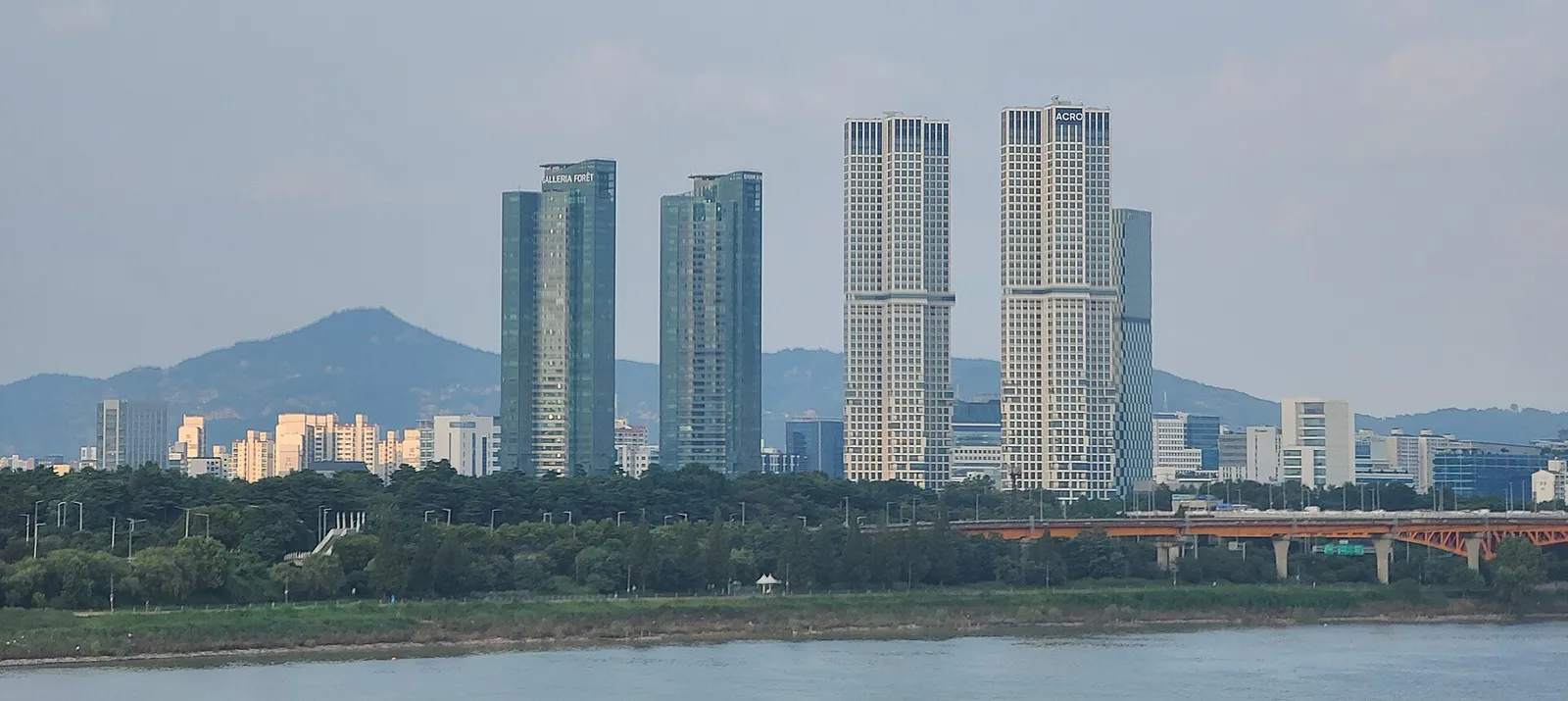
Places in this post
- Address
- 27 Wangsimni-ro, Seongsu-dong 1-ga, Seongdong-gu, Seoul
- Hours
- 09:00-18:00 (same on weekdays and weekends) - closed Mondays, 1 January, and on Seollal and Chuseok day
- Menu
- Admission Free
- Tip
- This is the site of the Ttukdo Water Source No.1 Filtration Plant of 1908. It is Seoul Tangible Cultural Heritage no. 72, and you only need to book ahead if you want a guided commentary.
- Address
- 273 Ttukseom-ro, Seongdong-gu, Seoul
- Hours
- Park open 24 hours - ecological forest (deer enclosure, pedestrian bridge) 05:30-21:30 - indoor facilities closed Mondays
- Menu
- Admission Free
- Tip
- There is no bike hire inside the park. Electric kick scooters and Segways are banned, with a 50,000 won fine.
- Address
- Along Achasan-ro, Seongdong-gu, Seoul (Seongsu Station to Ttukseom Station)
- Menu
- Visiting Free
- Tip
- The main axis is Achasan-ro between exits 1 and 2 of Seongsu Station and exit 4 of Ttukseom Station. There is also a shoe exhibition space inside Seongsu Station itself.
You came to Seongsu-dong for the cafes. Understood. But there is more here than cafes, and a good deal of it is free.
This post is put together only from material published by Seongdong-gu, the Seoul Metropolitan Government and the Korea Heritage Service.
Seoul Forest - check the day of the week first
The park itself is free and open 24 hours. But the indoor facilities all close on Mondays.
| Facility | Season | Hours | Closed |
|---|---|---|---|
| The park as a whole | All year | 24 hours | Never |
| Ecological forest (deer enclosure, pedestrian bridge) | All year | 05:30-21:30 | Never |
| Insect and plant garden | March-October | 10:00-17:00 | Mondays |
| Insect and plant garden | November-February | 10:00-16:00 | Mondays |
| Butterfly garden | May-October only | 10:00-17:00 | Mondays |
| Visitor centre | All year | 09:00-18:00 | Open year-round |
The butterfly garden does not open at all from November to April. Last admission to the insect and plant garden is 30 minutes before closing.
The community centre opens only irregularly, when there is an event on. The gallery garden is an outdoor garden rather than an indoor space, so it has no separate opening hours.
The deer are there. You cannot feed them
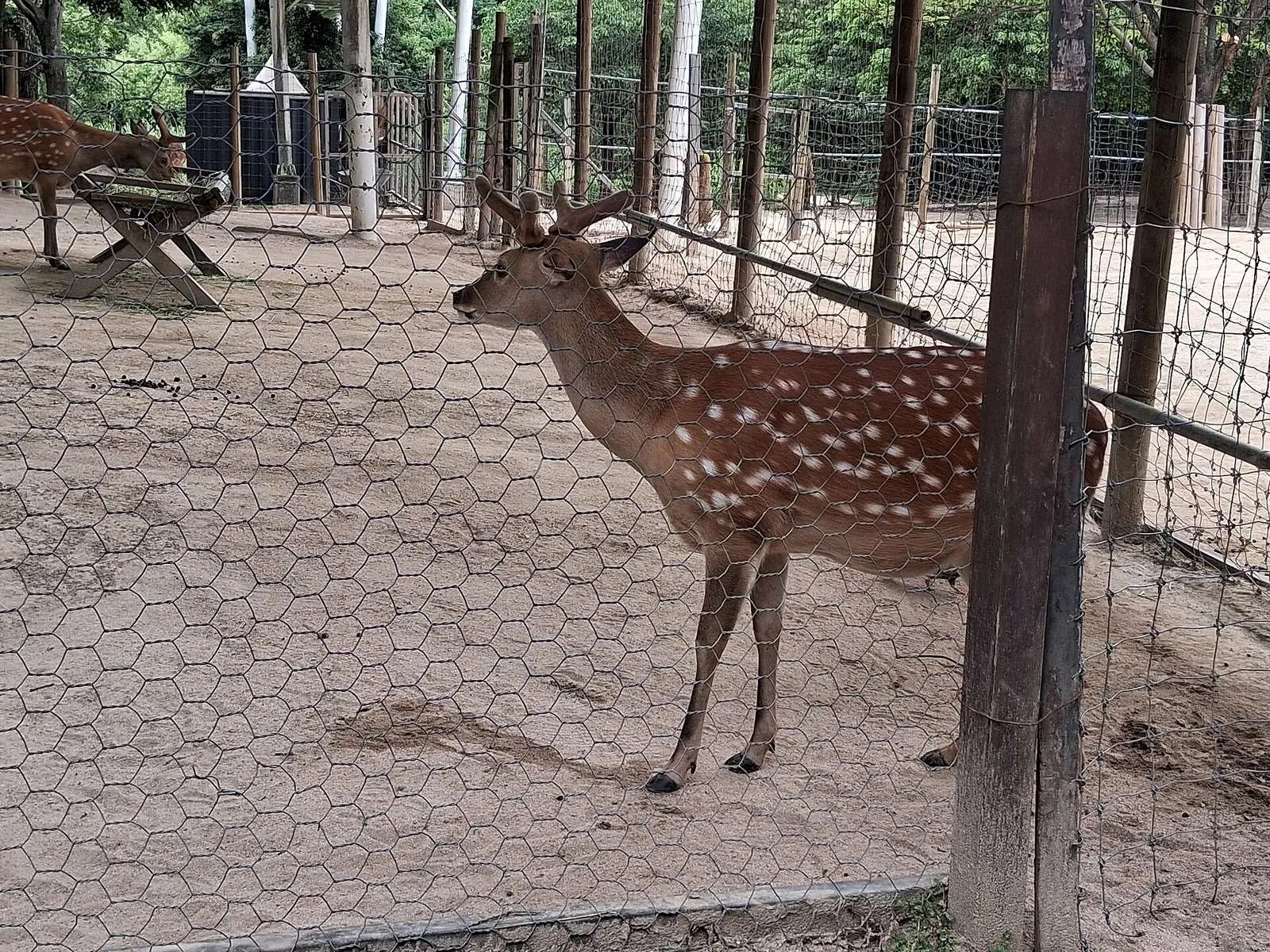
The official Seoul city page calls the sika deer enclosure the symbol of Seoul Forest. You can see them any time within the ecological forest hours of 05:30-21:30.
However, the sale of deer feed was discontinued on 1 January 2020. If you came to feed them, you will be disappointed. Plenty of people arrive not knowing this, which is why it is written down here.
If you were thinking of hiring a bike
There is no hire point inside the park. This is the Seoul city government’s official answer.
There is currently no rental point inside the park. For bicycle hire, please use the Seoul Bike (Ttareungi) unmanned rental system outside the park, or a private rental shop.
And this one you really do need to know. Electric kick scooters and Segways are banned from the park, and breaking the rule carries a 50,000 won fine (about $37). A lot of travellers get around on scooters these days, but not in Seoul Forest.
Tents and sun shelters are also banned, as are drones (a fine of up to 2 million won). Pets are allowed on a lead of 2m or less.
Personal photography is unrestricted. Only commercial shoots need advance contact and a fee.
You can walk to the Han River from here
There is a pedestrian bridge. It runs from the Wind Hill in the ecological forest to Han River Park, and the bridge deck doubles as a viewing platform.
Note, though, that the bridge is not open 24 hours. It keeps the same 05:30-21:30 as the ecological forest. The park stays open all night; this bridge does not.
The Seoul Waterworks Museum - the oldest red brick in the neighbourhood
Seongsu-dong being a red-brick neighbourhood is not only a cafe-street story. There is a brick building here that was put up in 1908 and is still standing.
- Admission free
- 09:00-18:00, the same on weekdays and weekends
- Closed Mondays, 1 January, and on Seollal and Chuseok day
- Five minutes on foot from exit 3 of Seoul Forest Station
This is the site of the Ttukdo Water Source No.1 Filtration Plant. Construction began in 1906 and finished in 1908, and it produced 12,500 cubic metres a day, supplying about 165,000 people at the time. It is the starting point of modern waterworks in Korea.
The heritage designation is worth stating precisely. It is not national registered cultural heritage but Seoul Tangible Cultural Heritage no. 72. It was designated in 1989, and the designation covers one water delivery building, one slow filtration bed and 5,575.3 square metres of land - not the building alone.
The Seoul city description of that slow filtration bed is a nice detail: it calls it the oldest surviving reinforced concrete structure in the country.
You only need to book ahead if you want a guided commentary. To simply look round, turn up. There is an English-language information page as well.
Seoul Forest and the museum were one site
This is where it joins up. The insect and plant garden at Seoul Forest is the old rapid filtration building of the plant, and the gallery garden is the old sedimentation basin, converted.
So Seoul Forest and the Waterworks Museum are effectively sharing one filtration plant site between them. Fittingly for a neighbourhood where factories became cafes, a water treatment plant became a park and a museum.
The handmade shoe street - the workshops are still running
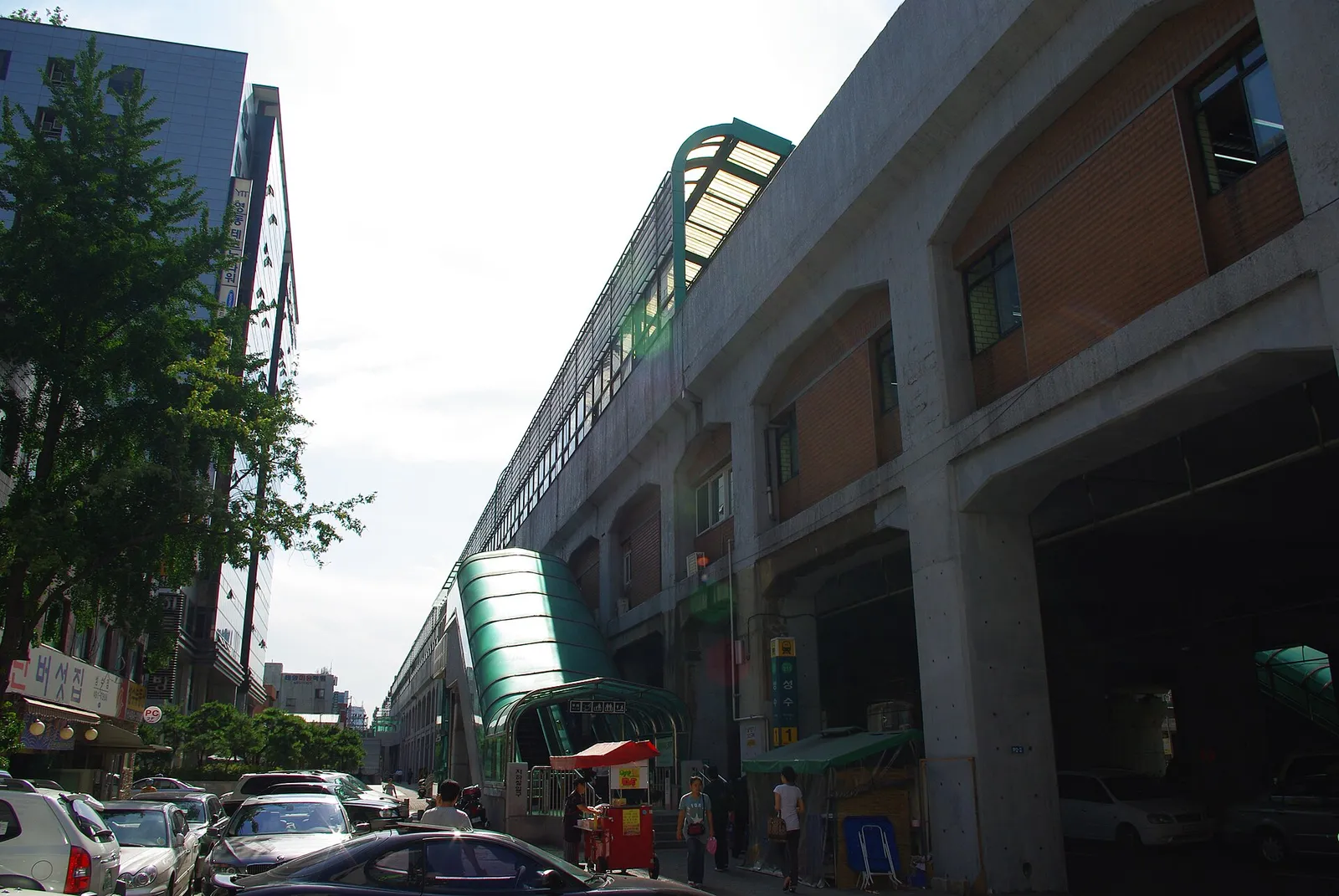
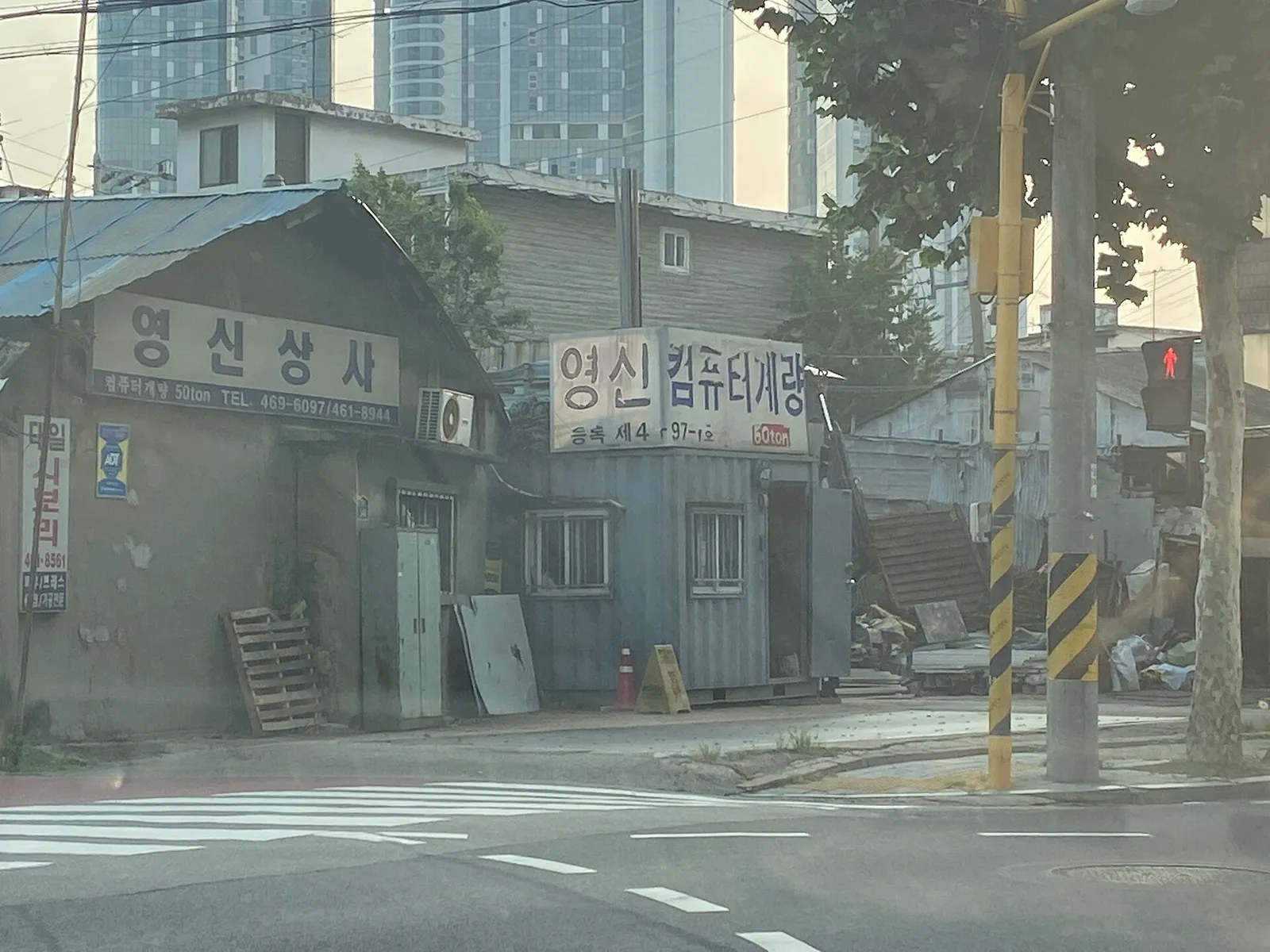
Seongdong-gu explains officially why this became a shoe neighbourhood. When the 1997 financial crisis pushed the Kumkang Shoes production headquarters out to Bupyeong, the shoe workshops scattered - and they converged on Seongsu-dong, where the Kumkang head office was and which was also close to the Esquire and Elcanto factories in Seongnam.
Seongdong-gu runs five public facilities here. All of them are free.
- Shoe Spot Seongsu - on the second floor of Seongsu Station, towards exits 1 and 4. Shoe displays and a hands-on space
- Handmade shoe joint sales outlet, building A - 105 Achasan-ro, between exits 1 and 2 of Seongsu Station
- Handmade shoe joint sales outlet, building B - 61 Achasan-ro, between Seongsu and Ttukseom stations
- The handmade shoe hub centre, Suda - an exhibition gallery and workshop, with shoemaking and leather keyring sessions
- Seongsu Handmade Shoe Hope Platform - 53 Achasan-ro, five minutes from exit 4 of Ttukseom Station. Pop-up stores on the ground floor, a leather craft workshop on the first
There is a line Seongdong-gu has written about this neighbourhood.
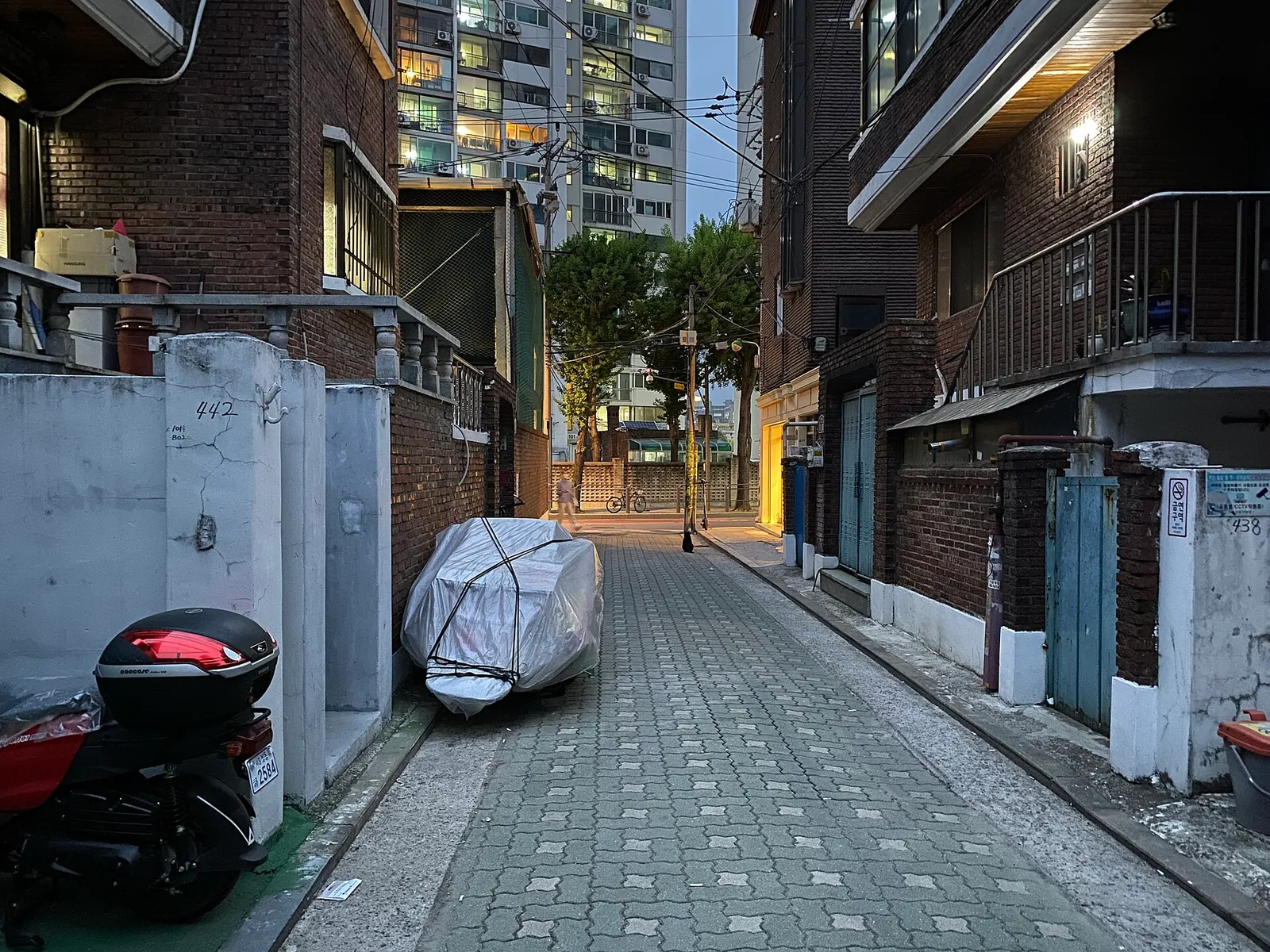
The red-brick factories, and the sight of traders on bicycles along Yeonmujang-gil, are part of Seoul’s heritage
There is something to see inside Seongsu Station too
The Seongsu industrial culture themed complex is inside the station building. It is one of the few facilities Seongdong-gu has labelled in both Korean and English.
Within it, My Store SS is the information space for visitors to Seongsu-dong. Be aware, though, that it is an unstaffed touchscreen, and its hours are not in any official source. There is nobody there to ask.
Ttukdo Market
There is one traditional market. It is a registered market in the Seoul city system, of the alley type. It is 15 minutes on foot from exit 3 of Seongsu Station.
Seongdong-gu notes that there is a food alley inside the market.
However, no official source gives its trading days or hours. In a traditional market every stall differs. If you need to know, ask the merchants’ association directly on 02-464-4426.
One thing to clear up. Ttukdo Cheongchun Market comes up online as if it were a permanent market, and no such market exists. Cheongchun Market is the name of a one-day night market event the Ttukdo Market traders’ association holds once each autumn. It was on 25 October in 2024 and 1 November in 2025, and the 2026 date has not yet been announced.
Which exit to take
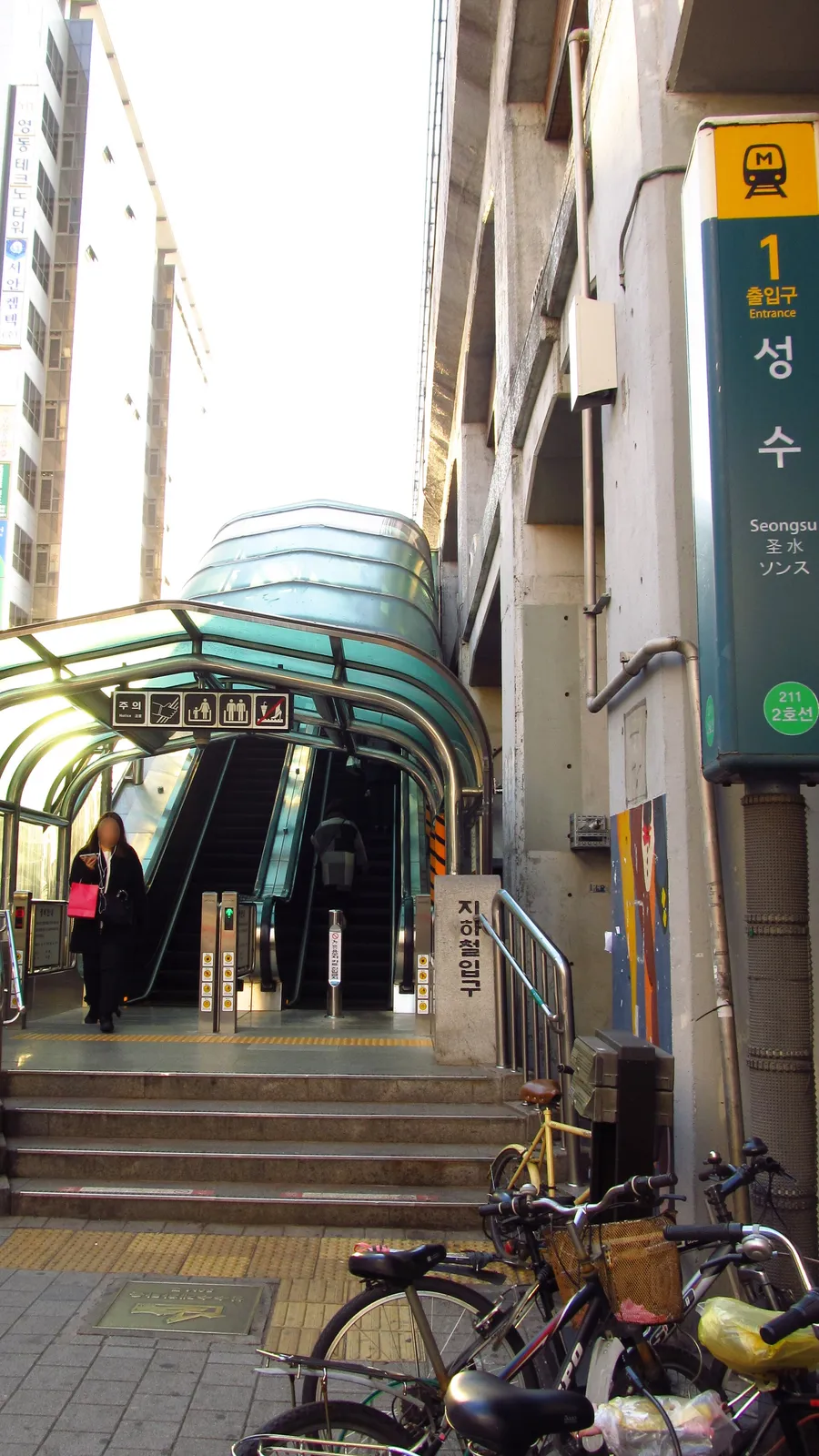
Seongsu-dong has three stations and each leads somewhere different.
| Destination | Station and exit |
|---|---|
| The cafe street (Yeonmujang-gil) | Line 2 Seongsu Station, exit 3 |
| The handmade shoe street | Line 2 Seongsu Station, exits 1 and 2 |
| Shoe Theme Park | Line 2 Seongsu Station, exit 4 |
| Ttukdo Market | Line 2 Seongsu Station, exit 3, then 15 minutes on foot |
| Handmade Shoe Hope Platform | Line 2 Ttukseom Station, exit 4 |
| Seoul Forest | Line 2 Ttukseom Station, exit 8 |
| Seoul Forest and the Waterworks Museum | Suin-Bundang Line Seoul Forest Station, exit 3 or exit 4 |
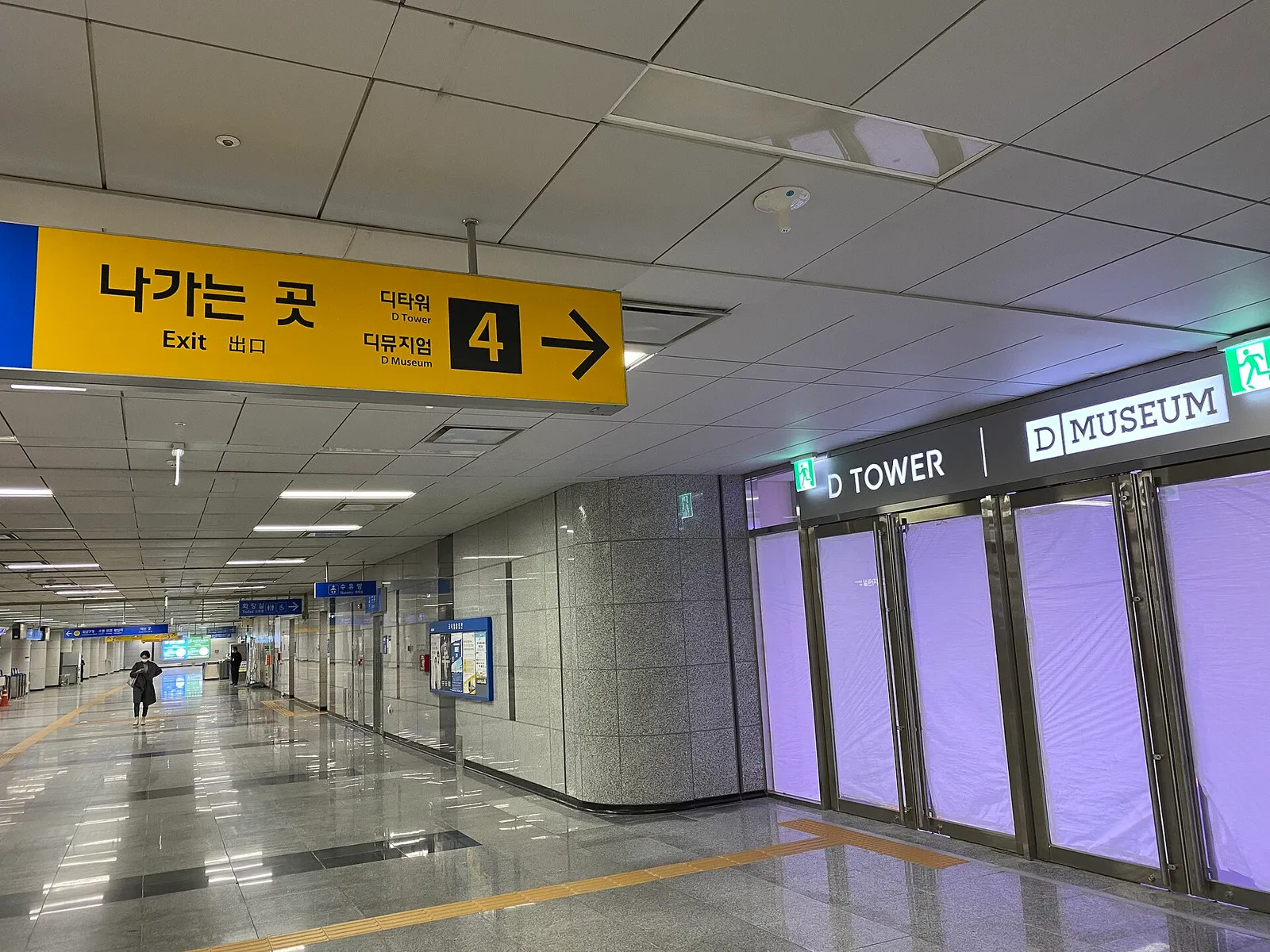
For Seoul Forest Station, the official sources contradict each other. The Seoul Metropolitan Government says exit 4, Seongdong-gu says exit 3, and the Seoul Tourism Organization says exits 3 and 4. Hence exit 3 or exit 4 here.
Seongdong-gu has laid out a route
This is the official Seongdong-gu themed route called Seongsu Brooklyn.
The galbi alley, then Atelier-gil, Seoul Forest, Understand Avenue and the Seoul Waterworks Museum
It is telling that stop number one is not a cafe but the galbi alley - the grilled rib restaurants. The catch is that nowhere in Seongdong-gu’s material is there a description, an address or a number of businesses for that alley. Only the name, on the route list.
When Seongdong-gu explains its red-brick policy, it cites Bushwick in Brooklyn, New York and the Aka Renga warehouses in Yokohama as overseas comparisons. “The Brooklyn of Korea” is not a phrase bloggers invented; it is the district office’s own wording.
Understand Avenue is a container complex next to Seoul Forest. It is a social contribution project run by a social cooperative, the Social Innovation Institute, and it opened in April 2016. Its notices have been updated as far as June 2026, so it is operating. Its central plaza serves as a passage through to Seoul Forest.
If you want to be shown around
Stated plainly. Seongsu-dong is a neighbourhood with weak tourist information.
- There is no Seongsu-dong course in the Seoul city walking-tour programme. Every course was checked
- My Store SS at Seongsu Station is an unstaffed touchscreen
- The English and Japanese on the Seongdong-gu website are a Google auto-translate widget
In practice there are two places where you can ask a person.
- The Seoul Forest visitor centre - 09:00-18:00, open year-round
- The 1330 tourist interpretation line - the Korea Tourism Organization’s multilingual phone and chat service
What could not be verified
The number of stalls at Ttukdo Market differs by more than double between official sources. Seongdong-gu says 139, the Seoul city dataset says 63. It was not possible to establish which is right, so no figure is given here.
The designation date of the Waterworks Museum also differs: Seoul Arisu Headquarters says 11 September, the Korea Heritage Service says 19 September - eight days apart. So this post says only that it was designated in 1989.
The opening hours of the individual units at Understand Avenue could not be confirmed. The 10:00-18:00 on the website is the customer support desk, not the units. Repeated calls for new tenants suggest the line-up is in flux, so no unit names are given either.
The hours of My Store SS and the 2026 date for Cheongchun Market are likewise absent from official sources.
Wrapping up
- All the Seoul Forest indoor facilities close on Mondays. The butterfly garden opens May to October only.
- The deer are there, but feed sales were discontinued in 2020.
- There is no bike hire inside the park, and electric kick scooters are banned (50,000 won fine).
- The pedestrian bridge to the Han River is open only 05:30-21:30, which is not the same as the park’s hours.
- The Waterworks Museum is free, 09:00-18:00, closed Mondays. It is the site of a 1908 filtration plant.
- All five of the public handmade shoe facilities are free.
- There is no walking-tour course here. For guidance, use the Seoul Forest visitor centre or 1330.
It would be a shame to see only the cafes. The Waterworks Museum and Seoul Forest are next door to each other and both are free. Just avoid Monday.
More in this series: food and cafes in Seongsu, the Seongsu overview, where to stay and Seoul autumn foliage spots.