 Now, Yeogi
How to Visit the Korean DMZ from Seoul (2026 Guide)
A practical guide to Paju's DMZ: Imjingak Peace Nuri park you can walk into freely, and the Third Tunnel and Dora Observatory you need a booking and a passport for. Fares, hours and how to get there.
Places in this post
- Address
- 148-40 Imjingak-ro, Munsan-eup, Paju-si, Gyeonggi-do
- Hours
- Outdoor park, open at all times
- Tip
- Free to enter. Parking ₩2,000 for a car (₩1,000 compact, ₩3,000 mid-size, ₩5,000 bus). Tel 031-956-8300
- Address
- 148-73 Imjingak-ro, Munsan-eup, Paju-si, Gyeonggi-do
- Hours
- Weekdays 09:00–18:00, weekends and holidays 09:00–19:00 (ticket sales close 30 minutes before)
- Menu
- Round trip, standard cabin (adult) 12,000원 · Round trip, standard cabin (child) 10,000원 · Round trip, crystal cabin (adult) 15,000원 · Round trip, crystal cabin (child) 13,000원
- Tip
- Closed for inspection on the first Monday of March, June, September and December. Tel 031-952-6388
- Address
- 310 Je3ttanggul-ro, Jangdan-myeon, Paju-si, Gyeonggi-do
- Hours
- Ticket desk and booking pick-up 09:00–14:30 / closed Mondays, weekday public holidays, and Seollal and Chuseok day
- Tip
- You cannot enter without photo ID — bring your passport. Minors must be with an adult. Tours can be suspended at short notice for security or weather reasons. Tel 031-954-0303
The Korean DMZ is not one place you buy a ticket for. It is two, and the difference decides your whole day. Everything up to the south bank of the Imjin River — the park, the bridge, the locomotive — is open to anyone who turns up. Everything past it sits inside the Civilian Control Line, and you need a reservation and photo ID to cross. This guide splits the trip along that line. Fares and hours are as listed in September 2026.
Imjingak Peace Nuri: the part with no gate
Imjingak (임진각) is a riverside park in Paju (파주), about an hour north-west of central Seoul, at 148-40 Imjingak-ro. There is no admission charge. Parking is ₩2,000 for a car (about $1.50), ₩1,000 for a compact and ₩5,000 for a coach.
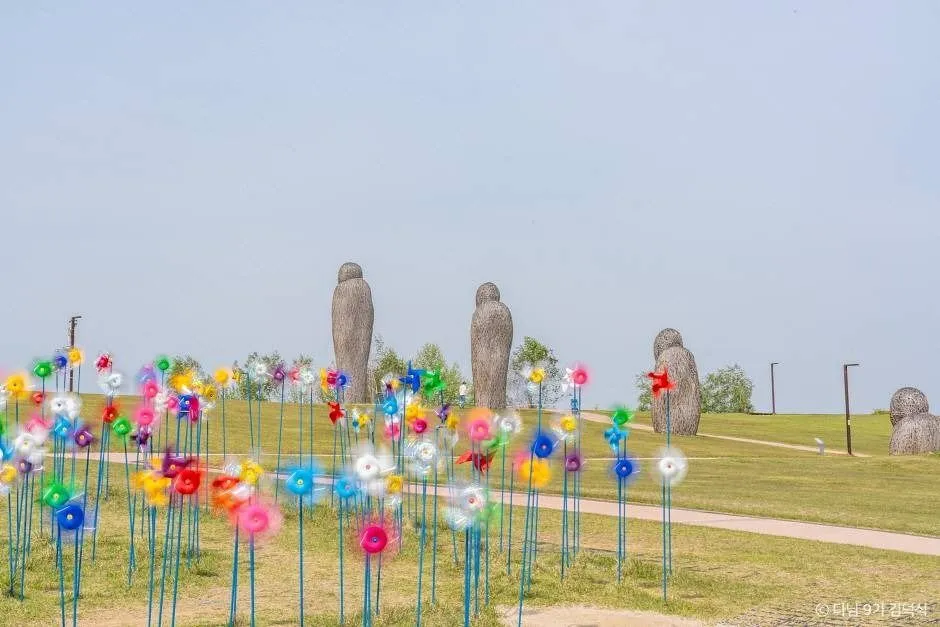
The centre of the park is a grass amphitheatre that holds around 20,000 people, plus an outdoor stage on the water. On the hill above it stands Hill of Wind, an installation by Kim Eon-kyung made of more than 3,000 pinwheels that turn together when the wind comes off the river. Nearby is Choi Pyung-gon’s bamboo figure work Calling for Unification, and there is a café beside the pond.
Freedom Bridge and the bullet-scarred locomotive
Three things in this park do more explaining than any signboard.
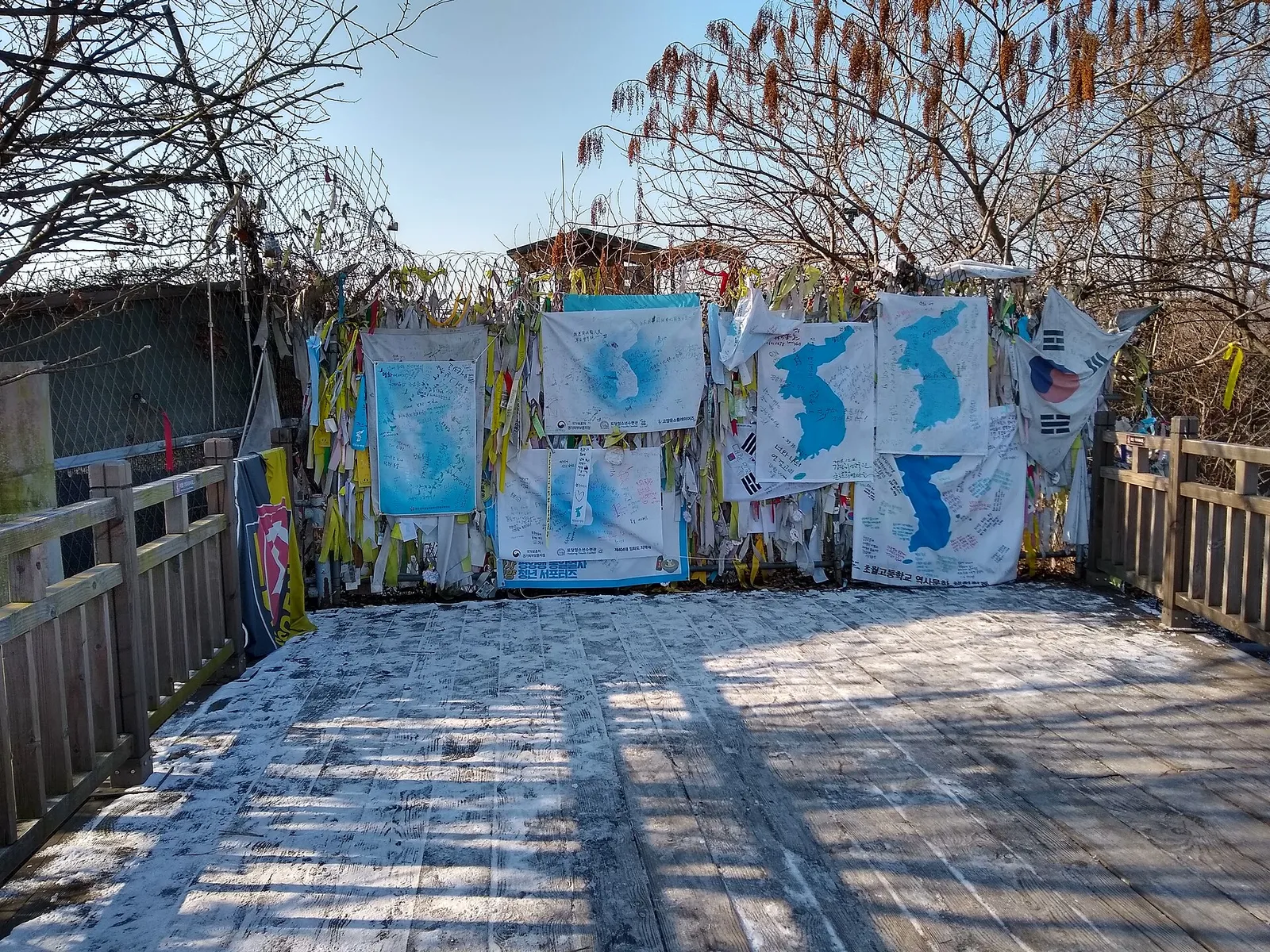
Freedom Bridge carried returning prisoners of war south in 1953. Today it stops at a wall of barbed wire, and visitors have covered that wire with ribbons and hand-painted cloths of a single, undivided Korean peninsula. It is the image most people have in mind when they picture the DMZ.
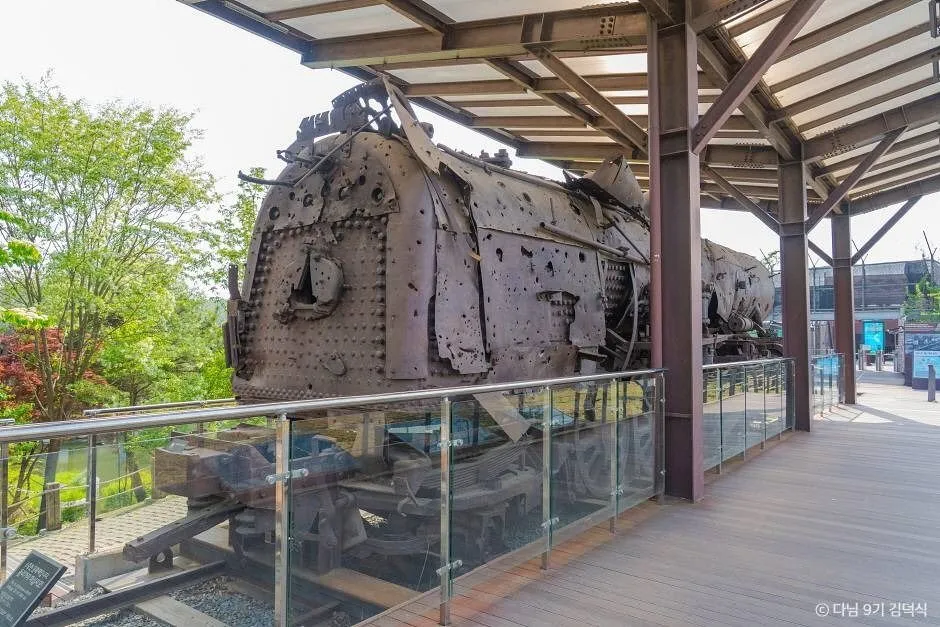
The Gyeongui Line steam locomotive was wrecked during the Korean War and left rusting at Jangdan Station inside the DMZ for decades before it was moved here. Its whole body is pitted with bullet holes.
Mangbaedan is an altar built so that Koreans displaced from the north could bow toward their hometowns. Joint memorial rites are held here at Korean holidays — a practical detail worth knowing, since the park is busiest on those days.
The Peace Gondola: crossing the line without a booking
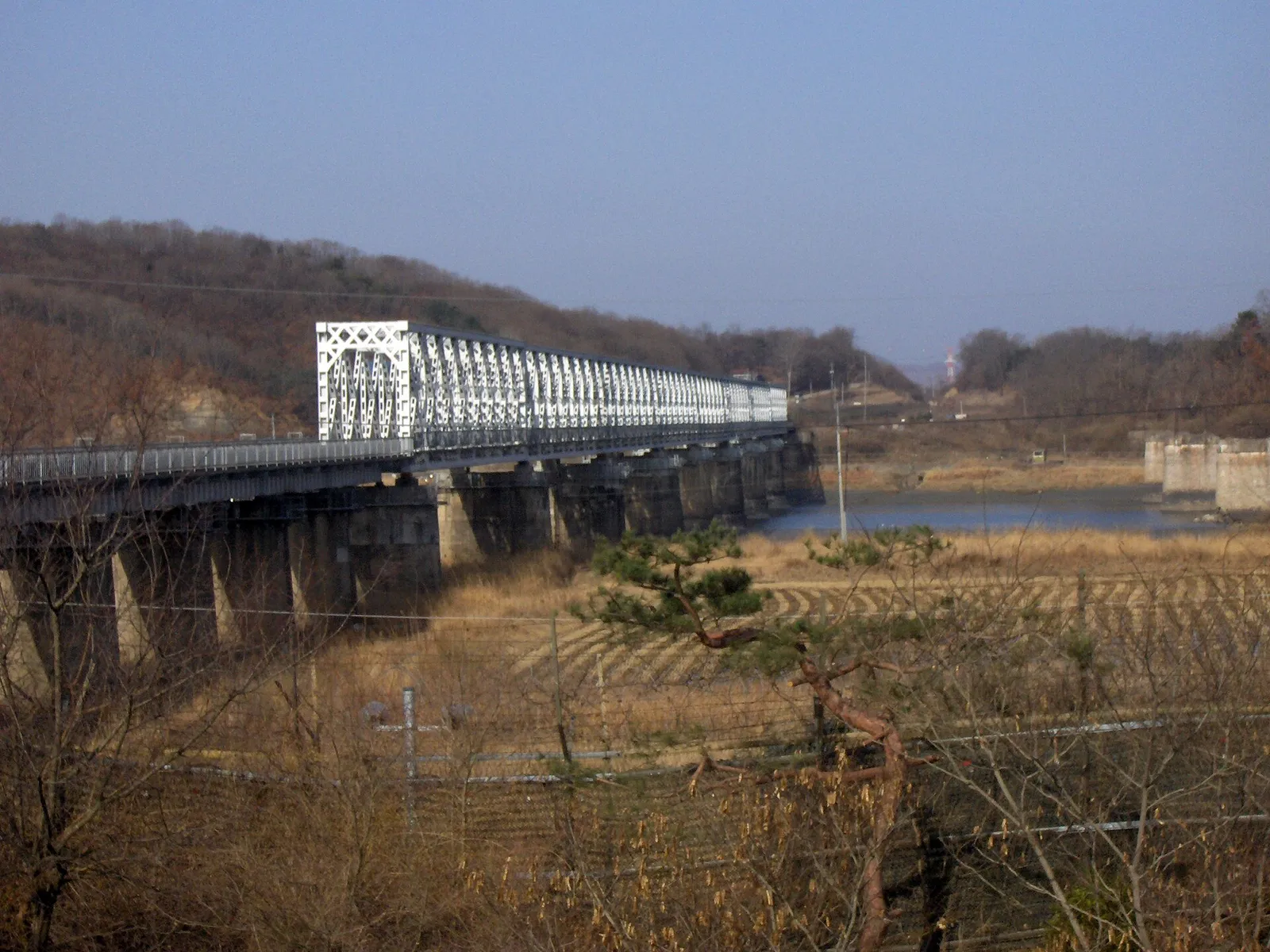
The cable car at 148-73 Imjingak-ro runs over the Imjin River and a short way into the Civilian Control Zone, then back. It is the one way to see across the line without a reservation. From the cabin you look down on the Jangdan peninsula and the Imjin River railway bridge, with the stone piers of the bridge destroyed in the war still standing beside the new one.
A round trip is ₩12,000 (about $9) for an adult in a standard cabin and ₩10,000 for a child; the glass-floored crystal cabin is ₩15,000 and ₩13,000. It runs 09:00–18:00 on weekdays and 09:00–19:00 at weekends and public holidays, with ticket sales closing half an hour before. It shuts for safety inspection on the first Monday of March, June, September and December.
The DMZ Peace Tour: Third Tunnel and Dora Observatory
You cannot drive your own car past the Civilian Control Line. To go further you join the DMZ Peace Tour run by Paju City: a shuttle leaves from Imjingak, visits the Third Tunnel and Dora Observatory, and returns. The ticket office is at 310 Je3ttanggul-ro, Jangdan-myeon, and both walk-up tickets and booking pick-up are handled between 09:00 and 14:30 only. It is closed on Mondays, on weekday public holidays, and on the days of Seollal and Chuseok.
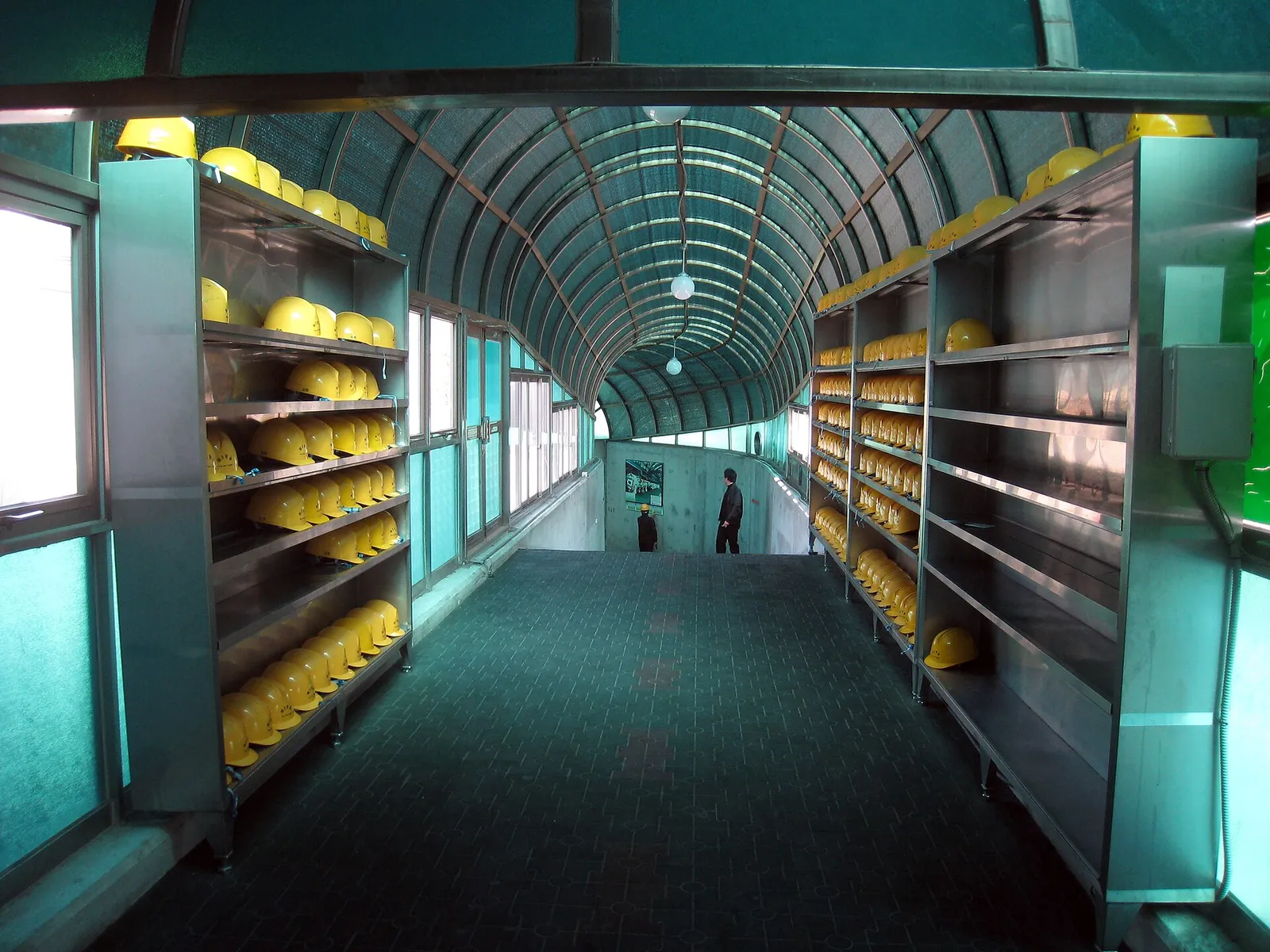
The Third Infiltration Tunnel was found in October 1978. It runs 1,635 m, is 2.1 m wide and 1.95 m high — low enough that most adults walk stooped — and reaches to within 44 km of Seoul. You collect a hard hat at the entrance and go down either the ramp or a small monorail. Photography inside the tunnel is not allowed, and phones are usually left in lockers.
Dora Observatory is the northernmost viewpoint on the South Korean side. It replaced the closed Songaksan observation post and moved to its present building in October 2018. Through the mounted binoculars you can pick out Songaksan mountain above Kaesong, the village of Gijeong-dong, and the outskirts of Kaesong city; official information notes the Kaesong Industrial Complex is visible on clear days. On a hazy day you will see very little, so check the forecast before you commit to this leg.
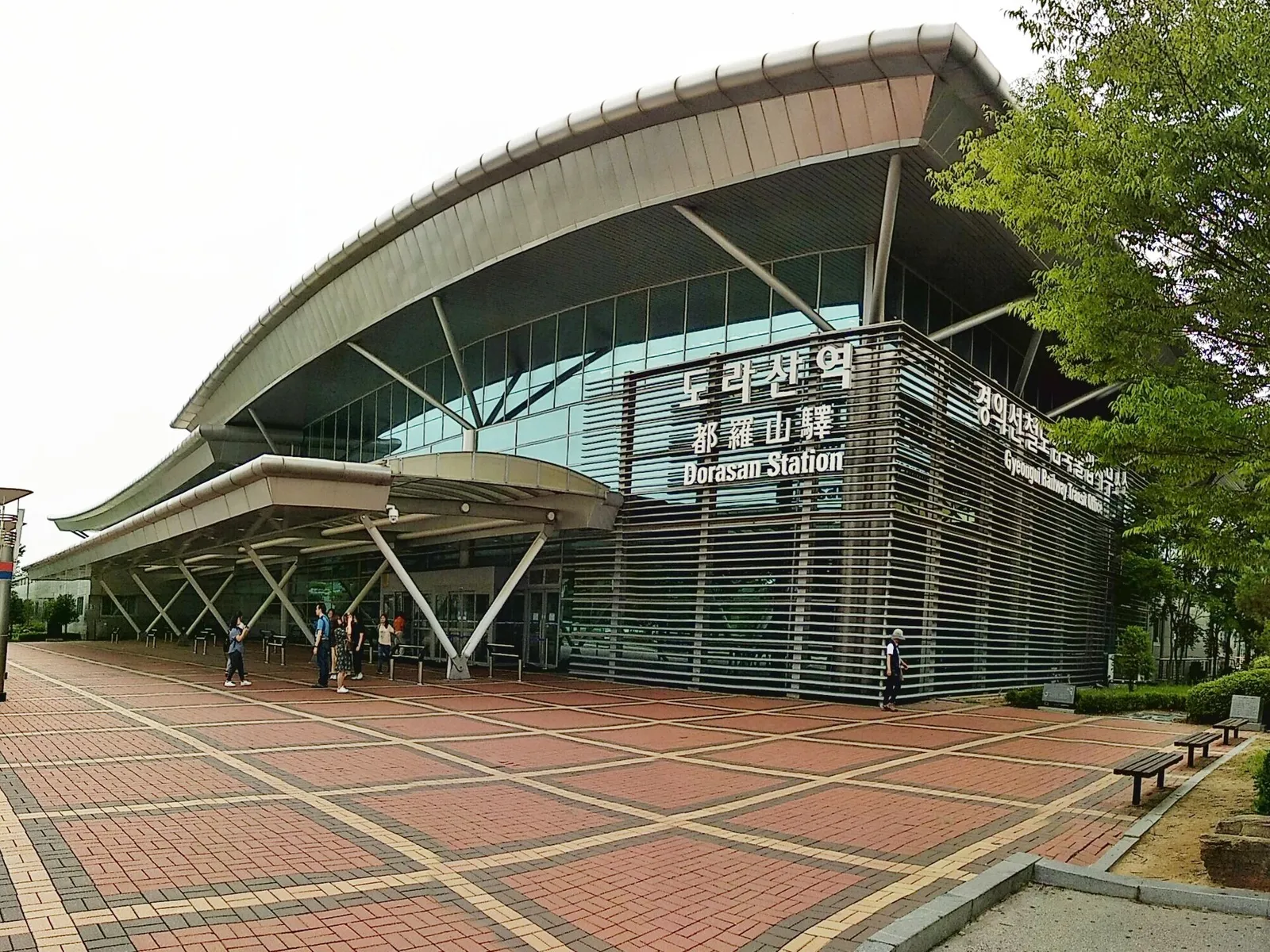
Dorasan Station is the last stop on the southern side of the Gyeongui Line and houses an inter-Korean transit office. Its platform signs still read “Seoul ↔ Kaesong ↔ Pyongyang” for a rail link that has never carried regular traffic. Some tour courses include it and some do not — check when you book.
Panmunjom (the JSA) is a separate thing
The blue huts you have seen in photographs are in the Joint Security Area, and they are not part of the Paju tour above. JSA visits are handled by the Ministry of Unification’s Panmunjom Tour Center, and general access has been repeatedly adjusted since 2023, so whether tours are running varies by period. If Panmunjom is the reason for your trip, check the Panmunjom Tour Center notices or call 1588-8889 before booking flights around it. The same centre also runs the DMZ Peace Trail, a separate set of guided walks in Paju, Cheorwon and Goseong.
Practical notes
- By train and bus: take the Gyeongui–Jungang Line to Munsan Station, then a local bus or taxi to Imjingak. Trains continue to Imjingang Station right by the park, but very few run, so check the timetable first. Anyone continuing toward Dorasan gets off at Imjingang for an ID check.
- By car: about an hour from Seoul on the Jayu-ro riverside road. Note that private cars stop at Imjingak — the shuttle is the only way past the line.
- ID: bring your physical passport for the DMZ Peace Tour. A photo on your phone is not accepted, and minors must be accompanied by an adult.
- Booking: fares, course options and departure times are on Paju City’s official DMZ Peace Tour site, which is where you reserve. Weekend slots fill early and walk-up sales close once a departure sells out. The site is mainly in Korean; many visitors book a Seoul-based coach tour instead, which bundles transport, the reservation and an English-speaking guide.
- Time needed: roughly 1–2 hours at Imjingak and about 3 hours for the leg past the Civilian Control Line, so plan on a full day from Seoul.
- Cancellations: tours can be called off the same morning for security or weather reasons. Do not build a tight itinerary around this one stop.
- Dress code: the tour is inside an active military area. Guides ask visitors to avoid clothing with political slogans, and to stay with the group at all times.
Wrapping up
The DMZ is less a view than a piece of evidence: a line you have only seen on maps, standing there as concrete, wire and a stopped railway. Imjingak alone — Freedom Bridge, the locomotive, the pinwheel hill — is worth the morning and costs almost nothing. If you can give it a full day and you have your passport, the tunnel and the observatory are what turn it into something you remember.
Planning the rest of your trip? See our guides on getting from Incheon Airport into Seoul and where to stay in Seoul.